
Why Finding the Right Plumbing Parts Store Matters
A plumbing parts store is your essential resource for locating the correct components to repair or upgrade your home’s plumbing system. Whether you’re dealing with a leaky faucet, a running toilet, or planning a major renovation, the right store provides expert guidance, professional-grade parts, and the specialized inventory you need to complete your project successfully.
Quick Guide to Finding a Plumbing Parts Store:
- Specialized plumbing supply stores – Offer expert staff, hard-to-find parts, and professional-grade inventory
- General hardware stores – Good for basic DIY supplies and common repair parts
- Online suppliers – Convenient for research and ordering specific brand components
- Wholesale distributors – Best for contractors and bulk purchases with competitive pricing
The frustration of a dripping faucet or a sudden leak is universal. With the global plumbing market valued at over $113 billion, it’s clear that maintaining these complex systems is a major priority for homeowners and professionals alike. The challenge for many is navigating the vast world of plumbing parts to find the one correct piece for the job.
The reality is simple: walk into the wrong store without preparation, and you’ll waste time, money, and multiple trips. Walk in with a clear strategy, and you’ll solve your problem on the first visit.
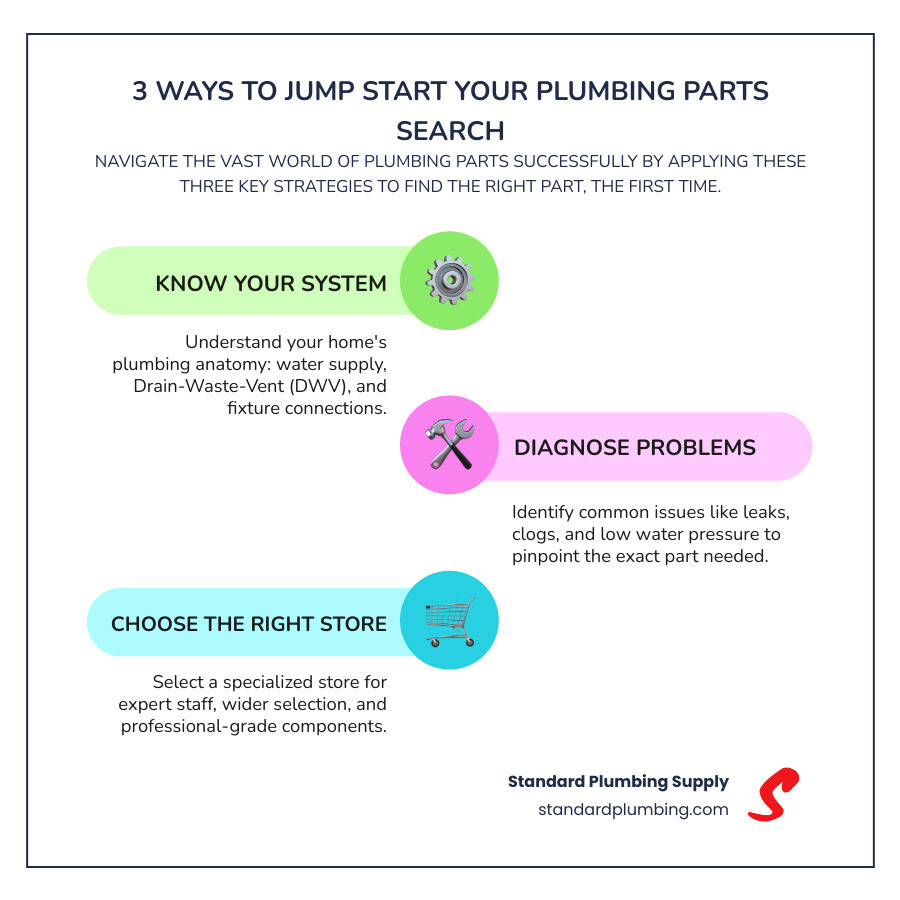
This guide simplifies the process, offering three key strategies to ensure you walk away with the right part, the first time. You’ll learn how to identify what you need, understand the materials and technologies available, and choose the best type of supplier for your specific situation.
I’m Jacob Reese, Vice President of Standard Plumbing Supply, and I’ve spent my entire life in the plumbing parts store business, from sweeping warehouses at age eight to now leading our family’s third-generation company serving contractors and homeowners across the Western United States. Over the years, I’ve seen what separates a successful parts search from a frustrating one, and I’m here to share those insights with you.
Way 1: Know Your System & Identify the Part
Before you even step foot in a plumbing parts store, the most crucial step is to understand what you’re dealing with. Think of your home’s plumbing system as its circulatory system, quietly doing its job until something goes wrong. Knowing its basic anatomy will save you a lot of headaches and ensure you get the right part on your first trip.
Your home’s plumbing system generally consists of two main networks: the water supply system and the Drain-Waste-Vent (DWV) system. The water supply brings fresh water into your home under pressure, distributing it to all your fixtures. The DWV system, on the other hand, collects wastewater and carries it away, while also venting the system to prevent vacuum formation and ensure proper drainage. Understanding how these systems interact with your fixtures – from your bathroom sinks to your washing machine – is fundamental.
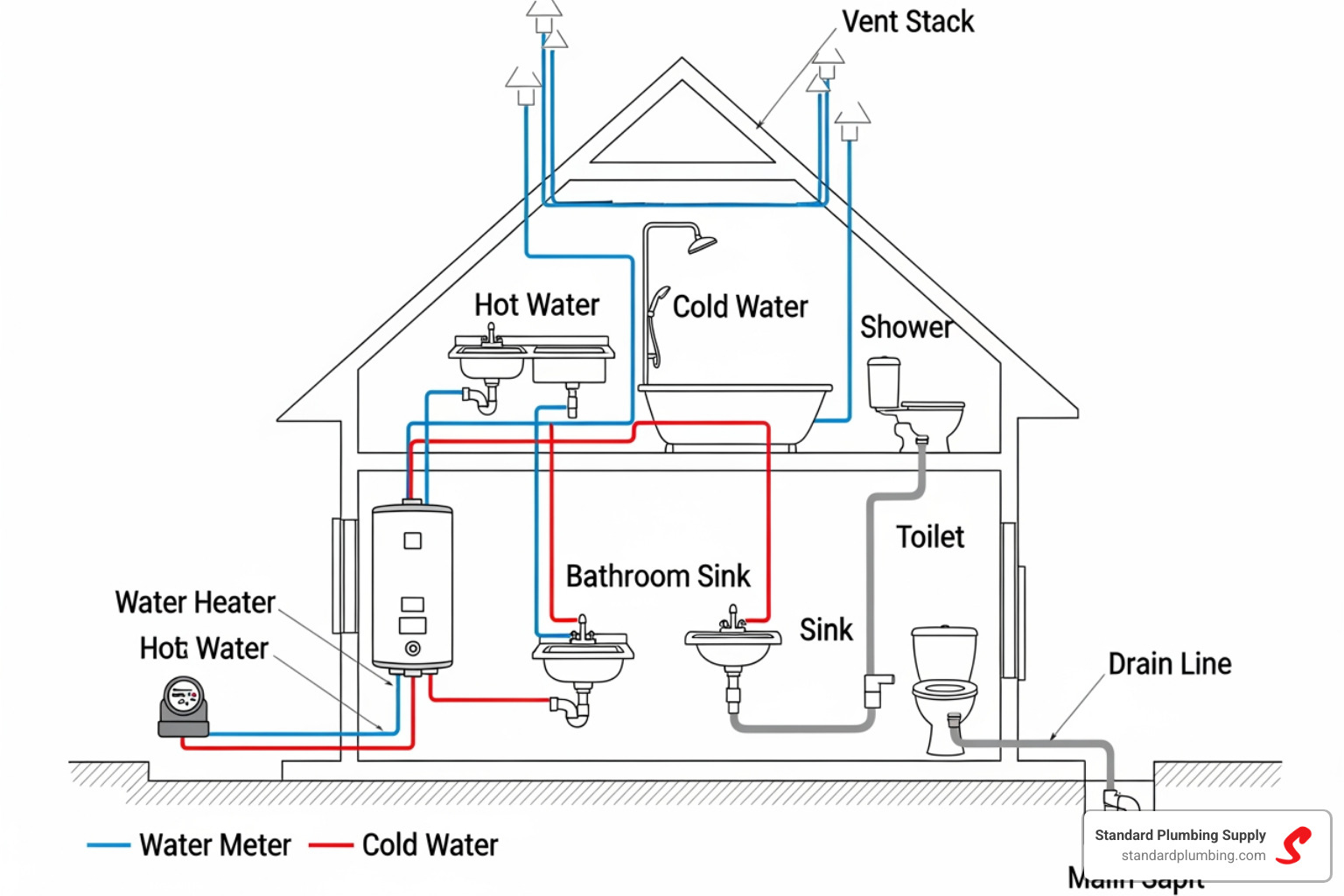
Essential components work together to keep everything flowing smoothly. For instance, shut-off valves are critical for isolating water flow to a specific fixture or even your entire home, allowing for repairs without a major flood. You can find robust options like those in our selection of Plumbing Tubular, Gas Supply Valves & Regulators. P-traps, like our Plumbing Fittings ABS Fittings ABS DWV Union P-Traps, are curved sections of pipe designed to hold a small amount of water, creating a seal that prevents sewer gases from entering your home. And to protect your drinking water from contamination, backflow preventers, such as those found in Plumbing Valves Valves Backflow, are non-negotiable. Don’t forget about proper ventilation, which is crucial for your DWV system, often utilizing components like Plumbing Venting Double Wall Flashings to ensure air circulation.
How to Find the Right Part at a plumbing parts store
Identifying the correct replacement part can feel like detective work, but with a few simple tricks, you can crack the case. When you visit a plumbing parts store, our experts are here to help, but coming prepared makes the process much smoother.
First, always take clear pictures from multiple angles of the broken part or the fixture it belongs to. A picture is worth a thousand words, especially when trying to describe a unique fitting. Even better, if possible, bring the old part with you. This allows us to match it exactly, ensuring compatibility.
Look for brand names, part numbers, or model numbers directly on the fixture or the part itself. These numbers are often etched, stamped, or printed on less visible areas. For example, specific repair parts might even have dedicated tools, like the Specialized plumbing tools for Sloan fixtures. Don’t forget to measure the part’s dimensions and any pipe diameters involved. A tape measure is your best friend here! Even a millimeter can make a difference in plumbing.
Common Parts Every Homeowner Should Know
While your home’s plumbing system is complex, a few common parts often need attention. Keeping these on your radar can help you quickly address minor issues before they become major headaches.
- Toilet flappers & fill valves: These are the unsung heroes of your toilet tank. A worn-out flapper is often the culprit behind a running toilet, wasting gallons of water. The fill valve controls the water refilling the tank after a flush.
- Faucet cartridges & O-rings: Leaky faucets are usually a sign that an internal cartridge or a small rubber O-ring has worn out. These are surprisingly easy to replace and can save you from that incessant drip-drip-drip.
- Showerheads and tub and shower trims: Beyond aesthetics, showerheads can clog with mineral deposits, reducing water pressure. If you’re looking to upgrade or repair, explore options for tub and shower trims to refresh your bathroom’s look and functionality.
- Flexible supply lines: These braided lines connect fixtures like toilets and sinks to your main water supply. They can degrade over time and are a common point of failure, leading to leaks.
- Drain assemblies: From the stopper in your sink to the P-trap connection, drain assemblies are crucial. Specific parts like Watco Hub Sets are examples of components that ensure proper drainage and sealing.
Having a basic understanding of these parts, and perhaps even a few spares on hand, can turn a potential plumbing emergency into a quick fix.
Way 2: Diagnose Problems & Understand Materials
The second strategy for a successful visit to a plumbing parts store involves becoming a plumbing detective. Understanding the symptoms of common problems and knowing the materials that make up your system will guide you directly to the solution.
Signs of common problems are often obvious, but sometimes subtle. Drips and leaks are the most apparent, often indicating a worn-out seal or a loose connection. Slow or clogged drains are usually caused by an accumulation of hair, grease, or foreign objects. Low water pressure can be a sign of mineral buildup in pipes, a failing pressure regulator, or even an issue with your main water supply. Gurgling noises from drains often signal a vent issue within the DWV system.
Addressing these issues promptly is key. For clogs, a drain snake or auger is often more effective and less damaging than chemical drain cleaners, which can corrode pipes over time. For leaks, replacing seals and gaskets is a common fix. We stock a variety of Plumbing Consumables and Cements to help you seal up those leaks. The best maintenance practices include regular inspections of visible pipes and fixtures, flushing your water heater annually to remove sediment, and cleaning faucet aerators to maintain water flow.
A Guide to Pipe Types and Their Applications
Understanding the different types of pipes used in residential plumbing is essential, as each has its own characteristics and applications. Knowing what’s in your walls will help you choose the correct fittings and repair materials.
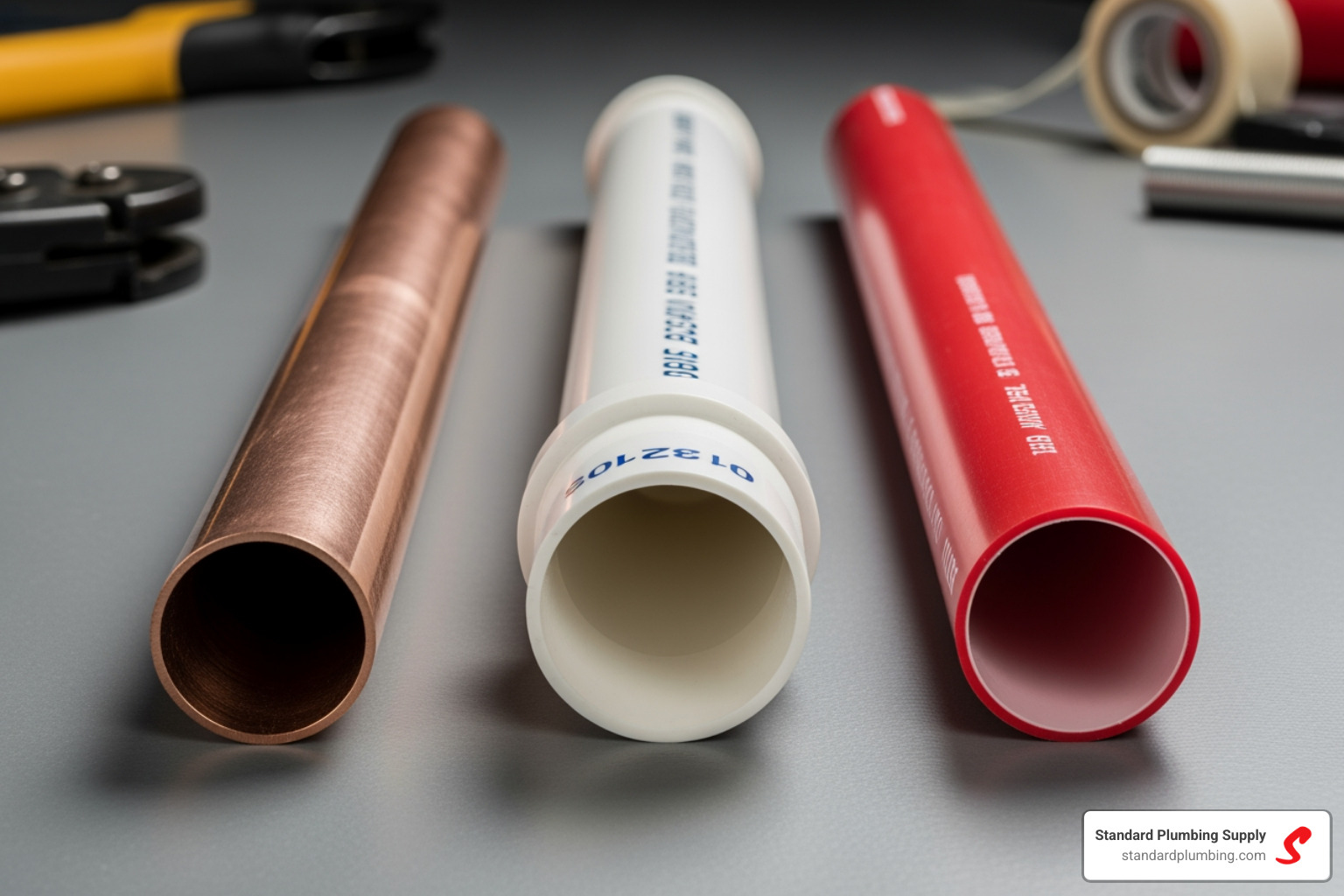
| Pipe Type | Cost | Durability | Flexibility | Common Applications |
|---|---|---|---|---|
| Copper | High | Excellent | Low | Water supply lines, hot water distribution |
| PVC / ABS | Low | Good | Low | Drain-Waste-Vent (DWV) systems, cold water supply |
| PEX | Moderate | Very Good | High | Water supply lines, radiant floor heating, hot/cold |
- Copper pipe: For decades, copper has been a gold standard for water supply lines due to its durability, resistance to corrosion, and ability to handle high temperatures. We offer quality options like Hard Copper Pipe.
- PVC & ABS pipe: These plastic pipes are commonly used for drain, waste, and vent (DWV) systems because they are affordable, lightweight, and easy to install. ABS (Acrylonitrile Butadiene Styrene) is often used in colder climates, while PVC (Polyvinyl Chloride) is more common in warmer areas. We carry essential components like ABS Repair Couplings for these systems.
- PEX pipe: (Cross-linked polyethylene) is a flexible plastic tubing that has gained immense popularity for water supply lines. Its flexibility makes it easier to install, reduces the number of fittings needed, and it’s resistant to freezing and corrosion. Explore options like Expansion PEX Pipe for your next project.
Essential Fittings and Connectors
Pipes are only as good as their connections. Fittings are the unsung heroes that change direction, join pipes, and provide access points.
- Elbows: Used to change the direction of a pipe run, such as our ABS DWV 90 Reducing Elbows, which are crucial for navigating tight spaces or corners in your DWV system.
- Couplings: These are used to connect two pieces of pipe together, either in a straight line or to adapt different pipe sizes.
- Caps: Used to seal off the end of a pipe, such as our ABS Threaded Caps, which are useful during installation or for temporary closures.
- Soldering vs. Press fittings: For copper pipes, traditional soldering requires a torch and specific skills, melting solder to create a watertight joint. Newer press-fit technology uses a special tool to crimp a fitting onto the pipe, creating a secure, flame-free connection. We stock necessary items like Brazing and Solder Supplies for traditional methods.
Way 3: Choose the Right Plumbing Parts Store & Technology
With the US DIY home improvement market valued at over $150 billion, it’s clear that many homeowners are taking on plumbing projects themselves. However, not all stores are created equal when it comes to plumbing supplies. The right plumbing parts store can make all the difference.
The plumbing world is constantly evolving with exciting new technologies. We’re seeing more smart home plumbing solutions, such as leak detection systems and smart water shut-off valves, designed to prevent costly water damage. Water-saving fixtures, like modern bathroom lavs with low-flow aerators, are not only environmentally friendly but can also reduce your utility bills. Press-fit technology, which we mentioned earlier, continues to simplify pipe connections, making plumbing more accessible for DIY enthusiasts and professionals alike.
Even technology in your pocket can help! Helpful tech tools like the CPF TechTools for Android and CPF TechTools for Apple apps offer calculators and dimensional catalogs on the go, proving that innovation is literally at your fingertips.
Why a Specialized plumbing parts store is Your Best Bet
While general hardware stores are convenient for many household needs, when it comes to plumbing, a specialized plumbing parts store offers distinct advantages. This is where our expertise truly shines.
- Expert staff with professional knowledge: Our team members aren’t just cashiers; they’re plumbing enthusiasts and seasoned professionals who can offer invaluable advice, troubleshoot complex issues, and help you find exactly what you need, even if you don’t know the exact name of the part. We understand the nuances of different systems and materials.
- Wider selection of professional-grade parts: We stock a comprehensive inventory that goes far beyond the basics. This means you’ll find a greater variety of brands, sizes, and specialized components.
- Access to hard-to-find components for older homes: For those living in historic homes or dealing with discontinued fixtures, finding compatible parts can be a nightmare at a big-box store. Specialized stores often carry or can source these unique items.
- Higher quality control and more durable materials: Professional-grade parts are designed for longevity and performance, often surpassing the quality of consumer-grade products found elsewhere. This translates to fewer callbacks for professionals and more reliable repairs for homeowners.
The Benefits of American-Made Plumbing Products
When you choose plumbing products manufactured in the USA, you’re investing in more than just a part; you’re investing in quality, reliability, and our economy.
- Superior quality standards and manufacturing: American-made products often adhere to rigorous manufacturing standards, leading to higher quality and consistency. This means fewer defects and a longer lifespan for your plumbing components.
- Proven reliability and longevity: Products made with precision and care are simply more reliable. This translates to fewer leaks, fewer repairs, and greater peace of mind for you.
- Supporting the domestic economy: Choosing American-made helps create and sustain jobs within our communities, strengthening the economic fabric of regions like Arizona, California, Idaho, Nevada, Oregon, Utah, and Wyoming, where our locations proudly serve.
- Adherence to strict US safety and environmental regulations: American manufacturers operate under some of the world’s most stringent safety and environmental regulations, ensuring that the products you bring into your home are safe and responsibly produced. You can Learn more about American manufacturers and their commitment to excellence.
Understanding Major Appliances: A Look at Water Heaters
One of the most critical, and often overlooked, components of your home’s plumbing system is the water heater. It silently provides the comfort of hot water for bathing, cleaning, and cooking. Choosing the right water heater and maintaining it properly is essential.
The importance of water heaters cannot be overstated, and their energy consumption can significantly impact your utility bills. The global plumbing market size, which includes these vital appliances, highlights the scale of this industry. Therefore, understanding the different types and choosing the right size for your household based on demand and efficiency is paramount.
- Tank Water Heaters: These are the most common type, storing and heating a reservoir of water.
- Pros: Generally have a lower initial cost and are simple to install.
- Cons: Suffer from standby heat loss (water cools if not used, requiring reheating) and have a limited supply of hot water, which can run out during peak demand. We offer reliable options like Residential Electric Water Heaters.
- Tankless Water Heaters: Also known as on-demand water heaters, these heat water directly as it flows through the unit, without a storage tank.
- Pros: Provide endless hot water and are significantly more energy-efficient, potentially reducing energy consumption by as much as 30% compared to tank models.
- Cons: Have a higher upfront cost and may have output limitations if multiple hot water fixtures are used simultaneously.
- Heat Pump (Hybrid) Water Heaters: These models use electricity to move heat from the surrounding air to the water, making them highly efficient.
- Pros: Offer the highest efficiency among electric water heaters, translating to significant energy savings.
- Cons: Have a higher initial cost, require more space, and need to be installed in areas with ambient temperatures generally above 40°F.
- Boilers for hydronic heating: While not strictly water heaters for domestic use, boilers are crucial for homes with radiant heating systems, providing hot water to circulate through pipes under floors or in radiators. Explore our range of Water Heating Boilers for these systems.
Regular maintenance, like flushing your tank water heater annually to remove sediment, will extend its life and maintain efficiency.
Conclusion
Navigating plumbing parts doesn’t have to be a daunting task. By following our three key strategies – knowing your system and identifying the part, diagnosing problems and understanding materials, and choosing the right plumbing parts store and leveraging technology – you’ll be well-equipped to tackle any plumbing challenge with confidence.
We believe in empowering homeowners and professionals alike. The value of a reliable supplier with a comprehensive inventory and knowledgeable staff cannot be overstated. From the smallest washer to the largest water heater, having access to quality products and expert advice is what makes a successful project.
For expert advice and an extensive selection of parts for any project, the team at Standard Plumbing Supply is ready to help at a location near you. Whether you need a simple washer or a complex fitting, start your search with a complete catalog. Explore our full range of PVC fittings and other plumbing parts today!
