
The Backbone of Your Business: Restaurant Plumbing Supplies
Running a successful restaurant means juggling many tasks, but often overlooked is the critical role of robust restaurant plumbing supplies. From keeping kitchens spotless to ensuring customer comfort, reliable plumbing is the silent workhorse behind every successful food service business. It is essential for daily operations, sanitation, and staying compliant with health codes.
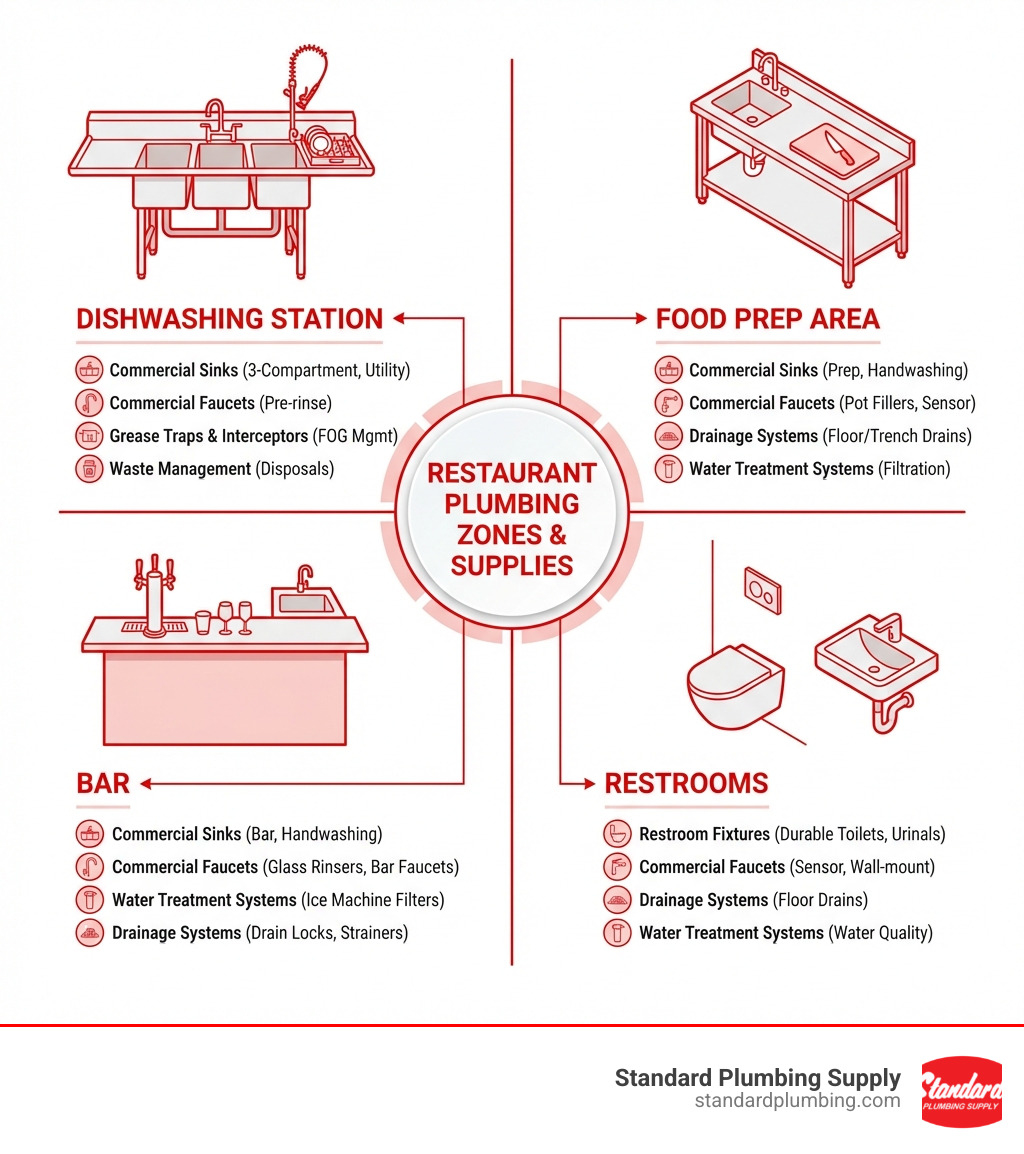
To help identify essential restaurant plumbing supplies, here’s a quick checklist of key categories:
- Commercial Sinks: Three-compartment, handwashing, utility, bar, and food service sinks.
- Commercial Faucets: Pre-rinse, wall-mount, deck-mount, pot fillers, and sensor faucets.
- Grease Traps & Interceptors: Crucial for managing fats, oils, and grease (FOG).
- Waste Management: Commercial garbage disposals or solids interceptors.
- Water Treatment Systems: For filtration, softening, and overall water quality.
- Drainage Systems: Floor drains, trench drains, strainers, and drain locks.
- Restroom Fixtures: Durable commercial toilets, urinals, and handwashing systems.
For additional background on how plumbing systems support commercial buildings in general, see plumbing.
I’m Jacob Reese, and as Vice President of Standard Plumbing Supply, I’ve seen the impact that quality restaurant plumbing supplies have on a business’s success and operational efficiency. My journey in the plumbing industry, starting from sweeping warehouses, has given me a deep understanding of what it takes to equip commercial kitchens for peak performance.
Restaurant plumbing supplies terms to know:
The Foundation: Commercial Sinks and Faucets
The heart of any commercial kitchen is its sinks and faucets. These specialized fixtures are essential for hygiene, health code compliance, and efficient workflow. Choosing the right commercial-grade sinks and faucets directly impacts your operations and costs.
Choosing the Right Commercial Sinks
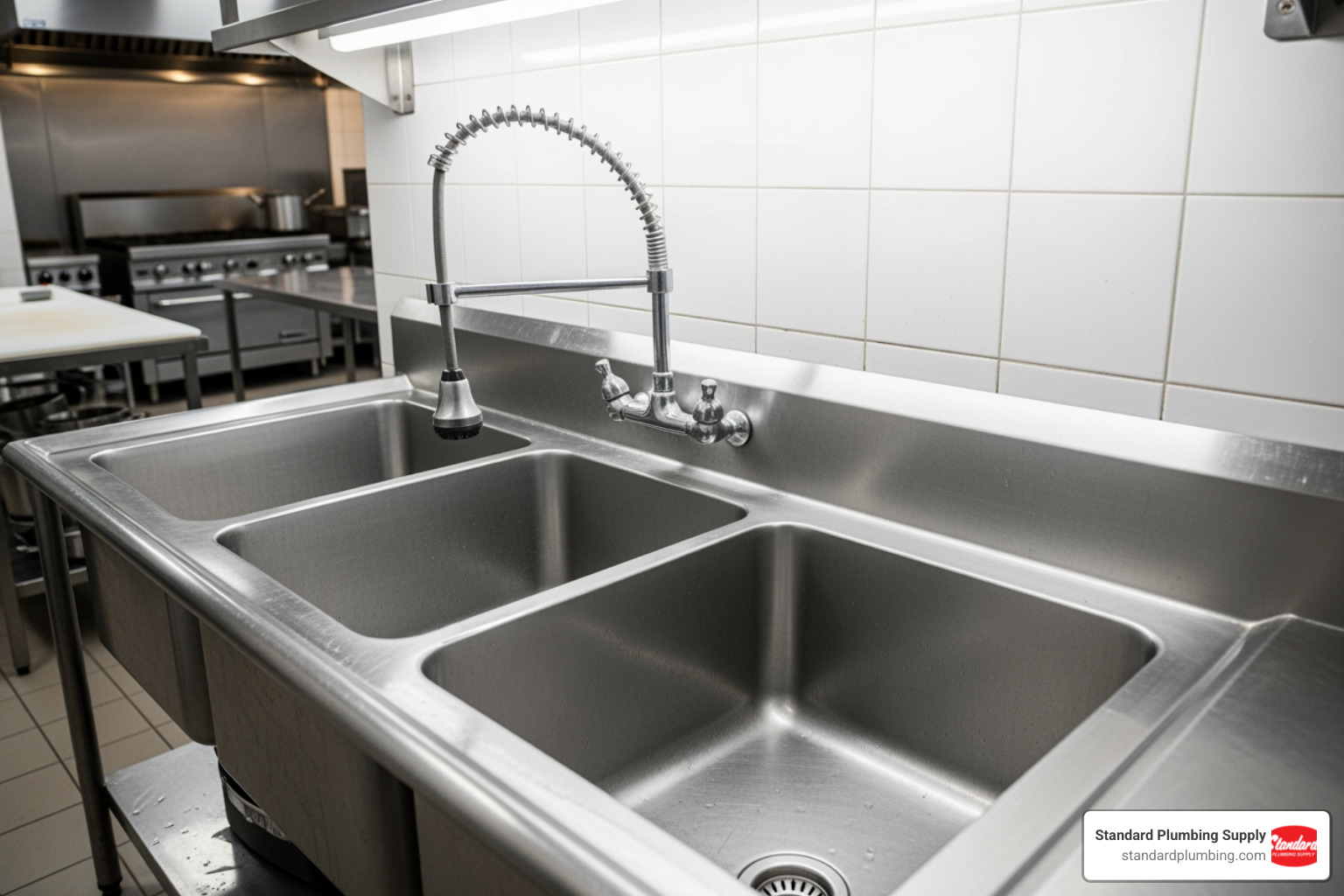
When it comes to restaurant plumbing supplies, commercial sinks are at the top of the list. Unlike residential models, they are built for heavy-duty use to withstand a busy kitchen’s demands and meet strict sanitation codes. We offer a wide variety of sinks essential for different functions within your establishment.
- Three-Compartment Sinks: A cornerstone of any commercial kitchen, these sinks facilitate the crucial wash-rinse-sanitize process mandated by health codes. This ensures all dishes and cookware are properly cleaned, preventing foodborne illnesses.
- Hand Washing Sinks: Dedicated handwashing sinks are non-negotiable for hygiene. Placed strategically in food prep areas and restrooms, they are critical for food safety and often feature touchless faucets to reduce contamination.
- Utility & Mop Sinks: Found in back-of-house areas, these robust fixtures are designed for heavy-duty cleaning tasks like filling mop buckets and washing large equipment.
- Bar Sinks: Essential for any bar area, these compact units are designed for quick glass rinsing, ice well drainage, and efficient drink preparation.
- Food Service Sinks: This category includes a wide array of sinks, such as prep sinks for washing vegetables or thawing meats, designed for specific food preparation tasks.
The material of choice for almost all commercial sinks is stainless steel. It offers unparalleled durability, resisting corrosion and stains. More importantly, it’s easy to clean and sanitize, making it ideal for meeting strict health department standards in locations across our service areas, from Phoenix to Las Vegas and Salt Lake City. When selecting sinks, consider the number of compartments, bowl depth, and drainboards to optimize workflow.
Here’s a comparison of common commercial sink types:
| Sink Type | Primary Use | Key Features | Common Locations |
|---|---|---|---|
| Three-Compartment Sink | Washing, rinsing, and sanitizing dishware | Multiple basins, often with drainboards, robust construction | Dishwashing area, main kitchen |
| Hand Washing Sink | Employee hand hygiene | Compact, often wall-mounted, sometimes touchless faucets | Food prep areas, restrooms, near cooking stations |
| Utility/Mop Sink | Heavy-duty cleaning, mop bucket filling | Deep basin, high splash guards, often floor-mounted | Janitorial closets, back-of-house, receiving areas |
| Bar Sink | Glass rinsing, ice drainage, beverage prep | Compact, often with ice bins or speed rails, integrated drainboards | Bar area, beverage stations |
| Food Service Prep Sink | Washing produce, thawing, general food preparation | Single or double basin, often larger than hand sinks, various configurations | Food preparation stations, butcher areas |
Selecting High-Performance Commercial Faucets
Complementing our selection of sinks are high-performance commercial faucets, another critical element of restaurant plumbing supplies. These fixtures are engineered for durability, efficiency, and hygiene, designed to withstand constant use far beyond what residential faucets could endure.
- Pre-Rinse Faucets: A workhorse in the dishwashing station, their high-pressure spray valves efficiently remove food debris from plates and pots before dishwashing. This saves time and reduces the load on dishwashers.
- Pot Fillers: Mounted above ranges, pot fillers eliminate the need to carry heavy, water-filled pots across the kitchen, significantly improving safety and workflow.
- Deck-Mount and Wall-Mount Faucets: Faucets can be mounted on the sink deck or the wall. Wall-mount faucets free up counter space and are often easier to clean around, improving sanitation.
- Touchless Sensor Faucets: A growing trend for hygiene, touchless faucets minimize contact, reducing the spread of germs. They also conserve water by running only when hands are detected, making them ideal for handwashing stations and restrooms in facilities across California and Oregon.
- GPM Flow Rates: Understanding a faucet’s Gallons Per Minute (GPM) is important. While pre-rinse units need higher GPM for cleaning, handwashing faucets can use lower, water-efficient GPMs to reduce water consumption and utility bills.
Commercial plumbing fixtures are designed with robust materials to ensure longevity and reliability, minimizing repairs and ensuring continuous operation in your busy kitchen.
Essential Restaurant Plumbing Supplies for Drainage and Waste Management
Managing waste effectively is a cornerstone of any successful restaurant. It’s not just about keeping the kitchen clean; it’s about preventing costly plumbing disasters, avoiding hefty fines, and maintaining a healthy environment. This section digs into the crucial role of grease traps, interceptors, and smart waste management solutions within your restaurant plumbing supplies.
The Critical Role of Grease Traps and Interceptors
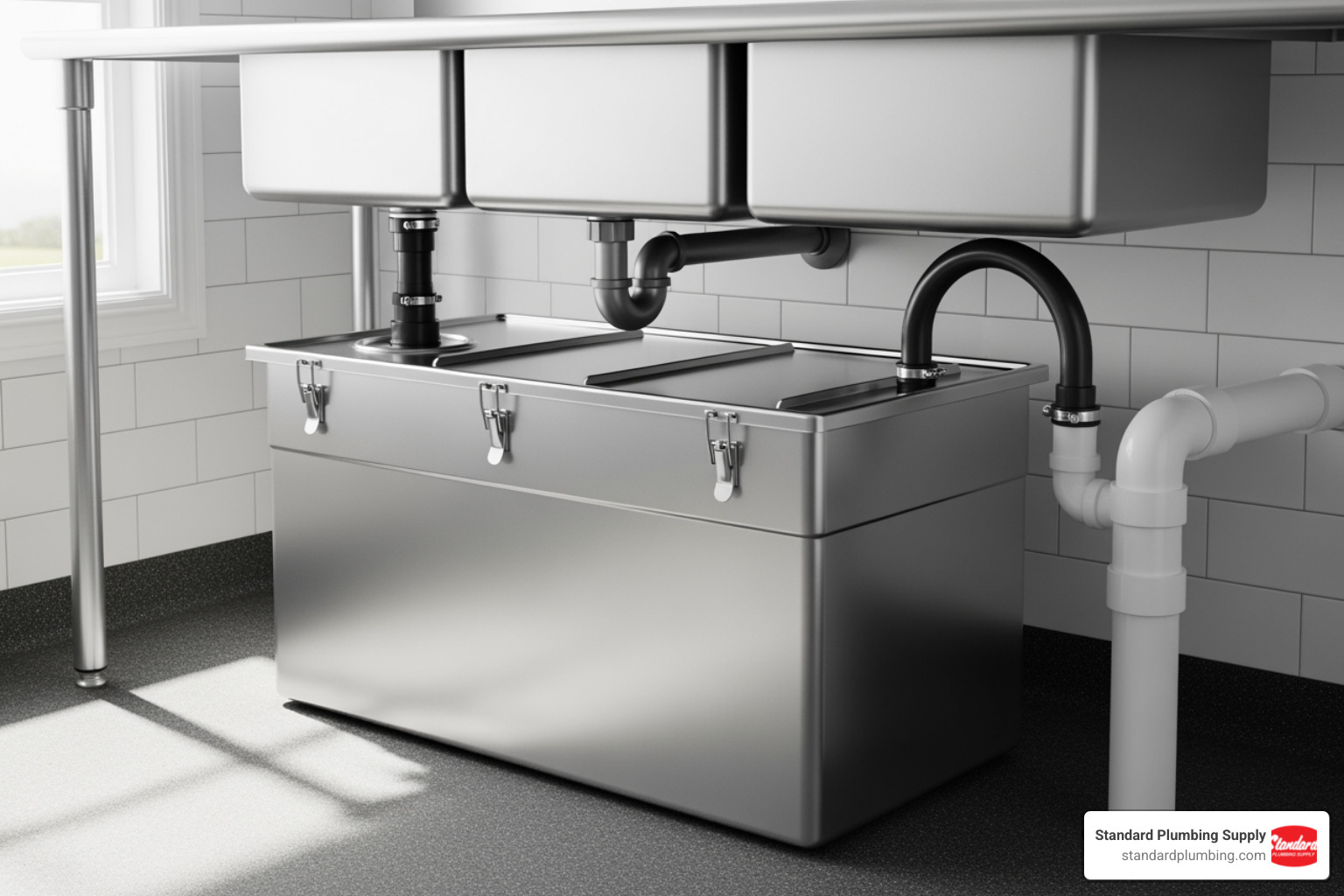
A vital component of restaurant plumbing supplies is the grease trap or interceptor. Fats, Oils, and Grease (FOG) are a restaurant’s plumbing nemesis. If FOG enters sewer lines, it solidifies and causes severe blockages, sewer backups, and expensive emergency repairs. This can also lead to substantial municipal fines, which are strictly enforced in all our service regions from Nevada to Idaho.
Grease traps are designed to intercept FOG before it enters the wastewater system. They slow the flow of warm wastewater, allowing FOG to cool, separate, and float to the top while solids settle at the bottom.
- Preventing Sewer Clogs: A grease trap’s primary job is to prevent FOG from damaging municipal sewer lines, which can cause widespread issues and lead to fines for non-compliant businesses.
- Avoiding Municipal Fines: Local regulations in places like Phoenix, Las Vegas, and Salt Lake City mandate the installation and regular maintenance of grease traps, with significant penalties for non-compliance.
- Health Code Compliance: A functioning grease trap helps prevent foul odors and pest infestations that can arise from FOG buildup, supporting overall sanitation.
- Manual Grease Traps: These smaller units are installed under sinks and require regular manual cleaning to remove accumulated FOG.
- Automatic Interceptors: Larger and more sophisticated, these are designed for high-volume kitchens and automatically separate and remove FOG, reducing maintenance labor.
- Sizing Considerations: Choosing the correct size of a grease trap is critical and depends on factors like seating capacity and the number of fixtures draining into it. An undersized trap will be inefficient. We help businesses determine the right size to meet their needs and local codes.
Managing Solids: Garbage Disposals vs. Solids Interceptors
Beyond FOG, solid food waste also challenges a restaurant’s plumbing. While commercial garbage disposals are a popular choice for eliminating food scraps, they can still contribute to drain clogs.
This is where solids interceptors come into play as a highly beneficial alternative or complement to traditional disposals.
- Commercial Garbage Disposals: These powerful units grind food waste into small particles to be flushed down the drain. However, they can still introduce a high load of organic matter into the plumbing, potentially leading to clogs or overwhelming grease traps.
- Solids Interceptors: These are designed as an under-the-sink garbage disposal replacement. They capture solid food waste before it enters the drain, preventing it from reaching the grease trap or main plumbing. This reduces the risk of clogs and improves the grease trap’s efficiency.
- Drain Strainers: A simple first line of defense, drain strainers prevent food, debris, and trash from entering your drains. They are available in various sizes and materials to fit all commercial sinks.
- Floor Sink Baskets: For floor drains in high-traffic kitchen areas, these baskets provide an additional layer of protection, catching larger debris.
- Drain Locks: To prevent staff from removing strainers or drain covers, drain locks are invaluable. These devices secure strainers in place, ensuring continuous protection against clogs.
By implementing a comprehensive strategy that includes robust strainers, floor sink baskets, and potentially solids interceptors, restaurants can significantly reduce their risk of drain clogs and improve the efficiency of their entire plumbing system.
Tips for effective drain protection in commercial kitchens:
- Install high-quality strainers in all sinks and floor drains.
- Use drain locks to secure strainers and covers, preventing tampering.
- Consider solids interceptors as an alternative or supplement to garbage disposals.
- Educate staff on proper waste disposal practices.
- Regularly inspect and clean all drain protection products.
Beyond the Basics: Water Quality and System Integrity
While visible fixtures like sinks and faucets are crucial, the unseen elements of your plumbing system—water quality management and the integrity of your drainage and gas lines—are equally vital. These components ensure health and safety, protect valuable equipment, and maintain smooth operations.
The Benefits of Water Treatment Systems
Water quality is critical in a restaurant, affecting everything from food taste to equipment longevity. Investing in water treatment systems is a smart business decision and a key part of your restaurant plumbing supplies.
- Protecting Equipment: Hard water contains minerals that cause scale buildup in expensive equipment like ice machines, dishwashers, and water heaters. This scale reduces efficiency, increases energy use, and shortens appliance lifespan, leading to costly repairs. Water softeners prevent this by removing these minerals.
- Preventing Scale Buildup: By preventing scale, water treatment systems ensure equipment operates at peak efficiency, reducing maintenance costs and avoiding unexpected breakdowns.
- Improving Beverage Taste: Filtered water is non-negotiable for quality beverages. Impurities and chlorine in tap water can negatively affect the taste of coffee, tea, and fountain drinks. Water filtration systems remove these elements for a consistent, high-quality product.
- Consistent Water Quality: Water treatment systems provide consistent water quality for food preparation, cooking, and cleaning, regardless of fluctuations in the municipal supply.
We offer a range of water treatment solutions, including water softeners and various filtration systems, to ensure your restaurant has access to clean, high-quality water that meets all your operational demands.
Essential Floor Drains and Gas Connectors
Beyond sinks and water treatment, the infrastructure beneath your feet and behind your walls plays a pivotal role in kitchen safety and efficiency. Floor drains and gas connectors are indispensable restaurant plumbing supplies that ensure smooth operations and adherence to safety standards.
- Floor Drains: In a busy kitchen, spills are inevitable. Floor drains, especially trench drains, are crucial for managing these liquids. They provide rapid water evacuation, which is vital for preventing slips and falls. Made from durable materials, these drains are designed to withstand extreme temperatures, harsh chemicals, and heavy traffic.
- Kitchen Safety: Quick removal of spilled liquids prevents hazardous slippery surfaces.
- Sanitation: Efficient drainage helps with thorough floor cleaning, preventing grime and bacteria buildup.
- Floor Sinks: Often integrated into the floor for direct drainage from equipment, we offer a wide selection of floor sinks and durable grates.
- Gas Connectors and Gas Hoses: For any restaurant with gas-powered cooking equipment, safe and reliable gas connectors and hoses are non-negotiable. These components connect your appliances to the gas supply line.
- Appliance Safety: High-quality, flexible gas connectors safely supply gas to appliances while allowing for movement during cleaning without compromising the line’s integrity.
- Compliance: Gas installations must adhere to strict local safety codes in all our service areas, from Wyoming to California. Using approved, durable gas connectors is fundamental to preventing gas leaks. We offer a comprehensive selection of products to ensure your kitchen’s safety and compliance.
Maintenance and Compliance: Protecting Your Investment
Investing in top-tier restaurant plumbing supplies is only half the battle. To protect that investment and avoid costly disruptions, a proactive approach to maintenance and compliance is essential. This final section explores key considerations for choosing fixtures, the benefits of proper maintenance, and innovations in commercial plumbing.
Key Considerations for Your Restaurant Plumbing Supplies
When outfitting a restaurant, choosing the right restaurant plumbing supplies impacts everything from daily operations to long-term profitability. Our experience suggests several key factors should guide your selection:
- Durability: Commercial environments demand robust solutions. Fixtures made from high-grade materials like stainless steel are crucial for resisting corrosion, impact, and harsh cleaning chemicals.
- NSF Certification: For any fixture that contacts food or water, NSF International certification is a gold standard, ensuring products meet strict public health and safety standards.
- Local Health Codes: Compliance with local health codes across our regions like Arizona, Utah, and California, is non-negotiable. This includes requirements for sinks, grease traps, and backflow prevention.
- Water Efficiency: Selecting water-efficient fixtures like low-flow faucets and pre-rinse units can lead to substantial savings on utility bills without compromising performance.
- Ease of Maintenance: Choosing fixtures that are easy to clean and repair will reduce labor costs and minimize downtime. Look for designs with easy access to components.
- Compatibility: Ensure all components of your plumbing system are compatible to streamline any future maintenance or upgrades.
By carefully considering these factors, you ensure your plumbing infrastructure is a strategic asset that supports your restaurant’s efficiency, hygiene, and financial health.
How Proper Plumbing Maintenance Prevents Downtime
In the food service world, unexpected plumbing issues can be catastrophic. Proper plumbing maintenance is an investment in your restaurant’s continuity and profitability.
- Preventative Maintenance Schedules: A regular, scheduled maintenance program is the best defense against plumbing emergencies. This includes routine inspections of all pipes, fixtures, and appliances.
- Grease Trap Cleaning: Regular cleaning, according to manufacturer and local regulations, prevents FOG buildup that can lead to overflows and fines.
- Leak Detection: Regular checks for drips or damp spots can catch small leaks early, preventing significant water damage, mold growth, and high water bills.
- Drain Cleaning: Proactive drain cleaning prevents the gradual accumulation of food and grease that lead to clogs. Using quality drain protection products can significantly reduce the need for professional drain cleaning.
- ROI of Maintenance: While maintenance has costs, the return on investment (ROI) is substantial. It dramatically reduces the likelihood of costly emergency repairs and extends the lifespan of your equipment. This proactive approach helps facilities reduce emergency service calls and maintenance expenses.
By embracing preventative plumbing maintenance, restaurants can avoid the financial setbacks associated with plumbing failures and ensure smooth operations.
Innovations in Commercial Restaurant Plumbing Supplies
The plumbing industry is constantly evolving, driven by demands for greater efficiency, hygiene, and sustainability. Staying abreast of these trends can offer significant advantages.
- Touchless Technology: Beyond faucets, sensor-activated soap dispensers, paper towel dispensers, and flush valves are becoming standard, enhancing hygiene in high-traffic areas.
- Water-Saving Fixtures: Advancements in low-flow fixtures continue, including ultra-low flush toilets and urinals that use significantly less water, offering substantial savings in areas like California and Nevada.
- Smart Monitoring Systems: The Internet of Things (IoT) is making its way into commercial plumbing. Smart systems can track water usage, detect leaks in real-time, and monitor grease trap levels, allowing for proactive management.
- Advanced Interceptor Designs: Grease and solids interceptors are becoming more efficient and easier to maintain, with improved separation capabilities and longer cleaning intervals.
- Sustainable Materials: There is a growing trend toward using more sustainable and recycled materials in the manufacturing of plumbing supplies.
These innovations contribute to a more efficient and hygienic operation and align with growing consumer expectations for environmentally responsible businesses.
Conclusion
The intricate network of restaurant plumbing supplies forms the critical, often unseen, backbone of any successful food service establishment. From the robust stainless steel sinks and high-performance faucets that ensure daily sanitation, to the essential grease traps and water treatment systems that protect your investment and maintain health standards, every component plays a vital role.
We’ve explored how carefully chosen sinks and faucets facilitate efficient operations and strict hygiene, how effective waste management prevents costly disruptions and fines, and how water quality systems safeguard equipment and improve your product. We’ve also highlighted the paramount importance of preventative maintenance in averting downtime and embracing innovations that drive efficiency and sustainability.
Investing in the right restaurant plumbing supplies isn’t merely an expense; it’s a strategic investment in your restaurant’s sanitation, operational efficiency, compliance, and long-term success. A well-equipped and properly maintained plumbing system ensures not only the smooth running of your kitchen but also the health and safety of your customers and staff.
At Standard Plumbing Supply, we are committed to providing the highest quality restaurant plumbing supplies and expert guidance to help your business thrive. Our extensive inventory and knowledgeable team are ready to assist you in selecting the perfect solutions custom to your unique needs, ensuring your restaurant’s plumbing infrastructure is robust, compliant, and ready for anything.
