
Understanding the hot water filter: How It Differs from Standard Systems
When most people think of water filtration, they picture the pitcher in their fridge or the carbon block under their sink. However, trying to run 140°F water through a standard plastic filter housing is a recipe for a flooded kitchen. A true hot water filter is engineered differently from the ground up to handle the unique thermal stresses of heated water.
Standard filter housings are typically made of reinforced polypropylene, which is great for cold water but softens and expands when exposed to high heat. This expansion can lead to “stress cracking” over time, which is why a dedicated hot water housing is non-negotiable. In contrast, specialized hot water systems utilize materials like reinforced polyamide or high-grade stainless steel. For example, high-quality units like the KleenWater KWHW2510 are rated for a maximum temperature of 176°F and can handle pressures up to 116 PSI, providing a safety margin that standard housings simply cannot match.
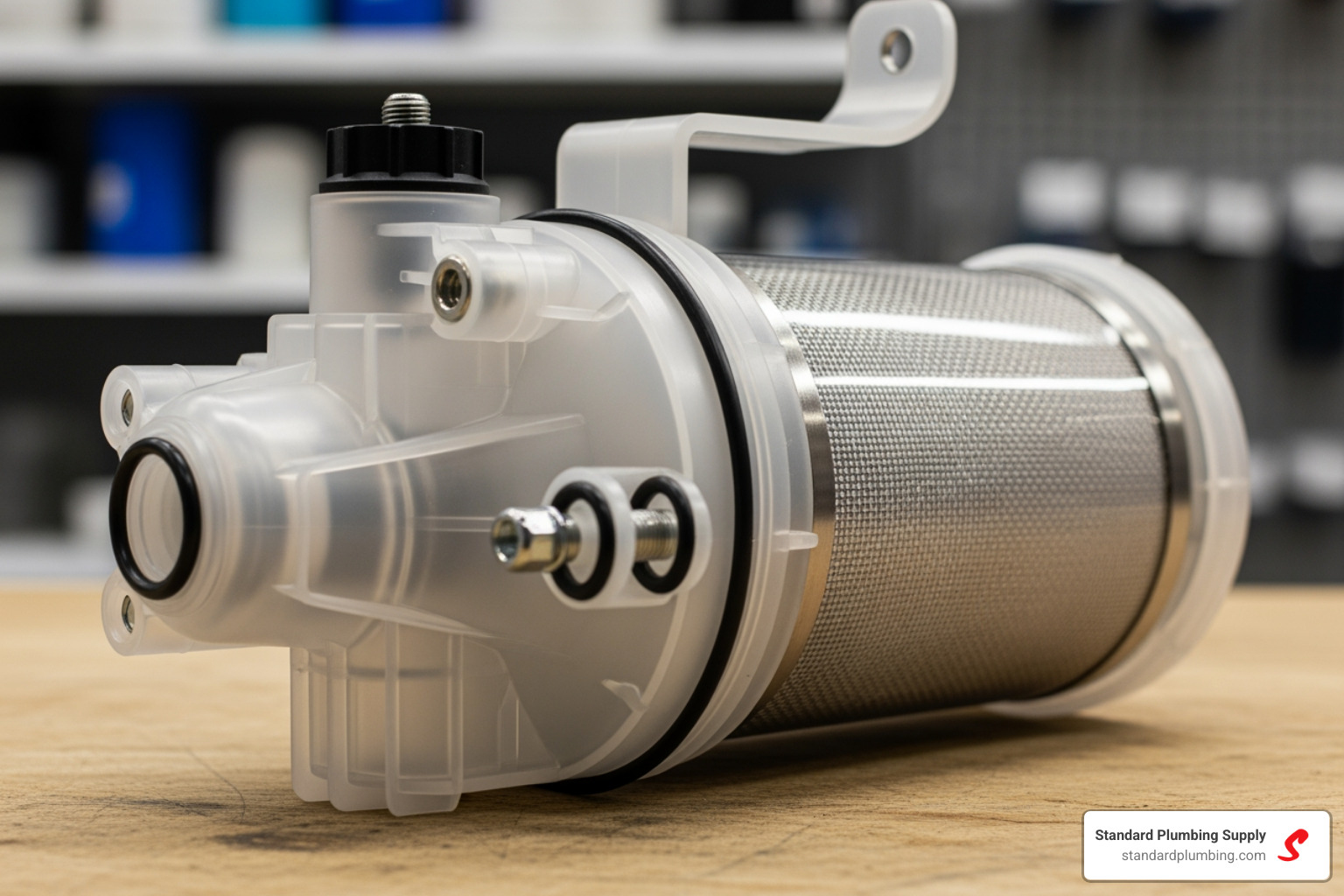
Beyond the “shell,” the internal components must be heat-resistant as well. Standard rubber O-rings can become brittle and crack under constant thermal stress, leading to slow drips or sudden leaks. Hot water systems use specialized gaskets and “string wound” cartridges or stainless steel mesh that won’t melt or lose structural integrity when the temperature spikes.
Certifications are another major differentiator. You should look for NSF 42 (which covers aesthetic effects like chlorine and taste) and NSF 53 (which covers health effects like lead and cyst reduction). While many cold filters have these, finding a filter that maintains these standards at high temperatures is the hallmark of a professional-grade hot water filter.
Why Your Home Needs a Dedicated Hot Water Filtration System
You might be wondering, “If I’m not drinking the hot water, why do I need to filter it?” The answer lies in your plumbing’s longevity and the quality of your household chores.
First, let’s talk about your appliances. Dishwashers and washing machines are expensive investments. Sediment and grit in your hot water lines act like sandpaper on internal valves, pumps, and seals. By installing a hot water filter, you provide a “security guard” that catches dirt and rust before it can clog your dishwasher’s spray arms or damage the delicate solenoid valves in your washing machine.

Scale prevention is perhaps the biggest “hidden” benefit. When water is heated, minerals like calcium and magnesium “fall out” of the liquid and stick to heating elements. This creates a crusty layer of scale. Just a small amount of scale can reduce the energy efficiency of your water heater by over 20% because the element has to heat the rock before it can heat the water. Using a nuvo heater cleaner in conjunction with a dedicated filter helps keep those elements shiny and efficient, extending the life of your water heater by years.
Types of Hot Water Purifiers and Filtration Technologies
Choosing the right technology depends on what you are trying to remove. Not all filters are created equal, and selecting the wrong media can lead to premature failure or poor water quality.
- Carbon Block: Excellent for removing chlorine (often up to 97.5% reduction, depending on the cartridge and test conditions), odors, and many organic chemicals. These are common in under-sink and point-of-use systems where taste and odor are priorities.
- String Wound Cartridges: These are the workhorses for sediment. They look like a spool of yarn and are designed to trap dirt, rust, and sand at high temperatures without restricting flow.
- Reverse Osmosis (RO): While traditionally a cold-water technology, some modern “hot and cold” dispensers filter water cold and then heat it on demand. This is ideal for reducing many dissolved contaminants (like certain heavy metals and TDS) when properly specified and maintained.
- UV Sterilization: Uses ultraviolet light to disrupt the DNA of bacteria and viruses, making them harmless. This is often a final stage in premium purifiers to support biological safety.
- SCMT (Silver Charged Membrane Technology): A newer approach used in some systems to help reduce the risk of microbial re-contamination after filtration, especially where water is stored.
| Technology | Best For… | Temperature Tolerance |
|---|---|---|
| Carbon Block | Taste, Odor, Chlorine | Moderate (Check Rating) |
| String Wound | Sediment, Rust, Dirt | High (Up to 176°F) |
| Reverse Osmosis | Heavy Metals, TDS | Low (Heats after filtration) |
| UV Lamp | Bacteria, Viruses | High |
For those using dedicated dispensers, keeping insinkerator replacement filters on hand helps ensure your tea and coffee taste like the beans or leaves, not the pipes.
Selecting a hot water filter for high TDS and borewell sources
If your water comes from a borewell or a tanker supply, you likely deal with high Total Dissolved Solids (TDS) – sometimes as high as 3000 ppm. This water is “heavy” with minerals and can be quite aggressive on plumbing. In these cases, a properly sized multi-stage setup is often necessary, starting with sediment removal and then adding media matched to your specific water report. For one option, see the filtration system f9800 details.
Key features of a premium hot water filter
When shopping for a system, look for these “quality of life” features:
- Child Safety Locks: Essential for instant-hot dispensers to help prevent accidental burns from high-temperature output.
- 5-Star Water Saving: Look for systems certified for efficiency, such as those rated by IAPMO, which minimize the “waste water” produced during the filtration process.
- Smart LED Indicators: These take the guesswork out of maintenance by flashing when it’s time for a cartridge change.
- Stainless Steel Tanks: Far superior to plastic for holding hot water; they are more hygienic, durable, and resistant to corrosion.
Installation and Maintenance: Keeping Your Lines Clear
Installing a hot water filter is a straightforward task for a DIYer or a pro, but it must be done correctly to avoid leaks. Most systems are installed “under-sink” or “inline” right before the appliance they are protecting, such as a dishwasher or an instant-hot water dispenser.
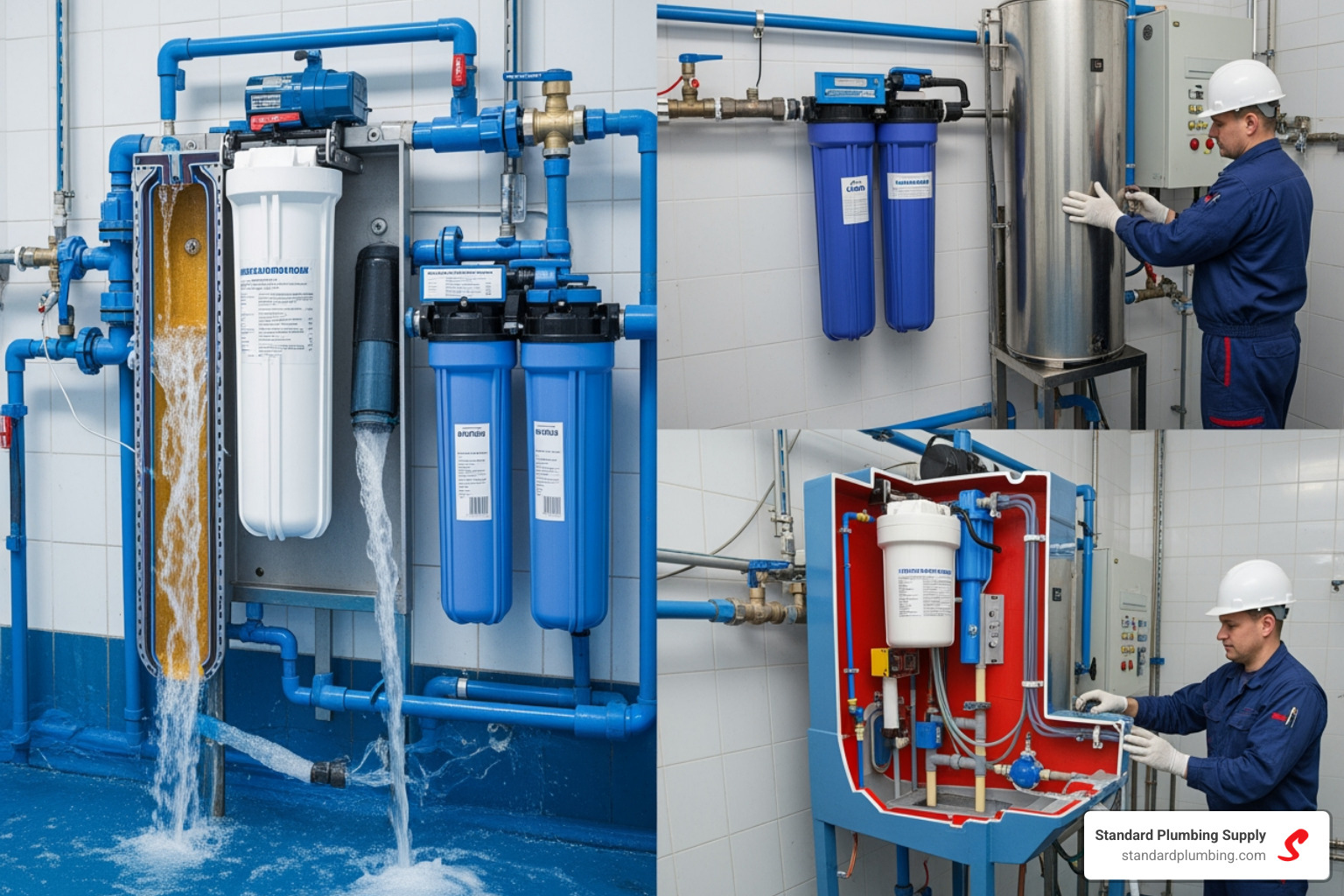
Maintenance is the most important part of owning a filter. A clogged filter is worse than no filter because it can restrict flow and become a breeding ground for bacteria.
- Replacement Schedule: Many point-of-use cartridges are commonly replaced on a 6-month interval (or earlier in high-sediment areas). Always follow the capacity and schedule listed for your specific cartridge.
- Twist-and-Lock Design: Modern systems often feature heads that automatically shut off the water when you unscrew the filter, making changes tool-free and dry.
- Monitor Pressure: Consider installing a simple pressure gauge inline. If you see a significant drop in pressure when the hot water is running, your filter may be loaded with sediment and due for replacement.
- System Flushing: After installing a new cartridge, run the hot water for two to three minutes. This removes any loose carbon fines or air pockets from the new media.
For specialized needs, like high-sediment areas, using a 1-50 mesh stainless steel filter as a pre-filter can help extend the life of finer downstream filters. If you are dealing with “orange water,” ensure you have the right nuvo iron filter replacement to keep those stains off your fixtures.
Frequently Asked Questions about Hot Water Filtration
Can I use a standard cold water filter for hot water lines?
Absolutely not. Standard blue or clear plastic housings are usually rated only up to 100°F. Hot water from a heater is typically 120°F to 140°F. Using a cold-water housing will cause the plastic to fail, potentially leading to a catastrophic burst and significant water damage to your home. Always verify the “Max Temp” rating on the housing before installation.
How often should I replace my hot water filter cartridge?
While 6 months is the industry standard, your “mileage may vary” depending on your water quality. If you notice your hot water flow slowing down at the faucet, or if your “instant hot” tank starts making a rumbling noise, it’s time to change the filter. High-sediment areas may require changes every 3 months to maintain optimal flow.
Do hot water filters reduce scale in my water heater?
Standard sediment filters do not remove dissolved minerals, but many hot water filter systems include “Scale Inhibitors.” These cartridges release a small amount of food-grade polyphosphate into the water, which coats the minerals so they can’t “stick” to your heater’s elements or your pipes. This is one of the best ways to protect a tankless water heater.
Can I install a hot water filter myself?
Yes, most inline and under-sink systems are designed for DIY installation. They typically use standard NPT threaded connections or push-to-connect fittings. However, if you are uncomfortable working with your home’s main plumbing lines or if you need to modify copper piping, we recommend contacting a professional plumber to ensure the system is leak-proof and up to local building codes.
Conclusion
At Standard Plumbing Supply, we’ve spent decades helping homeowners and pros across the West—from the sunny streets of Phoenix and Mesa to the mountains of Salt Lake and Park City—find the right solutions for their plumbing challenges. Whether you’re trying to protect a high-end dishwasher in Sacramento or just want a better-tasting cup of tea in Boise, a hot water filter is a smart, cost-effective upgrade.
Don’t let sediment and scale dictate the lifespan of your appliances. You can explore our full range of plumbing cleaners and filtration supplies online or visit one of our many locations across Arizona, California, Colorado, Idaho, Nebraska, Nevada, Oregon, Utah, and Wyoming. With our expertise and professional-grade supplies, we’ll help you keep your hot water running clear and your system running strong. Use our store locator to find the nearest SPS branch and let’s get your project started!
