
Why Bathroom Vanity Supply Matters for Your Next Renovation
Bathroom vanity supply is one of the most important decisions you’ll make when renovating your bathroom. Whether you’re a contractor sourcing for a client or a homeowner tackling a DIY remodel, the right vanity transforms both the function and feel of the space.
Quick Guide to Sourcing Bathroom Vanities:
- Types: Freestanding, wall-mounted (floating), corner, and double-basin configurations
- Sizes: Standard widths range from 24″ to 72″, with 30″, 36″, and 48″ being most popular
- Materials: Solid wood, engineered wood (plywood/MDF), with tops in granite, quartz, marble, or cultured marble
- Price Range: $100 for basic models up to $4,000+ for custom high-end units
- Configuration Options: With or without tops, single or double sinks, integrated or separate sink styles
The bathroom vanity market is growing fast—projected to expand by $1.5 billion by 2027 with a 4.5% annual growth rate. This growth is driven by homeowners realizing what renovation experts have known for years: a new vanity can completely refresh a bathroom without the cost and hassle of a full demolition.
A quality vanity provides critical storage, hides plumbing, adds counter space, and serves as the room’s visual centerpiece.
Online shopping has made bathroom vanity supply more accessible than ever, but the sheer number of options can be overwhelming. Understanding what you need before you start shopping saves time, money, and frustration.
I’m Jacob Reese, Vice President of Standard Plumbing Supply. With nearly two decades of experience helping contractors and homeowners source the right bathroom vanity supply, I’ve seen what works—and what doesn’t—when it comes to selecting vanities that last.
Decoding Vanity Types and Styles
When you begin your search for the perfect bathroom vanity supply, one of the first things you’ll encounter is the sheer variety of vanity types. Each type offers distinct advantages in terms of aesthetics, functionality, and space utilization. Understanding these differences is crucial for making an informed choice that suits your bathroom’s layout and your personal needs.
Let’s explore the main categories:
Freestanding Vanities: The most common type, freestanding vanities resemble furniture and sit on the floor. They are generally easier to install than wall-mounted options, don’t require wall reinforcement, and offer ample storage. A robust choice for any bathroom size, they are a staple of our bathroom vanity supply.
Wall-Mounted (Floating) Vanities: For a sleek, modern look, wall-mounted vanities are affixed to the wall, leaving the floor open. This creates an illusion of space and makes cleaning easier. Installation is more complex and may require wall reinforcement to support the vanity’s weight. They are popular in contemporary designs and smaller bathrooms.
Corner Vanities: Ideal for small bathrooms or powder rooms, corner vanities fit snugly into a corner to maximize functionality in compact layouts. While they offer less counter and storage space, they make efficient use of an often-underused area.
Double-Basin Vanities: Perfect for master or shared bathrooms, double-basin vanities feature two sinks, allowing two people to get ready at once. This makes morning routines smoother but requires more space, typically 60 inches or more. Our bathroom vanity supply includes many double-basin options for busy households in places like Salt Lake City, Las Vegas, and Phoenix.
Popular Styles to Match Your Decor
Beyond the basic type, the style of your vanity plays a huge role in defining your bathroom’s overall aesthetic. With so many options available in bathroom vanity supply, you can find a look that perfectly complements your home’s decor.
Here are some of the most popular styles we see:
- Modern: Characterized by clean lines, minimalist designs, smooth surfaces, and often a floating installation. Modern vanities frequently feature sleek hardware, geometric shapes, and neutral colors like white, gray, or black.
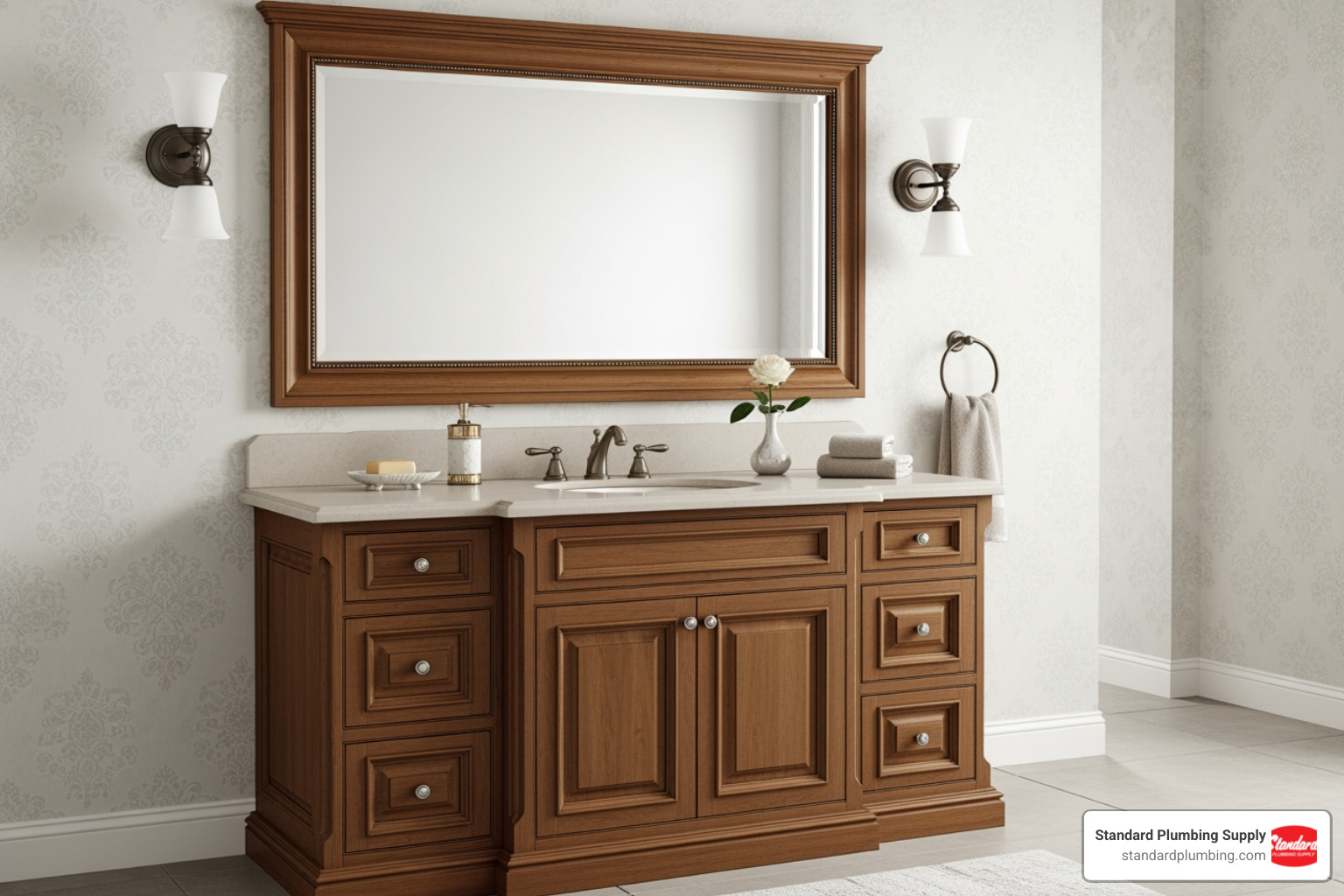
- Traditional: Features classic elements like raised panel doors, decorative moldings, and a furniture-like appearance. Often found in rich wood tones or classic painted finishes, they evoke timeless elegance.
- Farmhouse: Inspired by rustic charm, farmhouse vanities often feature distressed wood finishes, barn door elements, open shelving, and sometimes a trough-style sink. They blend functionality with a cozy, lived-in feel.
- Rustic: Similar to farmhouse but leaning more towards natural, rugged materials. Rustic vanities might incorporate reclaimed wood, rough-hewn textures, and earth-toned finishes, ideal for homes in scenic areas like Jackson or Sun Valley.
- Transitional: This style bridges the gap between traditional and modern, combining classic comfort with contemporary clean lines. It often features simple door styles and a sophisticated, adaptable aesthetic.
- Coastal: Evokes a serene, breezy feel with light, airy colors (whites, blues, grays), natural wood finishes, and beadboard paneling. They create a refreshing, beachy atmosphere.
- Industrial: Draws inspiration from urban lofts, incorporating raw materials like metal, concrete-look tops, and exposed piping for an edgy, functional aesthetic.
Choosing the Right Materials for Durability and Style
When selecting your bathroom vanity supply, the materials used are paramount. They dictate not only the vanity’s aesthetic appeal but also its durability, resistance to moisture, and overall longevity in a humid bathroom environment. A beautiful vanity made from unsuitable materials will quickly show its age, so choosing wisely is a smart investment.
Material choice is about more than looks; it’s about durability against daily use, splashes, and humidity. In any bathroom, materials must resist warping, swelling, and mold. This is crucial in varied climates like those in Boise, Las Vegas, and Phoenix.
Solid Wood vs. Engineered Wood
The core structure of your vanity cabinet is typically made from either solid wood or various forms of engineered wood. Each has its own set of characteristics:
| Material | Durability | Cost | Moisture Resistance | Appearance | Maintenance |
|---|---|---|---|---|---|
| Solid Wood | Excellent, very strong, can last for decades. | Higher, reflects quality and craftsmanship. | Good, if properly sealed and finished. Can warp if unsealed. | Natural grain, rich texture, unique variations. Can be stained or painted. | Requires regular cleaning and occasional re-sealing/finishing. |
| Plywood | Very good, stable, resistant to warping and cracking. | Mid-range. | Excellent, especially marine-grade or water-resistant plywood. | Smooth surface, often veneered or painted. | Easy to clean, durable finish. |
| MDF (Medium-Density Fiberboard) | Fair to good, can be sturdy but less impact resistant than wood. | Lower, economical option. | Poor to fair, highly susceptible to swelling and damage from moisture if not properly sealed. | Smooth, consistent surface, ideal for painted finishes. | Easy to clean, but must protect from water. |
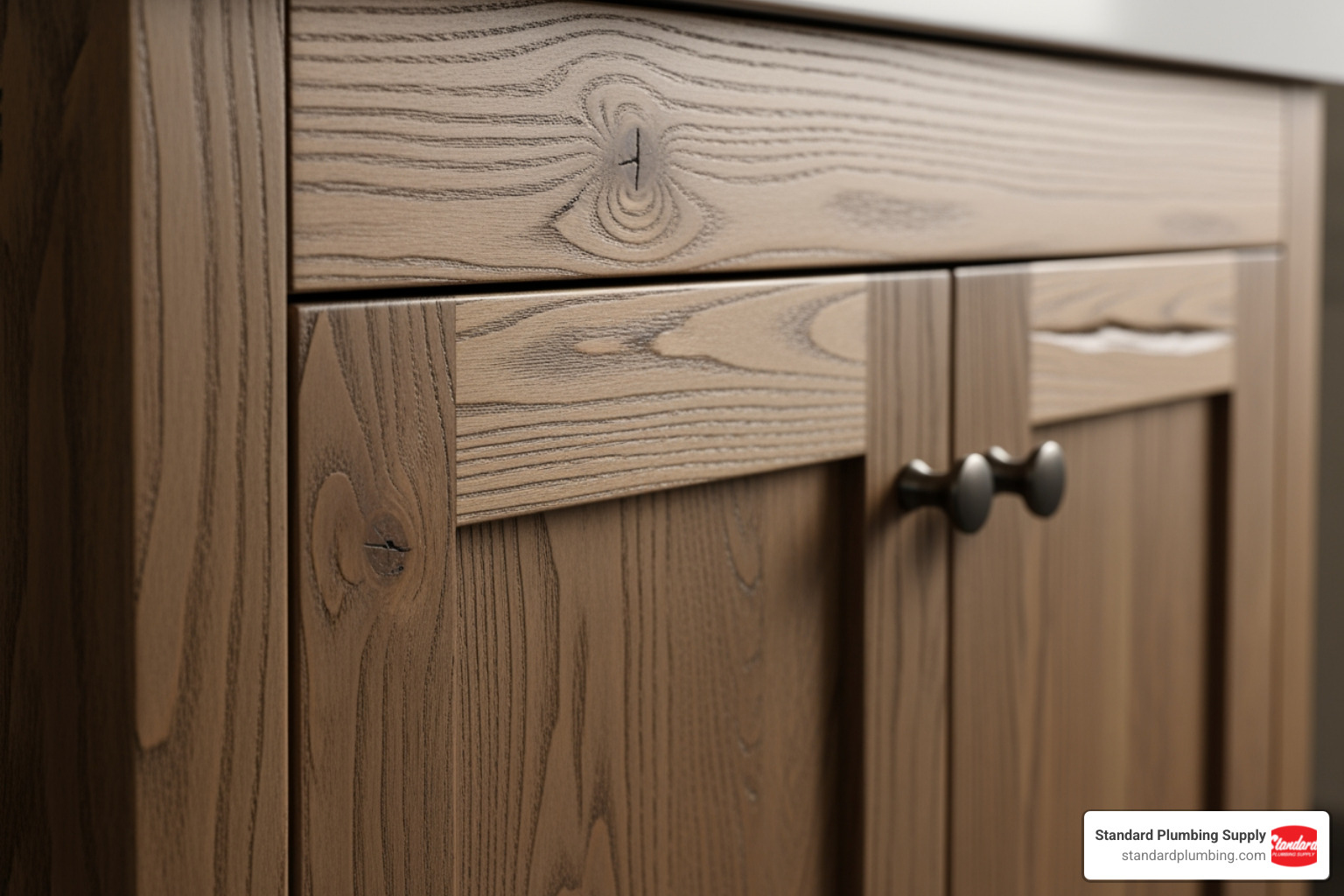
Solid wood vanities are popular for their durability and natural elegance. They offer a premium feel and lasting quality but require proper sealing to protect against moisture.
Engineered wood like plywood offers excellent stability and moisture resistance, making it great for painted or veneered cabinets. MDF is a budget-friendly option with a smooth surface for paint, but it’s highly vulnerable to water damage and must be thoroughly sealed.
Countertop and Sink Materials
The vanity top and sink need to be both beautiful and highly functional.
Countertop Materials:
- Granite: A durable natural stone with unique patterns. It’s heat and scratch-resistant but requires periodic sealing to prevent stains.
- Quartz: An engineered stone that’s non-porous, stain-resistant, and requires no sealing. It offers a consistent look in a wide range of colors.
- Marble: A luxurious natural stone known for its veining. It’s softer than granite and more prone to scratches, requiring regular sealing.
- Cultured Marble: A non-porous, durable, and budget-friendly engineered product that can be molded with an integrated sink.
- Ceramic: A classic, durable, and easy-to-clean choice often used for integrated sink/countertop units.
Sink Materials:
- Vitreous China: A durable, non-porous ceramic with a glass-like enamel coating. It’s the most common material for bathroom sinks.
- Fireclay: Fired at high temperatures, this material is even more durable and chip-resistant than vitreous china.
- Integrated Sinks: Molded as part of the countertop for a seamless look and easy cleaning.
Choosing the right materials from our bathroom vanity supply ensures your vanity will be both stunning and durable for years to come.
Sizing, Sinks, and Tops: Getting the Configuration Right
The right size and configuration of your vanity are critical for both functionality and flow in your bathroom. An oversized vanity can block doors and create a cramped space. This section will guide you through choosing the perfect fit from our bathroom vanity supply.
Choosing the Right Size Vanity for Your Bathroom Space
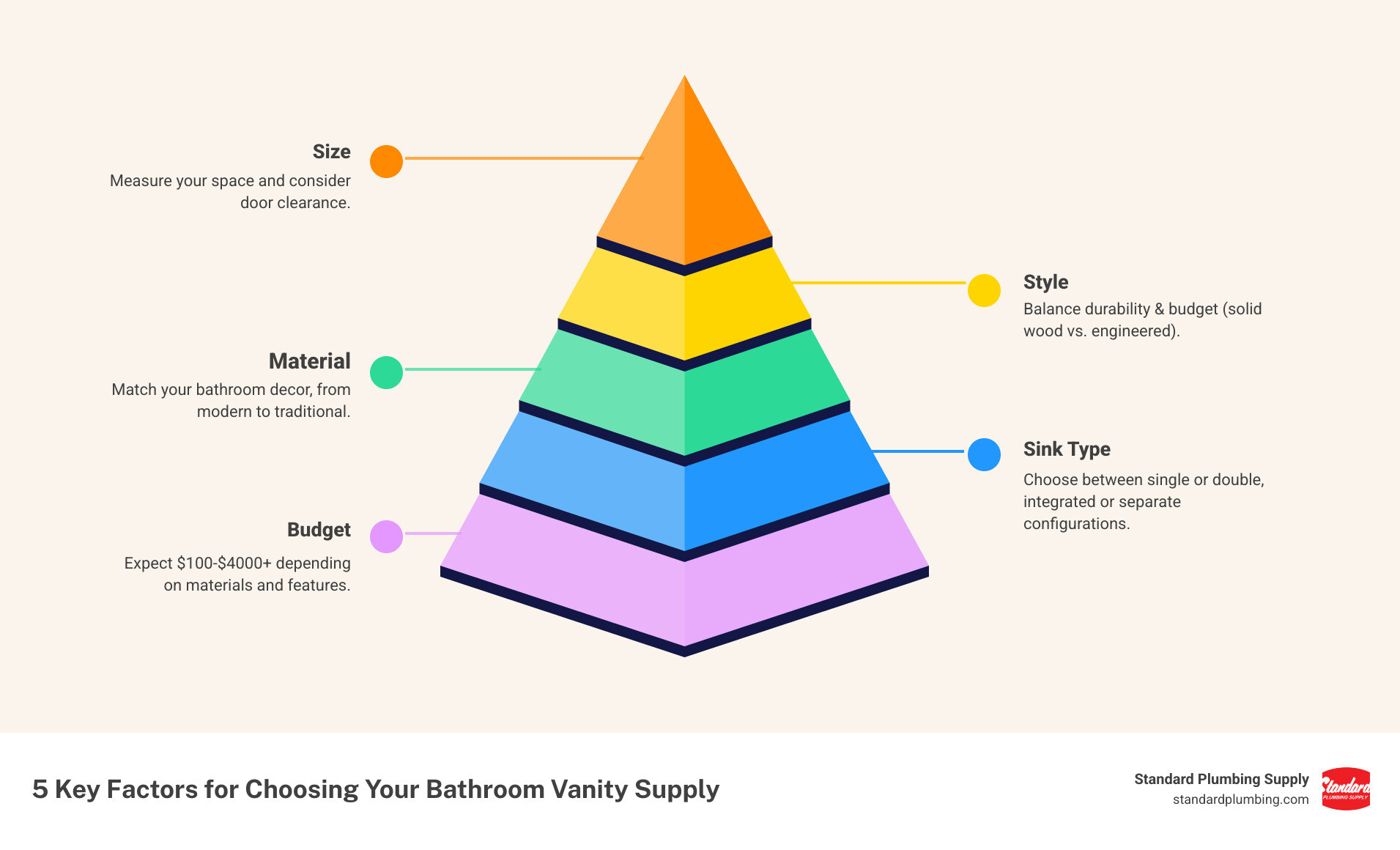
Before browsing our bathroom vanity supply, accurately measure your space. This is a comprehensive assessment, not just a width measurement:
- Width: Measure the available wall space, leaving a few inches of clearance on either side if the vanity is near a wall or another fixture.
- Depth: Standard depths are 18-22 inches. Ensure the vanity doesn’t protrude too far, obstructing movement or making the room feel cramped.
- Height: Standard heights range from 30 to 36 inches. Taller “comfort height” vanities (34-36 inches) are more ergonomic for adults.
- Door Swing Clearance: Ensure cabinet doors and drawers can open fully without hitting walls or fixtures—a common oversight.
- Plumbing Location: Note your existing water supply and drain locations. Major plumbing relocation can add significant cost and complexity.
Standard vanity sizes are designed to fit most layouts. Popular widths from our bathroom vanity supply include:
- 24-inch vanities: Perfect for small powder rooms.
- 30-inch vanities: A common size for guest bathrooms.
- 36-inch vanities: Offers more counter space for standard bathrooms.
- 48-inch vanities: A good choice for larger single-sink bathrooms.
- 60-inch vanities: Often used for double-sink configurations.
- 72-inch vanities: Ideal for spacious double-sink master baths.
Our bathroom vanity supply also includes sizes ranging from 12 inches up to 122 inches for every unique space.
Single vs. Double Sinks
The choice depends on your bathroom’s size and who uses it.
- Single Sinks: Versatile for most bathroom sizes, single sinks conserve counter space. This is ideal for smaller bathrooms or for maximizing counter area in a master bath.
- Double Sinks: A game-changer for shared bathrooms, double sinks allow two people to get ready at once. They require a wider vanity (typically 60+ inches) and are a popular feature in homes we serve in areas like Sacramento, San Diego, and Salt Lake City.
You’ll also choose between integrated sinks (molded into the countertop for a seamless look) or separate sinks, which offer more design flexibility:
- Undermount Sinks: Installed beneath the countertop for a smooth, easy-to-clean surface.
- Vessel Sinks: A stylish bowl that sits on top of the counter, but may reduce usable counter space.
Vanity With or Without a Top?
This decision impacts both cost and customization.
- Vanity with a Top (All-in-One Sets): These sets come with a cabinet, countertop, and often an integrated sink. They are convenient, save time, and ensure compatibility, making them great for a straightforward installation.
- Vanity Without a Top (Cabinet-Only Units): This option provides maximum customization. Pair your chosen cabinet with any countertop and sink style for a personalized look. You will also need to select a compatible faucet and consider adding a backsplash and side splash for water protection.
Key Features and Cost Factors for Your Bathroom Vanity Supply
Beyond the basic type, size, and material, the smaller details and overall cost can significantly influence your final decision when selecting from our bathroom vanity supply. These elements contribute to both the daily user experience and the long-term value of your investment.
Storage Solutions
A vanity is a vital storage hub. Thoughtful solutions keep your bathroom tidy:
- Drawers: Deep, full-extension drawers are excellent for organizing toiletries. Look for options with adjustable dividers or built-in organizers.
- Shelves: Cabinet shelving provides space for larger items like towels. Adjustable shelves offer more flexibility.
- Cabinet Doors: These conceal plumbing and provide discreet storage. Consider soft-close hinges to prevent slamming.
- Open Shelving: Some vanities feature open shelving, perfect for displaying decorative items. This stylish option requires keeping things tidy.
Features That Improve Functionality
Modern vanities often come with features that significantly improve daily use:
- Soft-Close Drawers and Hinges: A highly sought-after feature, soft-close mechanisms prevent slamming, reducing noise and wear. This small luxury extends the vanity’s life, making it a worthwhile investment.
- Power Outlets: Some vanities include integrated power outlets inside drawers, perfect for charging devices and keeping cords out of sight.
- Tilt-Out Drawers: These narrow top drawers are great for small items like makeup or jewelry.
- Adjustable Levelers: These ensure your vanity sits perfectly level on uneven floors for a professional finish.
Finding the Right Bathroom Vanity Supply for Your Budget
Vanity prices range from under $100 to over $4,000 for custom options. The price varies significantly across our locations in Arizona, California, and beyond. Understanding cost factors helps you manage your budget:
- Material: Solid wood is generally more expensive than engineered wood. Natural stone tops cost more than cultured marble.
- Size: Larger vanities, especially double-sink models, are more expensive.
- Brand: Premium brands often use higher-quality materials and construction.
- Features: Soft-close hardware, integrated power, and specialized storage increase the price.
- Configuration: All-in-one sets can be more cost-effective than buying components separately.
Maintaining Your Bathroom Vanity Supply for Longevity
Proper care is key to protecting your investment and keeping your vanity looking new for years.
- Regular Cleaning: Wipe surfaces regularly with a soft, damp cloth and mild, non-abrasive cleaner for tougher grime. Rinse and dry immediately to prevent water damage.
- Material-Specific Care:
- Wood Vanities: Use wood-specific cleaners and promptly wipe up spills.
- Natural Stone Countertops (Granite, Marble): Use pH-neutral stone cleaners and reseal periodically (every 6-12 months).
- Quartz Countertops: Mild soap and water are usually sufficient.
- Ceramic/Vitreous China Sinks: Standard bathroom cleaners are fine, but avoid abrasive scrubbers.
- Protecting from Moisture:
- Always wipe up water splashes immediately.
- Ensure your bathroom has adequate ventilation to reduce humidity.
- Use a tray under soap dispensers to catch drips.
- Check plumbing periodically for leaks.
- Avoiding Harsh Chemicals: Harsh or abrasive cleaners can damage finishes, etch stone, or degrade sealants. Always read labels and test in an inconspicuous area first.
Following these tips will keep your vanity beautiful and functional for years to come.
Frequently Asked Questions about Bathroom Vanities
We often hear similar questions from our customers about bathroom vanity supply. Here, we’ll address some of the most common inquiries to help clarify your choices.
What’s the difference between a sink and a vanity?
Think of it this way:
- A sink is the basin for washing.
- A vanity is the cabinet structure that supports the sink. It provides counter space, conceals plumbing, and offers storage.
While the sink is the functional washing component, the vanity is the furniture piece that integrates it into your bathroom. Our bathroom vanity supply includes both standalone sinks and full vanity units.
Can you replace just the top of a bathroom vanity?
Yes. Replacing just the vanity top is a cost-effective way to update your bathroom if the cabinet is in good condition but the top is outdated or damaged.
When replacing only the top, you’ll need to:
- Measure Carefully: Ensure the new top’s dimensions match your existing cabinet.
- Consider Sink Type: Decide on an integrated, undermount, or vessel sink and ensure compatibility.
- Check Faucet Holes: Confirm the new top has the correct faucet hole configuration.
This approach can significantly update your bathroom’s look for less money and effort.
Does a bathroom vanity always include the sink?
No, not always. Our bathroom vanity supply offers both options:
- Vanity Sets (with sink and top included): Many vanities are sold as complete “all-in-one” units with the cabinet, countertop, and an integrated sink. These sets are convenient and simplify purchasing by ensuring all components are compatible.
- Cabinet-Only Options (without sink or top): For more personalization, you can buy the vanity cabinet by itself. This allows you to choose a custom countertop, sink, and faucet to match your design vision, offering greater freedom but requiring more coordination.
When exploring our bathroom vanity supply, check the product description to see what’s included.
Conclusion
Choosing the right bathroom vanity supply is a pivotal decision that impacts the functionality, aesthetics, and overall value of your bathroom. From understanding the various types and styles to selecting durable materials, sizing it correctly, and considering essential features, every choice contributes to creating a space that you’ll love for years to come.
We’ve explored how a new vanity can transform your bathroom without the need for a costly, full-scale renovation, acting as the centerpiece that ties the room together. We’ve also highlighted the importance of features like soft-close drawers and hinges, and how proper maintenance can ensure your investment lasts.
The market for bathroom vanities is robust and growing, offering an incredible array of options to suit every taste and budget. Whether you’re planning a full remodel or just a quick refresh, making an informed decision about your bathroom vanity supply is a smart investment in your home.
We invite you to experience the quality and variety of our bathroom vanity supply firsthand. Our team at Standard Plumbing Supply is ready to help you steer the choices and find the perfect vanity for your project.
Visit our showroom to explore options and let us help you find the ideal bathroom vanity supply solution for your home in Arizona, California, Colorado, Idaho, Nebraska, Nevada, Oregon, Utah, or Wyoming.
