
Why Dry Air and Bloody Noses Go Hand in Hand
Humidifiers for bloody noses are one of the most effective and straightforward solutions when dry indoor air is the culprit behind frequent nosebleeds.
Here’s a quick answer if you need it fast:
How humidifiers help with bloody noses:
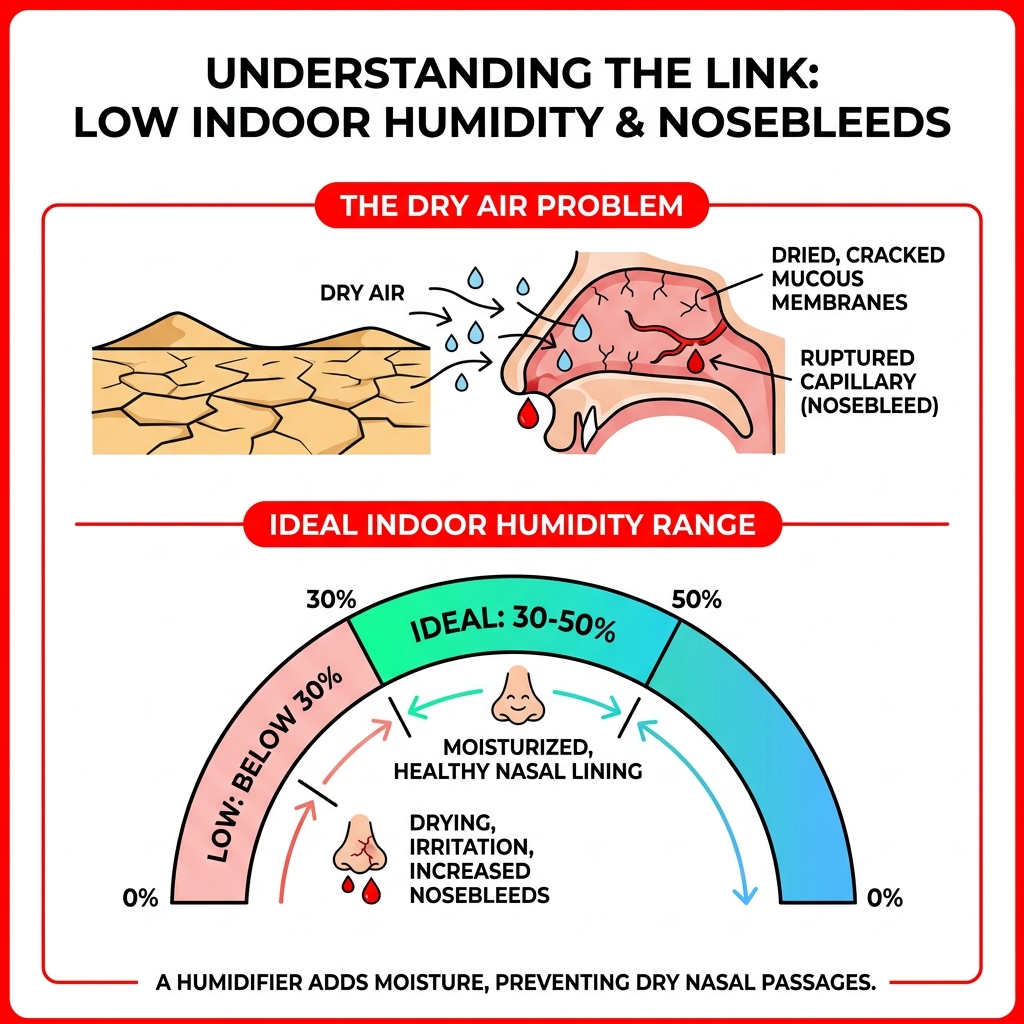
- Dry indoor air dries out the mucous membranes inside your nose
- Dried membranes crack, causing the tiny blood vessels (capillaries) near the surface to rupture and bleed
- A humidifier adds moisture back into the air, keeping those membranes hydrated and intact
- Keeping indoor humidity between 30% and 50% is the sweet spot for preventing dry-air nosebleeds
- Cool-mist ultrasonic humidifiers are the most widely recommended type for home use
Nosebleeds are more common than most people think — and winter is the worst time for them. When you run your heating system, it pulls moisture out of the air. That dry air then pulls moisture out of your nasal passages. The result? Dry, fragile tissue that bleeds easily, sometimes just from breathing.
It’s not just uncomfortable. For kids especially, it can be scary and disruptive.
The good news is that the fix is simple and affordable. A quality humidifier, properly maintained, can make a real difference in how often you or your family deal with this problem.
I’m Jacob Reese, Vice President of Standard Plumbing Supply, and through my work supplying HVAC and plumbing products across the Western United States, I’ve seen how indoor air quality — including the right humidity levels — directly impacts home comfort and health, including finding the right humidifiers for bloody noses. In this guide, I’ll walk you through everything you need to know to choose, use, and maintain a humidifier that keeps dry-air nosebleeds at bay.
Why Dry Air Causes Nosebleeds and How Humidifiers Help
To understand why humidifiers for bloody noses are so effective, we have to look at the biology of the nose. Your nasal cavity is lined with delicate mucous membranes. These membranes serve as the first line of defense for your immune system, trapping viruses and bacteria before they can reach your lungs.
However, these membranes require a constant layer of moisture to remain elastic and healthy. When the air in your home drops below a certain humidity level—which happens frequently in the arid climates of Utah, Arizona, Colorado, and Nevada—the air begins to “steal” moisture from your body.
As the moisture evaporates from your nasal passages, the skin inside your nose becomes brittle. Think of it like a desert landscape: when the ground dries out, it cracks. In your nose, those cracks happen in the tissue surrounding your nasal capillaries. Because these blood vessels are so close to the surface, even a tiny crack can lead to a significant bleed.
By using a humidifier, you are essentially preventing frequent bloody noses from dry air by restoring that lost moisture. This keeps the tissue elastic, the blood vessels protected, and your “internal defense system” functioning properly.

The Science of Epistaxis in Dry Climates
In the medical world, a nosebleed is known as epistaxis. While there are many causes—ranging from trauma to medications—environmental dryness is the most common trigger for chronic, recurring bleeds.
In high-altitude areas like Salt Lake City, Denver, or Jackson, the air is naturally thinner and holds less moisture. When you add a furnace into the mix during the winter months, the relative humidity inside a home can drop to as low as 10%. For context, that is drier than the Sahara Desert! At these levels, inflammation and irritation are almost guaranteed. Can a humidifier help with nosebleeds? The answer is a resounding yes, as it provides the consistent hydration necessary to prevent the vascular sensitivity that leads to spontaneous bleeding.
Choosing the Best Humidifiers for Bloody Noses
Not all humidifiers are created equal. Depending on your room size, budget, and local climate, you’ll want to choose a technology that fits your lifestyle.
| Humidifier Type | Best For | Pros | Cons |
|---|---|---|---|
| Ultrasonic | Bedrooms & Nurseries | Extremely quiet; energy-efficient | Requires distilled water to avoid “white dust” |
| Evaporative | Large Living Areas | Self-regulating; no mineral dust | Noisier due to internal fan; requires filter changes |
| Steam Vaporizer | Congestion Relief | Purest moisture (boiling kills bacteria) | High energy use; burn risk for children |
When looking for humidifiers for bloody noses: how it helps and when to use it, you should prioritize units that can run for at least 12 to 24 hours on a single tank. This ensures that your nasal passages stay hydrated throughout the night, which is when most dry-air nosebleeds occur.
Top Features in Humidifiers for Bloody Noses
If you are shopping at one of our Standard Plumbing Supply locations, here are the features we recommend looking for:
- Top-Fill Design: Makes refilling the tank much easier and less messy.
- Built-in Humidistat: This acts like a thermostat for your humidity, turning the unit off once the room reaches your target level.
- 360-Degree Nozzles: Allows you to direct the mist toward your bed without moving the entire unit.
- Auto Shut-off: A critical safety feature that turns the motor off when the water runs out.
- Whisper-Quiet Operation: Look for decibel levels below 30dB for bedroom use.
Are Cool Mist Humidifiers for Bloody Noses Safe for Kids?
Safety is a major concern for parents in our communities, from Boise to Sacramento. For children’s rooms and nurseries, cool-mist ultrasonic humidifiers are the gold standard.
The primary reason is the lack of a heating element. Steam vaporizers or warm-mist units boil water to create vapor. If a curious toddler knocks over a warm-mist unit, the hot water can cause severe burns. Cool-mist units provide the same hydration benefits for the nose without the safety risks. Pediatricians generally recommend cool mist because it doesn’t heat up the room and is safer for children who might have a stuffy nose or croup alongside their nosebleed issues.
Maintaining Your Humidifier for Optimal Health
A humidifier can be your nose’s best friend, but if it isn’t cleaned, it can become a health hazard. Because these machines deal with standing water and warmth, they are breeding grounds for mold and bacteria. If you breathe in contaminated mist, you might trade your nosebleeds for a respiratory infection.
To keep things safe, follow these cleaning protocols:
- Daily Rinse: Empty the tank, rinse it with fresh water, and dry it every single day.
- The Three-Day Deep Clean: Every three days, use a solution of 3% hydrogen peroxide or plain white vinegar to disinfect the tank and the base.
- Rinse Thoroughly: After using any cleaning chemicals, rinse the unit multiple times to ensure you aren’t breathing in chemical residues.
Properly treating dry nasal passages requires a clean environment. If you notice a “slimy” film inside the tank, that’s biofilm (bacteria), and it needs to be scrubbed away immediately.
Using the Right Water to Prevent White Dust
In many of the states we serve, like Arizona and Idaho, hard water is a common issue. If you fill your humidifier with tap water, the ultrasonic vibration breaks down the minerals (like calcium and magnesium) into a fine “white dust” that settles on your furniture and can be inhaled.
To prevent this:
- Use Distilled or Demineralized Water: This is the best way to keep the air pure and the machine running longer.
- Check Your Filters: If you use an evaporative humidifier, change the wick filter every 1-2 months, or more often if you notice mineral crusting.
Monitoring Humidity and Avoiding Common Mistakes
The biggest mistake homeowners make is “setting it and forgetting it.” More humidity isn’t always better. If your home’s humidity level climbs above 50%, you invite mold growth in your drywall and dust mites in your carpets.
The only way to know for sure is to use a hygrometer. This is a small, inexpensive device that measures the moisture in the air. You can find these at most hardware stores or through our HVAC specialty catalogs.
Keep your levels between 30% and 50%. If you start seeing condensation on your windows, your humidity is too high—turn the humidifier down! Preventing a bloody nose with a home humidifier is about balance, not saturation.
Alternatives and Supplemental Nasal Care
While humidifiers for bloody noses do the heavy lifting, you can supplement your care with these tips:
- Saline Sprays: Use a simple salt-water spray throughout the day to keep membranes moist while away from home.
- Petroleum Jelly: Applying a very thin layer of petroleum jelly or a dedicated nasal gel inside the nostrils before bed can provide a physical barrier against dryness.
- Whole-Home Systems: If you’re tired of refilling small tanks, consider a whole-home humidifier. These are installed directly into your HVAC system and pull water from your plumbing, providing consistent humidity to every room in the house automatically.
Frequently Asked Questions about Humidifiers for Bloody Noses
What is the ideal humidity level to prevent nosebleeds?
The “sweet spot” is between 30% and 50% relative humidity. In the summer, you can go slightly higher (up to 60%), but in the winter, keeping it at 40% is usually enough to stop nosebleeds without causing window condensation.
Should I use a cool mist or warm mist humidifier for nosebleeds?
Both are effective at adding moisture. Cool mist is safer for homes with children and pets. Warm mist can feel more soothing if you have a cold or sinus congestion, as the heat helps reduce inflammation. However, for pure nosebleed prevention, cool mist is often the most practical choice.
How often should I clean my humidifier to avoid health risks?
You should empty and dry the tank daily. A full disinfection with vinegar or peroxide should happen at least once a week, though every three days is recommended by health experts to prevent any chance of mold growth.
Conclusion
Living in the Western U.S. means dealing with dry air, but it doesn’t have to mean dealing with painful, messy nosebleeds. By selecting the right humidifiers for bloody noses and maintaining them properly, you can significantly improve your respiratory health and home comfort.
At Standard Plumbing Supply, we’ve been helping our neighbors across Utah, Colorado, Arizona, and beyond find the right solutions for their homes for decades. Whether you need a portable unit for a nursery or a whole-home humidification system integrated into your furnace, we have the expertise to help.
Don’t let the dry air win this winter. Find the right HVAC solutions and accessories at a location near you, or use our store locator to talk to one of our experts in person. We have locations from Logan to St. George and everywhere in between, ready to help you breathe easier.
