
Why a Bathroom Ventilation Fan with Light Belongs in Every Bathroom
A bathroom ventilation fan with light does two important jobs at once: it clears out steam, odors, and moisture while also lighting your space. Here’s a quick look at what to know before you buy:
| What to Consider | Quick Answer |
|---|---|
| CFM (airflow) | ~1 CFM per sq ft of bathroom space |
| Noise level | Under 1.5 sones for quiet operation |
| Lighting type | LED is best — up to 50,000-hour lifespan |
| Energy efficiency | Look for ENERGY STAR certification |
| Smart features | Humidity sensors, dimmers, Bluetooth available |
| Safety | Must use GFCI circuit if installed over shower or tub |
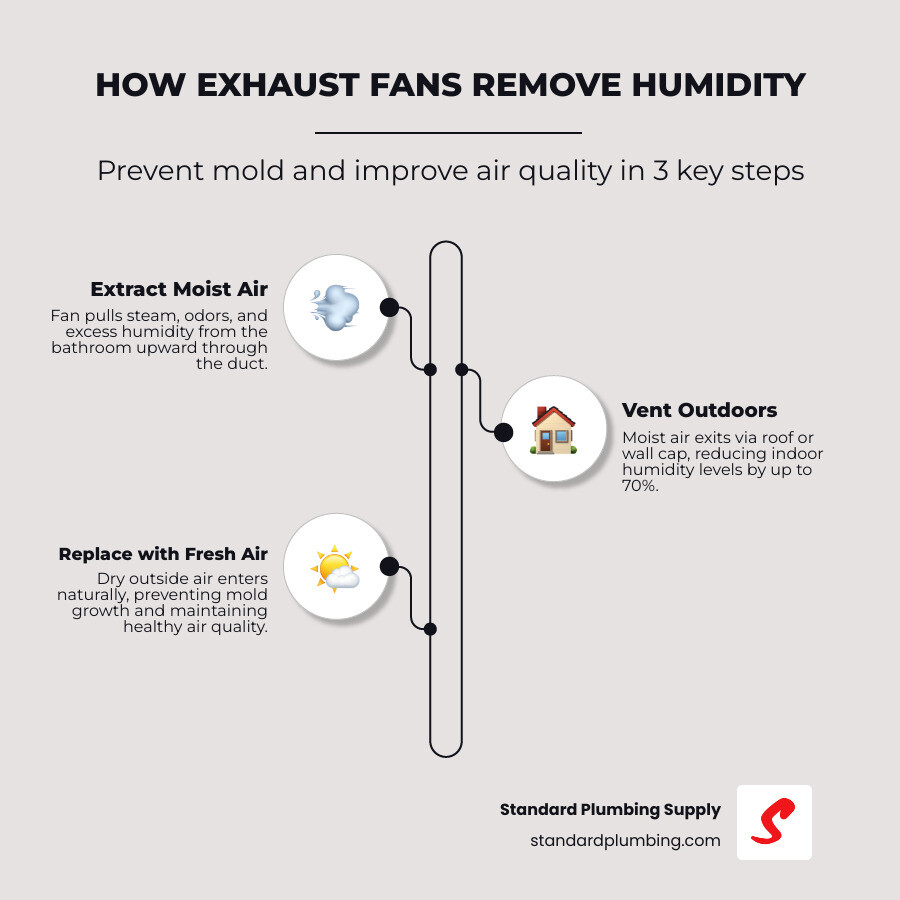
Bathrooms are one of the most moisture-heavy rooms in any home. Without proper ventilation, that humidity builds up fast — leading to mold, mildew, and damage to walls and ceilings. A combo fan-and-light unit solves the problem without taking up extra ceiling space or requiring separate fixtures.
The good news: today’s options range from basic and budget-friendly to feature-packed units with dimmable LEDs, motion sensors, and built-in heaters.
I’m Jacob Reese, VP of Standard Plumbing Supply, and through decades of hands-on experience sourcing ventilation products for contractors and DIYers across the Western U.S., I’ve helped countless customers find the right bathroom ventilation fan with light for every type of project. Let’s break down the best options available today.
Discover more about bathroom ventilation fan with light:
Key Features of a High-Performance Bathroom Ventilation Fan with Light
When we talk about a high-performance bathroom ventilation fan with light, we aren’t just looking for something that spins. We are looking for a unit that integrates seamlessly into your daily routine. Modern engineering has transformed these from noisy boxes into sophisticated home appliances.
One of the most significant upgrades in recent years is the shift to LED lighting. Unlike old incandescent bulbs that burn out quickly in humid environments, LED lighting is now the industry standard, featured in the vast majority of new models. These LEDs often boast a 50,000-hour rated life, meaning you might never have to climb a ladder to change a bulb again.
Beyond basic illumination, many high-performance ventilation fan with light and night light features offer layered lighting. This includes a powerful main light for your morning routine and a low-wattage night light (often around 4W to 7W) to help you navigate the bathroom safely at 2 AM without blinding yourself.
Efficiency is another major pillar. ENERGY STAR certification is a must-have for many of our customers in states like California and Colorado, where building codes are strict. These fans use high-efficiency motors—often DC motors—that consume up to 50% less energy than standard models while moving the same amount of air.
Some high-end units even include SurfaceShield™ technology, which uses antimicrobial violet light to kill viruses and bacteria on surfaces, or selectable CCT (Correlated Color Temperature) LED options. This allows you to toggle between warm white (2700K) and cool daylight (5000K) settings to match your bathroom’s aesthetic.

Choosing the Right Bathroom Ventilation Fan with Light for Your Style
Gone are the days of ugly, industrial-looking plastic grilles. We see a huge demand for stylish bathroom exhaust fans with light options that complement modern decor.
- Decorative Grilles: Brands are now offering designer-inspired grilles in finishes like Brushed Nickel, Oil Rubbed Bronze, and Matte Black.
- Glass Lenses: Instead of yellowing plastic, many premium models feature frosted glass lenses that diffuse light beautifully and are easier to clean.
- Recessed Lighting: If you want a minimalist look, some fans are designed to look exactly like a standard recessed “can” light, hiding the ventilation components entirely.
- CleanCover™ Design: This feature eliminates vent slots that typically collect dust, offering a sleek, flush-mount appearance that stays cleaner for longer.
Smart Features in a Modern Bathroom Ventilation Fan with Light
If you love tech, you’ll be impressed by the advanced 2-in-1 bathroom exhaust fan with light models currently hitting the market. We are seeing a surge in “smart” bathrooms across our locations from Salt Lake City to Phoenix.
Bluetooth Speakers: Imagine streaming your favorite podcast or morning playlist directly through your ceiling fan. These integrated speakers are moisture-resistant and offer surprisingly good sound quality. Humidity and Motion Sensors: Some fans, like the Broan-NuTone Roomside Series, feature ULTRASense™ technology. They automatically turn on when they detect a rise in humidity or when someone walks into the room, and turn off once the air is clear. Dimmable LEDs: Many units now support wall-mounted dimmers, allowing you to set a relaxing mood for a late-night soak in the tub. Multi-Speed DC Motors: Features like Panasonic’s Pick-A-Flow® allow you to select the exact CFM (50, 80, or 110) with the flip of a switch, ensuring you get the right amount of power for your specific room size.
Sizing and Noise: Understanding CFM and Sones
Choosing the right bathroom ventilation fan with light isn’t just about looks; it’s about physics. Two numbers matter most: CFM and Sones.
CFM (Cubic Feet per Minute) measures how much air the fan moves. The general rule of thumb is 1 CFM for every square foot of bathroom space. If your bathroom is 80 square feet, you need at least an 80 CFM fan. Sones measure how loud the fan is. For context, 1.0 sone is about the volume of a quiet refrigerator. Anything under 1.5 sones is considered quiet, while fans rated at 3.0 or higher will sound like a small jet engine taking off in your bathroom.
If you are looking for peace and quiet, an ultra-quiet 130 CFM ceiling bathroom exhaust fan is a fantastic choice for larger master baths.
How to Determine the Right CFM for Your Space
To get the best performance, you need to match the airflow volume to your room’s dimensions.
| Bathroom Size (Sq. Ft.) | Recommended CFM |
|---|---|
| Up to 45 | 50 CFM |
| 45 to 75 | 80 CFM |
| 75 to 105 | 110 CFM |
| 105 to 130 | 130 – 150 CFM |
For bathrooms with vaulted ceilings or extra-large soaking tubs, we often recommend “oversizing” the fan slightly to ensure moisture doesn’t settle on high walls. If you have a separate water closet (the “toilet room”), that area usually requires its own dedicated 50 CFM fan.
Why Sone Ratings Matter for Bathroom Comfort
We’ve all been in a bathroom where you can’t even hear yourself think because the fan is so loud. That’s a high sone rating at work. If you value a spa-like atmosphere, you should learn more about quiet heating and ventilation solutions with light.
Modern DC motors are the secret to silence. For example, the Panasonic WhisperWarm series can operate at less than 0.3 sones. That is virtually silent. At Standard Plumbing Supply, we recommend aiming for a fan rated under 1.5 sones for any primary bathroom. Economy models often land in the 3.0 to 5.0 sone range, which is fine for a powder room where you might actually want some “white noise” for privacy, but it’s less ideal for a master suite.
Top-Rated Models: Comparing the Best Bathroom Ventilation Fan with Light Options
At our stores across the West, we carry leading models from trusted brands like Broan-NuTone, Panasonic, and Hunter. Each has its own strengths.
Panasonic is widely regarded as the “gold standard” for quiet, high-efficiency fans. Their high-performance fan and heater with light, the WhisperWarm® DC, is a favorite in colder climates like Boise, Idaho, or Rock Springs, Wyoming. It combines a powerful exhaust fan with a 1600W heater, so you don’t step out of the shower into a freezing room.
Broan-NuTone offers the most variety, from their budget-friendly 678 model (which has over 10,000 positive reviews online) to their high-tech ChromaComfort™ series that features multi-colored LED light shows controlled by a smartphone app.
Best for Large Master Suites
For a large master bathroom (over 100 sq. ft.), you need muscle. Look for units that offer:
- 110 to 150 CFM: To clear large volumes of steam quickly.
- 6-inch Ducting: Larger ducts allow air to move more freely with less friction and noise.
- Dual Lighting: Units that provide both a bright task light and a gentle night light.
- High-Efficiency Motors: To handle the longer run times required for larger spaces.
A great option here is the Panasonic WhisperChoice, which allows you to find the ideal bath fan for large spaces by selecting between 110 and 150 CFM depending on your needs.
Best for Small Powder Rooms
Powder rooms don’t usually have showers, so moisture isn’t the main concern—odors and lighting are. You can discover compact bath fans with light that fit into smaller ceiling footprints.
- 50-80 CFM: Plenty of power for a small half-bath.
- 4-inch Ducting: Standard size that is easy to install in tight spaces.
- Economy Series: Since these fans run less frequently, you can often save money by choosing a standard AC motor model rather than a premium DC motor.
The Broan-NuTone 678 is a classic choice here, providing 50 CFM and a bright light in a very reliable, affordable package.
Installation and Maintenance for Longevity
A bathroom ventilation fan with light is only as good as its installation. We see many DIYers make the mistake of using the wrong duct size. If you put a high-powered 110 CFM fan on a tiny 3-inch duct, the air will “bottle-neck,” making the fan louder and less effective. Always match your ducting to the manufacturer’s specs—usually 4-inch or 6-inch round ducting.
For retrofits, look for “Roomside Installation” models. These are a lifesaver because they can be installed entirely from the bathroom side without needing to crawl through a dusty attic. Features like EZDuct™ connectors and SlideClip™ grilles make the process much faster.
Professional Installation Considerations
If you aren’t comfortable with electrical wiring or cutting into your ceiling, it’s worth hiring a pro. There are several technical hurdles to clear:
- Ceiling Joist Compatibility: You need to ensure the fan housing fits between your joists (most are designed for 2×8 construction).
- GFCI Protection: If the fan is going directly over a shower or tub, it must be connected to a GFCI-protected circuit for safety.
- Wiring: Some fans allow you to wire the light and the fan to separate switches, while others combine them.
- Venting: Never vent a bathroom fan into your attic! This just moves the moisture problem from your bathroom to your roof structure. It must vent all the way to the outdoors via a roof or wall cap.
For those in Utah or Idaho, you can get expert guidance on heating and ventilation bath exhaust fans at our local showrooms.
Maintenance Tips for Peak Performance
To keep your fan running for 10+ years, follow these simple steps:
- Clean the Grille: Dust builds up on the cover every few months. Pull it down and wash it with warm, soapy water.
- Vacuum the Interior: Use a vacuum attachment to suck out dust from the motor and blower wheel. Dust is the #1 cause of motor overheating.
- Check the Damper: Make sure the little flap (damper) where the fan meets the duct isn’t stuck. If it stays closed, the fan won’t move any air.
- Re-lamping: If you have an older incandescent model, replace bulbs with the correct wattage to avoid melting the plastic lens.
Frequently Asked Questions about Bathroom Ventilation Fans
Can I install a fan with a light directly over my shower?
Yes, but with conditions. The unit must be UL Listed or ETL Listed for use over a bathtub or shower. Additionally, it must be installed on a GFCI (Ground Fault Circuit Interrupter) protected branch circuit. This ensures that if any moisture causes an electrical short, the power cuts off instantly to prevent injury. Most modern fans with frosted glass or enclosed LED lenses meet these safety codes.
What is the benefit of an ENERGY STAR certified fan?
ENERGY STAR certified fans are roughly 50% more efficient than standard models. They use better motors that run cooler and quieter. Because they use less energy, they save you money on your monthly utility bills. Furthermore, many local building codes in our service areas (like California’s Title 24) actually require ENERGY STAR or high-efficacy lighting for new constructions and major remodels.
How do I choose between LED and incandescent lighting?
Honestly, there isn’t much of a contest anymore—LED is the winner. LED lights use a fraction of the electricity, produce almost no heat (which is better for the fan’s motor life), and can last up to 50,000 hours. Incandescent bulbs are cheaper upfront but burn out frequently and can be hard to find as the industry moves away from them. Look for a high CRI (Color Rendering Index) of 90 or above if you want the light to look natural for applying makeup.
Conclusion
Upgrading to a bathroom ventilation fan with light is one of the smartest “small” investments you can make in your home. It protects your structure from moisture damage, improves your air quality, and brightens up your morning. Whether you need a silent powerhouse for a master suite in St. George or a compact heater-fan combo for a chilly morning in Jackson, Wyoming, we have you covered.
At Standard Plumbing Supply, we pride ourselves on helping our neighbors across the West find the right tools for the job. With locations in Arizona, California, Colorado, Idaho, Nebraska, Nevada, Oregon, Utah, and Wyoming, there is likely an SPS store just around the corner from you. Use our store locator to find your nearest branch and speak with our experts today.
Ready to upgrade? Browse our full catalog of HVAC and ventilation solutions to find the perfect match for your home.
