
When Your Shower Drain Stopper Stops Working
Fix shower drain stopper problems faster than you think — most repairs take under 30 minutes and cost little to nothing.
Quick answer: How to fix a shower drain stopper
- Identify your stopper type — lift-and-turn, push-pull, toe-touch, pop-up, trip-lever, or flip-it
- Remove the stopper — twist counterclockwise, unscrew a set screw, or pull the overflow plate
- Clean the stopper and drain — remove hair, soap scum, and mineral buildup
- Inspect for damage — check gaskets, O-rings, and threaded rods
- Reinstall or replace — rethread by hand, test the seal, adjust as needed
Most drainage problems are solved just by cleaning out what’s trapped under the stopper. If the stopper is cracked, corroded, or the linkage is bent, a replacement part typically costs under $20.
A broken or sluggish drain stopper is one of the most common bathroom frustrations homeowners face. Hair, soap scum, and mineral deposits build up fast — and when the stopper mechanism itself wears out or gets stuck, a simple soak turns into a slow drain emergency.
The good news? This is one of the most beginner-friendly plumbing fixes there is. You don’t need special skills, and you probably already own most of the tools required.
I’m Jacob Reese, Vice President of Standard Plumbing Supply and a third-generation plumbing industry professional who has helped contractors and DIYers source the right parts to fix shower drain stopper issues for years. Let’s walk through exactly what you need to get this done right.
Essential Tools to Fix Shower Drain Stopper Issues
Before we dive into the murky depths of your drain, we need to gather our gear. You don’t need a heavy-duty van full of equipment to fix shower drain stopper problems, but having the right hand tools will prevent you from scratching your beautiful chrome or nickel finishes.
The DIY Plumbing Kit
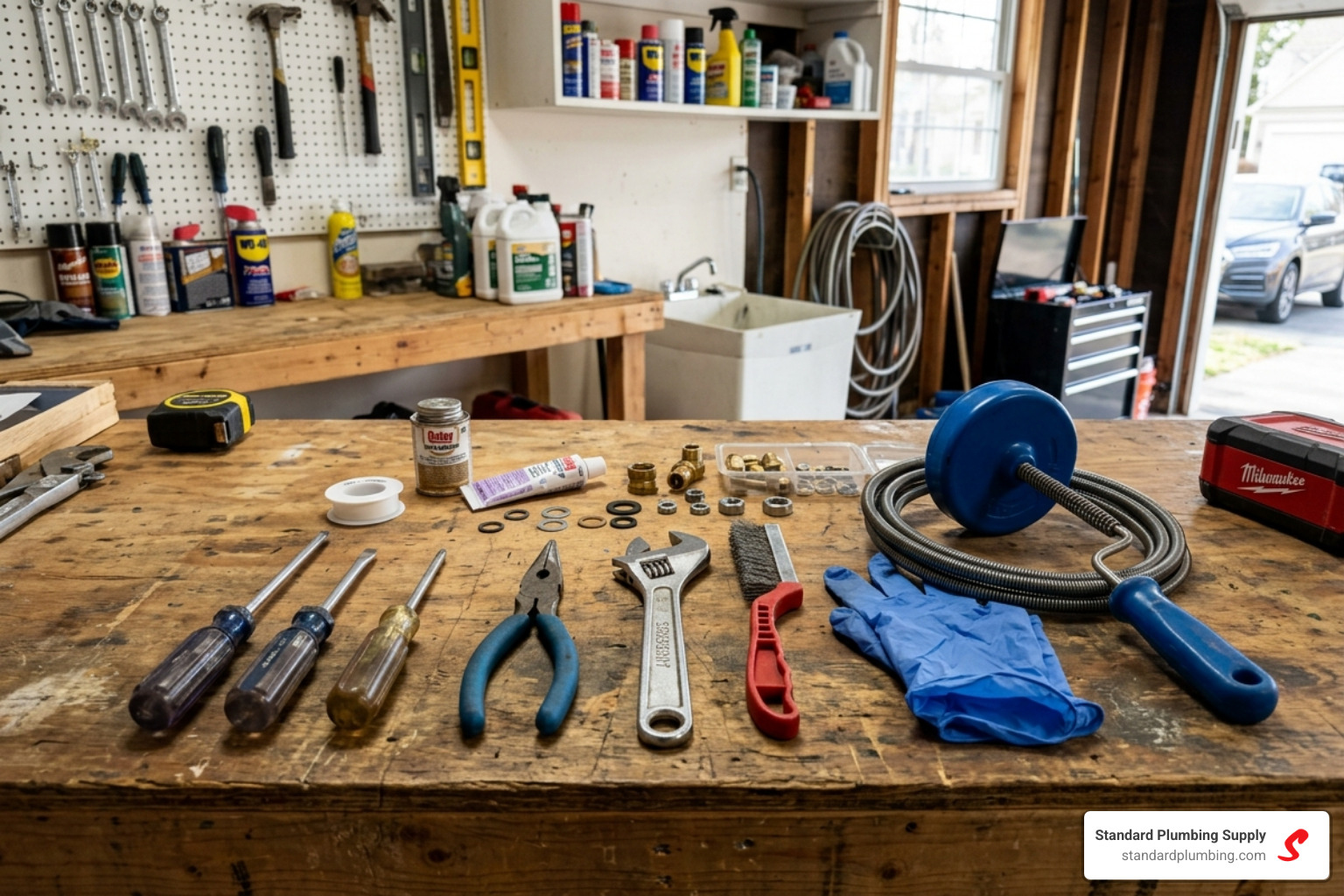
Most of these items are likely sitting in your garage or under the kitchen sink right now. If you’re missing anything, we have locations from Boise, Idaho, to Mesa, Arizona, where our team can help you find exactly what you need.
- Screwdrivers: You’ll want both a flat-head and a Phillips head. These are essential for removing overflow plates and loosening set screws.
- Needle-nose pliers: These are perfect for grabbing clumps of hair or holding small bolts that are too slippery for your fingers.
- Allen wrenches (Hex keys): Many lift-and-turn stoppers use a tiny set screw hidden under the lip of the cap. A small Allen wrench is often the only way to get it loose.
- Rags and a Bucket: Plumbing is wet work. Laying a rag down in the tub also prevents you from losing tiny screws down the drain—a mistake we’ve all made once!
- Silicone Grease: A little dab on the threads or O-rings makes future removals much easier.
Consumables for a Lasting Fix
Sometimes a simple cleaning isn’t enough. You might need to reseal or lubricate parts to ensure a watertight fit.
- 14 Oz Soft Plumbers Putty: This is used under the drain flange if you end up replacing the entire assembly.
- Thread Sealants & Teflon Tape: Great for ensuring a snug, leak-free fit on threaded posts.
| Stopper Type | Removal Difficulty | Est. Repair Time |
|---|---|---|
| Lift-and-Turn | Easy | 5–10 Mins |
| Push-Pull | Easy | 5–10 Mins |
| Toe-Touch | Easy | 5–10 Mins |
| Pop-Up | Medium | 15–20 Mins |
| Trip-Lever | Medium/Hard | 20–30 Mins |
Step-by-Step Removal and Repair Guide
The first step to fix shower drain stopper issues is knowing what you’re looking at. Most modern homes in the Western U.S., from Salt Lake City to Sacramento, use one of five or six common designs. Identifying yours is half the battle.
Identification Cues
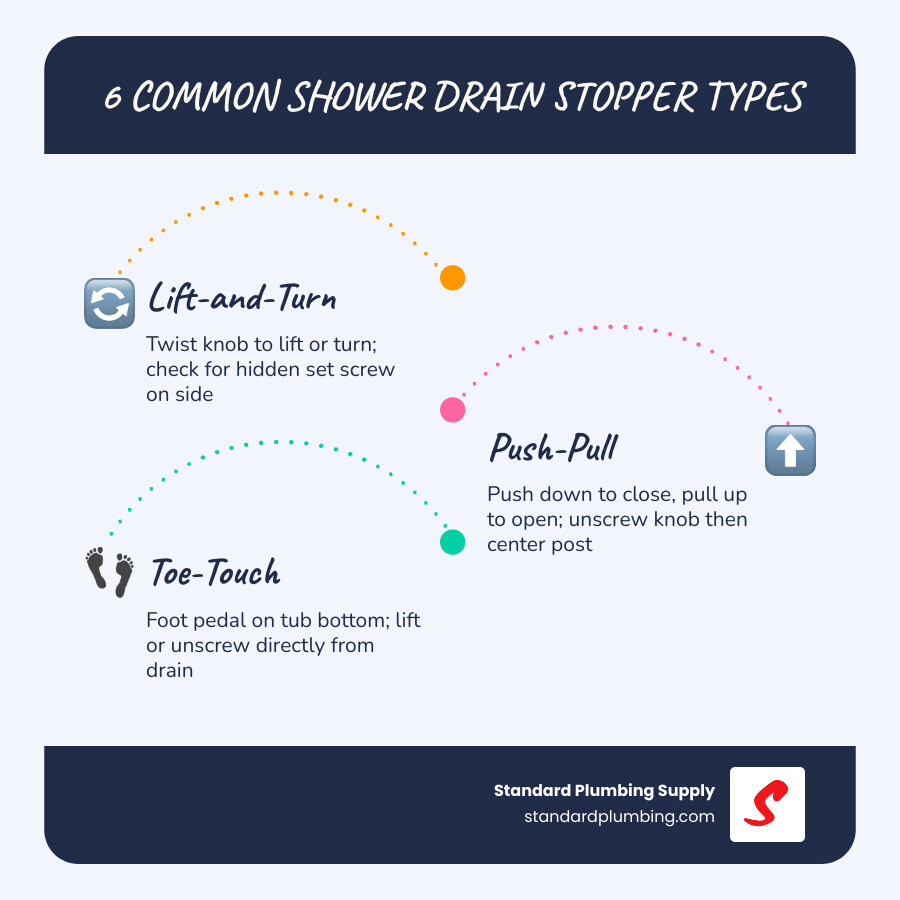
- Lift-and-Turn: Has a small knob on top. You lift it and turn it to lock it open.
- Push-Pull: Similar to lift-and-turn, but you simply pull up or push down without much twisting.
- Toe-Touch: A spring-loaded cap. You push it with your toe to open or close it.
- Pop-Up/Trip-Lever: These are connected to a lever on the overflow plate (the metal circle on the tub wall).
For a deep dive into the mechanics of these systems, How To Fix a Bathtub Drain Stopper – This Old House offers excellent visual insights into how the internal rods connect.
Removing Lift-and-Turn, Push-Pull, and Toe-Touch Stoppers
These three are the “low-hanging fruit” of plumbing. They are generally attached directly to the drain crossbars.
- Set the stopper to the ‘Open’ position. It’s much harder to unscrew a closed stopper.
- Look for the hidden screw. For a lift-and-turn, lift the stopper and look sideways under the cap. You might see a tiny slotted screw or an Allen screw. Loosen it (don’t remove it entirely, or you’ll drop it!) and the cap should slide off.
- Unscrew the main post. Once the cap is off, use a large flat-head screwdriver or pliers to unscrew the brass post from the drain.
- Toe-Touch trick. For toe-touch models, try unscrewing the top cap counterclockwise by hand. If it spins without coming off, the internal spring might be broken. You may need to hold the base with pliers (wrapped in a rag) while you turn the top.
If your stopper is beyond saving, we recommend high-quality replacements like the Moen Chrome Pop-Up W/O Overflow, which offers a clean look and reliable seal.
How to Fix Shower Drain Stopper Pop-Up and Trip-Lever Assemblies
These are a bit more “mechanical.” Instead of the stopper being a simple plug, it’s connected to a linkage system hidden behind the tub wall.
- Remove the overflow plate. Use your screwdriver to remove the two screws holding the plate to the tub wall.
- Pull the “snake.” Carefully pull the plate away. A long brass rod assembly (the linkage) will follow it out of the hole.
- The Plunger. At the end of that rod is a heavy brass weight called a plunger. If your tub won’t hold water, this plunger is likely covered in hair and soap scum, preventing it from seating properly.
- Clean and Adjust. Scrub the plunger clean. If the tub still leaks, you can adjust the length of the rod by loosening the lock nut and threading the rod further in or out.
For those dealing with stubborn clogs while the stopper is out, the How to Unclog a Shower Drain – iFixit Repair Guide is a fantastic resource for manual debris removal.
Troubleshooting Stuck or Corroded Stoppers
Sometimes, a 20-year-old stopper simply refuses to budge. This is common in areas with hard water, like Phoenix or Las Vegas, where mineral deposits act like natural superglue.
- Penetrating Oil: Spray a little WD-40 or specialized penetrating oil around the threads. Let it sit for 15 minutes.
- Controlled Torque: Use steady pressure. Brute force often snaps brass bolts, turning a 10-minute job into a 2-hour nightmare.
- Protect the Finish: Always wrap your tool jaws in a rag.
- Check the Seals: If the stopper moves but won’t seal, inspect the rubber. You might just need a Pfister Classic Rubber Valve Disc or a new O-ring to restore the vacuum.
Cleaning and Maintenance for Clog Prevention
Once you’ve successfully managed to fix shower drain stopper issues, you don’t want to do it again next month. Maintenance is the key to a free-flowing drain.
The Vinegar Soak
Mineral buildup can make a stopper “sticky.” Every few months, remove the stopper and soak it in a bowl of white vinegar for an hour. This dissolves calcium and lime without damaging the metal finish.
Manual Debris Removal
While the stopper is out, take a moment to look down the drain with a flashlight. You’ll likely see a “hair monster” caught on the crossbars.
- Use needle-nose pliers or a 18 Drain Snake Auger to pull it out.
- Avoid using heavy chemicals if you can; manual removal is safer for your pipes and the environment.
- If you must use a cleaner, check our selection of professional-grade Drain Cleaners that are safer for modern plumbing systems.
Regular Inspection Schedule
We recommend a “Seasonal Flush.” Every three months:
- Remove the stopper.
- Clear any hair.
- Flush the drain with a gallon of boiling water (if you have metal pipes) or very hot tap water (if you have PVC).
- Apply a tiny bit of waterproof grease to the stopper threads.
Frequently Asked Questions
Why won’t my shower drain stopper unscrew?
The most common culprit is a hidden set screw. Many people try to force a lift-and-turn stopper by twisting the knob, not realizing there is a tiny screw underneath the cap that must be loosened first. Another reason is mineral “binding.” In places like St. George, Utah, or Tucson, Arizona, hard water can calcify the threads. Use penetrating oil and wait.
How do I fix shower drain stopper leaks?
If your tub loses water while you’re bathing, the seal is compromised. Check the large rubber gasket on the underside of the stopper. If it’s cracked or flattened, it needs replacement. Also, ensure the drain flange (the metal ring in the tub floor) isn’t nicked or corroded, as this prevents the rubber from making a perfect seal.
When should I call a professional plumber?
While most stopper issues are DIY-friendly, call us or a pro if:
- The linkage rod snaps off inside the overflow pipe.
- The drain flange is spinning and won’t tighten (this indicates a leak under the tub).
- You see water stains on the ceiling below the bathroom.
- The pipes are old, crumbling lead or extremely corroded galvanized steel.
Conclusion
Learning how to fix shower drain stopper problems is a “DIY win” that saves you the $150+ a plumber might charge for a service call. With a few basic tools and a little patience, you can restore your bathroom’s functionality and prevent major clogs before they start.
At Standard Plumbing Supply, we’ve been the trusted partner for homeowners across the West for decades. Whether you’re in Sandy, Utah, or Rancho Cordova, California, our experts are ready to help you find the right parts for your project.
Ready to upgrade your entire bathing experience? Explore Bathroom Tubs and Showers at our online catalog or visit one of our many locations today. We’ll help you keep the water flowing exactly where it’s supposed to go!
