
Why Every Pressurized System Needs a Pressure Relief Valve
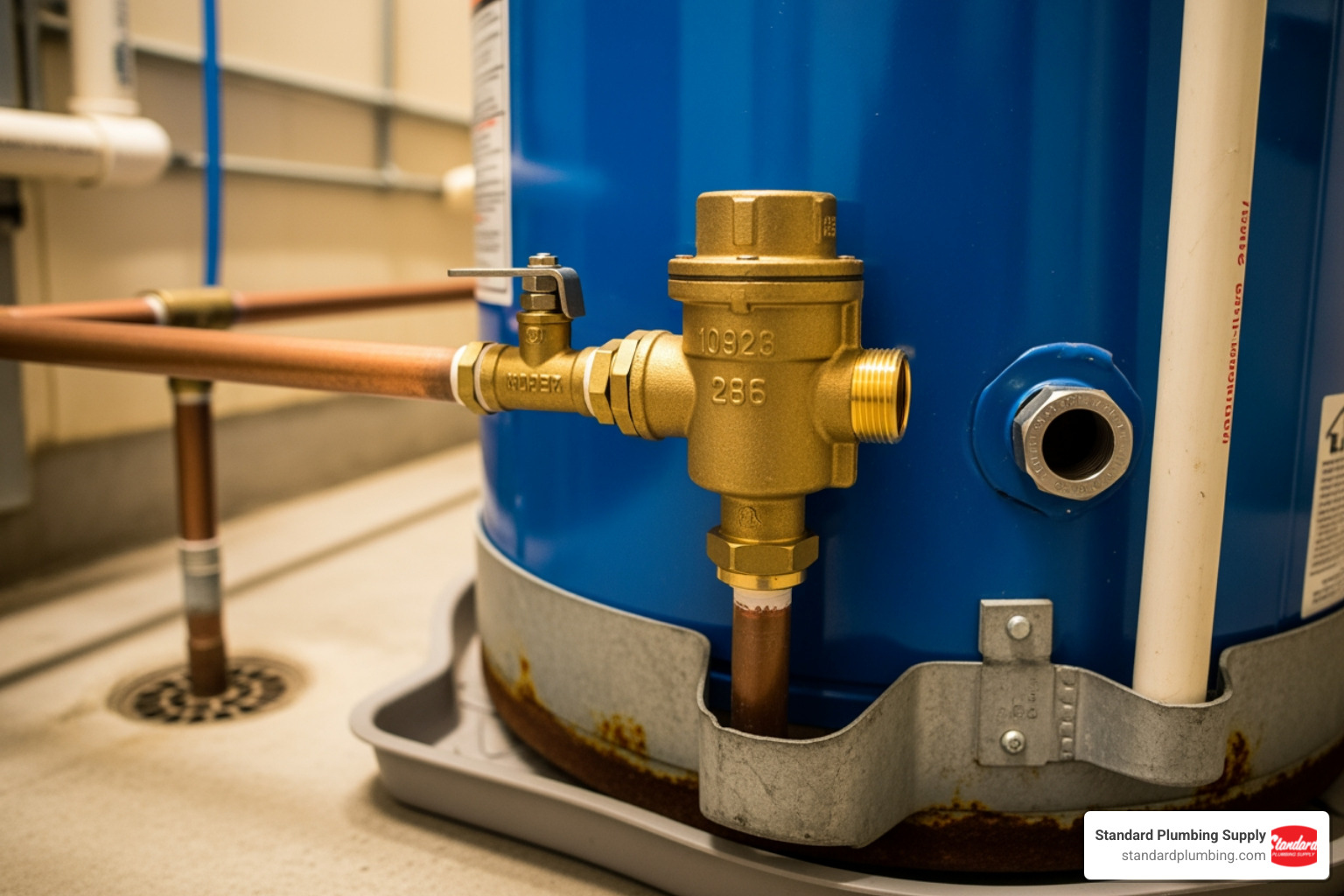
A pressure relief valve is a mechanical safety device designed to protect pressurized vessels and systems from catastrophic failure by automatically venting excess pressure when it exceeds a predetermined limit. Here’s what you need to know:
Quick Answer:
- What it does: Opens automatically at a preset pressure to discharge fluid (gas or liquid) from a system, then closes when pressure returns to safe levels
- Why it matters: Prevents explosions, equipment damage, and protects life and property in systems like water heaters, boilers, and pressure vessels
- How it works: Uses spring force to keep a disc sealed against a valve seat; when system pressure exceeds the spring force, the valve opens to relieve pressure
- Where it’s required: Legally mandated in most countries for pressure vessels with maximum allowable working pressure (MAWP) of 15 psig or greater
Pressure relief valves originally became popular in boiler systems, but today they’re essential safety components in everything from your home water heater to nuclear reactors and chemical plants. The ASME Boiler and Pressure Vessel Code requires these devices on most pressurized equipment, making them one of the most critical—yet often overlooked—safety features in modern plumbing and industrial systems.
What makes pressure relief valves unique is their simplicity and reliability. They don’t need external power or control systems to function. The sole source of power is the process fluid itself, which means they’ll protect your system even during a complete power failure.
I’m Jacob Reese, Vice President of Standard Plumbing Supply and a third-generation leader in our family business, where I’ve worked with pressure relief valves and safety systems since I was eight years old, holding nearly every role from warehouse to leadership. Through decades of hands-on experience, I’ve seen how proper pressure relief valve selection and installation protects both property and lives in residential, commercial, and industrial applications.
Understanding the Fundamentals: How a Pressure Relief Valve Works
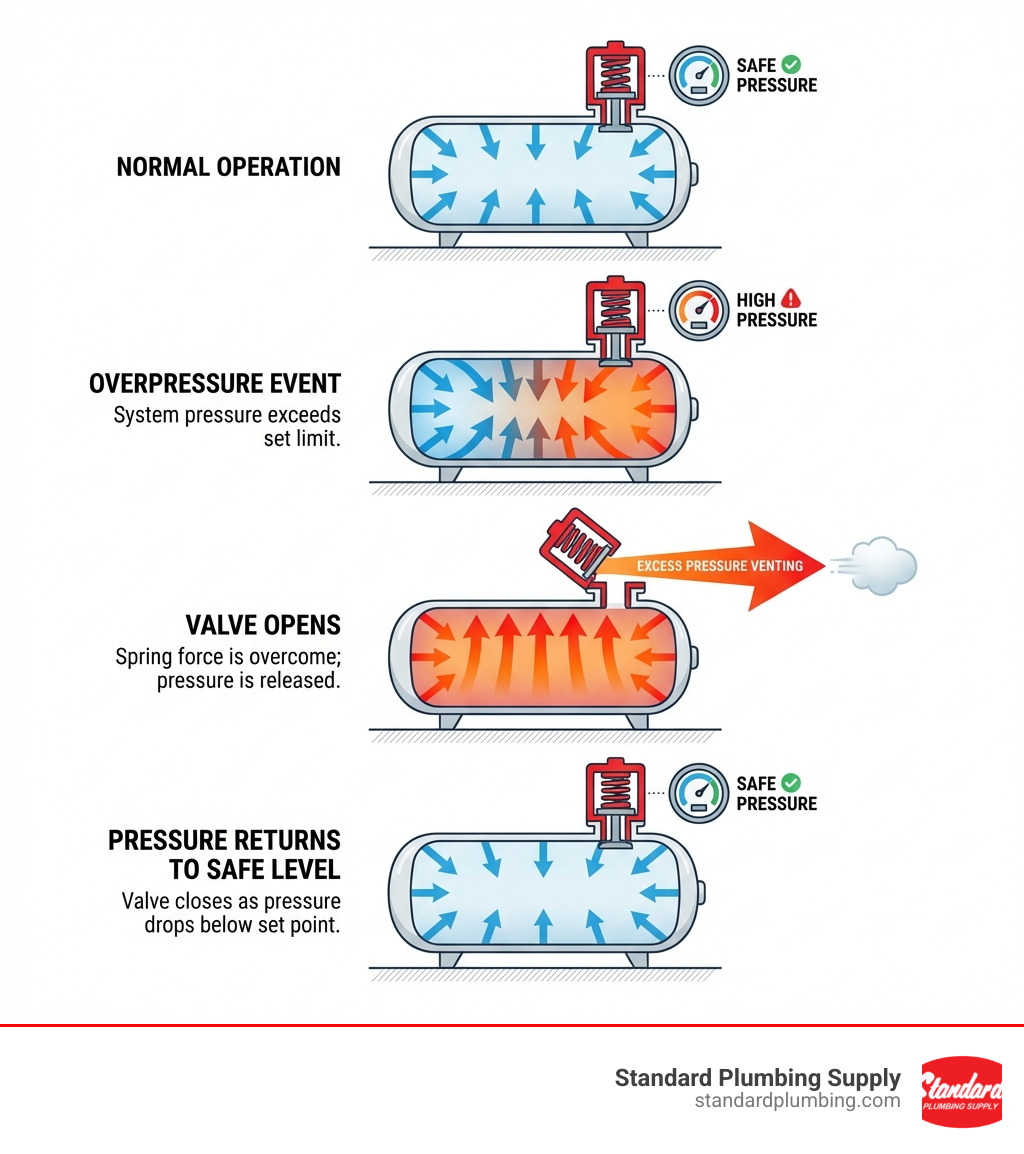
At its core, a pressure relief valve (PRV) is a marvel of mechanical engineering, designed for one critical purpose: to prevent over-pressurization. Imagine a balloon filling with too much air – eventually, it bursts. A PRV acts as a controlled release, letting just enough air (or liquid) out to prevent that burst.
How does this clever device work its magic? It’s a direct-acting mechanism, meaning the system pressure itself is the force that triggers its operation. When the system pressure rises above a predefined limit, it pushes against internal components within the valve. This force overcomes the opposing force of a spring, causing the valve to open. Once open, it allows the pressurized fluid to escape until the system pressure drops back to a safe level. Then, the spring force takes over again, resealing the valve. It’s a beautifully simple, neat solution for a potentially catastrophic problem.
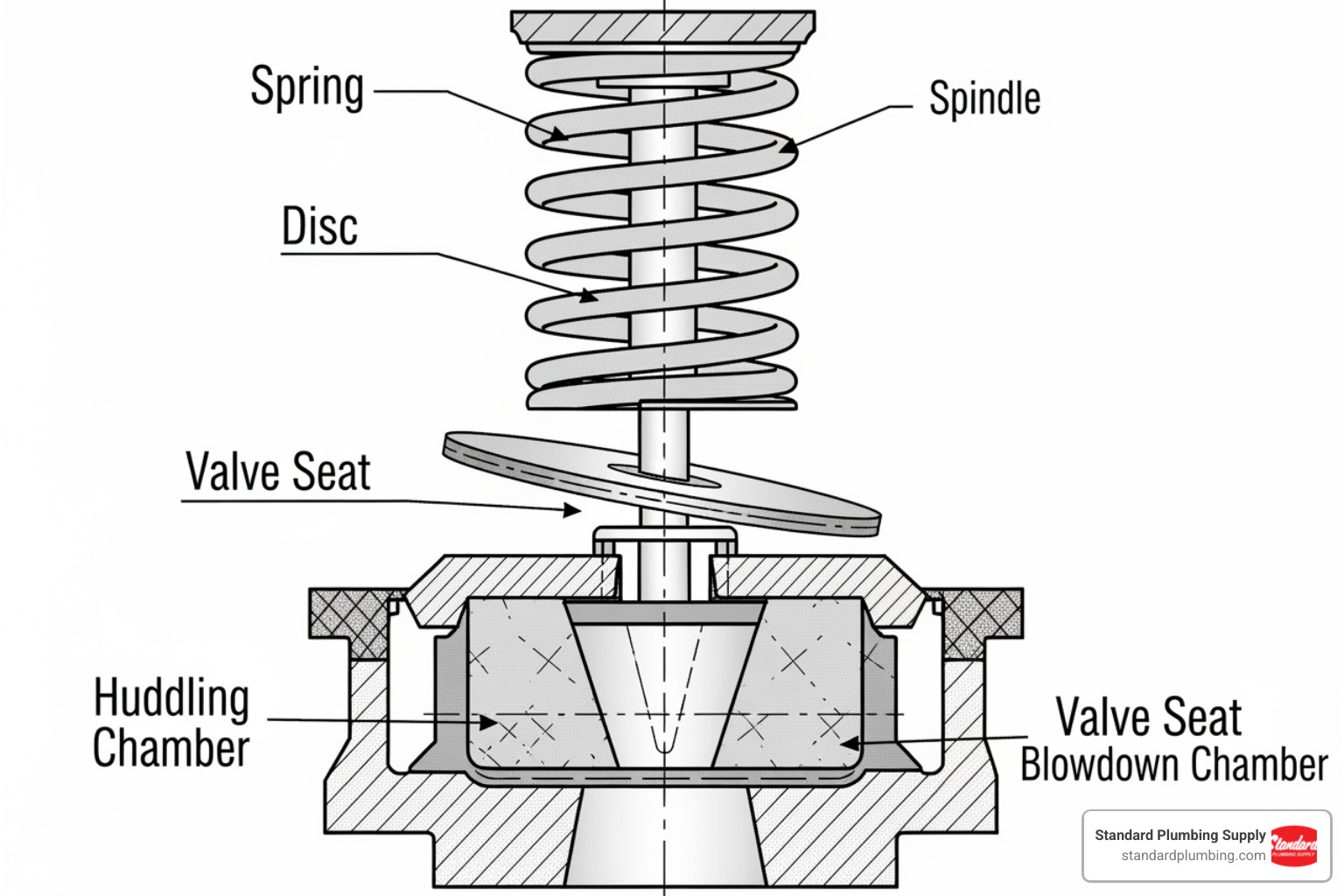
The key components typically include a spring-loaded mechanism holding a disc, poppet, or ball bearing against a valve seat. This creates a seal, keeping the system closed during normal operation. For many PRVs, especially spring-loaded types, a clever design feature called a “huddling chamber” helps ensure rapid and full opening. Once the valve begins to lift, the fluid enters this chamber, exposing a larger area of the disc to the system pressure. This amplifies the force, causing the valve to “pop” open more decisively. The momentum of the fluid flowing through the valve also contributes to this rapid opening, ensuring quick relief of pressure. The simplicity of this design means that the process fluid is the sole source of power, making the PRV inherently reliable, even during power outages.
The Mechanics of Pressure Release
Understanding the mechanics involves a few key terms:
- Set Pressure: This is the predetermined pressure at which the valve is designed to begin opening. It’s the critical threshold that, once exceeded, signals the PRV to act.
- Cracking Pressure: This is the actual pressure at which the valve first begins to open, allowing a detectable flow. It’s typically very close to the set pressure.
- Overpressure: This refers to the increase in pressure above the set pressure during the relieving process. PRVs are often designed to reach their full flow capacity at a certain percentage of overpressure (e.g., 10% above set pressure for unfired systems).
- Relieving Pressure: This is the set pressure plus the overpressure. It’s the maximum pressure reached in the system during a relief event.
- Reseating Pressure (or Closing Point Pressure): Once the excess fluid has been discharged and the system pressure drops, the valve closes. The reseating pressure is the pressure at which the valve fully closes and restores the seal.
- Blowdown: This is the difference between the set pressure and the reseating pressure, typically expressed as a percentage of the set pressure. For example, a 10% blowdown means the pressure must drop 10% below the set pressure before the valve fully closes. Blowdown can vary, usually between 2-20%, and some valves even have adjustable blowdown.
- Proportional Opening: Unlike safety valves that “pop” fully open almost instantly, many pressure relief valves open proportionally. This means they open only as much as needed to relieve the excess pressure, providing a more gradual and controlled release.
Reading the Blueprints: PRV Symbols
In technical diagrams, particularly Piping and Instrumentation Diagrams (P&IDs), symbols are used to represent components like pressure relief valves. These symbols provide a quick visual reference to the valve’s type and functionality.
The most common symbol for a fixed pressure relief valve typically involves a circle or square representing the valve body, with lines indicating inlet and outlet connections, and a zigzag line (representing a spring) or a diagonal line with an arrow pointing away from the flow direction, signifying the relief function.
For an adjustable pressure relief valve, an arrow is often drawn through the zigzag spring line or across the diagonal line on the symbol. This arrow indicates that the activation pressure can be manually modified, usually via a screw or knob to adjust the spring tension. While symbols can vary slightly depending on the industry or specific standard (e.g., ISO, ASME, ISA), the core elements generally remain consistent, allowing engineers and technicians to quickly understand the valve’s role in the system.
A Guide to the Different Types of Pressure Relief Valves
While the basic principle of a pressure relief valve remains consistent, pressure relief devices is diverse, with various types designed for specific fluids, operating conditions, and safety requirements. Understanding these functional differences is key to selecting the right valve for the job.
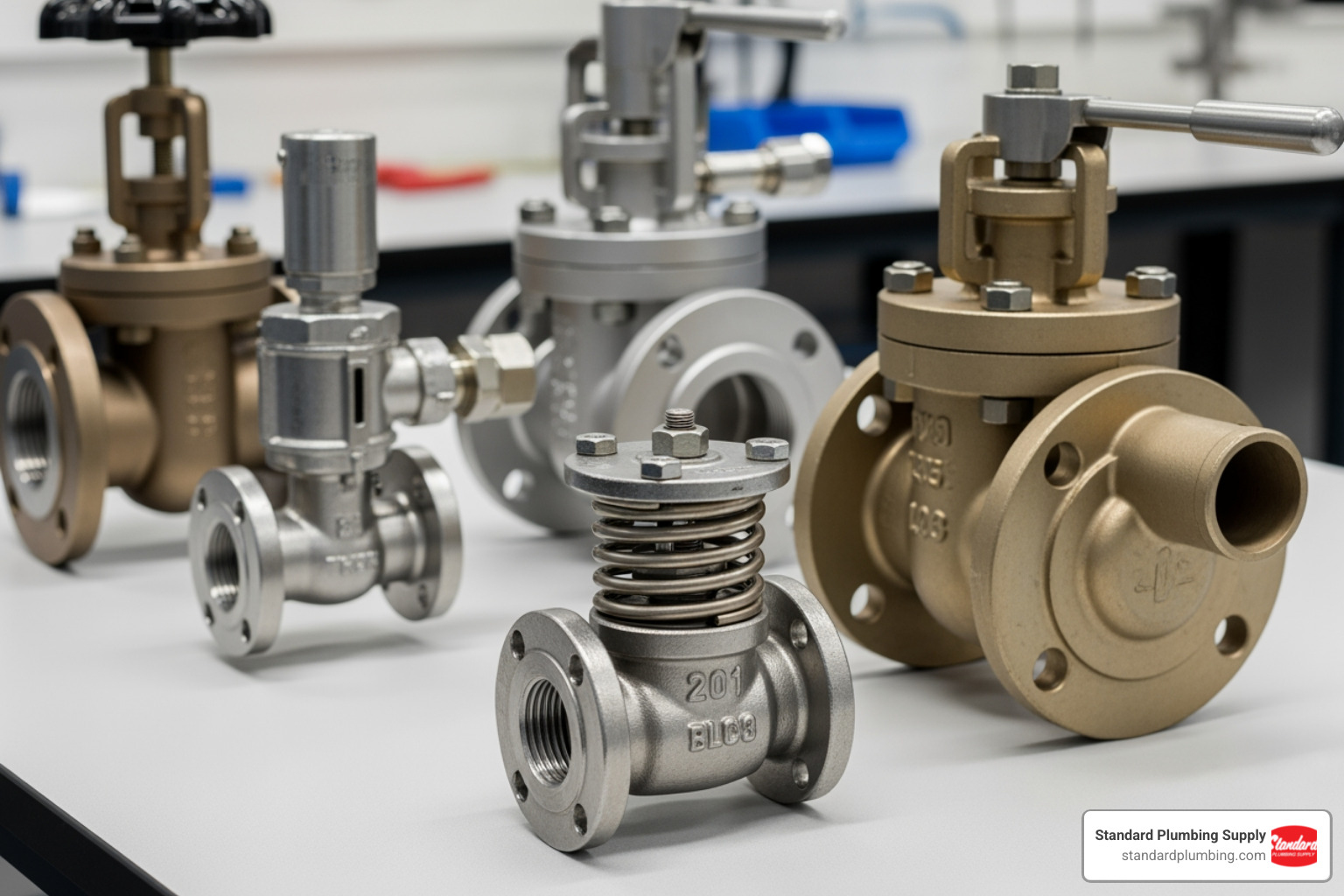
Pressure Relief Valve (PRV) vs. Safety Valve (SV)
It’s common to hear the terms “pressure relief valve” and “safety valve” used interchangeably, but there’s a subtle yet important distinction, especially in industrial contexts.
| Feature | Pressure Relief Valve (PRV) | Safety Valve (SV) |
|---|---|---|
| Primary Service | Liquid service | Gas or vapor (steam) service |
| Opening Action | Proportional lift; opens gradually as pressure increases | “Pop” action; opens rapidly to full lift |
| Flow Rate | Designed for slow, controlled relief | Designed for high, instantaneous discharge |
| Application | Protects against overpressure from thermal expansion, pump bypass | Protects against rapid overpressure from internal reactions or external heat |
| Common Use | Hydraulic systems, pump discharge, water heaters | Boilers, air receivers, steam systems |
Pressure Relief Valves (PRVs) are generally used for liquid service. They open gradually, or proportionally, as the pressure increases above the set point. This modulating action provides a controlled release of fluid, ideal for situations like thermal expansion in a closed liquid system or to prevent overpressure in a pump discharge line.
Safety Valves (SVs), on the other hand, are typically used for gas or vapor service. They are characterized by their “pop” action: once the set pressure is reached, they open almost instantaneously to full lift, providing a rapid, high-volume discharge. This snap-acting behavior is crucial for quickly relieving large amounts of pressure in systems like boilers or air compressors.
When a valve is designed for both liquid and gas/vapor service, it’s often called a Safety Relief Valve (SRV). These versatile devices combine features of both, offering a full lift for vapor service and a proportional lift for liquid service, though their set pressure accuracy is usually optimized for one fluid type.
Common Functional Types and Their Applications
Beyond the basic PRV/SV distinction, several other specialized types exist:
- Safety Relief Valves (SRV): As mentioned, these are hybrid valves suitable for both liquid and gas/vapor service. They are critical in many industrial applications where systems might contain either or both phases of fluid.
- Thermal Relief Valves: These are a specific type of relief valve optimized for very low flow rates. Their primary function is to manage pressure changes caused by thermal expansion in trapped volumes of liquid, such as in pipelines or heat exchangers when exposed to heat.
- Pilot-Operated Relief Valves (PORV): These valves use a small, external pilot valve to control the main relief valve. The pilot senses system pressure and, when the set point is reached, it directs system pressure to open the main valve. PORVs offer precise control, tighter sealing, and can operate closer to the system’s normal operating pressure compared to conventional spring-loaded valves. They are often found in critical applications in oil and gas or chemical processing.
- Vacuum Relief Valves: While most relief valves protect against overpressure, vacuum relief valves protect equipment from excessive internal vacuum. If the pressure inside a vessel drops too low (e.g., during cooling or draining), these valves open to admit air or an inert gas, preventing implosion. They are particularly important for storage tanks.
- Balanced Bellows Valves: In some systems, there’s variable backpressure at the valve’s outlet. This backpressure can affect the set pressure and performance of conventional relief valves. Balanced bellows valves feature a bellows that isolates the spring from the backpressure, ensuring that the set pressure remains unaffected by changes in outlet pressure. This makes them ideal for systems discharging into a common header or pressurized system.
Critical Applications and Industries
The pressure relief valve is an indispensable safety component across a vast spectrum of applications, from the smallest residential water heater to the largest industrial complexes. Its role is simple yet profound: to prevent catastrophic failure, ensuring the safety of people, property, and processes.
In Your Home and Business
Even in our daily lives, these unsung heroes are hard at work. We often don’t think about them until there’s a problem, but they’re silently protecting us.
- Water Heaters: Perhaps the most common residential application is the temperature and pressure (T&P) relief valve found on water heaters. This critical device releases water if either the temperature or pressure inside the tank exceeds safe limits, preventing potential explosion due to thermal expansion. We carry a variety of pressure relief valves suitable for these applications.
- Boiler Systems: In homes and businesses that rely on boilers for heating, PRVs are paramount. They control pressure levels and release excess steam or hot water, preventing the boiler from becoming a hazard. Regular maintenance, including checking the PRV, is essential for these systems.
- Plumbing Systems: Beyond water heaters, PRVs protect various parts of your plumbing system from over-pressurization, which can occur due to thermal expansion from water heating or sudden changes in water flow. They help protect plumbing connections and can even contribute to reducing utility costs by preventing leaks and damage. We also see integrated solutions, like some valves featuring flood sensors with SentryPlus Alert technology, offering an extra layer of protection for your property.
In Industrial Settings
The industrial landscape, with its complex processes and high-stakes operations, relies heavily on pressure relief valves for safety and operational integrity.
- Oil and Gas: From refining to petrochemicals and natural gas processing, PRVs are fundamental. They protect pressure vessels, pipelines, and storage tanks from overpressure events during processing, transport, and storage of volatile fluids. This includes safeguarding against scenarios like rapid pressure spikes when filling a storage tank.
- Chemical Plants: Chemical reactions, especially exothermic ones, can generate rapid and significant pressure increases. PRVs are vital for containing these events, preventing explosions, and ensuring the safety of personnel and the surrounding environment. Organizations like the Design Institute for Emergency Relief Systems (DIERS) and the European DIERS Users’ Group (EDUG) were formed specifically to develop technology and methods for sizing these critical relief systems for chemical reactors. You can learn more about their work here: DIERS and EDUG: European DIERS Users’ Group.
- Power Generation: Whether in conventional power plants or nuclear reactors, PRVs are non-negotiable safety devices. They protect critical steam systems, heat exchangers, and other high-pressure equipment from exceeding their design limits.
- Hydraulic and Pneumatic Systems: In systems that use pressurized liquids (hydraulics) or gases (pneumatics) to transmit power—think construction equipment, aircraft, or industrial automation—PRVs prevent damage to sensitive equipment and ensure consistent operation by relieving excess pressure. They can even help prevent issues like cavitation in pumps by diverting excess pressure.
- Pressure Vessels: Any vessel designed to hold fluids under pressure, across virtually all industries, requires overpressure protection. As highlighted by the Petroleum Equipment & Technology journal, these valves are a cornerstone of safety in such critical infrastructure.
Selection, Installation, and Maintenance Best Practices
Choosing, installing, and maintaining a pressure relief valve correctly is not just about compliance; it’s about safeguarding lives, protecting valuable assets, and ensuring the longevity of your entire system. This is where professional guidance and attention to detail truly pay off.
How to Select the Right Pressure relief valve
The selection process for a pressure relief valve is critical and depends on several factors:
- Set Pressure: This is the most crucial parameter. The valve’s set pressure must be appropriate for the system’s maximum allowable working pressure (MAWP) and operating conditions.
- Flow Capacity: The valve must be capable of discharging the maximum potential flow rate during an overpressure event to prevent further pressure buildup. This requires careful sizing calculations, often guided by standards like API 5210-1, Sizing and Selection of Pressure-Relieving Devices.
- Material Compatibility: The valve’s body and seal materials must be compatible with the fluid it will handle to prevent corrosion, degradation, or leaks. Common body materials include brass and stainless steel. For seals, FKM offers excellent chemical resistance for oils and solvents but isn’t suitable for hot water or steam, while PTFE (Teflon) is highly resistant to nearly all fluids but lacks flexibility.
- Operating Temperature: The valve and its components must be rated for the maximum operating temperature of the system.
- Connection Size and Type: The inlet size of the PRV should match the pipe size it connects to to avoid flow constriction. Various connection types (e.g., FNPT, MNPT, MGHT) are available to integrate seamlessly into your plumbing.
- Application Specifics: Consider whether you need a proportional-opening PRV for liquid service, a snap-acting safety valve for gas/vapor, or a specialized valve like a balanced bellows for variable backpressure.
When you’re looking for the right valve, our team at Standard Plumbing Supply can help you steer these specifications to ensure you get the perfect fit for your project.
Proper Installation Procedures
Correct installation is as important as selecting the right valve. Here are some best practices:
- Vertical Mounting: Most PRVs are designed for vertical, upright installation to ensure proper drainage and operation.
- Proximity to Vessel: Install the valve as close as possible to the protected vessel or system to minimize pressure drop in the inlet piping.
- Inlet Piping: The inlet piping should have an inside diameter no smaller than the valve’s inlet connection to avoid flow constriction. Keep it as short and direct as possible.
- Discharge Piping: The outlet piping should be larger than the valve’s outlet to prevent backpressure and ensure unrestricted flow. It must be simple, direct, and properly drained to prevent fluid accumulation. Crucially, discharge piping needs to be independently supported and braced to withstand reactive thrust forces when the valve opens. If the fluid is hazardous, the discharge must be routed to a safe location or collection system.
- Avoiding Overtightening: When installing, avoid overtightening the valve, as this can distort the body or damage internal components, leading to leaks or malfunction. For flanged valves, ensure bolts are drawn down evenly. For threaded valves, use hex flats on the inlet bushing, not the valve body.
- Cleanliness and Handling: Thoroughly clean all system connections before installation. Use appropriate gaskets that do not impede flow. Handle valves with care; rough handling or dropping can alter factory settings or damage seating surfaces. Store valves in their original containers in a clean, protected environment until ready for use.
- Bonnet Vents: For balanced bellows valves, ensure the bonnet vent is never plugged and is piped to a safe location if the fluid is hazardous, as it provides a telltale sign of bellows failure or leaks.
Common Issues, Maintenance, and Replacement
Even the most reliable pressure relief valve can encounter issues. Regular inspection and maintenance are vital for ensuring continued safety and performance.
Common issues include:
- Leaking or Weeping: A continuous drip or audible hiss from the valve when the system pressure is below the set pressure. This often indicates dirt on the seating surface, corrosion, or a damaged seat/disc.
- Chattering: Rapid, uncontrolled opening and closing of the valve, which can damage the valve and connected piping. This is often caused by excessive pressure drop in the inlet piping or an improperly sized valve.
- Failure to Open: The valve does not open when the system pressure exceeds the set pressure. This is a critical failure that can lead to catastrophic system rupture. Causes include corrosion, seized components, or improper installation.
- Corrosion: Depending on the fluid and environment, corrosion can degrade valve materials, leading to leaks or component failure.
Maintenance and Inspection:
We recommend regular visual inspections for signs of leaks, corrosion, or damage. For some applications, a manual “pop test” (briefly opening the valve with a lever) can be performed, but this should only be done if specified by the manufacturer and local codes, and only if it’s safe to discharge the fluid. For critical systems, periodic professional testing and calibration are essential.
Replacement:
Pressure relief valves don’t last forever. We advise replacing a valve if it:
- Leaks or weeps persistently.
- Shows visible signs of corrosion or physical damage.
- Fails to open or close properly during testing.
- Has reached its recommended service life. Many manufacturers suggest replacement every 3-5 years, especially for water heater T&P valves, though this can vary based on operating conditions and manufacturer guidelines.
For boiler PRVs, replacement should always be handled by a fully-qualified and registered professional. Always turn off the system and drain it before replacing a PRV, then refill and test the new valve thoroughly.
Codes, Standards, and Legal Requirements
The widespread use of pressure relief valves is not merely a recommendation; it’s often a legal imperative. In our service areas across Arizona, California, Colorado, Idaho, Nebraska, Nevada, Oregon, Utah, and Wyoming, as in most industrialized regions, protecting pressure vessels and equipment with these devices is mandatory. These requirements are put in place to ensure public safety, prevent industrial accidents, and maintain environmental integrity. Adhering to these codes and standards is paramount for ensuring the reliability and safe operation of any pressurized system.
Key Governing Codes
Several key codes and standards dictate the design, selection, installation, and maintenance of pressure relief valves:
- ASME Boiler & Pressure Vessel Code (BPVC): This is one of the most widely recognized and adopted standards globally, including throughout the United States. The ASME Code provides comprehensive rules for the design, fabrication, and inspection of boilers and pressure vessels, and mandates that these vessels include overpressure protection. This code specifies the types and designs of allowable protection devices, often requiring PRVs to open within 10% overpressure for unfired systems. You can find a list of countries accepting the ASME Boiler & Pressure Vessel Code to see its global reach.
- API Standards (e.g., API 520, API 521): Developed by the American Petroleum Institute, these standards are critical for the petroleum refining, petrochemical, and related industries. API 520, Part 1: Sizing, Selection, and Installation of Pressure-relieving Devices Part I—Sizing and Selection provides detailed guidance on the sizing and selection of pressure-relief devices for equipment with a maximum allowable working pressure (MAWP) of 15 psig or greater. API 521, in turn, focuses on pressure-relieving and depressuring systems.
- Pressure Equipment Directive (PED) 97/23/EC (European Union): While primarily an EU standard, it’s important to recognize the global landscape of safety regulations. This directive sets essential safety requirements for pressure equipment within the European Economic Area. See the PED 97/23/EC for more details. For operations within our service areas, however, ASME and API standards are the primary governing bodies.
These codes are not just guidelines; they are legally binding in many jurisdictions, underscoring the critical nature of proper PRV application. Our team at Standard Plumbing Supply is well-versed in these requirements and can help ensure your projects meet the necessary safety and regulatory standards.
Conclusion
The pressure relief valve is indeed an unsung hero, a silent guardian constantly at work to ensure the safety and integrity of pressurized systems everywhere. From the hot water heater in your home to the complex machinery in industrial plants across Arizona, California, Colorado, Idaho, Nebraska, Nevada, Oregon, Utah, and Wyoming, these devices are fundamental to preventing catastrophic failures, protecting valuable equipment, and most importantly, safeguarding lives.
We’ve explored how these valves work, from the intricate dance of spring force and pressure differentials to the critical terminology of set pressure and blowdown. We’ve seen the diverse range of types, each custom for specific applications—be it a proportional-opening PRV for liquid service or a snap-acting safety valve for gas. And we’ve emphasized that whether you’re dealing with residential plumbing or industrial processes, proper selection, meticulous installation, and diligent maintenance are non-negotiable best practices.
At Standard Plumbing Supply, we understand the critical role these components play. Our commitment to providing high-quality, compliant solutions means you can trust us to help you find the right pressure relief valve for any application. For all your project needs, from valves to fittings, explore our extensive plumbing and PVC fittings catalog. We’re here to help you build safer, more reliable systems.
