
Why MDPE Barrier Pipe is Critical for Safe Water Supply
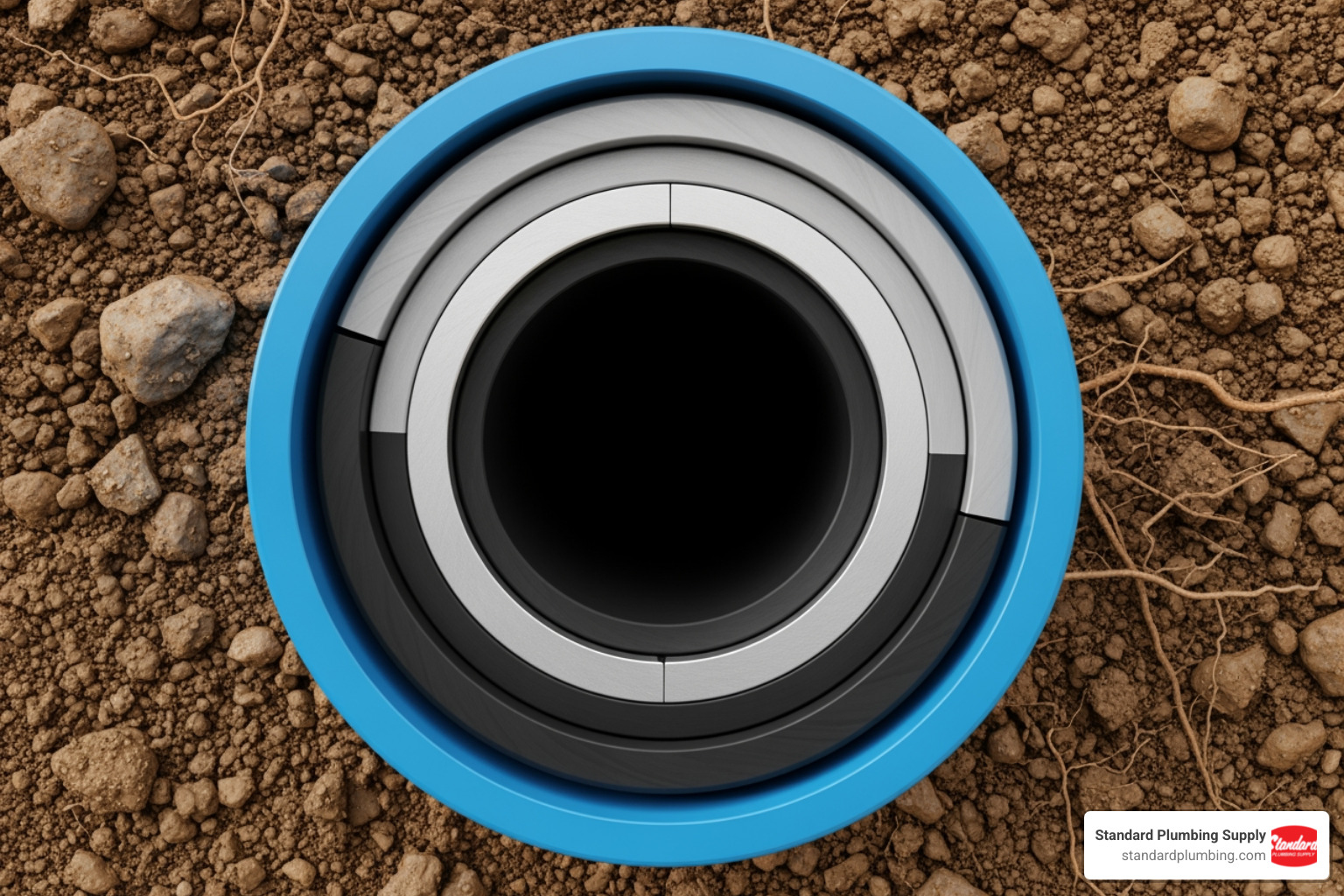
MDPE barrier pipe is a specialized multi-layer water supply pipe designed to prevent contaminants in the soil from permeating into your drinking water. Here’s what you need to know:
What is MDPE Barrier Pipe?
- A blue polyethylene pipe with an aluminum barrier layer sandwiched between inner and outer plastic layers
- Specifically engineered to stop hydrocarbons, chemicals, and other soil contaminants from seeping through the pipe wall
- Often identified by brown marker stripes on the exterior
When You Need It:
- Brownfield sites (previously developed land with potential contamination)
- Areas near former industrial sites, landfills, petrol stations, or military land
- Any location where soil contamination is suspected or confirmed
- Required by UK Water Supply Regulations for contaminated ground
Key Difference from Standard MDPE:
- Standard blue MDPE = suitable for clean ground (greenfield sites)
- MDPE barrier pipe = essential for contaminated ground protection
If you’re working on new housing developments, commercial projects, or any construction on previously used land, understanding barrier pipe isn’t optional—it’s about protecting public health and meeting regulatory requirements.
The choice between standard MDPE and barrier pipe typically comes down to one question: Has this land been developed before? If yes, or if there’s any doubt, barrier pipe is usually the safer choice. Many developers now install it proactively to avoid soil testing costs and ensure compliance.
As Jacob Reese, Vice President of Standard Plumbing Supply and a third-generation leader in the plumbing industry, I’ve helped contractors steer MDPE barrier pipe selection for countless projects across the Western United States. My experience, from sweeping warehouses at age eight to managing our Vendor Managed Inventory program, has given me knowledge of how critical proper pipe selection is for long-term project success.
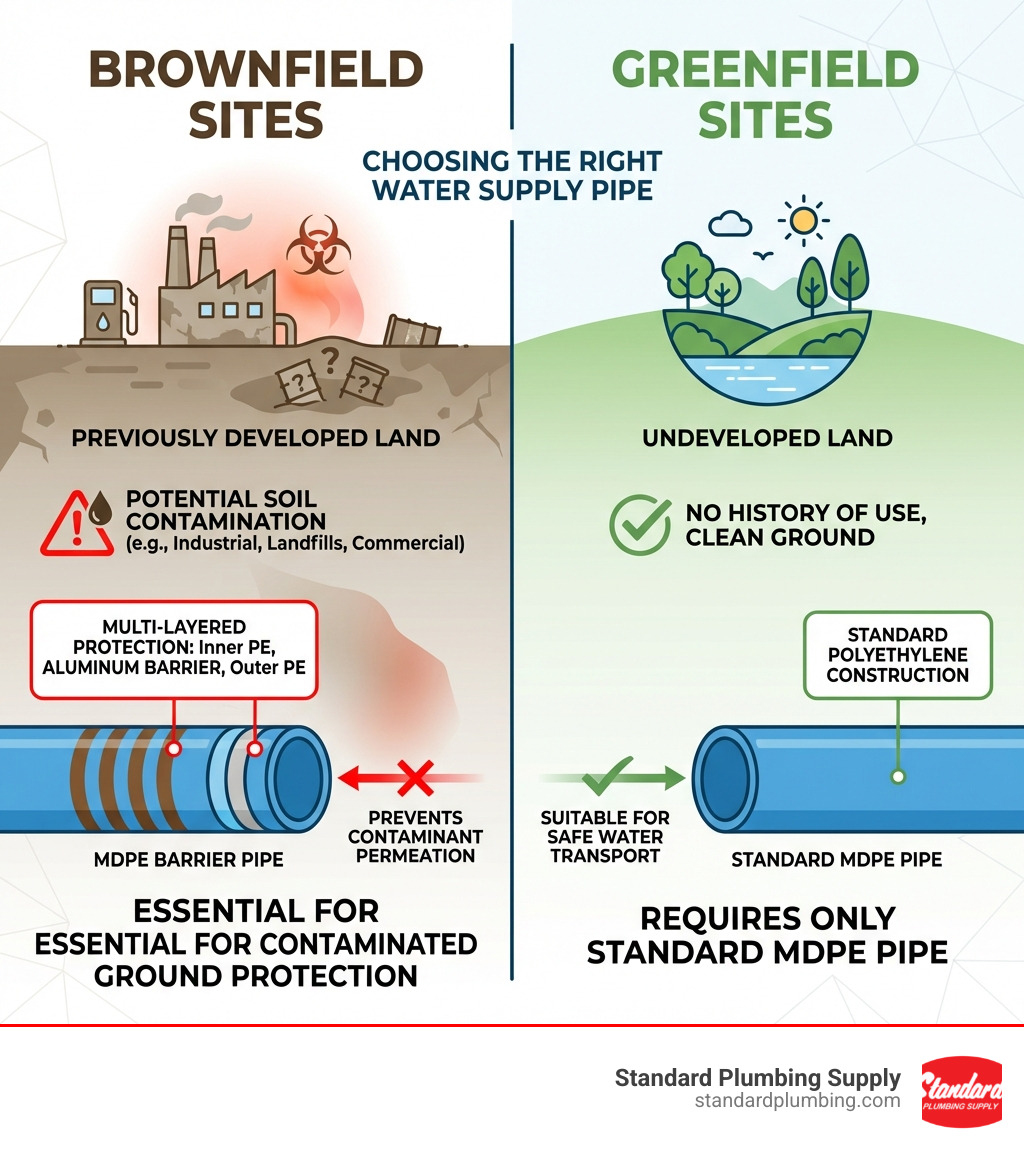
What is MDPE Barrier Pipe and Why is it Essential?
At its core, MDPE barrier pipe is a sophisticated solution designed to safeguard our most precious resource: clean, potable water. Its primary purpose is to prevent harmful substances present in the surrounding soil from seeping into the water supply. This protection is crucial, especially in areas where the ground might be compromised. We’re talking about a pipe that acts as a fortress for your drinking water, ensuring it remains pure from the source to the tap.
The magic behind this protection lies in its multi-layer construction. Unlike a standard pipe, MDPE barrier pipe incorporates an impermeable aluminum barrier layer. This layer is carefully sandwiched between an inner and outer polyethylene (PE) layer. Think of it like a protective shield, specifically engineered to block the movement of contaminants through the pipe wall. The outer layer is typically blue, just like regular MDPE pipe for potable water, but it often features distinct brown marker stripes. These stripes are a visual cue, letting installers and utility workers know they’re dealing with a specialized barrier product.
Understanding Brownfield Sites and Contamination Risks
To truly appreciate the necessity of MDPE barrier pipe, we need to understand the environments where it shines brightest: brownfield sites. Simply put, a brownfield site is any land that has been previously developed and is now disused or derelict. These sites often have a history of industrial or commercial use, or may have even served as landfills. In contrast, a greenfield site is land that has never been developed before, offering a pristine canvas.
The challenge with brownfield sites is the potential for soil contamination. Over decades, industrial activities can leave behind a cocktail of harmful substances, including hydrocarbons (like those found in fuels and oils) and various chemicals. These contaminants can linger in the soil for extended periods, posing a significant risk to underground infrastructure, especially water pipes. Standard plastic pipes, while durable, can allow these substances to permeate through their walls over time, compromising the quality of the drinking water they carry. This is where the aluminum barrier layer in MDPE barrier pipe becomes a non-negotiable hero, providing a robust defense against such ingress. You can find more information about how water companies assess contaminated land in resources such as brownfield site guidance.
For more detailed, practical examples of how barrier pipe is specified on contaminated ground, many regional water companies publish technical guidance, such as this guidance from water authorities on pipe selection.
When is MDPE Barrier Pipe Required?
The decision to use MDPE barrier pipe isn’t just a good idea; it’s often a regulatory requirement in many areas. While specific regulations vary by state and local municipality across our service areas in Arizona, California, Colorado, Idaho, Nebraska, Nevada, Oregon, Utah, and Wyoming, the underlying principle is consistent: protect public health. For instance, in the UK, water authorities may mandate barrier pipe systems to comply with Section 4 of the Water Supply (Water Fittings) Regulations 1999 and DWI Regulations 31 and 33 for contaminated ground. While these specific UK regulations don’t apply directly to us, they illustrate the global recognition of this issue. We always advise checking with local water authorities and building codes in your specific area to ensure compliance.
MDPE barrier pipe is specifically recommended or required in a variety of situations:
- Brownfield Developments: New housing or commercial projects built on reclaimed land or sites with a history of industrial use.
- Landfill Sites: Areas adjacent to or formerly used as landfills, where chemical leachate can be a concern.
- Petrol Stations: Sites where fuel spills could have contaminated the ground.
- Agricultural Areas: Where pesticides and fertilizers might have leached into the soil.
- Military Land: Former military sites can have a range of contaminants.
- River Crossings and Flood-Prone Areas: Where water might carry contaminants.
In some cases, even on greenfield sites, developers choose to install MDPE barrier pipe proactively. This can eliminate the need for costly and time-consuming soil reports, streamlining the approval process and providing an added layer of safety. It’s a smart move that often pays off in peace of mind and project efficiency.
Key Differences: Standard MDPE vs. MDPE Barrier Pipe
Understanding the distinction between standard MDPE pipe and MDPE barrier pipe is fundamental for any plumbing project, especially those involving water mains. While both are made from Medium Density Polyethylene and are excellent for water conveyance, their internal structure and intended applications differ significantly.
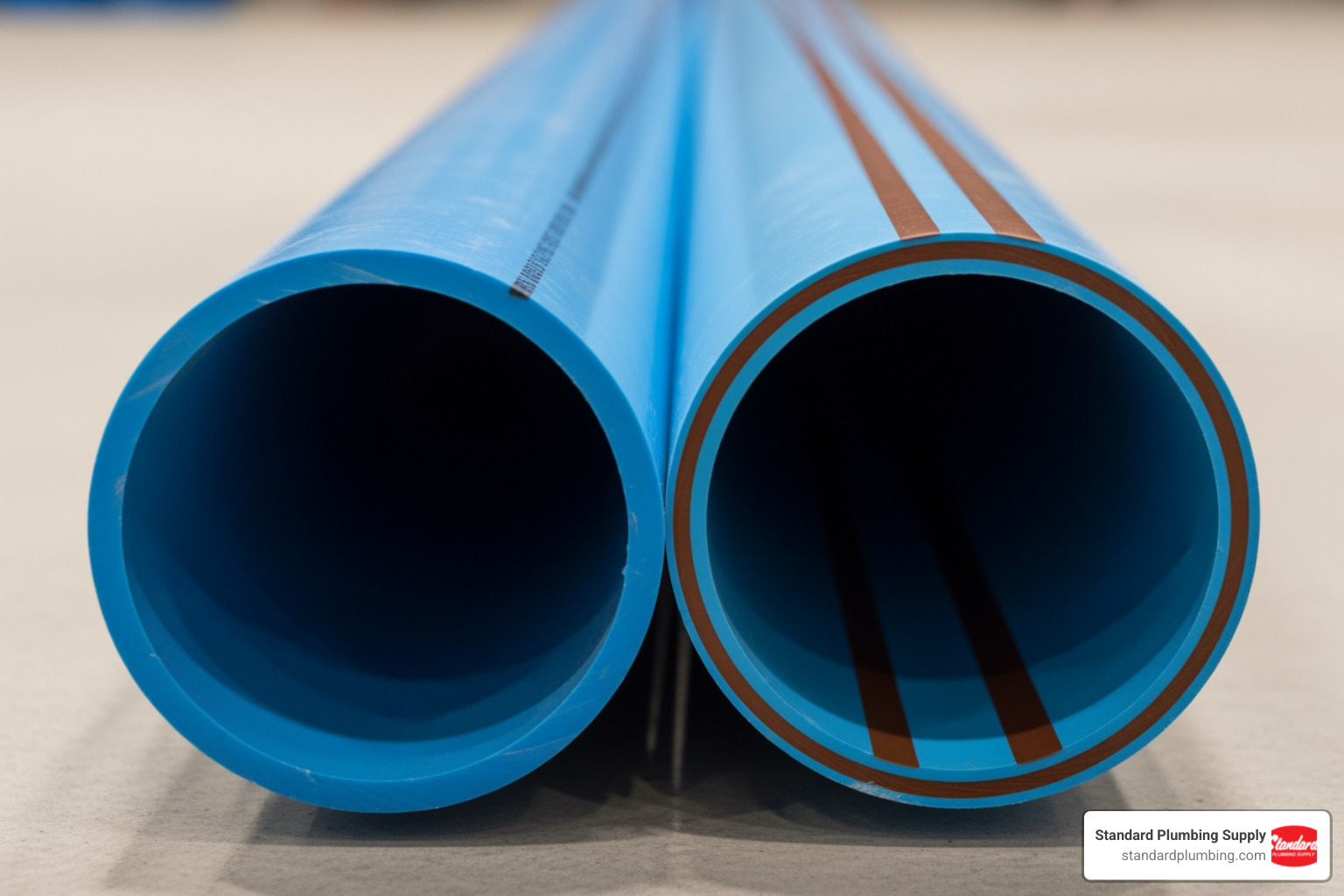
The most striking difference lies in their construction and, consequently, their permeability. Standard blue MDPE pipe is designed for use in clean, uncontaminated ground, often referred to as greenfield sites. It’s robust, flexible, and resistant to corrosion, making it a reliable choice for potable water distribution in suitable environments. However, it lacks the specialized defense against soil-borne contaminants.
MDPE barrier pipe, on the other hand, is engineered with an additional, impermeable barrier layer. This makes it impervious to the hydrocarbons and chemicals that can permeate standard plastic pipes. Visually, standard MDPE is typically solid blue, while MDPE barrier pipe maintains its blue color but is distinguished by those tell-tale brown stripes running along its length. This visual cue is vital for quick identification on site, preventing costly errors.
When it comes to cost, MDPE barrier pipe is generally more expensive than standard MDPE due to its complex multi-layer construction and specialized materials. However, this increased investment is negligible compared to the potential costs associated with water contamination, regulatory fines, and public health risks. It’s an investment in safety and long-term reliability.
Construction and Materials of MDPE Barrier Pipe
Let’s dig a bit deeper into what makes MDPE barrier pipe so effective. Its construction is a marvel of modern engineering, typically involving several distinct layers. At its heart is an inner PE (polyethylene) core, which forms the main conduit for the water. Surrounding this core are often adhesive layers, ensuring that all components bond together securely. The star of the show, however, is the impermeable aluminum layer. This metallic layer is the true barrier, preventing the migration of any hazardous substances. Finally, an outer protective PE layer encases the entire structure, providing durability, UV resistance, and protection against physical damage during installation and use.
Due to its specialized function, MDPE barrier pipe goes by several alternative names in the industry. You might hear it referred to as “multi-layer pipe,” “contaminated land pipe,” or simply “brownfield pipe.” While these names highlight its purpose, the core technology remains consistent: a robust defense for potable water.
Performance in Contaminated Environments
The real test for any water pipe comes when it’s buried in challenging environments. In contaminated ground, standard MDPE pipe, over time, can succumb to the relentless permeation of hydrocarbons and chemicals. These substances can slowly migrate through the pipe wall, tainting the water supply and potentially posing health risks. It’s a silent threat that can go unnoticed until it’s too late.
MDPE barrier pipe stands as a protective shield in these very conditions. Its aluminum layer acts as an impenetrable barrier, effectively blocking the ingress of these contaminants. This ensures the long-term water safety for communities, preventing not only health hazards but also undesirable taste and odor issues that can arise from tainted water. By using MDPE barrier pipe, we are not just installing a conduit; we are installing a commitment to health and quality.
A Head-to-Head Comparison: MDPE vs. PEX Barrier Pipe
While MDPE barrier pipe is a champion for underground mains, it’s important to understand that it’s not the only “barrier pipe” out there. PEX (cross-linked polyethylene) also comes in barrier pipe variants, primarily for internal plumbing. Let’s compare these two to help you choose the right material for your specific plumbing project.
| Feature | MDPE Barrier Pipe | PEX Barrier Pipe |
|---|---|---|
| Application Focus | Underground potable water mains, contaminated land | Internal hot & cold potable water distribution |
| Flexibility | Flexible, but more rigid than PEX; coils well | Highly flexible, excellent for tight spaces |
| Jointing Methods | Compression fittings, electrofusion, butt fusion | Crimp, expansion, push-fit fittings |
| UV Resistance | Good for buried applications; outer layer for UV | Limited; typically not for prolonged outdoor exposure |
| Cost | Higher than standard MDPE, but cost-effective for its purpose | Varies; competitive with copper for internal plumbing |
| Typical Diameters | 25mm to 180mm+ (1-inch to 7-inch+) | 1/2-inch to 1-inch (common for residential) |
Primary Applications
MDPE barrier pipe is primarily designed for underground use, connecting distribution mains to properties, especially where the soil is contaminated. It’s built to withstand the rigors of burial and provide a robust, long-lasting solution for your main water supply line. For large-scale projects like new developments in California, Utah, or Colorado, this is your go-to for safe water delivery.
PEX barrier pipe, on the other hand, typically refers to PEX tubing with an oxygen barrier layer. This is crucial for internal heating systems (like radiant floor heating) where oxygen permeation could corrode metal components. While not designed for soil contamination, its barrier properties are vital for its specific applications within a building’s hot and cold potable water plumbing system. So, while both have “barrier” in their name, their applications are distinctly different. Think of MDPE for the journey to the house, and PEX for the journey within.
Installation and Handling
When it comes to installation, both pipes have their unique characteristics. MDPE barrier pipe is flexible enough to be coiled and laid in trenches, but it’s more rigid than PEX. This rigidity can be an advantage for maintaining straight runs underground. However, its bending radius is larger than PEX, meaning it requires more space for turns.
PEX, with its exceptional flexibility, can snake through walls, ceilings, and floors with ease, often requiring fewer fittings and reducing installation time for internal plumbing. It has a much tighter bending radius, which is a huge benefit in confined spaces. The tools required also differ: MDPE uses specialized compression, electrofusion, or butt fusion tools, while PEX relies on crimping, expanding, or push-fit tools. We at Standard Plumbing Supply offer a wide range of fittings and tools for both, ensuring our customers across Nevada, Idaho, and Oregon have what they need for efficient and secure installations.
Installation and Best Practices for MDPE Barrier Pipe
Proper installation is paramount to ensuring the long-term effectiveness of MDPE barrier pipe. It’s not just about getting the pipe in the ground; it’s about doing it right to protect the water supply for decades.
One critical consideration is installation depth. To reduce the risk of freezing, especially in colder regions like Wyoming or the higher elevations of Colorado, MDPE barrier pipe should be installed at a minimum depth of 900mm (approximately 3 feet) below ground level. If any sections of the pipe are exposed to freezing temperatures, such as where it enters a building or crosses a shallow trench, proper insulation is essential. Additionally, avoiding “dead legs” in pipe runs—sections of pipe where water can sit stagnant—helps minimize the risk of water freezing and damaging the pipe.
Cutting and Joining Techniques
Working with MDPE barrier pipe requires careful attention to detail, particularly when cutting and joining.
- Cutting: We recommend using a specialized ratchet cutter for clean, precise cuts. These cutters are designed to slice through the multi-layer pipe without damaging the inner aluminum barrier. It’s crucial to keep the cutter straight during the process to ensure a smooth, perpendicular cut that protects the integrity of the inner layers.
- Joining: The most common joining methods include compression fittings and electrofusion.
- Compression fittings are popular for smaller diameter pipes (e.g., 25mm to 63mm) due to their ease of use, cost-effectiveness, and not requiring specialist tools.
- Electrofusion is the preferred method for larger diameters (typically 90mm and above). This technique uses fittings with built-in electric heating elements that, when energized, melt and fuse the pipe ends together, creating a strong, leak-proof joint.
- Butt fusion is another method used for the largest sizes, requiring specialized machinery to heat and press pipe ends together.
It is absolutely vital to use fittings specifically designed for MDPE barrier pipe. Standard MDPE fittings will not fit correctly due to the barrier pipe’s extra layers and slightly larger outer diameter, which could compromise the entire system.
Compatible Fittings for MDPE Barrier Pipe
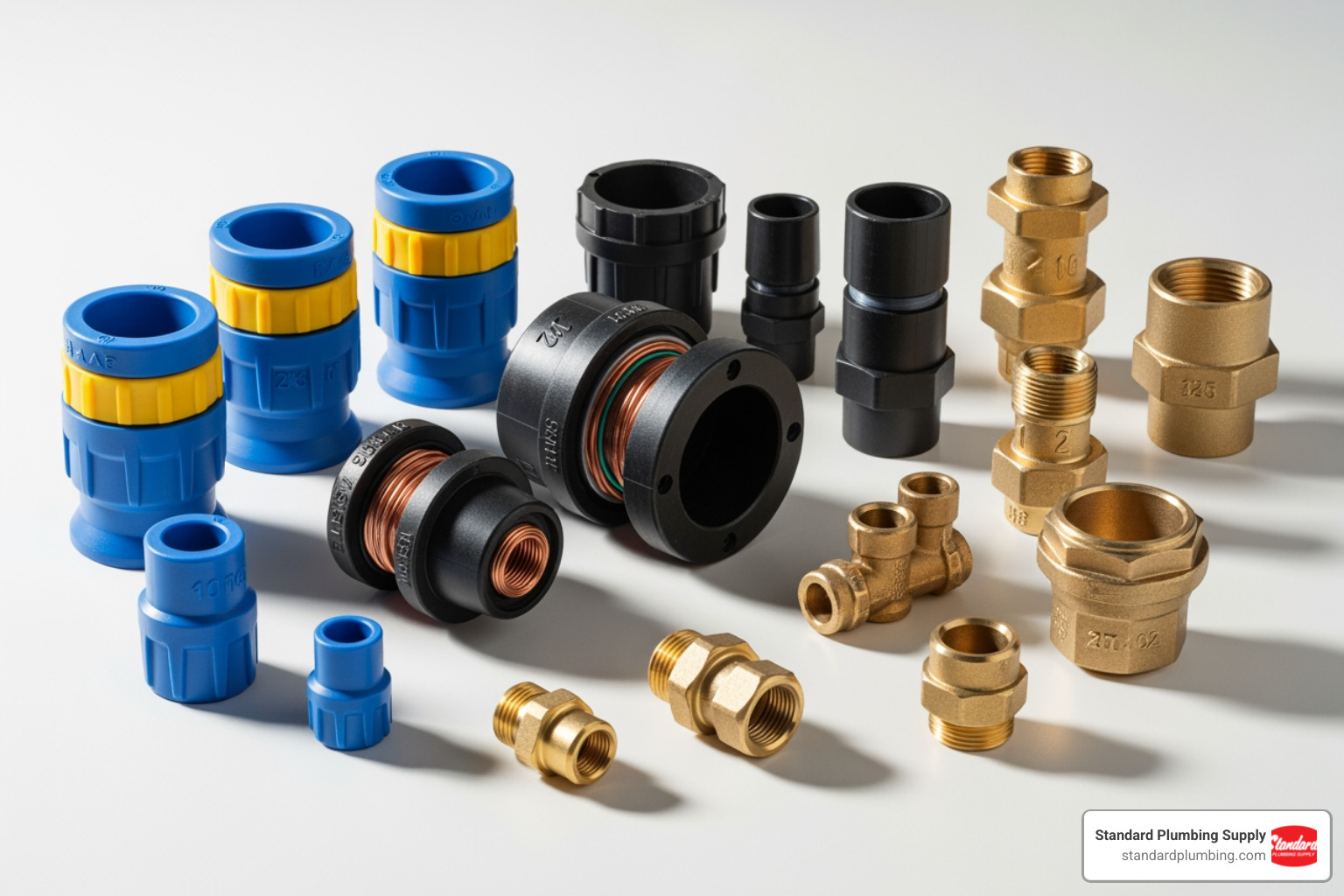
The success of your MDPE barrier pipe system hinges on using the right compatible fittings. These fittings are engineered to accommodate the multi-layered structure of the barrier pipe and ensure a secure, leak-proof connection that maintains the integrity of the barrier.
Common types of fittings that are compatible with MDPE barrier pipe include:
- Compression adaptors: Used to connect barrier pipe to other pipe materials or thread types.
- Couplers: For joining two lengths of barrier pipe together.
- Elbows: To change the direction of the pipe run.
- Tees: For branching off the main line.
- Stopcocks: To control water flow.
- Reducers: To connect pipes of different diameters.
These fittings are typically made from durable materials like polypropylene, often with acetal grab rings and nitrile seals to ensure a tight, long-lasting connection. For more detailed information on specific fittings, you can always check product specifications from manufacturers or consult our own extensive catalog.
Connecting to Buildings and Infrastructure
The final step in establishing a safe water supply is connecting the MDPE barrier pipe to a residential or commercial building. This transition needs to be handled with care to maintain the water’s integrity.
This usually involves using a specialized ferrule off-take, often a right-angle self-tapping type. This fitting allows a smaller diameter barrier pipe (commonly 25mm or 32mm) to branch off the main line and be run into the building. In some instances, a barrier boundary box may be installed. These boxes are designed to house water meters and stopcocks, providing an accessible and protected point of connection while maintaining the barrier protection.
Once inside the building, the MDPE barrier pipe can then transition to other suitable pipe materials for internal plumbing, such as regular MDPE, copper, or PEX, using appropriate adaptors or couplings. This ensures that the water remains protected up to the point of use. We at Standard Plumbing Supply are always ready to assist our customers in Arizona, Utah, and Nevada with the right components for seamless and secure connections.
Frequently Asked Questions about Barrier Pipes
We often get questions about barrier pipes, and we’re always happy to clarify. Here are some of the most common inquiries we receive from contractors and developers working on projects across our service regions.
What are the relevant standards and approvals for MDPE barrier pipe?
Ensuring that MDPE barrier pipe meets rigorous standards is critical for potable water safety. While specific regulatory bodies and standards vary by country, the core intent is universal: to guarantee the pipe effectively prevents contamination.
In the UK, for example, products like Protecta-Line MDPE barrier pipe hold approvals such as WRAS (Water Regulations Advisory Scheme), BS 8588, and BS EN 12201. They also comply with DWI (Drinking Water Inspectorate) Regulations 31 and 33, which are crucial for ensuring the safe transport of drinking water and compliance with UK water supply regulations, especially in contaminated ground.
For our customers in the Western United States, including states like California, Oregon, and Washington, comply with local and federal regulations from agencies like the EPA (Environmental Protection Agency) and state-specific plumbing codes. While the exact certifications might differ from the UK examples, the principle of ensuring material safety, impermeability, and suitability for potable water in potentially contaminated soil remains paramount. Always consult with your local water authority and building inspectors to confirm specific requirements for your project.
What is the expected lifespan of MDPE barrier pipe?
One of the most appealing aspects of MDPE barrier pipe is its exceptional durability and long service life. Just like standard MDPE, a MDPE barrier pipe is expected to last for at least 50 years. This longevity is a testament to the robust nature of polyethylene and the added protection of the barrier layer. What’s even more impressive, recent studies suggest that these pipes could potentially exceed 100 years in service.
This extended lifespan is a huge benefit for infrastructure projects, reducing the need for frequent replacements and minimizing disruption. The material’s inherent resistance to corrosion, chemical degradation, and fatigue contributes significantly to this impressive durability, making it a reliable choice for generations.
Does barrier pipe offer protection against freezing?
This is a common and important question, especially for installations in colder climates like Idaho or the mountainous regions of Utah. The short answer is: no, the barrier layer in MDPE barrier pipe does not inherently offer protection against freezing. It’s just as vulnerable to freezing as standard MDPE pipe. If the water inside the pipe falls below 0°C (32°F) and freezes, it will expand, and this expansion can cause damage to the pipe.
However, there’s a silver lining! Like other plastic pipes, MDPE barrier pipe is generally more resistant to bursting from freezing than rigid materials such as copper. Its inherent flexibility allows it to expand slightly, absorbing some of the pressure from freezing water without immediately rupturing.
To effectively protect against freezing, we recommend two key strategies:
- Adequate Burial Depth: Ensure the pipe is installed at a minimum depth of 900mm (approximately 3 feet) below the ground surface. This depth typically places the pipe below the frost line in many regions, leveraging the insulating properties of the earth.
- Insulation: For any sections of the pipe that cannot be buried deeply enough or are exposed (e.g., where they enter a building), proper pipe insulation is crucial.
Taking these precautions will help ensure your MDPE barrier pipe system remains functional and leak-free, even through harsh winters.
Conclusion
Navigating the complexities of modern plumbing projects, especially those on previously developed land, demands careful consideration of every component. Understanding the distinctions between standard MDPE and MDPE barrier pipe is not merely a technical detail; it’s a commitment to public health and environmental responsibility.
We’ve explored how MDPE barrier pipe acts as an essential safeguard, preventing insidious contaminants from compromising our potable water supply, particularly on brownfield sites. Its unique multi-layer construction, featuring that vital aluminum barrier, sets it apart as the go-to solution for challenging ground conditions. While PEX barrier pipe serves its critical role within internal plumbing, MDPE barrier pipe stands firm as the protector of our underground mains.
The decision always starts with a thorough site assessment. By understanding the history and potential contamination risks of your project site, you can make an informed choice that ensures both safety and regulatory compliance. At Standard Plumbing Supply, we’re here to help you every step of the way, providing the expertise and materials you need to build reliable, safe plumbing systems across Arizona, California, Colorado, Idaho, Nebraska, Nevada, Oregon, Utah, and Wyoming. We believe in getting it right the first time, protecting our communities one pipe at a time. Find all your plumbing fitting needs at one of our many locations.
