
Understanding Drain Traps: The Unsung Hero Under Your Sink
Drain trap replacement is a manageable DIY project that most homeowners can tackle in 30 minutes to 2 hours with basic tools and parts costing between $10-$50. Here’s what you need to know:
Quick Answer: Is Replacing a Drain Trap Difficult?
- Skill Level: Beginner to Intermediate
- Time Required: 30 minutes to 2 hours
- Cost: $10-$50 for materials
- Tools Needed: Channel-lock pliers, bucket, rags, and a new trap kit
- Success Rate: High – Most homeowners can complete this successfully
That U-shaped pipe beneath your sink isn’t just plumbing – it’s your home’s first line of defense against sewer gases. The drain trap holds a small amount of standing water that creates a seal, blocking harmful gases from entering your living space. It also catches dropped rings and other valuables, and provides an access point for clearing clogs.
When that trap starts leaking, corroding, or cracking, you face a choice: call a plumber or tackle it yourself. The good news? Replacing a drain trap is one of the most straightforward plumbing projects you can do. Unlike more complex repairs that require cutting into walls or soldering copper pipes, drain trap replacement uses simple slip-nut connections that tighten by hand.
I’m Jacob Reese, Vice President of Standard Plumbing Supply and a third-generation plumbing professional who’s been working with drain traps since I was eight years old. Over the years, I’ve helped thousands of contractors and DIYers steer drain trap replacement projects, and I can tell you that with the right parts and clear instructions, this is a project most people can handle on their own.
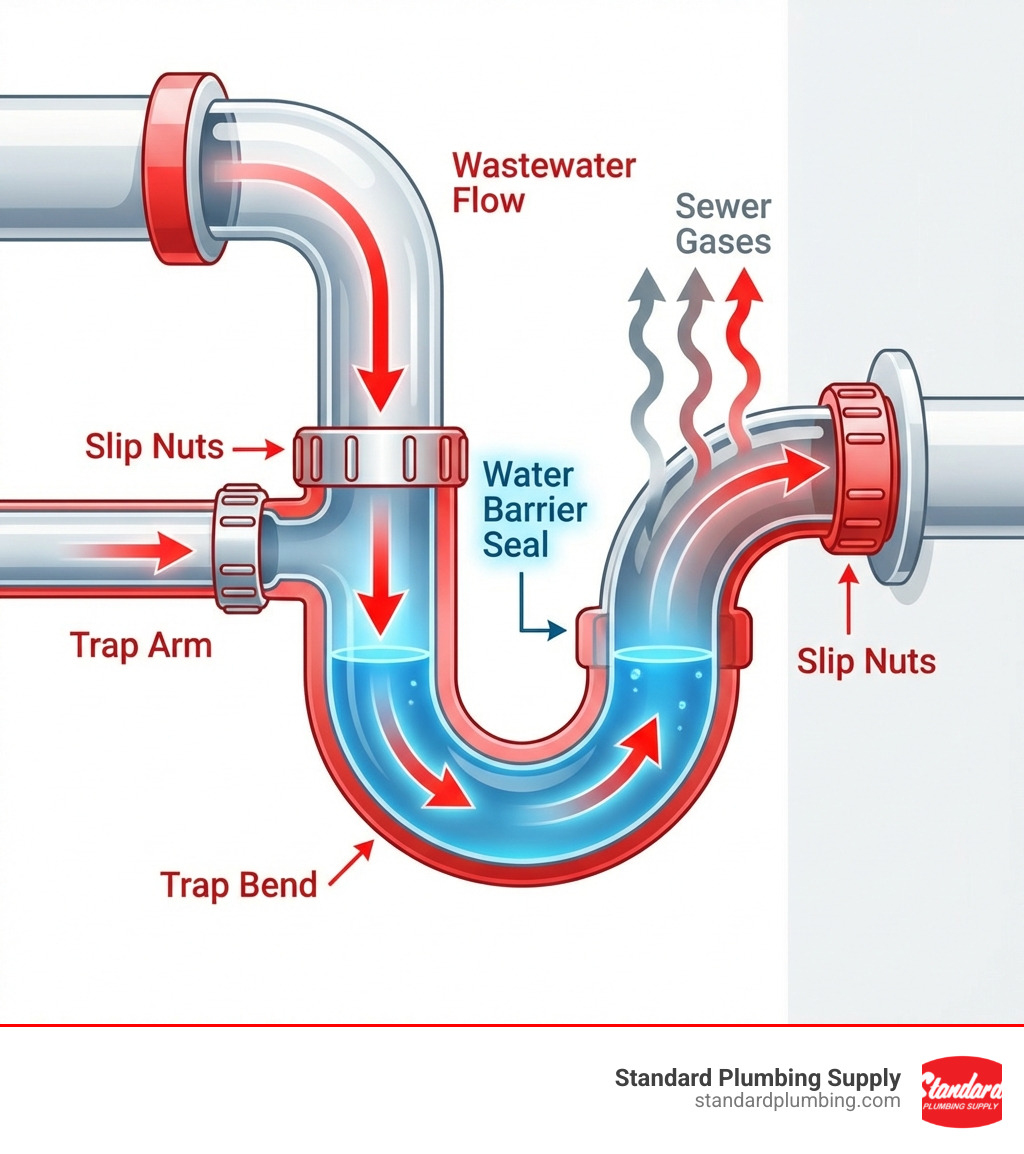
Understanding Your Drain Trap Before You Begin
Before we dive into the how-to, let’s understand why a drain trap might need attention and what options we have for replacement. Identifying the problem correctly and choosing the right parts are crucial first steps.
Signs Your Drain Trap Needs Replacing
Our drain traps work tirelessly, often out of sight and out of mind, until something goes wrong. Here are the tell-tale signs that your trusty trap is ready for a swap:
- Leaks and Drips: This is the most common and frustrating sign. A persistent drip from beneath your sink, even a slow one, indicates a compromise in the trap’s integrity. It could be loose fittings, a cracked pipe, or a deteriorated seal. A leaky sink trap can be a frustrating plumbing issue for homeowners, and ignoring it can lead to water damage and mold.
- Corrosion on Metal Traps: If you have an older metal trap, you might notice green, blue, or rusty discoloration. Metal drainpipes under sinks can rust, break, or become loosened over time. This corrosion weakens the material, making leaks inevitable.
- Cracks in Plastic: Plastic traps, while resistant to corrosion, can still suffer damage. Excessive heat (like frequent boiling water) or harsh chemical drain cleaners can cause ABS plastic traps to become deformed and eventually fail. You might see hairline cracks or larger fractures.
- Persistent Clogs: While clogs often occur further down the line, a trap that frequently clogs could be signaling a problem with its design or condition. Flexible, accordion-like trap arms, for instance, are susceptible to clogging due to their inner ridges.
- Foul Odors: Water barrier we talked about? If that barrier is compromised – say, by a leak that drains the trap or a crack that allows air to bypass the water – you’ll start smelling unpleasant sewer gases. This isn’t just gross; it’s a health and safety concern.
- Damaged Slip-Nut Threads: The plastic or metal nuts that hold the trap sections together can strip or crack. If you can’t tighten them sufficiently to stop a leak, it’s time for a new trap.
Common Problems Leading to Drain Trap Replacement
Beyond the visible signs, several common issues actively cause drain traps to fail:
- Corrosion: As mentioned, metal traps, especially chrome-plated thinwall brass, are prone to corrosion over time, leading to pinhole leaks or complete structural failure.
- Seal Failure: The rubber or nylon washers within the slip-nut connections harden, crack, or degrade. These seals are critical for preventing leaks, and their failure is a primary reason for drips.
- Mechanical Damage: An accidental bump under the sink, an impact from a dropped item, or even damage from a plumber’s auger trying to clear a stubborn clog can cause mechanical damage, necessitating replacement.
- Chemical Damage from Drain Cleaners: We often reach for chemical drain cleaners out of frustration, but many contain caustic chemicals that can degrade plastic pipes, particularly ABS. This can lead to deformation and eventual failure. We always recommend avoiding harsh chemical drain cleaners.
- Age-Related Wear and Tear: Like all plumbing components, drain traps simply wear out. Years of hot water, everyday use, and minor impacts take their toll, making replacement inevitable.
Choosing the Right Material and Type
When it comes to selecting a new drain trap, we have a few excellent options, each with its own benefits.
| Material Type | Durability | Cost | Appearance | Code Compliance |
|---|---|---|---|---|
| PVC Plastic | High (rugged, longevity) | Low | Basic White | Generally compliant |
| ABS Plastic | Moderate (can deform with hot water/chemicals) | Low | Basic Black | May not be allowed by local plumbing codes |
| Chrome-Plated Metal | Moderate (prone to corrosion) | Medium-High | Decorative/Shiny | Generally compliant |
| Flexible (Accordion) | Low (susceptible to clogs, kinks) | Low | Basic White/Grey | Often outlawed by local codes; plumbers avoid |
PVC Plastic: Our go-to recommendation for most homeowners. PVC plastic traps outperform all other types in ruggedness and longevity. They are inexpensive, durable, and easy to work with, and don’t corrode the way chromed brass drainpipes do. They are widely accepted by plumbing codes across Arizona, California, Colorado, Idaho, Nebraska, Nevada, Oregon, Utah, and Wyoming.
ABS Plastic: Similar to PVC in cost and ease of installation, ABS plastic traps are another option. However, as noted in our research, ABS plastic traps may become deformed and eventually fail when forced to handle frequent passage of boiling water and caustic household chemicals. Some local plumbing codes may also not allow them, so it’s always good to check.
Chrome-Plated Metal (Brass or Copper): If aesthetics are a priority, particularly for exposed plumbing under a pedestal sink, chrome-plated thinwall brass traps are popular. They offer a classic, polished look but are more susceptible to corrosion over time compared to plastic.
Flexible Traps: These accordion-like traps might seem like a convenient solution for misaligned pipes. While a swivel trap is easiest to work with because it can be easily adjusted for angled or misaligned drainpipe/fixture installations, flexible, accordion-like trap arms or tailpiece extensions are generally discouraged. The inner ridges of flexible pipes can make them susceptible to clogging, and most plumbers avoid this type of drain trap. In fact, local codes in many of our service areas may even outlaw them. We always recommend smooth-walled pipes as a better choice.
Other Features to Consider:
- Clean-out Plug: A clean-out plug on a trap is handy so the trap can be cleaned out without removing it. This is a great feature for preventive maintenance.
- Sizes: Drain traps come in various diameters. 1 1/2-inch traps are typically used for kitchen sinks and sometimes bathroom sinks, while 1 1/4-inch traps are common for lavatories. Kitchen sinks sometimes use 2-inch traps, especially those with garbage disposals. Always measure your existing pipes to ensure you get the correct size.
Gather Your Tools and Materials
Preparation is half the battle! Having everything you need within reach will make your drain trap replacement project smooth and stress-free.
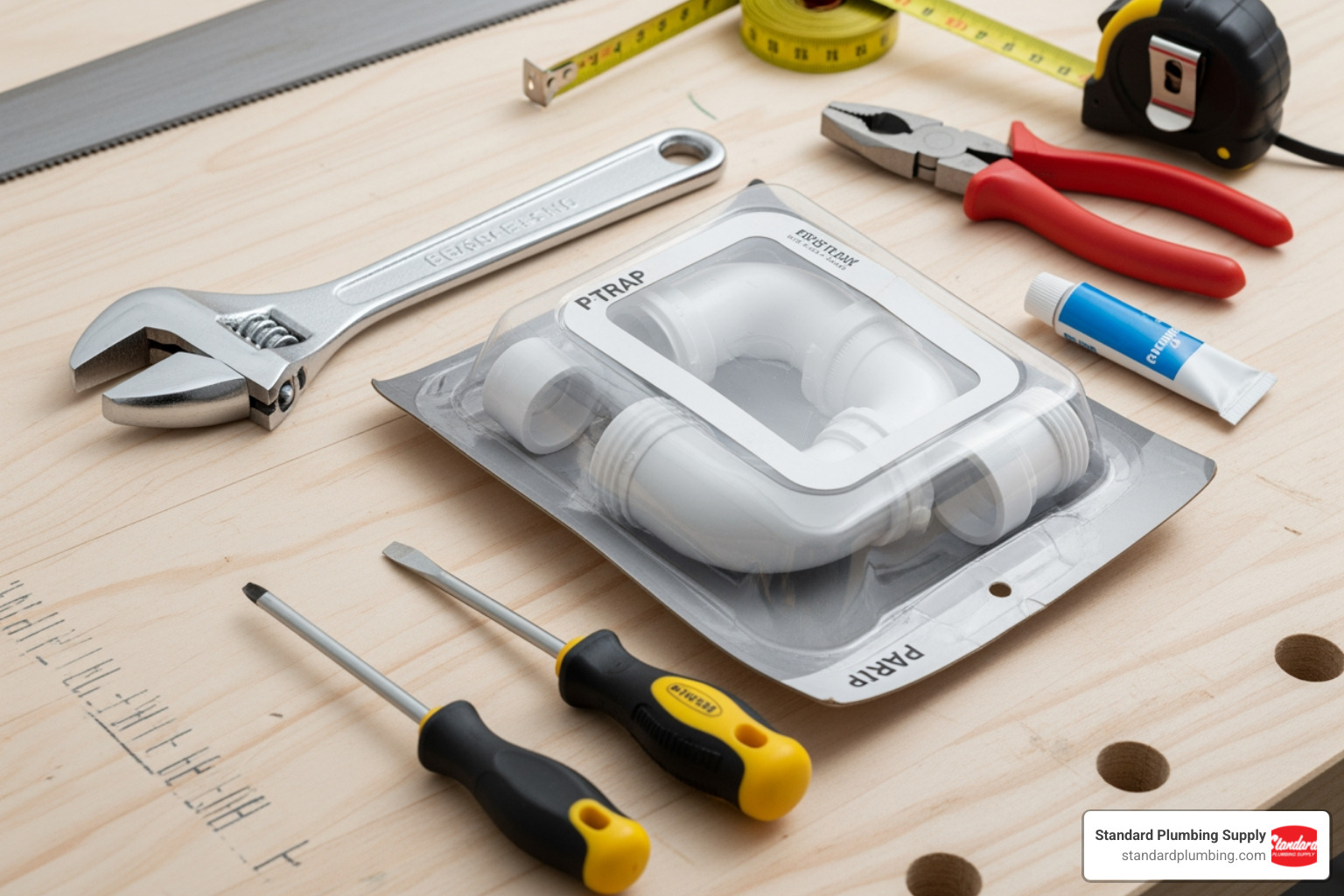
Essential Tools and Supplies
Before you begin, gather the following:
- New Drain Trap Kit: We’ll cover how to choose the right one in the next section.
- Bucket or Pan: Essential for catching any residual water when you disconnect the old trap. Don’t skip this, unless you enjoy impromptu indoor water features!
- Channel-lock Pliers (Tongue-and-Groove Pliers): These are your best friend for loosening and tightening slip nuts. A large pair will give you the leverage you need.
- Rags or Paper Towels: For wiping up spills and keeping things tidy.
- Flashlight or Headlamp: Working under a sink can be dark, even with overhead lights.
- Hacksaw or PVC Cutter: If you need to trim new plastic pipes to size or cut out a solvent-glued old trap.
- Safety Glasses: Always a good idea when dealing with old pipes and potential splashes.
- Work Gloves: Protect your hands from grime and sharp edges.
- Plumber’s Tape or Pipe Joint Compound (Optional but Recommended): While not always necessary for slip-joint connections, a thin layer on threads can provide extra leak protection, especially for the tailpiece connection. For pop-up drain installations, pipe putty is used to seal the drain flange, and pipe joint compound for the tailpiece gasket.
- PVC Primer and Cement (for glued PVC systems): If your existing system is solvent-glued PVC, you’ll need these to connect new sections, along with appropriate adapters.
Buying the Right Replacement Kit
Choosing the right replacement kit is simpler than it sounds. Here’s our advice:
- Measure Your Pipes: The most important step! Standard sizes for kitchen sinks are usually 1 1/2 inches in diameter, while bathroom sinks typically have traps that are 1 1/4 inches. Some kitchen sinks, especially those with garbage disposals, might use 2-inch traps. Measure the diameter of your existing pipes where the trap connects.
- Take the Old Parts to the Store: If possible, remove your old trap (carefully!) and take the trap, tailpiece, and drain extension with you to your local Standard Plumbing Supply store. Our knowledgeable team can help you find an exact match or the best upgrade. This ensures you get the correct diameter and configuration.
- Look for Complete Kits: Replacement drain traps are sold as kits that typically include the trap bend, trap arm, slip nuts, and washers. This makes buying easy, as all necessary components are usually included.
Your Step-by-Step Guide to Drain Trap Replacement
Alright, let’s get our hands dirty! Follow these steps, and you’ll have a leak-free drain in no time. We’re here to help if you hit a snag.
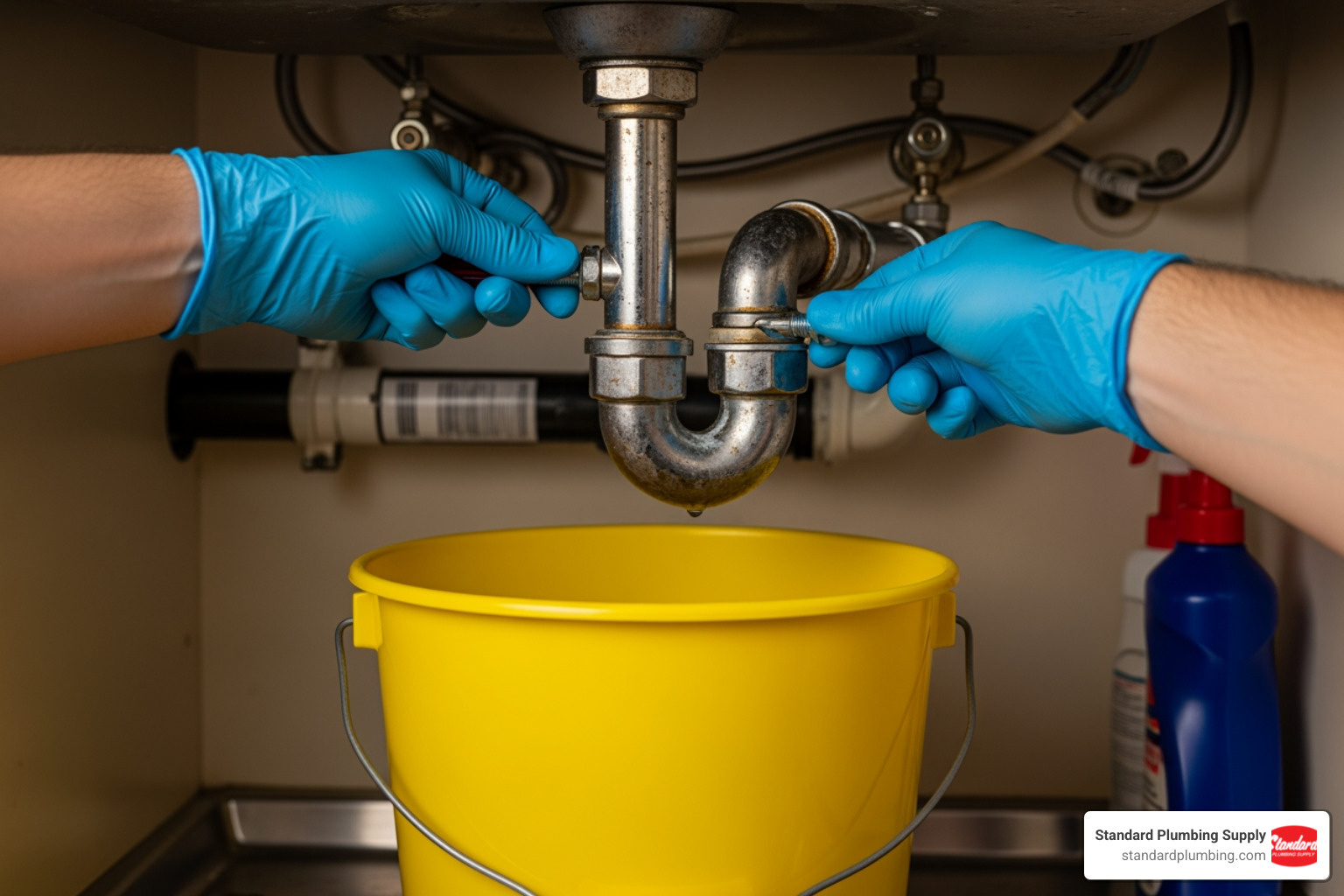
Step 1: Prepare Your Workspace and Remove the Old Trap
This is where the adventure begins!
- Clear Under the Sink: Remove everything from the cabinet beneath the sink to give yourself plenty of room to work.
- Place Your Bucket: Position your bucket or pan directly under the old drain trap. This is non-negotiable, as there will be residual water in the trap and pipes.
- Shut Off Water (Optional but Recommended): While you’re not working with pressurized water, shutting off the water supply at the sink’s shut-off valves is a good habit. This prevents accidental splashes from the faucet if someone turns it on.
- Loosen Slip Nuts: Locate the slip nuts connecting the trap to the sink tailpiece (the pipe coming straight down from the sink drain) and to the drain extension (the pipe going into the wall or floor). Using your channel-lock pliers, gently turn the nuts counter-clockwise to loosen them. If they’re stubborn, a little penetrating oil can help.
- Drain the Trap: Once the nuts are loose, carefully slide them out of the way. If your trap has a clean-out plug, remove it to drain the water into your bucket. Otherwise, slowly pull the trap down and away, allowing the water to empty into the bucket. Be ready for a gush!
- Remove the Trap Arm and Bend: Disconnect the entire old trap assembly, including the curved P-trap bend and the horizontal trap arm. If your system is solvent-glued PVC, you’ll need to cut the pipes close to the fittings using a hacksaw or PVC cutter.
Step 2: Test-Fit and Assemble the New Trap
Now for the exciting part – bringing in the new!
- Clean Up: Take a moment to clean the exposed ends of the sink tailpiece and the wall drainpipe. Wipe away any grime or old sealant.
- Dry-Fit the New Trap: Before applying any sealants or tightening anything, assemble your new trap components loosely. This “dry-fit” allows you to check for proper alignment and determine if any pipes need to be cut to size.
- Slide the new slip nuts and washers onto the sink tailpiece and the trap arm. Make sure the beveled (tapered) side of the washers faces the slip nut, and the flat side faces the pipe.
- Connect the trap bend to the sink tailpiece and the trap arm.
- Connect the trap arm to the wall drainpipe.
- Cut to Size (If Needed): If your trap arm is too long, mark the excess and use your hacksaw or PVC cutter to trim it. Make clean, straight cuts.
- Align for Proper Slope: This is critical for good drainage. The trap arm (the horizontal section leading to the wall) needs a slight downward slope towards the wall drain – approximately 1/4-inch per foot. This ensures water drains efficiently and doesn’t sit in the pipe. A swivel trap can be a lifesaver here for easy adjustment.
Step 3: Install the New Trap and Test for Leaks
The moment of truth!
- Connect the Trap Bend and Arm: Once you’re satisfied with the dry-fit and alignment, apply a thin layer of plumber’s tape or pipe joint compound to the threads of the slip nuts if desired (especially for metal traps). Reassemble the trap, ensuring all washers are correctly seated.
- Hand-Tighten Slip Nuts: Start by hand-tightening all the slip nuts. You want them snug, but not overly tight.
- Final Tightening with Pliers: Use your channel-lock pliers to give each slip nut an additional quarter to half-turn. For plastic nuts, be especially careful not to overtighten, as this can crack the plastic. For metal, a bit more torque is fine. The goal is a secure, leak-free connection without stripping threads or damaging components.
- Run Water to Fill the Trap: Turn your water supply back on (if you turned it off). Close the sink stopper and fill the sink with water. This will ensure the new trap fills and creates that essential water seal.
- Check for Leaks: Pull the stopper and let the water drain. As the water flows, carefully inspect all connections on your new trap for any drips or seepage. Run your finger along each joint, or better yet, place a dry paper towel under the new connections.
If you see any wet spots, tighten the corresponding slip nut slightly. Repeat the water test until all connections are bone dry. Congratulations, you’ve just completed a successful drain trap replacement!
Troubleshooting and Pro Tips
Even the simplest projects can throw a curveball. Here’s how to handle common challenges and keep your new drain trap in top shape.
Common Challenges During Drain Trap Replacement
- Stuck or Corroded Nuts: Old metal nuts can be seized with corrosion. Apply penetrating oil and let it sit for a few minutes. If still stuck, gentle tapping with a hammer and screwdriver (on the nut, not the pipe!) can sometimes break the bond. Be prepared to cut the old trap out if necessary.
- Misaligned Pipes: This is a common headache. If your wall drainpipe or sink tailpiece isn’t perfectly aligned, a standard rigid trap might not fit without stress. This is where a swivel trap shines, offering adjustability. For minor misalignments, flexible couplings (not the accordion type, but smooth-walled rubber couplings) can sometimes help connect slightly off-center pipes.
- Leaks After Installation: Don’t panic! Most leaks after installation are due to:
- Loose Nuts: Simply tighten them slightly.
- Improperly Seated Washers: Disassemble the leaking joint, ensure the washer is flat and correctly oriented (beveled side towards the nut), and reassemble.
- Damaged Washer: If the washer is cracked or pinched, replace it.
- Overtightened Plastic Nuts: If you overtightened a plastic nut and cracked it, you’ll need to replace the nut or the entire trap if it’s an integrated part.
- Dealing with Solvent-Glued (Permanent) PVC Pipes: Some older systems, especially in utility sinks, might have rigid PVC or ABS pipes permanently solvent-glued. To replace this type, you’ll have to cut off the old pipes and use adapters (slip-joint to glue-on, for example) to connect to a new assembly with slip fittings. This adds a step but is still manageable.
Kitchen vs. Bathroom Sink Considerations
While the basic principles of drain trap replacement are the same, there are a few differences:
- Pipe Diameters: As we discussed, kitchen sinks often use 1 1/2-inch or 2-inch traps, while bathroom sinks typically use 1 1/4-inch or 1 1/2-inch. Always double-check your measurements.
- Pop-Up Drain Assemblies in Bathrooms: Bathroom sinks commonly feature a pop-up drain mechanism. When replacing a bathroom sink trap, you might also be dealing with the pivot rod and clevis strap that operate the stopper. Removing the P-trap is usually the first step when installing or replacing a pop-up drain. You’ll need to disconnect the pivot rod from the trap arm before removal and reconnect it during reassembly. The duration for installing a pop-up drain is typically 2-4 hours, with an intermediate difficulty level.
- Garbage Disposal Connections in Kitchens: If your kitchen sink has a garbage disposal, the trap will connect directly to the disposal unit’s drain outlet. The process is similar, but ensure you have the correct fitting for the disposal.
Preventive Maintenance for Your New Drain Trap
A little care goes a long way in extending the life of your new drain trap and preventing future issues:
- Avoid Harsh Chemical Cleaners: We can’t stress this enough. These chemicals are bad for your pipes, bad for the environment, and can damage plastic traps.
- Regular Cleaning: Periodically clean your trap, especially if it has a clean-out plug. For traps without a plug, carefully remove and clean it every few years to prevent debris buildup.
- Periodically Check for Leaks: Make it a habit to peek under your sink every few months. Look for any signs of moisture around the trap connections. Early detection can save you from bigger problems.
- Use Natural Cleaners: For minor clogs or freshening, a mixture of baking soda and vinegar followed by hot water is a safe and effective alternative to harsh chemicals.
Codes, Costs, and Repairs
Beyond the hands-on work, there are important practical and legal considerations for your drain trap replacement.
Can a Drain Trap Be Repaired Instead of Replaced?
Sometimes, a full replacement isn’t necessary.
- Tightening Loose Nuts: Often, a leak is simply due to a loose coupling nut. A quick turn with your channel-lock pliers can solve the problem. For metal traps, tighten hand-tight plus about a half turn with slip-joint pliers. For plastic traps, hand-tighten and give about a quarter turn with pliers if needed.
- Replacing Worn Washers: If tightening doesn’t work, disassembling the joint and replacing a hardened or deteriorated rubber or nylon washer can often fix the leak.
- When Replacement is Necessary: However, if the metal of the trap has corroded through, if the slip-nut threads are stripped or damaged, or if the plastic is cracked or deformed, repair isn’t an option. In these cases, a full drain trap replacement is the only reliable solution.
Typical Costs and Project Time
One of the biggest advantages of DIY drain trap replacement is the cost savings.
- Estimated DIY Cost: A new trap kit is typically very affordable, costing between $10 to $50. This makes it a highly economical project for homeowners.
- Professional Replacement Cost: While we encourage DIY, sometimes a professional plumber is needed. The cost for a plumber to replace a sink trap will be significantly higher, often ranging from $100 to $300 or more, depending on labor rates in your area (like Bakersfield, Las Vegas, or Salt Lake City) and the complexity of the job.
- Estimated Time: A straightforward drain trap replacement can take anywhere from 30 minutes to 2 hours. This includes preparation, removal, installation, and leak testing. More complex situations, like dealing with solvent-glued pipes or significant misalignment, might push you towards the longer end of that estimate.
Plumbing Codes and Regulations
Plumbing codes exist for a reason: to ensure the health and safety of occupants.
- Importance of Code Compliance: Drain traps are required by plumbing code in all of our service areas, including Arizona, California, Colorado, Idaho, Nebraska, Nevada, Oregon, Utah, and Wyoming. These codes dictate materials, sizing, and installation methods to prevent sewer gas entry and ensure proper drainage. You can find an overview of trap regulations from the Cornell Law School Legal Information Institute.
- Checking Local Codes: While general principles apply, it’s always wise to check with your specific local building department or plumbing authority. What’s allowed in Boise might differ slightly from what’s allowed in Los Angeles.
- Why Some Flexible Traps Are Not Code-Compliant: This is where flexible (accordion-style) traps often run into trouble. Their corrugated interiors can trap debris, making them susceptible to clogs. Many local plumbing codes prohibit their use because they are harder to keep clean and can impede proper drainage. Smooth-walled pipes are always the preferred and generally code-compliant choice.
Conclusion: A Leak-Free Sink is Within Your Reach
We hope this guide has demystified the process of drain trap replacement and given you the confidence to tackle this common household plumbing project. As you’ve seen, it’s a manageable DIY task that can save you money and empower you with a new skill.
The U-shaped hero under your sink plays a vital role in preventing sewer gases from entering your home and keeping your plumbing running smoothly. With the right tools, materials, and a little patience, you can ensure your sink remains leak-free and functional.
We at Standard Plumbing Supply are always here to help. Whether you need the perfect replacement trap, the right tools, or just some expert advice, our team is ready to assist.
