
Why Adding a Bidet to Your Toilet Is Worth Considering
Adding a bidet to your toilet is easier and more affordable than most people expect — and it comes in several forms to fit any bathroom or budget.
Here’s a quick look at your main options:
| Bidet Type | Cost (Unit) | Install Time | DIY Friendly? |
|---|---|---|---|
| Bidet attachment | $20–$100 | 20–40 min | Yes |
| Bidet toilet seat | $150–$700 | 20–60 min | Yes (non-electric) |
| Handheld sprayer | $20–$60 | 15–30 min | Yes |
| Standalone bidet | $400–$1,500+ | Half-day+ | Usually no |
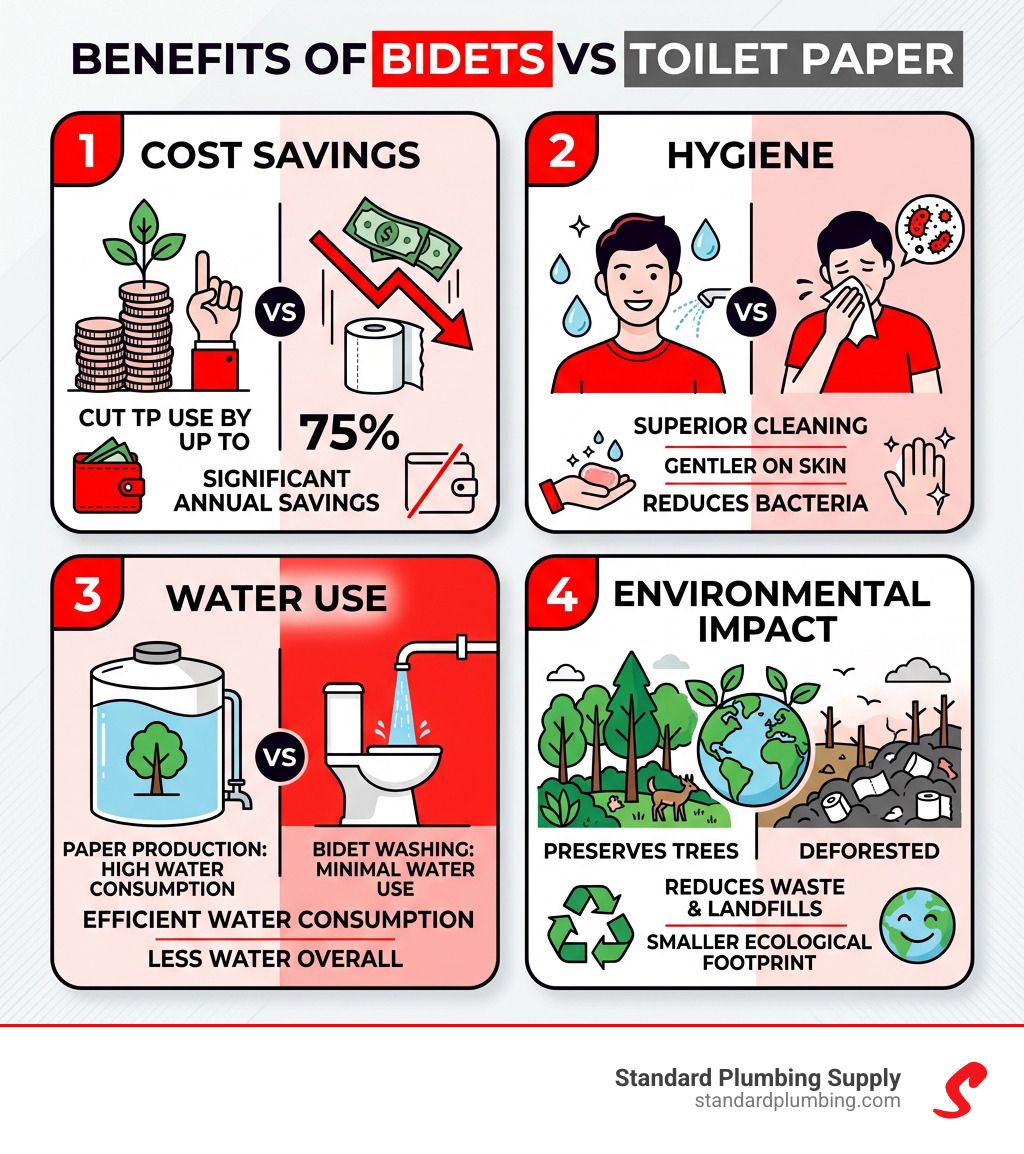
Bidet sales in the US have been growing fast — and it’s easy to see why. A typical household can cut toilet paper use by up to 75%, saving hundreds of dollars a year. That’s before factoring in the hygiene benefits and reduced environmental footprint.
Once people make the switch, most say they can’t imagine going back.
I’m Jacob Reese, VP of Standard Plumbing Supply and a third-generation leader in a family business that has been supplying plumbing pros and DIYers across the Western US since 1952 — and adding a bidet to your toilet is one of the most common upgrade questions we hear from both contractors and homeowners. Let’s walk through everything you need to know to choose and install the right option for your bathroom.
Choosing the Right Option for Adding Bidet to Toilet
When you decide to upgrade your bathroom experience, the first hurdle is deciding which “delivery system” works best for your lifestyle and your plumbing. At Standard Plumbing Supply, we see customers across Arizona, Utah, and the West choosing between four primary categories.
Bidet Attachments
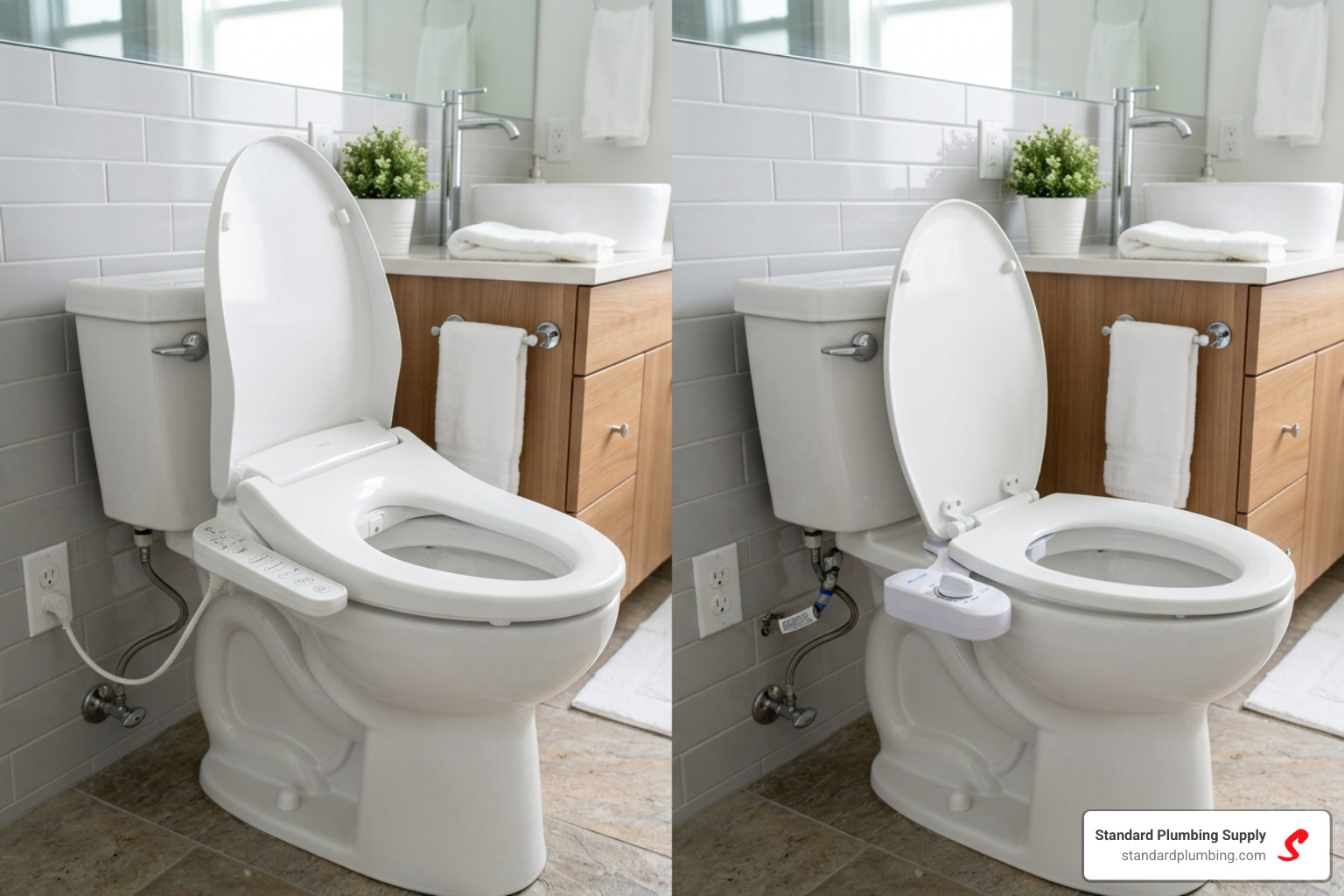
These are the most popular entry-point for homeowners. An attachment is a thin device that slides under your existing toilet seat. It connects to the water supply line behind the toilet. They are strictly mechanical (non-electric) and usually only provide cold water unless you buy a dual-temperature model that hooks up to your sink’s hot water line.
Bidet Toilet Seats
If you want the “Cadillac” experience, this is it. You replace your entire existing toilet seat with a specialized one. These often require electricity to power luxury features like heated seats and warm air dryers. For those looking for a high-end experience, you might consider electronic bidet seat options that offer a range of cleansing modes.
Handheld Sprayers
Often called “shattafs,” these look like the sprayer on your kitchen sink. They mount to the side of the tank or the wall. They offer the most flexibility in terms of where the water goes, but they do require a bit more manual dexterity and carry a slightly higher risk of “user error” splashes.
Standalone Bidets
These are separate porcelain fixtures installed next to the toilet. While common in Europe, they are rarer in the US because they require a significant bathroom footprint and dedicated plumbing (drain and water lines). If you are doing a full remodel in a place like Salt Lake City or Las Vegas, you might look into standalone bidet fixtures to add a touch of classic luxury.
Requirements for Adding Bidet to Toilet Seats
Before you pull the trigger on a high-end seat, you need to check two major things: Power and Shape.
Electrical Requirements: Most electronic bidet seats require a GFCI (Ground Fault Circuit Interrupter) outlet located within three to four feet of the toilet. If you don’t have one, you’ll need to hire an electrician. We strongly advise against using extension cords in the bathroom due to the obvious water-and-electricity safety risks.
Compatibility: Toilets generally come in two shapes: Round (about 16.5 inches from the bolt holes to the front) and Elongated (about 18.5 inches). You must buy a seat that matches your bowl shape, or it simply won’t fit.
Water Usage: You might worry that adding bidet to toilet setups will spike your water bill. According to EPA research on household water usage, the amount of water used by a bidet is negligible—usually less than an eighth of a gallon per wash. Interestingly, it takes significantly more water to manufacture the toilet paper you’d otherwise be using!
Features to Look For
When comparing models, look for these key features that improve hygiene and comfort:
- Dual Nozzles: Separate nozzles for rear and “feminine” cleaning provide better aim and hygiene.
- Self-Cleaning: The nozzles should rinse themselves with fresh water before and after every use.
- Heated Water: While many find the cold water refreshing (even in Idaho winters!), a heated reservoir or hybrid heater is a game-changer for comfort.
- Air Dryer: This allows you to go completely “paperless” by using warm air to dry off.
- Adjustable Pressure: Everyone has a different preference; look for a dial or remote that lets you fine-tune the “jet” strength.
Pre-Installation Checklist and Compatibility
Nothing kills a DIY buzz faster than getting a toilet half-disassembled and realizing the parts don’t fit. Before you start adding bidet to toilet components, do a quick “recon” mission.
- Measure the Bolt Spread: Most US toilets have a standard 5.5-inch spread between the seat bolts, but it’s worth a quick check.
- Check Tank Clearance: Some “one-piece” toilets have a curved transition between the bowl and the tank. This can block a bulky bidet attachment from sitting flat. Check a Bidet Fit and Compatibility Guide to ensure your model works with your specific toilet.
- Inspect the Shutoff Valve: If your house is older (common in historic districts of Boise or Riverside), that silver valve behind the toilet might be “frozen” or leaky. If it doesn’t turn easily, replace it before you start.
- Supply Line Type: If you have a rigid metal pipe connecting your tank to the wall, you will need to replace it with a flexible braided stainless steel hose to accommodate the bidet’s T-valve.
Step-by-Step Guide to Adding Bidet to Toilet Attachments
Ready to get to work? Most bidet attachments can be installed in under 30 minutes. Here is the standard process we recommend at Standard Plumbing Supply.
1. Shut Off the Water
Turn the silver handle behind your toilet clockwise until it stops. Flush the toilet and hold the handle down until the tank is as empty as possible. Use a sponge or towel to soak up the last bit of water in the bottom of the tank—this prevents a “mini-flood” when you disconnect the hose.
2. Remove the Seat
Unscrew the two bolts holding your toilet seat in place. You’ll usually find plastic nuts underneath the rim that you can loosen by hand or with pliers. Set the seat and hardware aside.
3. Install the T-Valve
This is the “brain” of the operation. It’s a three-way metal or plastic connector. Screw the top of the T-valve onto the threaded shank at the bottom of your toilet tank. Pro Tip: Hand-tighten this first! Cross-threading the plastic shank on a toilet tank is a costly mistake. Once it’s snug, give it a quarter-turn with a wrench.
4. Connect the Hoses
Reconnect your main water supply line to the bottom of the T-valve. Then, connect the small bidet hose to the side outlet of the T-valve and the other end to the bidet attachment.
5. Mount the Bidet
Place the bidet attachment over the bolt holes on the toilet rim. Put your toilet seat back on top of it. Re-insert the bolts through the seat and the bidet’s mounting brackets. Tighten everything down.
6. The Leak Test
Slowly turn the water shutoff valve back on. Don’t just blast it! Keep a towel handy and watch every connection point for a few minutes. If you see a drip, give that connection a tiny bit more tension with your wrench.
Tools and Materials for Your DIY Project
You don’t need a massive toolbox for this. Most kits come with the T-valve and hoses, but you’ll want to have these on hand:
- Adjustable Wrench: For tightening the supply lines.
- Screwdriver (Flathead or Phillips): For the toilet seat bolts.
- Bucket and Towels: To catch the “residual” water in the lines.
- Teflon Tape: While many modern connectors use rubber O-rings (which don’t need tape), having some on hand can help seal stubborn threads.
If you find your current setup is beyond a simple attachment, you might want to look into specialized bidet accessories or replacement parts at our local stores.
Overcoming Common Installation Challenges
Even a “simple” job can throw a curveball. Here is how we help our customers handle the tricky stuff:
- Skirted Toilets: These are toilets with smooth, flat sides that hide the trapway. They look great but make it impossible to reach the bolts or the water connection. You may need a “top-mounting” bolt kit or a T-valve that connects at the wall shutoff rather than the tank.
- Rigid Water Lines: If your toilet uses a stiff chrome pipe, it won’t bend to allow for the T-valve. Buy a flexible braided hose. They are inexpensive and much easier to work with.
- Inaccessible Fill Valves: If your toilet tank is tucked under a countertop or has a unique design where you can’t reach the bottom of the tank, you can often install the T-valve at the sink’s water supply line instead.
- Low Water Pressure: If the spray feels more like a “leak” than a “wash,” check the T-valve. Some have a built-in filter or a pressure-regulator disk that might be clogged with sediment from your pipes.
Frequently Asked Questions about Bidet Installation
Do I need a plumber or electrician to install a bidet?
For most attachments and non-electric seats, no. These are designed for DIYers. However, if you are installing a standalone bidet that requires new floor drains, or if you need a new electrical outlet, you should call a pro. Labor costs for a basic seat installation usually range from $100 to $300, while adding a GFCI outlet might run $120 to $350.
How much money does a bidet save on toilet paper?
The average American uses about 141 rolls of toilet paper per year. For a family of four, that’s a massive expense. By adding bidet to toilet setups, most families report a 75% reduction in paper use. The bidet pays for itself in six to twelve months. Plus, homes on septic systems (common in rural parts of Wyoming and Oregon) benefit immensely because less paper means fewer clogs and pump-outs.
Can I install a bidet on a one-piece or specialized toilet?
Yes, but you have to be careful. One-piece toilets often have less space between the seat bolts and the tank. Look for “slim” bidet models. If your toilet has “quick-release” hinges, you’ll need to ensure the bidet mounting plate doesn’t interfere with the release mechanism.
Conclusion
Adding a bidet to your toilet is one of the smartest upgrades you can make for your home. It’s a rare “triple-win”: it’s more hygienic, it saves you money, and it’s better for the environment. Whether you are looking for a simple $50 attachment for a rental in San Diego or a luxury heated seat for a custom home in St. George, we have the expertise to help you get it done right.
Maintenance Tips:
- Clean the Nozzles: Once a month, use an old toothbrush and mild soap to clean the spray heads.
- Check for Leaks: Every few months, just run your hand around the connectors to make sure everything is still bone-dry.
- Filter Replacement: If your bidet has an inline water filter, swap it out every 6 months to prevent sediment buildup.
Ready to make the switch? Shop our full catalog of toilets and bidets or visit any of our Standard Plumbing Supply locations across the West to talk to our experts in person. We’ve been helping our neighbors since 1952, and we’re ready to help you, too!
