
Why Water Pressure Problems Call for Booster Pump Systems
Booster pump systems are devices that increase water pressure and flow rate in a plumbing system when the existing supply isn’t strong enough to meet demand.
Here’s a quick summary of what you need to know:
- What they do: Raise water pressure from a source (city supply, well, tank) to a usable level at fixtures and appliances
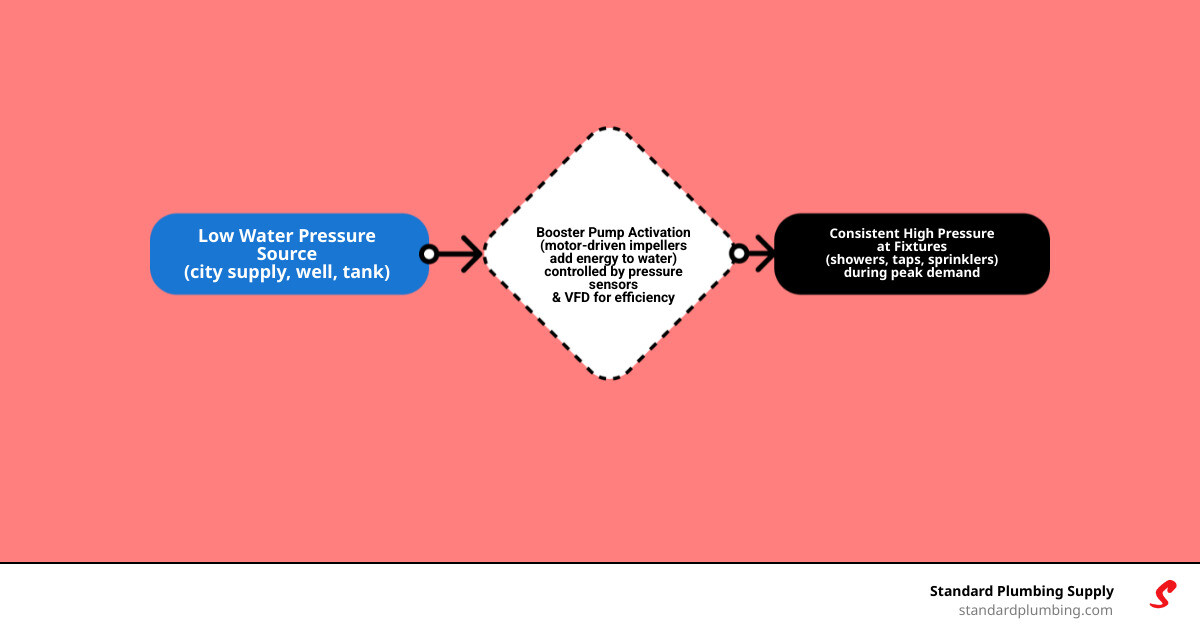
- How they work: Use motor-driven impellers to add energy to water, controlled by pressure sensors and sometimes a Variable Frequency Drive (VFD)
- Common uses: Homes with low municipal pressure, multi-story buildings, irrigation systems, commercial facilities, and industrial processes
- Key types: Single-stage (moderate residential needs) and multi-stage (high-pressure or high-rise applications)
- Main benefit: Consistent, reliable pressure at every tap, shower, and sprinkler — even during peak demand
Low water pressure is frustrating. Weak showers, slow-filling appliances, and irrigation systems that can’t cover a full field all point to the same root cause: not enough pressure in the pipes. In multi-story buildings, pressure that’s perfectly fine on the ground floor can drop significantly by the time it reaches upper floors. Backflow prevention devices alone can reduce line pressure by as much as 12 PSI — enough to notice at the fixture.
A booster pump system solves this directly by adding pressure where the supply falls short.
I’m Jacob Reese, VP of Standard Plumbing Supply and a third-generation leader in the wholesale plumbing and HVAC distribution industry — I’ve helped contractors and DIYers source and spec booster pump systems across dozens of applications over the years. This guide covers everything you need to choose, install, and maintain the right system for your situation.
Handy booster pump systems terms:
What is a Booster Pump and How Does it Function?
At its core, a booster pump system is a machine designed to increase the pressure of a fluid that is already moving. Unlike a standard well pump that might lift water from deep underground, a booster pump acts as an intermediary. It takes the incoming pressure—whether from a municipal line or a storage tank—and gives it a “boost” to reach the desired level at the endpoint.
The physics behind this relies on centrifugal force. Inside the pump, a motor spins one or more impellers. As water enters the pump’s inlet, the spinning impellers throw the water outward at high velocity. This kinetic energy is then converted into pressure as the water is channeled through the pump casing and out the discharge port.
According to Wikipedia’s overview of booster pumps, these systems are essential in high-rise buildings where gravity works against the water supply. Without them, the penthouse shower would be nothing more than a sad trickle. They are also vital for overcoming friction loss in long pipelines or the pressure drop caused by backflow prevention devices, which are mandated by the Clean Water Act but can sap up to 12 PSI from your system.
Key Components of booster pump systems
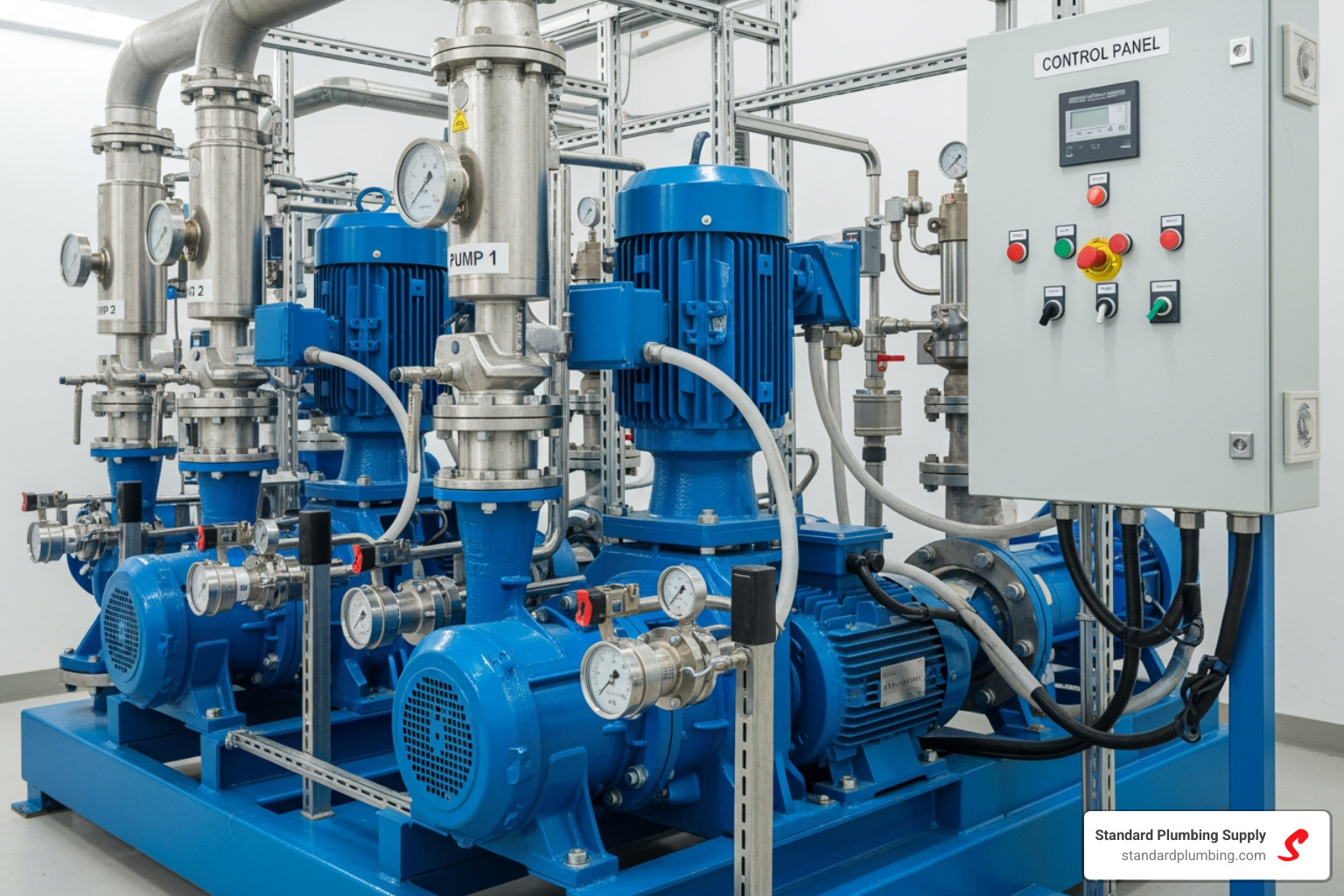
A modern booster pump system is more than just a motor and a fan. It is an engineered package of components working in harmony:
- The Pump: Usually a centrifugal design. For smaller tasks, a 360 non-submersible utility transfer pump might handle simple fluid movement, but dedicated booster pumps are built for continuous pressure maintenance.
- The Controller: This is the “brain” of the system. it monitors the water demand and tells the pump when to start and stop.
- Pressure Transducers/Sensors: These devices measure the real-time pressure in the line. When they sense the pressure dropping (like when you turn on a faucet), they signal the controller to activate the pump.
- Check Valves: These are critical for preventing backflow. They ensure that once the water is pressurized and sent into your home or building, it doesn’t flow backward into the supply line when the pump turns off.
- Accumulator or Pressure Tank: While some modern “tankless” systems exist, many setups use a small tank to handle minor leaks or small water draws without forcing the pump to cycle on and off constantly.
The Role of Variable Frequency Drives (VFD)
One of the most significant advancements in booster pump systems is the integration of Variable Frequency Drives (VFDs). Traditionally, pumps were either “on” or “off.” They ran at 100% speed regardless of whether you were rinsing a single dish or running three showers at once. This led to massive energy waste and “pressure hunting,” where the water pressure would surge and dip.
A VFD changes the game by adjusting the motor speed to match the exact demand. If you only need a small boost, the VFD slows the motor down. This results in:
- Energy Efficiency: You only pay for the electricity you actually need.
- Consistent Pressure: The system maintains a rock-steady PSI, regardless of how many taps are open.
- Reduced Wear: Soft-start and soft-stop features prevent “water hammer” and extend the life of your plumbing and the pump itself.
For those looking at high-efficiency circulation in larger systems, products like the Grundfos UP43-110F demonstrate how modern motors can adapt to varying system requirements.
Main Types and Applications of booster pump systems
Not all water pressure problems are created equal, which is why there are different types of booster pump systems tailored for specific needs.
Single-Stage vs. Multi-Stage Pumps
The primary distinction in pump design is the number of impellers used to move the water.
- Single-Stage Booster Pumps: These have one impeller. They are ideal for residential homes where you just need a moderate boost to city water pressure. They are compact, cost-effective, and generally easier to install.
- Multi-Stage Booster Pumps: These use two or more impellers in series. The first impeller boosts the pressure and hands it off to the second, which boosts it further. This “stacking” effect allows for much higher pressures, making them the standard choice for high-rise apartments, large industrial plants, and agricultural irrigation.
| Feature | Single-Stage | Multi-Stage |
|---|---|---|
| Pressure Output | Moderate (up to 50-60 PSI boost) | High (can exceed 100+ PSI boost) |
| Energy Efficiency | Good for low demand | Excellent for variable high demand |
| Complexity | Simple | Higher (often includes VFD/PLC) |
| Best Use Case | Single-family homes | High-rises, Irrigation, Factories |
Common Applications
We see booster pump systems utilized across a wide variety of sectors throughout the West, from the high deserts of Nevada to the coastal regions of California:
- Residential: Fixing “weak” showers and ensuring sprinklers reach the corners of the yard.
- Commercial: Hotels and office buildings use pressure boosting systems to ensure guests on the 10th floor have the same experience as those on the 1st.
- Industrial: Manufacturing processes often require specific, high-pressure water for cooling circuits, washdown systems, or boiler feeds.
- Agriculture: Farmers use multi-stage boosters to move water across vast, uneven fields, ensuring every crop receives uniform hydration.
- Specialty Trades: Window cleaners using water-fed poles often use portable booster systems (like the Tucker 110v system) to reach heights above 40 feet while maintaining multiple operators on one line.
How to Select and Install the Right System
Choosing the wrong pump is a recipe for a “noisy” system that wears out prematurely. To get it right, you need to look at three main numbers:
- Flow Rate (GPM): How much water do you need at peak times? Count your fixtures. A standard shower is about 2.5 GPM; a kitchen sink is about 2.2 GPM.
- Total Dynamic Head (TDH): This is the total equivalent height the pump must “push” the water. It includes the vertical lift plus the friction loss caused by the length and diameter of your pipes.
- Desired Pressure (PSI): Most residential systems aim for a steady 50-60 PSI. If your incoming city pressure is 30 PSI, you need a pump that provides a 30 PSI boost.
When selecting components, don’t overlook the small stuff. A high-quality check valve is non-negotiable to prevent the pump from “cycling” (turning on and off rapidly) due to water back-flowing.
Best Practices for Installation
At Standard Plumbing Supply, we always recommend professional installation for complex booster pump systems, but if you’re a seasoned DIYer or a contractor, keep these best practices in mind:
- The Bypass Line: Always install the booster pump on a bypass loop with shut-off valves. This allows you to service or replace the pump without cutting off water to the entire building.
- Vibration Isolation: Pumps vibrate. Use flexible connectors on the inlet and outlet pipes and mount the pump on a vibration-dampening pad to prevent the hum from traveling through your floorboards.
- Location Matters: Install the pump in a dry, ventilated area that is easily accessible. If it’s a “flooded suction” setup (where the water source is above the pump), it will stay primed much more easily.
- Electrical Safety: Most residential boosters run on 115V or 230V. Ensure you are using a dedicated circuit with a GFCI plug if required. For hydronic or specialized circulation, high-quality pumps like the stainless steel Grundfos 3-speed are excellent choices for longevity.
Maintenance, Troubleshooting, and Safety Precautions
A well-maintained booster pump system can last 10 to 15 years, but it won’t happen by accident.
Routine Maintenance
- Check for Leaks: Inspect seals and joints monthly. Even a tiny drip can lead to “short cycling,” where the pump turns on every few minutes to replace the lost pressure.
- Monitor the Pressure Tank: If your system has one, check the air pre-charge annually. If the tank is “waterlogged” (the internal diaphragm has failed), the pump will start and stop violently.
- Listen for Noise: Grinding or clicking sounds usually indicate bearing wear or debris in the impeller.
Common Troubleshooting
- Pump Cycling: Usually caused by a leaking fixture, a failed check valve, or a waterlogged pressure tank.
- Cavitation: If the pump sounds like it’s pumping marbles, it might be “starving” for water. Check for clogged inlet strainers or a closed supply valve.
- No Pressure: Check the power supply and the controller settings. Often, a tripped breaker or a blown fuse in the controller is the culprit.
Using the right tools for the job, such as a proper flange set for secure connections, can prevent many common vibration and leak issues before they start.
Safety Precautions
- Lockout/Tagout: Always disconnect the power before working on the pump.
- Pressure Relief: Never work on a pressurized system. Drain the lines before loosening any bolts or fittings.
- Material Compatibility: If you are boosting hot water or chemicals, ensure the pump materials (like stainless steel vs. cast iron) are rated for that specific use.
Frequently Asked Questions about Booster Pumps
Why is my water pressure low?
Low pressure isn’t always a pump problem. Before buying a system, check for:
- Clogged aerators on faucets.
- A partially closed main shut-off valve.
- Leaky pipes underground.
- Mineral scale buildup in old galvanized pipes (common in older homes in Salt Lake City or Boise).
Do I need a pressure tank with a booster pump?
If you have a traditional constant-speed pump, yes—you need a tank to prevent the pump from burning out due to frequent starts. If you have a modern VFD-controlled system (like the Grundfos SCALA2), you may not need a large tank, as the pump can “sip” power to maintain pressure at low flows.
How long do booster pump systems typically last?
With proper maintenance, expect 10-15 years. Factors that shorten this lifespan include high heat, frequent cycling, and poor water quality (sediment can erode impellers).
Conclusion
Whether you’re dealing with a weak shower in a Sandy, Utah bungalow or managing a multi-story commercial complex in Riverside, California, booster pump systems are the definitive answer to low water pressure. By understanding the components—from the VFD controllers to the critical check valves—you can ensure your water flows exactly how you need it, when you need it.
At Standard Plumbing Supply, we’ve been the trusted partner for Western states’ plumbing needs for decades. From our stores in Arizona and Colorado to our hubs in Oregon and Wyoming, we carry the inventory and the expertise to help you spec the perfect system.
Ready to upgrade your home’s performance? Shop Residential Water Heaters and pressure solutions at a Standard Plumbing Supply location near you. Whether you need a simple utility pump or a sophisticated multi-stage VFD package, we’ll keep you up and running.
