
What Are 110mm Pipe Fittings and Why Do They Matter?
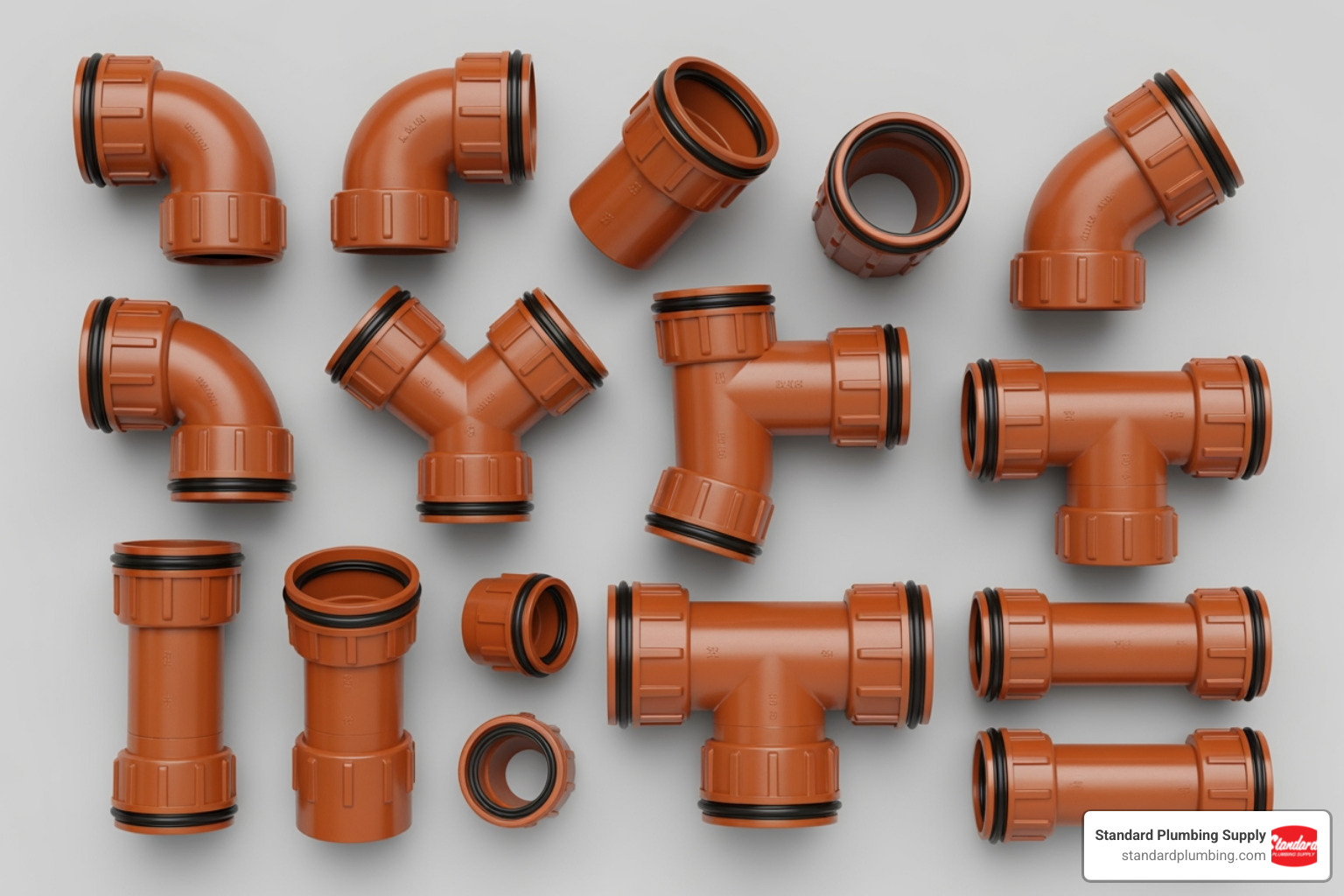
110 pipe fittings are the backbone of domestic underground drainage systems across the UK and many other regions. These components connect, redirect, and manage the flow of wastewater from your home to the main sewer system.
Quick Overview of 110mm Pipe Fittings:
- Standard Size: 110mm is the most popular diameter for domestic underground drainage pipes
- Primary Use: Foul water drainage (toilets, sinks) and surface water drainage (rainwater)
- Common Material: PVC-U (unplasticized polyvinyl chloride)
- Key Components: Bends, junctions, couplings, gully traps, access points
- Flow Capacity: Up to 4.5 liters per second when installed correctly
- Minimum Fall: 1:80 for foul water, 1:40 for surface water
Whether you’re installing a new drainage system, repairing an existing one, or connecting to above-ground waste pipes, understanding the different types of 110mm fittings is essential. These fittings ensure smooth flow, prevent blockages, and provide access for maintenance—all critical for a drainage system that works reliably for decades.
The range includes everything from simple couplings that join pipe lengths together, to complex junctions that branch off to multiple outlets, to specialized gully traps that prevent debris from entering your drainage system. Each fitting serves a specific purpose, and choosing the wrong one can lead to poor flow, persistent blockages, or costly repairs down the line.
I’m Jacob Reese, Vice President of Standard Plumbing Supply, and I’ve spent over two decades helping contractors and DIY enthusiasts select the right 110 pipe fittings for their drainage projects. From warehouse floors to customer job sites, I’ve seen how the right fitting selection makes all the difference between a system that flows flawlessly and one that causes headaches.
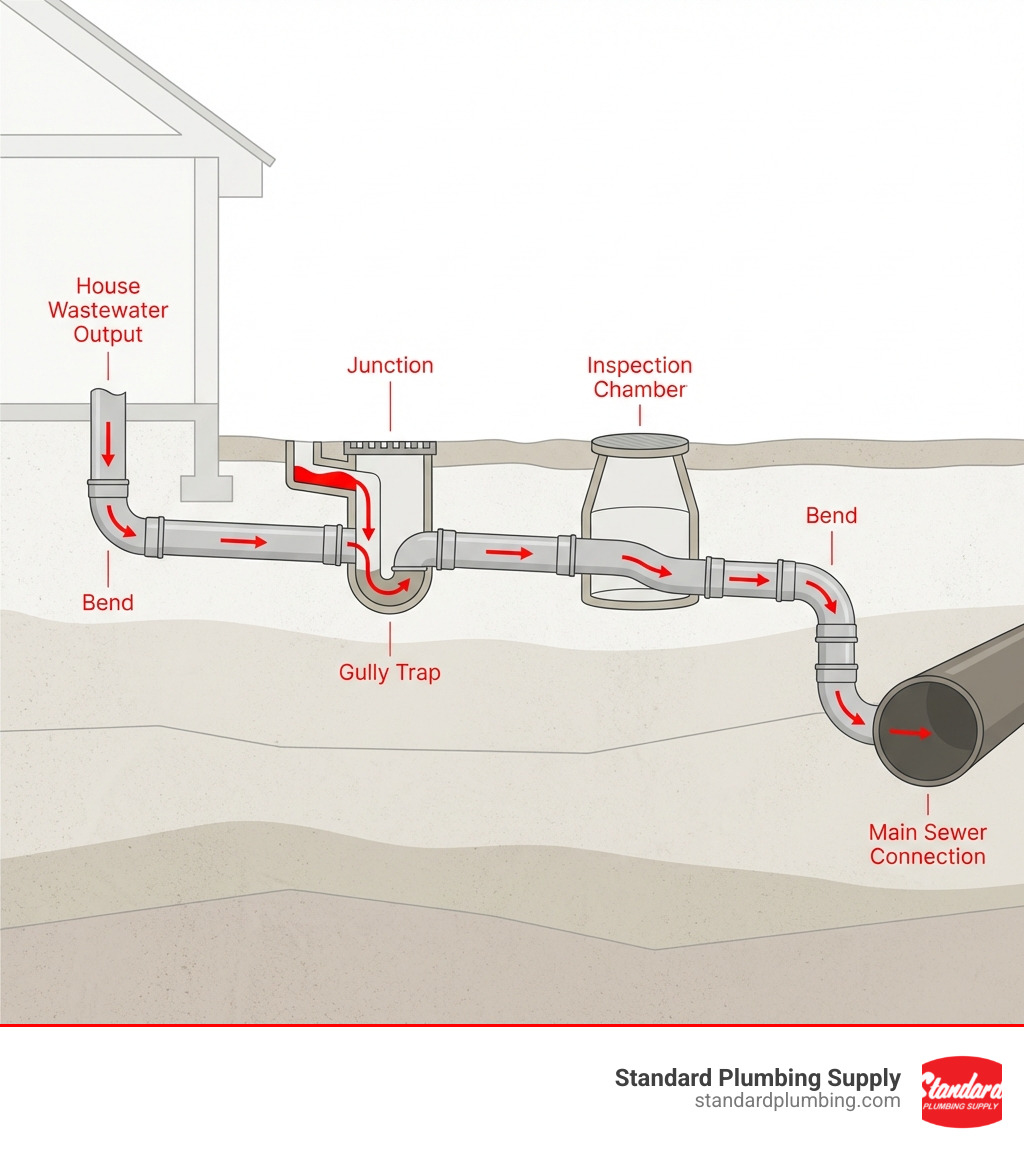
Why PVC-U is the Modern Standard for Drainage
When it comes to underground drainage, PVC-U (unplasticized polyvinyl chloride) has emerged as the go-to material, and for good reason. It represents a significant leap forward from traditional materials like clay or cast iron, offering a suite of advantages that make it the preferred choice for modern drainage systems in our service areas across Arizona, California, Colorado, Idaho, Nebraska, Nevada, Oregon, Utah, and Wyoming.
Our experience shows that PVC-U provides an efficient means of waste water drainage and foul discharge from above-ground drainage systems, seamlessly integrating into robust underground solutions. If you would like a broader technical overview of PVC as a material, you can also refer to this general resource from Wikipedia on polyvinyl chloride.
Durability
PVC-U is inherently strong and resilient. It can withstand the pressures of underground burial, resisting soil movements and external loads without cracking or deforming. This inherent strength ensures a long service life, giving you peace of mind that your drainage system will perform reliably for decades.
Lightweight
One of the most significant advantages of PVC-U is its light weight. Compared to the heavy, cumbersome sections of clay or cast iron pipe, PVC-U pipes and 110 pipe fittings are remarkably easy to handle, transport, and install. This not only reduces the physical strain on installers but also speeds up project completion times, cutting down on labor costs. We often hear from our customers how much they appreciate the ease of maneuverability on site.
Ease of Installation
The lightweight nature of PVC-U directly contributes to its ease of installation. With innovative jointing systems, such as push-fit mechanisms and solvent welding, connections can be made quickly and securely. This reduces the complexity of installation, minimizes the need for specialized tools, and helps prevent common installation errors that can lead to future problems.
Cost-Effective
While the initial material cost might sometimes be comparable to other options, the overall cost-effectiveness of PVC-U shines through in its lower installation time, reduced labor, and minimal maintenance requirements over its lifespan. This makes it a smart investment for any drainage project.
Chemical Resistance
Wastewater can contain a variety of chemicals that might corrode or degrade other pipe materials over time. PVC-U, however, boasts excellent chemical resistance, ensuring it remains unaffected by common household and commercial waste streams. This property contributes significantly to its longevity and reliability.
Smooth Interior Bore
The interior surface of PVC-U pipes is exceptionally smooth. This smooth bore minimizes friction, allowing wastewater and solids to flow freely and efficiently. This characteristic is crucial for preventing blockages and ensuring the “self-cleansing” velocity necessary for effective foul water drainage. Optimal flow means fewer headaches down the line.
High Flow Rates
Thanks to its smooth interior and consistent diameter, a 110mm pipe can typically handle a flow rate of up to 4.5 liters per second for foul water drainage when installed with the correct gradient. This impressive capacity ensures that domestic and light commercial drainage needs are met without issue.
Comparison to Traditional Materials
For centuries, clay and cast iron were the workhorses of underground drainage.
- Clay pipes, while durable in their own right, are heavy, brittle, and prone to root intrusion at their often rudimentary joints. They require precise bedding and careful handling to prevent cracks and fractures.
- Cast iron pipes are incredibly strong and fire-resistant, but they are exceptionally heavy, difficult to cut and join, and susceptible to corrosion over time, leading to internal scaling that can restrict flow.
PVC-U overcomes these limitations, offering a robust, lightweight, corrosion-resistant, and easy-to-install alternative that has become the modern standard. While we appreciate the historical significance of these older materials, the practical advantages of PVC-U are undeniable for today’s underground drainage needs.
Key Features of PVC-U 110 Pipe Fittings
The design of modern PVC-U 110 pipe fittings is all about making your life easier and your drainage system more reliable. These aren’t just simple plastic tubes; they’re engineered components with specific features that improve performance and simplify installation.
- Push-Fit Joints: Many PVC-U 110 pipe fittings use an innovative push-fit system. This means you can simply push the pipe into the fitting, and a secure, watertight connection is made. This is a game-changer for speed and ease of installation, especially when working in tight spaces or challenging trench conditions.
- Rubber Seal Technology: Integral to the push-fit system are high-quality rubber seals. These seals, often double-ribbed or captive, create a high-capacity pressure joint that prevents leaks and resists root intrusion. The easy-fit rubber seal, sometimes retained by a circular plastic insert, ensures stability during transit and a perfect connection every time.
- Snap Cap Systems: Some push-fit fittings incorporate snap cap systems. These are designed for user-friendliness, ensuring all components are compact, have no sharp edges, and allow for easy, secure connections.
- High-Temperature Waste Discharge: Modern PVC-U is formulated to be suitable for high-temperature waste discharge, meaning it can safely handle hot water from sinks, washing machines, and dishwashers without degrading.
- Longevity and Low Maintenance: The inherent durability of PVC-U, combined with its smooth bore and resistance to chemical degradation, contributes to a drainage system that requires minimal maintenance over its long lifespan. Fewer blockages, fewer leaks, and less need for intervention mean more time saved and money in your pocket.
A Comprehensive Guide to Common 110 Pipe Fittings
Understanding the specific function of each 110 pipe fitting is crucial for designing and installing an effective drainage system. At Standard Plumbing Supply, we ensure you have access to the right components for every job, helping you achieve a flawless drainage layout.
Bends and Elbows
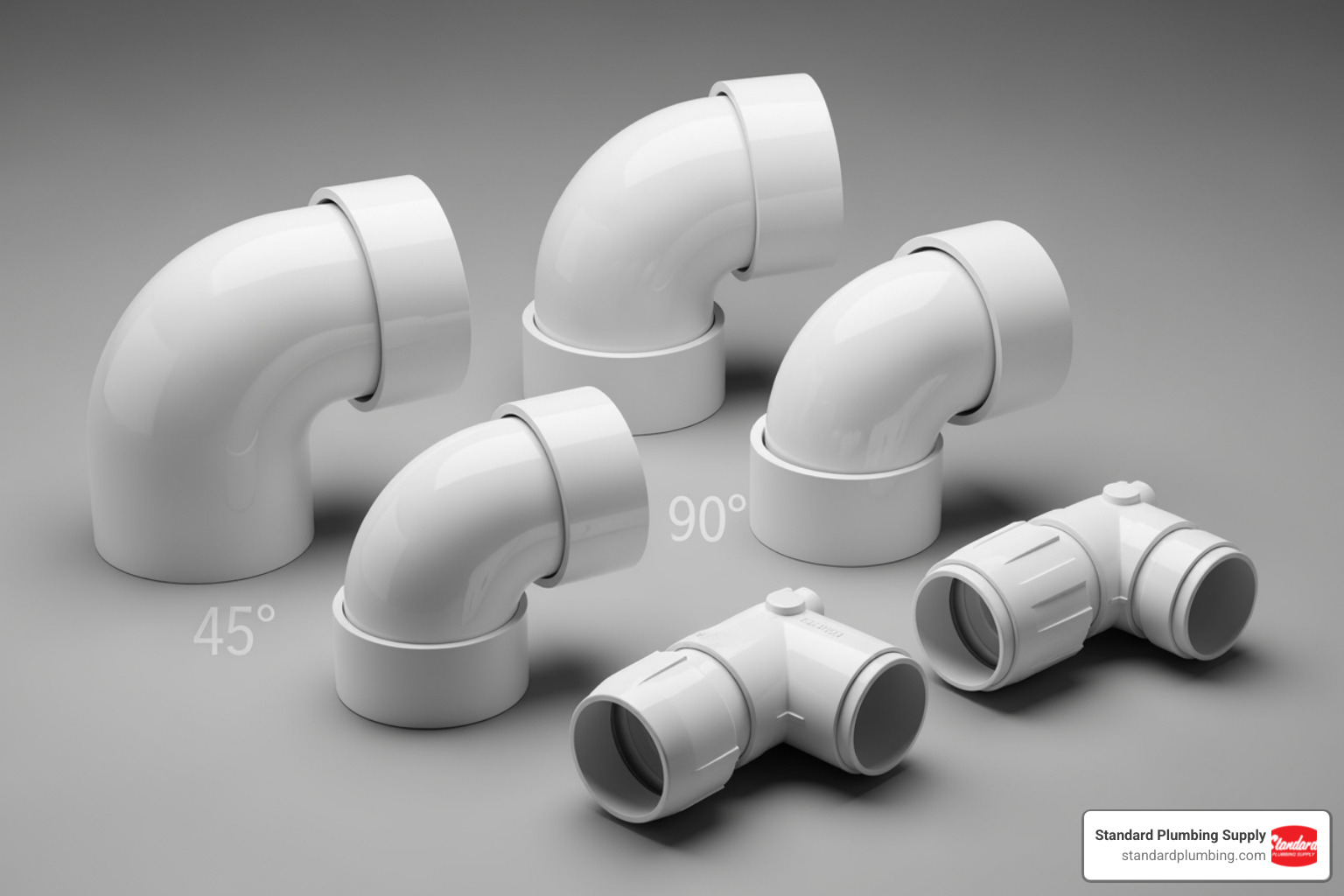
Bends and elbows are the artists of the drainage world, allowing you to gracefully change the direction of your pipe runs. Without them, your drainage system would be a straight, inflexible line, which is rarely practical in the real world.
- Single Socket Bends: These bends have one socketed end for connecting to a plain-ended pipe and one plain end to be inserted into another socket. They are common for creating gentle or sharp turns. You’ll find them in various angles, such as 87.5°, 45°, 30°, and 15°, allowing for precise adjustments to your pipe path.
- Double Socket Bends: As the name suggests, these fittings have a socket at both ends, allowing two plain-ended pipes to be connected. This is ideal for continuous pipe runs where you need to change direction without adding extra couplings.
- Adjustable Bends: These clever fittings offer flexibility, allowing you to set the angle anywhere from 0° to 90° or 0° to 45°. They are incredibly useful for navigating unexpected obstacles or making fine adjustments on site, saving you from needing a multitude of fixed-angle bends.
- Rest Bends: Typically found at an 87.5° angle, a rest bend is designed to sit directly on a solid surface, providing a stable change of direction, often used at the base of a soil stack.
For example, a 110mm 45-degree bend is frequently used for smooth changes in direction, minimizing turbulence and maintaining flow velocity. While some specialized applications might use stainless steel bends (like a 45° bend in AISI 304 stainless steel for specific industrial or marine contexts), for standard underground drainage, PVC-U bends are the norm.
Junctions and Branches
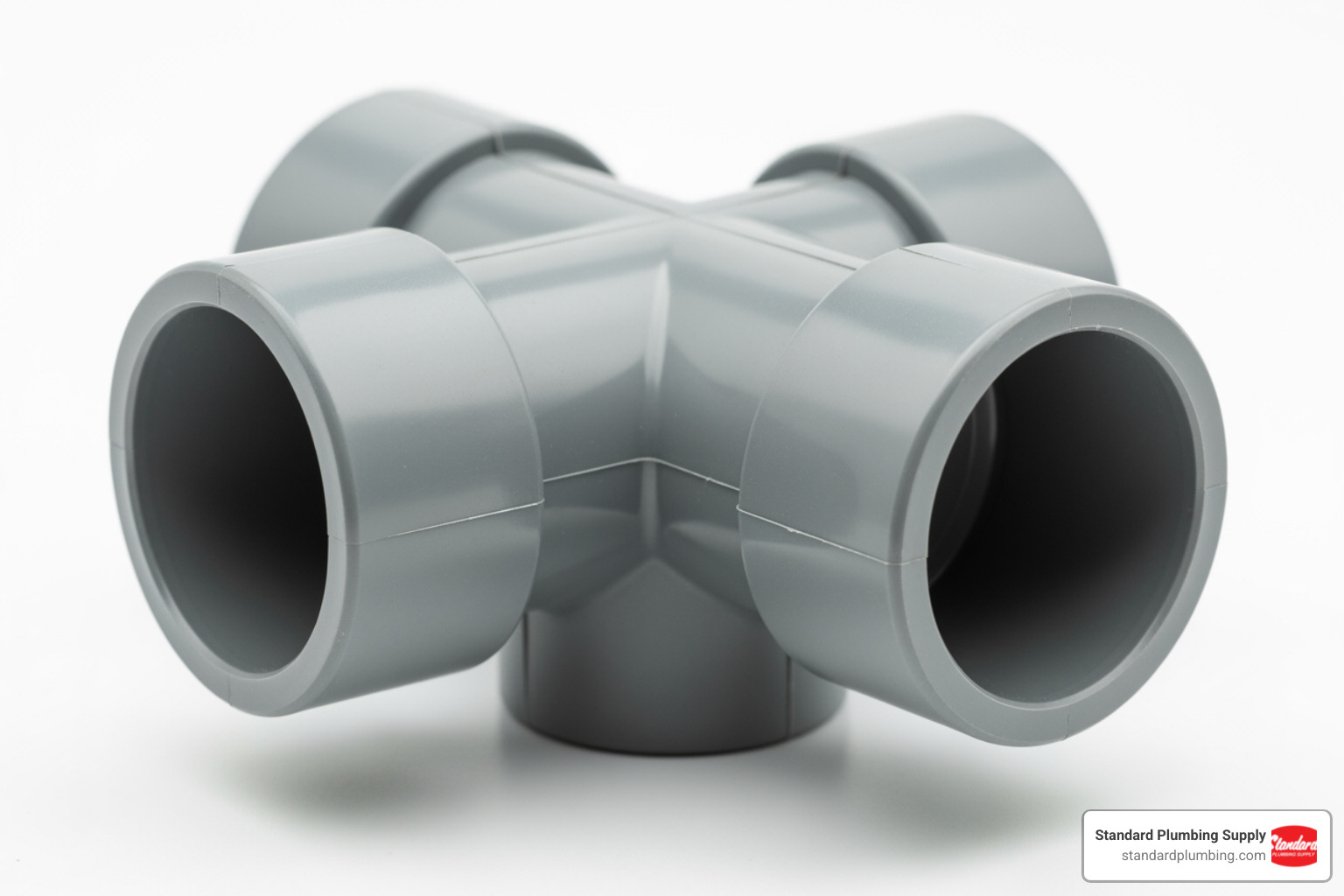
Junctions are where your drainage system truly becomes a network, allowing you to connect multiple pipe runs into a single main line. They are essential for branching off to different appliances or connecting multiple waste streams.
- Equal Junctions: These fittings allow a branch line of the same diameter to join a main line. For example, a 110mm equal junction would connect two 110mm pipes at an angle.
- Triple Socket Junctions: These are highly versatile, featuring three sockets to connect three pipes. You might find a 110mm 92.5° triple junction or a 45° triple junction, allowing for efficient merging of lines.
- Soil Pipe Junction Sockets: These are specifically designed to add another pipe to an existing pipeline, crucial for expanding or modifying your drainage system.
These fittings are designed to ensure that the merging flow does not create turbulence or blockages, maintaining the efficient movement of wastewater.
Couplings and Connectors
Couplings and connectors are the workhorses that bring your drainage system together, allowing you to join pipe lengths, adapt to different sizes, or transition between materials.
- Double Socket Couplings: These are fundamental for joining two plain-ended pipe sections. A 110mm double socket coupling creates a secure, watertight connection, ensuring the integrity of your pipe run.
- Flexible Couplings: These are invaluable for making repairs or connecting pipes of slightly different external diameters or materials. They typically consist of a rubber sleeve with stainless steel clamps, providing a durable and watertight seal. This is particularly useful when connecting to existing infrastructure that might not be perfectly aligned or of a slightly different dimension.
- Slip Couplings: Also known as repair couplings, these fittings lack an internal stop, allowing them to slide fully onto one pipe before being slid back over the second pipe. This makes them ideal for repairing a damaged section of pipe without having to adjust the entire run.
- Reducers: When you need to connect a smaller diameter pipe to a larger one, a reducer is your friend. For instance, a 4-1/2″ (110mm) x 3-1/2″ (90mm) reducer fitting allows a smooth transition from a smaller waste pipe into the main 110mm drainage line. These are critical for maintaining proper flow dynamics and preventing bottlenecks.
- Waste Adaptors: Fittings like an underground waste adaptor for a 40mm pipe allow smaller waste pipes from sinks or showers to connect securely into the larger 110mm underground system.
Gullies, Traps, and Access Points
This category of 110 pipe fittings is all about protection and accessibility—preventing debris, controlling odors, and allowing for maintenance without major excavation.
- Gully Traps: These are installed at ground level to collect surface water (like from a patio or driveway) and direct it into the underground drainage system. Crucially, they contain a water seal that prevents foul odors from escaping the drainage system.
- Bottle Gullies: A common type, known for their compact design and efficient trapping mechanism.
- Back Inlet Gullies: Designed to connect to a waste pipe at the back, often used for sinks or washing machines discharging directly outside.
- Universal Roddable Gullies: These allow for rodding access through the gully itself, simplifying maintenance.
- P-Traps: While often associated with internal plumbing, a low back P-trap can be found in some underground drainage scenarios, particularly where a water seal is required close to an appliance or fixture to prevent odors.
- Access Pipes and Rodding Points: These are specifically designed for system maintenance and inspection.
- An access pipe is essentially a section of pipe with a removable cap or plug, providing direct entry into the drainage line.
- Rodding points, often made of aluminum, offer a dedicated access point for drain rods or CCTV cameras, allowing for blockages to be cleared or inspections to be conducted without having to dig up the entire system.
- Inspection Chambers & Risers: These are larger access points, typically installed where multiple drainage lines converge or at significant changes in direction. They allow for visual inspection, debris removal, and rodding of the main drainage runs. Small and large inspection chamber risers, along with chamber bases and covers, form a complete access solution.
- Socket Plugs: These are used to cap off the end of a pipe run or an unused socket on a fitting, preventing debris ingress or providing a temporary seal during installation.
Fittings Designed for System Maintenance and Access:
- Inspection Covers (galvanized steel or plastic, round and square shapes)
- Rodding Points (e.g., aluminum rodding points)
- Access Plugs
- Inspection Chambers (with various inlets)
- Chamber Risers
- Gully Traps (many are roddable)
These components are vital for the long-term health of your drainage system, making it easier to keep household drains clear and to address any signs of a blocked underground drain promptly.
Installation Essentials: Standards and Best Practices
Installing 110 pipe fittings correctly is not just about getting the water to flow; it’s about ensuring system longevity, preventing blockages, and adhering to critical safety and health standards. For us at Standard Plumbing Supply, proper installation is paramount, and it’s why we emphasize best practices that align with local building codes and recognized industry standards in all our service areas.
While some regions, like the UK, adhere to British Standards like BS EN 1401-1 (for PVC-U non-pressure underground drainage) and BS EN 13476-2 (for structured-wall piping systems), in our locations across the Western United States, we focus on compliance with American standards. These include:
- ANSI/AWWA C110/A21.10: For ductile iron fittings.
- ASTM A536: Specifies ductile iron materials.
- ANSI/AWWA C104/A21.4: For cement-mortar lining for ductile iron pipe.
- ANSI/AWWA C111/A21.11: For rubber-gasket joints for ductile iron pressure pipe and fittings.
- ANSI B16.1: For cast iron pipe flanges and flanged fittings.
- UL/ANSI/NSF Standards 61 and 372: For drinking water system components and lead content.
- ASME B16.5 / API 6A: For pipe flanges and flanged fittings, often in industrial applications.
- NSF/ANSI 61-4 & California AB1953 Lead Free: Important for potable water systems, ensuring lead-free components.
- ASTM A197, ASME B16.3, B16.14, B16.39, ASTM A153, ASME B1.20.1: For various malleable iron fittings and threads.
- ASTM D1784: For PVC compounds.
Always consult your local building department for the specific codes and regulations that apply to your project. Our team is always ready to help you steer these requirements.
Calculating Fall and Flow Capacity
The concept of “fall” or gradient is critical for effective drainage, especially for foul water. It ensures that gravity not only moves the liquid but also carries the solids along with it, preventing sedimentation and blockages.
- Minimum Fall Gradient for Foul Water: For 110mm drainage pipe carrying foul water (containing solids), a minimum gradient of 1:80 is required. This means for every 80 units of horizontal length, the pipe must drop 1 unit vertically. This slope is designed to create a “self-cleansing velocity,” ensuring solids are transported efficiently without settling.
- Minimum Fall Gradient for Surface Water: For surface water or wastewater without solids, a steeper minimum fall of 1:40 is generally recommended. While surface water is less prone to blockages from solids, this steeper gradient helps ensure rapid runoff and prevents standing water.
- Flow Rate Capacity: When installed with the correct gradient, a 110mm pipe can typically handle a flow rate of up to 4.5 liters per second for foul water drainage. This capacity is more than sufficient for most domestic applications.
Common Problems with 110 Pipe Fittings Installation
Even with the best materials, installation errors can lead to significant problems. Here are some common pitfalls and how to avoid them:
- Incorrect Gradient: This is perhaps the most common issue. Too shallow a fall leads to solids settling and blockages, while too steep a fall can cause liquids to run ahead of solids, leaving them behind. Always use a spirit level or laser level to ensure the correct gradient.
- Poor Jointing: Leaky joints are a major problem, leading to ground saturation, potential structural damage, and root intrusion. Ensure all push-fit connections are fully seated, and rubber seals are clean and lubricated. For solvent weld connections, follow manufacturer guidelines precisely.
- Inadequate Support: Pipes laid in trenches must be properly bedded and supported to prevent sagging, which can create bellies where water and solids collect. Use appropriate granular material for bedding and backfill carefully.
- Blockages: Beyond incorrect gradients, blockages can occur from debris entering the system (preventable with gully traps and access covers) or from foreign objects flushed down drains.
- Leaks: Often a result of poor jointing or physical damage to the pipe or fitting during backfilling. Always pressure test your system before final backfill if local codes require it.
- Root Intrusion: Tree and shrub roots are attracted to water and nutrients, and they can exploit even the smallest crack or poorly sealed joint. Maintaining good joint integrity and considering root barriers near established trees can help.
- Lack of Access: Failing to install sufficient inspection chambers, rodding points, or access pipes can turn a simple blockage clearance into a costly excavation project. Plan your access points strategically.
110mm vs. 160mm Pipe: Choosing the Right Size
While 110mm is the standard for domestic drainage, there are times when a larger diameter pipe, such as 160mm, is necessary. Choosing the right size is crucial for system performance and compliance.
| Feature | 110mm Pipe | 160mm Pipe |
|---|---|---|
| Application | Standard for individual domestic properties | Larger domestic, shared drainage, commercial projects |
| Flow Capacity | Up to 4.5 liters/second (foul water) | Significantly higher flow capacity |
| Cost | Generally more cost-effective | Higher material and installation costs |
| Installation | Easier to handle and install | Requires larger trenches, heavier equipment |
| Primary Use Case | Standard household wastewater | High-volume wastewater, multiple connections |
For most individual homes and typical domestic usage, 110mm pipe fittings and pipes are the appropriate and most cost-effective choice. They are designed to handle the flow from standard household fixtures efficiently.
However, for larger properties, shared drainage systems connecting multiple houses, or light commercial applications with higher wastewater volumes, a 160mm pipe diameter is typically used. This larger size accommodates greater flow rates and provides a buffer for peak usage, ensuring the system doesn’t become overwhelmed. When in doubt, it’s always best to consult with a plumbing professional or your local building authority.
Frequently Asked Questions about 110mm Drainage
We often get asked similar questions about 110 pipe fittings and drainage systems. Here are some of the most common ones, with clear answers to help you make informed decisions.
What is the minimum fall for a 110mm drainage pipe?
The minimum fall for a 110mm drainage pipe depends on the type of water being drained:
- Foul water drainage (e.g., toilets, sinks, containing solids) requires a minimum gradient of 1:80. This fall ensures that solids are carried away effectively, preventing them from settling and causing blockages. It creates a “self-cleansing” flow.
- For surface water or wastewater (without solids), a steeper minimum fall of 1:40 is recommended. While surface water doesn’t have solids to transport, this steeper gradient helps ensure rapid runoff and prevents any standing water within the pipe.
Achieving the correct gradient is critical for the long-term performance of your drainage system.
Can you connect 110mm PVC pipe to older clay pipes?
Yes, absolutely! Connecting new 110mm PVC pipe to older clay pipes is a common task during repairs or system upgrades. You can connect them effectively using a flexible adaptor or rubber coupling. These specialized fittings are designed to create a watertight seal between different pipe materials and even accommodate slight variations in outside diameters. They are robust, easy to install, and provide a reliable transition, ensuring the integrity of your drainage system.
What are access pipes and rodding points for?
Access pipes and rodding points are unsung heroes of any well-designed drainage system. They are installed to allow for easy inspection, cleaning, and clearing of blockages within the drainage system without requiring excavation.
- An access pipe is typically a segment of pipe with a removable cap or plug, providing a direct entry point into the drainage line. This allows for visual checks and the insertion of tools or cameras.
- A rodding point, often fitted with a screw-cap, offers a dedicated, easily accessible opening for drain rods or CCTV inspection equipment. For instance, a 110mm double socket coupling with an access plug can serve as a rodding point, allowing maintenance personnel to quickly address issues like blockages or inspect the pipe’s condition. These components are strategically placed at key points in the system, such as changes in direction or long straight runs, to ensure comprehensive coverage and simplify future maintenance.
Conclusion: Build Your Drainage System with Confidence
Navigating 110 pipe fittings might seem complex, but with the right knowledge and components, it’s a straightforward path to a reliable drainage system. We’ve seen how 110mm is the standard for domestic underground drainage, offering ample capacity and robust performance. The versatility and inherent advantages of PVC-U—its durability, lightweight nature, ease of installation, and resistance to chemical degradation—make it the modern material of choice.
Correct installation, including meticulous attention to gradient and proper jointing, is paramount for preventing common problems and ensuring the longevity of your system. And with a comprehensive range of bends, junctions, couplings, gullies, and crucial access points, you have every fitting you need to design, install, or repair your drainage infrastructure with confidence.
At Standard Plumbing Supply, we’re here to help you every step of the way. From selecting the right 110 pipe fittings to offering expert advice, we’re your trusted partner in plumbing.
Find all the ABS cleanout tees and fittings you need for your next project.
