
When Your Sink Drain Needs to Go: What to Know Before You Start
Bathroom sink drain assembly replacement is a DIY-friendly plumbing job that most homeowners can complete in 3-4 hours for around $50-65 in parts.
Here’s a quick overview of what the process involves:
- Turn off the water supply valves under the sink
- Remove the clevis strap, pivot rod, and P-trap
- Extract the old drain flange and clean the sink surface
- Apply plumber’s putty and install the new drain body
- Reconnect the P-trap, pivot rod, and clevis
- Test for leaks by filling the sink and checking all joints
Hiring a professional plumber typically runs $100-350, depending on labor rates and minimum service call fees. Doing it yourself saves real money.
So why would you need to replace your drain in the first place? The most common culprits are rust, a worn rubber gasket, a sticking pop-up stopper, or a drain that’s simply leaking around the flange. Sometimes it’s less about function and more about aesthetics — a corroded or mismatched drain can drag down an otherwise clean bathroom.
The good news: this is one of those home repairs that sounds more intimidating than it actually is. With the right parts, a few basic tools, and clear instructions, you can get a leak-free drain installed without calling a plumber.
I’m Jacob Reese, Vice President of Standard Plumbing Supply and a third-generation plumbing professional who grew up learning the trade from the ground up. Over the years, I’ve helped countless contractors and DIYers source the right components for jobs exactly like bathroom sink drain assembly replacement. In this guide, I’ll walk you through everything you need to do this job right the first time.
Understanding Your Bathroom Sink Drain Assembly Replacement Options
Before you head to one of our stores in Utah, Arizona, or any of our other Western locations, you need to know exactly what kind of drain you’re looking for. Not all sinks are created equal, and choosing the wrong hardware can lead to a frustrating afternoon.
Pop-Up Drains vs. Grid Strainers
Most residential bathrooms use a pop-up drain. This system uses a lift rod (the little handle behind your faucet) connected to a pivot rod and a clevis strap to raise and lower the stopper. If you prefer a more modern look or have a vessel sink, you might choose a “push-and-pull” or “toe-touch” stopper that doesn’t require the rod assembly at all.
On the other hand, grid strainers are decorative drains that feature an open grid design. These allow for continuous draining and are common in commercial settings or guest bathrooms where you don’t necessarily need to fill the basin with water.
The Importance of Overflow Compatibility
This is a big one. Does your sink have a small hole near the rim? That’s the overflow. If it does, you must purchase a drain assembly with an overflow port—a small opening in the side of the drain body that allows water from the overflow channel to enter the pipe. If you’re working with a specialty sink, you might need something like the 9244 overflow nyl drain kit, which is designed specifically for these configurations.
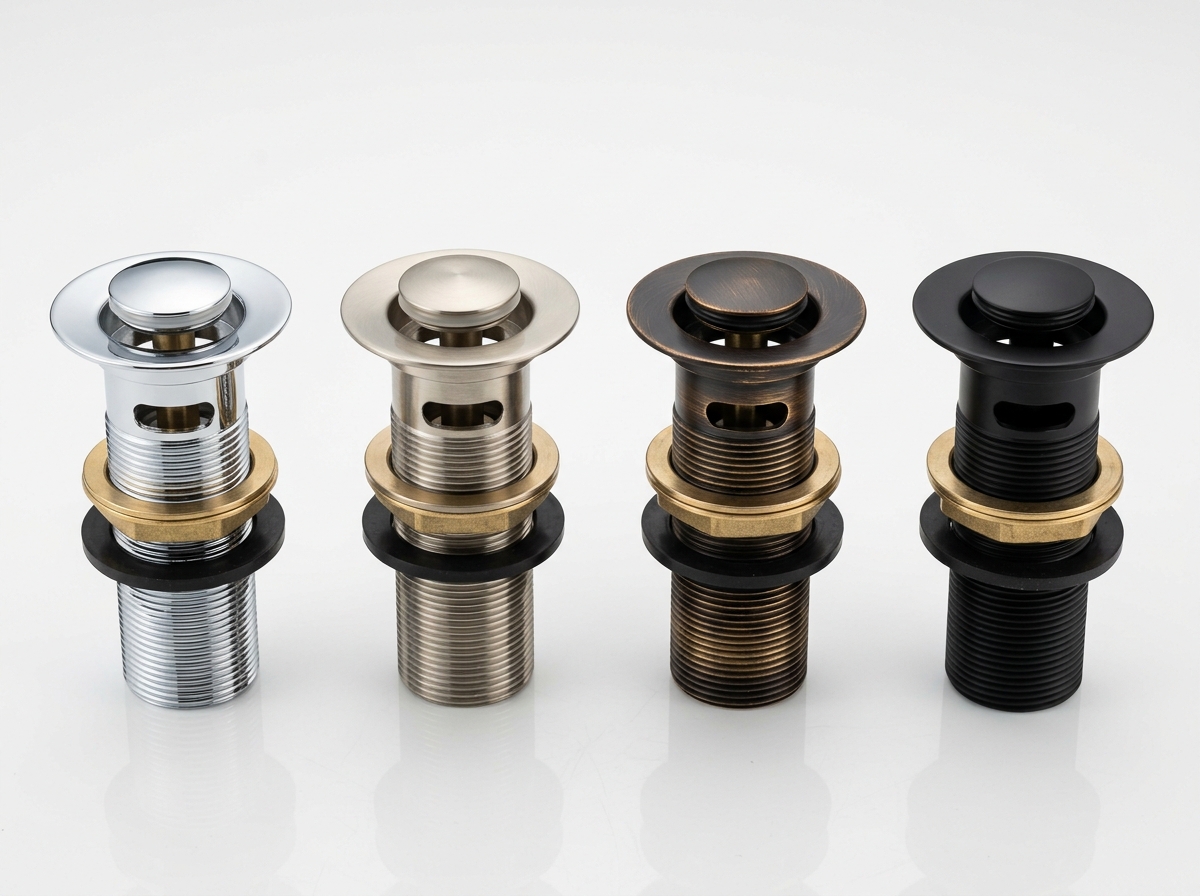
Material Matters: Brass vs. Plastic
When browsing our aisles, you’ll notice a price difference between plastic and metal assemblies. Here is how they stack up:
| Feature | Plastic (Nonmetallic) | Metal (Brass/Stainless) |
|---|---|---|
| Durability | Good for budget builds; won’t rust | Excellent; lasts decades |
| Installation | Easier to hand-tighten; lightweight | Requires more torque; feels “premium” |
| Corrosion | Immune to mineral buildup | Can tarnish over time depending on finish |
| Price | Very affordable ($10-$25) | Mid to high range ($30-$150+) |
For those looking for the gold standard in durability, an all-metal Moen drain assembly offers a heavy-duty solution that resists the “sticking” issues common with cheaper units.
Essential Tools and Materials for Success
You don’t need a truck full of tools for a bathroom sink drain assembly replacement, but having the right ones on hand prevents “mid-project panic.”
Your DIY Plumbing Kit
- Slip-joint pliers: Essential for loosening large nuts on the P-trap and drain body.
- Basin wrench: This long-reach tool is a lifesaver if you have a pedestal sink or a very deep vanity where standard pliers can’t reach.
- Plumber’s putty: This is the traditional sealant used under the drain flange. However, if you have a stone or composite sink, check the manufacturer’s instructions—sometimes silicone is required to prevent staining.
- Silicone sealant: Often used for the underside of the sink or for “no-putty” gaskets.
- Adjustable wrench: For the smaller nuts on the pivot rod and lift rod.
- Bucket and rags: You will have water spill out when you remove the trap. Be ready for it.
If you’re updating your bathroom aesthetics, you might want to match your new drain to your faucet. We see a lot of homeowners moving toward a matte black finish for a sleek, contemporary look.
Step-by-Step Guide to Bathroom Sink Drain Assembly Replacement
Ready to get your hands dirty? Follow this guide to ensure a professional-grade result.
Removing the Old Bathroom Sink Drain Assembly
First, clear out everything under the sink. You need room to move.
- Water Shut-off: While you aren’t technically working on the pressurized water lines, it’s a good habit to turn off the shut-off valves. If you accidentally bump a supply line, you won’t end up with a flood.
- Disconnect the Rods: Under the sink, find the horizontal pivot rod that goes into the back of the drain. Squeeze the metal spring clip and slide it off to disconnect the pivot rod from the perforated metal clevis strap.
- The P-Trap: Place your bucket directly under the P-trap (the U-shaped pipe). Loosen the slip nuts at both ends. Let the water drain into the bucket. If the nuts are stuck, use your slip-joint pliers, but be gentle—old plastic can crack.
- Remove the Drain Body: Use your pliers to unscrew the large mounting nut holding the drain body to the bottom of the sink. Once that’s off, you can push the drain assembly up through the hole.
- Clean the Surface: This is the most important step for a leak-free seal. Use a putty knife to scrape away old, crusty plumber’s putty. For stubborn residue or silicone, a bit of mineral spirits on a rag works wonders. You want that porcelain (or stone) to be spotless and dry.
If your plumbing is slightly misaligned from the wall, you might need an offset ring to help the new assembly line up perfectly with your existing waste pipes.
Installing the New Bathroom Sink Drain Assembly Replacement
Now, let’s put the new one in.
- Prep the Flange: Take a golf-ball-sized amount of plumber’s putty and roll it between your hands to create a “snake” about the thickness of a pencil. Wrap this around the underside of the new drain flange.
- Seat the Drain: Press the flange firmly into the sink’s drain hole.
- The Bottom Seal: From underneath, slide the rubber gasket (tapered side up), the friction washer, and the mounting nut onto the drain body.
- Tighten: Hand-tighten the mounting nut first. Then, use your pliers to give it another quarter to half turn. You want the putty to squeeze out from the top—that’s how you know you have a solid seal. Expert Tip: Don’t overtighten! You can crack the sink or the plastic nut if you go overboard.
- Tailpiece Connection: Thread the tailpiece onto the bottom of the drain body. If you’re working with specific materials like ABS, ensure you have the correct ABS drain components for a compatible fit.
Final Connections and Leak Testing
We’re in the home stretch! Now we just need to make it functional and watertight.
Reconnecting the Mechanics
Insert the stopper into the drain from the top. Under the sink, insert the pivot rod into the opening on the back of the drain pipe. Make sure the rod goes through the hole at the bottom of the stopper (if you want it to be “vandal-resistant”) or sits under it (if you want to be able to pull the stopper out for easy cleaning). Tighten the pivot rod nut by hand.
Attach the pivot rod back to the clevis strap using the spring clip. Adjust the height of the clevis strap on the lift rod until the stopper opens and closes fully when you pull the handle behind the faucet.
The Moment of Truth: Leak Testing
Don’t just run the tap for five seconds and call it a day. Follow these professional testing steps:
- The Dry Rag Test: Wipe down every single joint with a dry rag so the pipes are bone dry.
- The Fill-and-Release: Plug the sink and fill it to the overflow. Check the overflow connection for leaks. Then, pull the stopper and let the water rush out all at once. This puts maximum pressure on the joints.
- The Dye Test: If you suspect a tiny leak but can’t see it, add a drop of food coloring to the water. It makes “slow beads” much easier to spot against white plastic or porcelain.
- Check for Slow Drips: Lay a dry paper towel in the bottom of the vanity and check it again in 30 minutes. If it’s still dry, you’ve successfully completed your bathroom sink drain assembly replacement!
Frequently Asked Questions about Sink Drains
How much does a bathroom sink drain assembly replacement cost?
If you go the DIY route, you’re looking at $21 to $65 for a quality kit and some sealant. If you call a pro, expect to pay between $100 and $150 for the replacement itself, but keep in mind many plumbers have a minimum service call fee that can push the total closer to $350.
How long does it take to replace a sink drain?
For a beginner, we usually estimate 3 to 4 hours. This accounts for the time spent cleaning off old putty and potentially making a second trip to Standard Plumbing Supply because you realized your P-trap was also corroded! For an experienced DIYer, the job usually takes about an hour.
Do I need plumber’s putty or silicone for the flange?
Plumber’s putty is the standard because it’s easy to work with and easy to remove in ten years when you want a new look. However, silicone is mandatory for certain stone, marble, or granite sinks because the oils in plumber’s putty can permanently stain the stone. Always check your sink’s manual!
Conclusion
At Standard Plumbing Supply, we’ve been helping folks across the West—from the high deserts of Peoria, Arizona, to the snowy peaks of Jackson, Wyoming—maintain their homes for generations. A bathroom sink drain assembly replacement is a fantastic way to save money, learn a new skill, and keep your home in top shape.
Whether you need a simple stopper or a full tubular supply kit, we have the professional-grade parts you need to get the job done right. If you run into a snag or aren’t sure which gasket you need, stop by any of our locations in Utah, Idaho, California, or beyond. Use our store locator to find the nearest branch, and our experts will be happy to walk you through your project.
Don’t let your hard-earned money go down a leaky drain—fix it today with a little help from us!
