
Why Solar Water Heating Matters for Your Home and Budget
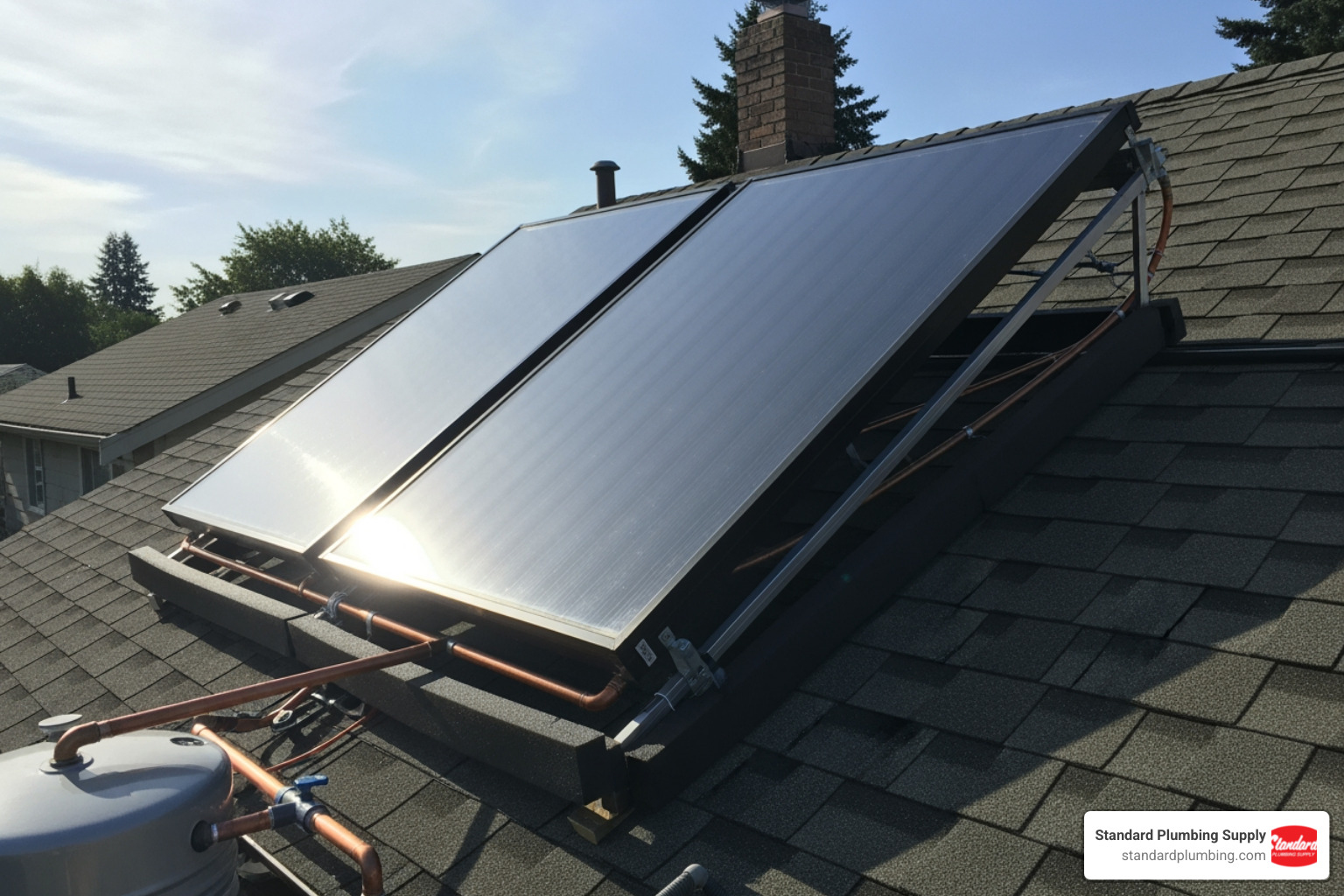
Solar water heating uses the sun’s thermal energy to heat water, potentially reducing your water heating costs by 50% to 80% and significantly lowering your carbon footprint. Water heating accounts for roughly 18% of energy use in a typical home, making it a prime area for savings. Here’s a quick overview:
- How it works: Rooftop solar collectors absorb sunlight, transferring heat to water via insulated piping and a heat exchanger.
- Energy savings: ENERGY STAR certified systems use 60% less energy than standard water heaters.
- System types: Active systems use pumps, while passive systems use gravity.
- Payback period: Typically 10 to 15 years, but faster with incentives or in sunny climates.
- Lifespan: Systems are built to last 20+ years with proper maintenance.
Modern solar water heating systems are more efficient and affordable than ever. The technology is simple: dark collectors absorb sunlight, convert it to heat, and transfer it to water in an insulated storage tank. A conventional backup heater ensures you have hot water on cloudy days.
While the upfront cost of $60 to $150 per square foot of collector area can be significant, the long-term savings are compelling. The energy used to manufacture a system is typically recovered within just 2 to 3 years of operation.
I’m Jacob Reese, Vice President of Standard Plumbing Supply. I’ve seen the growing interest in solar water heating as a way to combat rising energy costs. Through Standard’s network, we help customers determine if solar is right for them and connect them with the best products.
This guide will cover how these systems work, the types available, their pros and cons, and what to expect during installation and maintenance.
How Solar Water Heating Works: From Sunlight to Hot Water
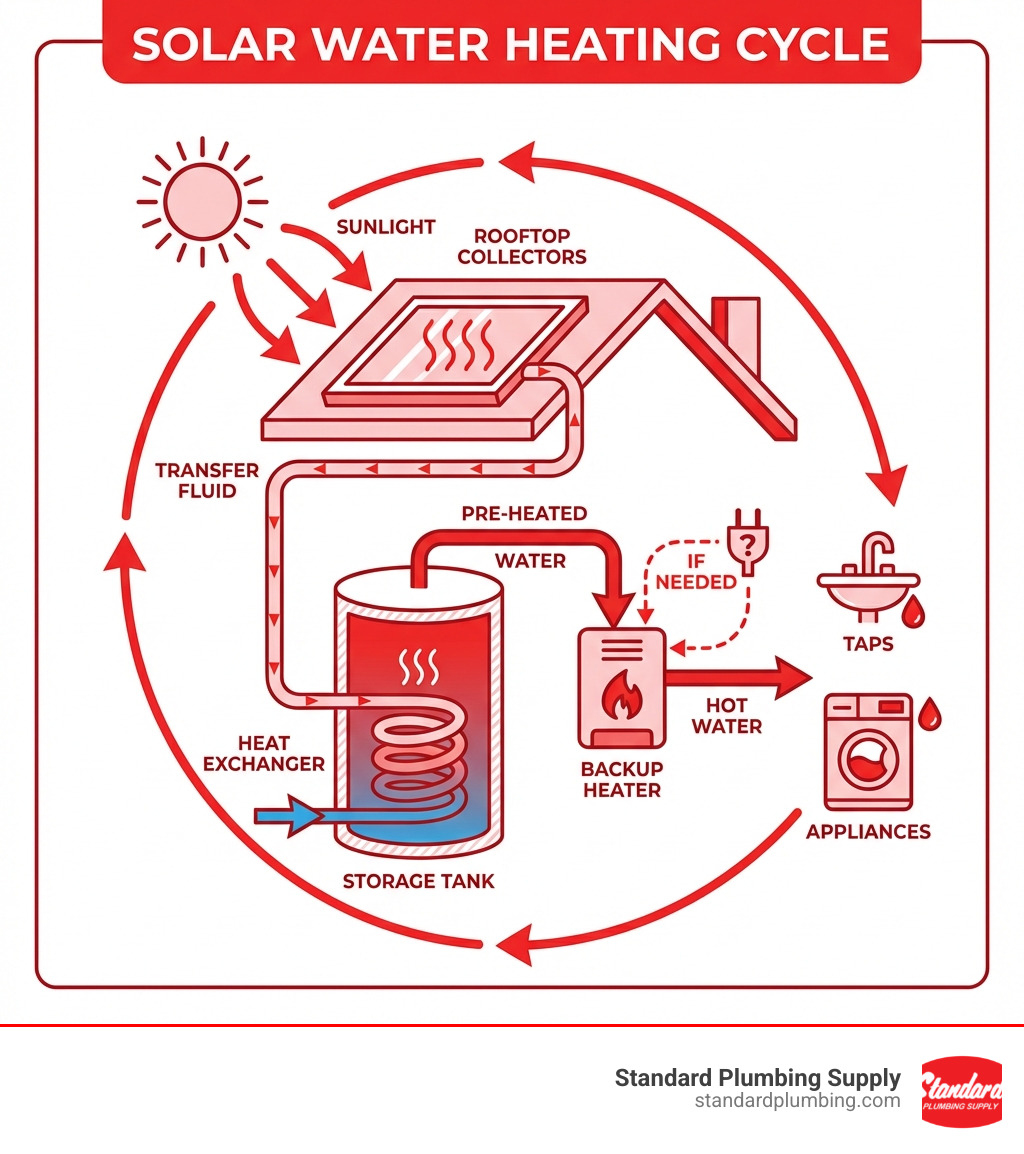
Solar water heating is a clean, efficient way to provide hot water for your home by capturing the sun’s thermal energy, not generating electricity like PV panels. It reduces your reliance on traditional energy sources by changing sunlight into hot water for your daily needs.
The Basic Principle: Capturing Thermal Energy
The process is straightforward:
- Absorption: Rooftop collectors absorb sunlight and heat up.
- Circulation: A heat-transfer fluid (water or an antifreeze solution) circulates through the collectors, absorbing the heat.
- Heat Transfer: The heated fluid flows to a storage tank and passes through a heat exchanger, transferring its heat to your home’s water supply.
- Pre-heating: The water in your tank is now pre-heated by the sun.
- Backup Use: Your conventional water heater has to do less work (or none at all) to bring the water to the final temperature, saving significant energy—often covering 60-65% of your water heating needs.
This cycle uses the sun’s free energy to make your water heating more sustainable and cost-effective.
Key Components and Their Roles
A typical system consists of several key parts working together.
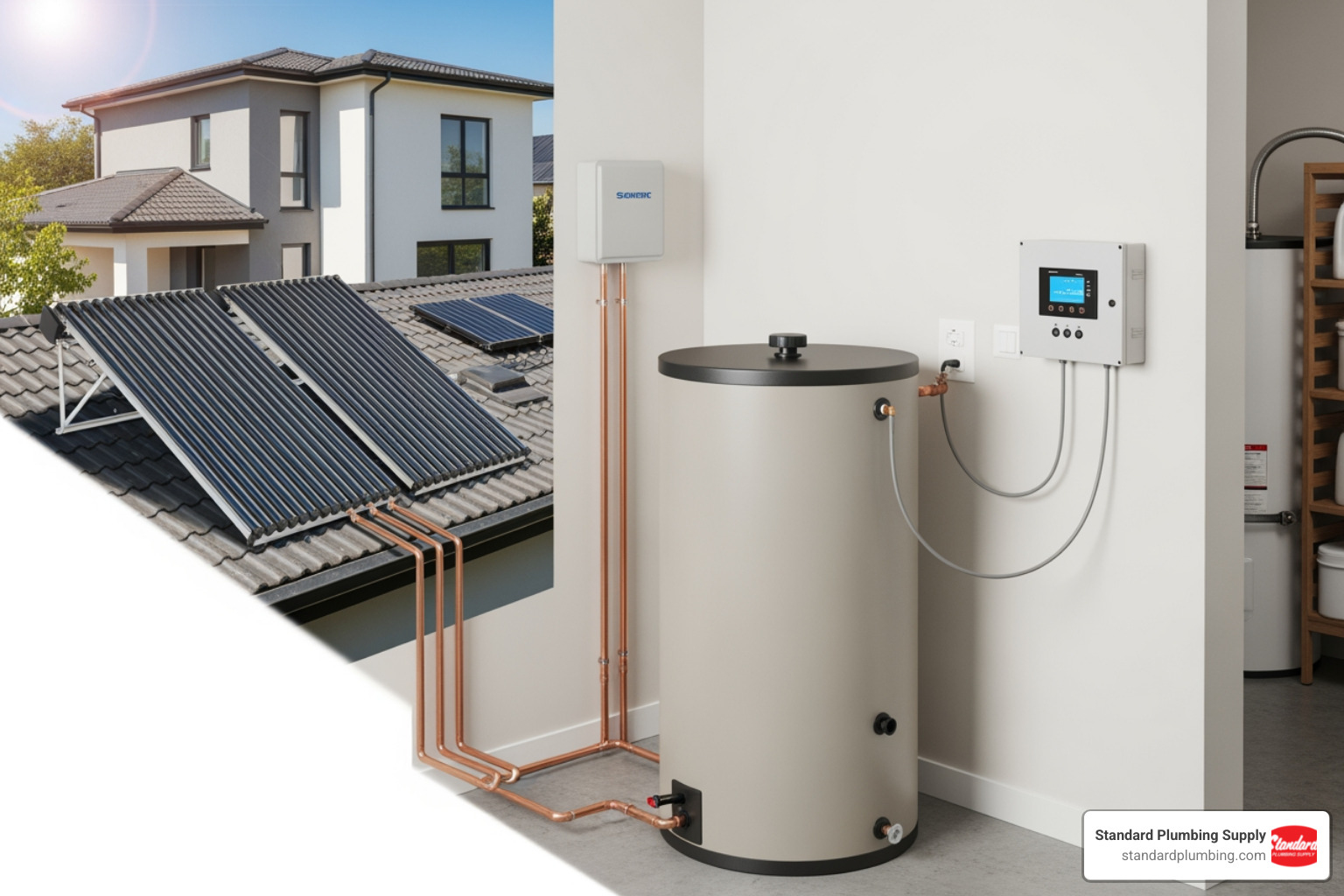
- Solar Collectors: Panels or tubes on your roof that absorb solar radiation and convert it to heat.
- Storage Tanks: Well-insulated tanks that hold the solar-heated water until it’s needed.
- Controllers: The “brain” of the system that activates the pump only when the collector is hotter than the water in the tank, ensuring efficiency.
- Pumps: In active systems, pumps circulate the heat-transfer fluid between the collectors and the tank.
- Mixing Valves: A safety device that blends hot water from the solar tank with cold water to prevent scalding at the faucet.
- Backup System: A conventional electric or gas water heater that ensures you always have hot water, regardless of the weather.
For more details on how these systems work, visit the Department of Energy’s guide on solar water heaters.
Types of Solar Water Heating Systems
The best solar water heating system for your home depends on your climate, budget, and hot water needs. Systems are mainly classified as active or passive.
Active vs. Passive Systems
The main difference is how they circulate the heat-transfer fluid:
-
Active Systems: These use electric pumps and controllers for precise operation and are the most common choice, especially where freezing is a concern.
- Direct Systems: Circulate potable water through collectors. They are simpler but require freeze protection in colder climates.
- Indirect Systems: Use a non-freezing fluid (like propylene glycol) that transfers heat via a heat exchanger. This provides excellent freeze protection and is recommended for year-round use in areas like Idaho, Wyoming, and Colorado.
- Drainback Systems: A type of indirect system that automatically drains water from the collectors when the pump is off, providing robust freeze and overheat protection without using antifreeze.
-
Passive Systems: Rely on natural convection (gravity) without pumps. They are less expensive but also less efficient, best suited for mild climates like parts of Arizona or Southern California.
- Thermosiphon Systems: Place the storage tank above the collector, allowing hot water to rise naturally into the tank.
- Integrated Collector-Storage (ICS) Systems: Combine the collector and storage into one unit. They are simple but not recommended for cold climates due to freezing risks.
For most of our service areas with cold winters, active indirect or drainback systems are the most practical choice.
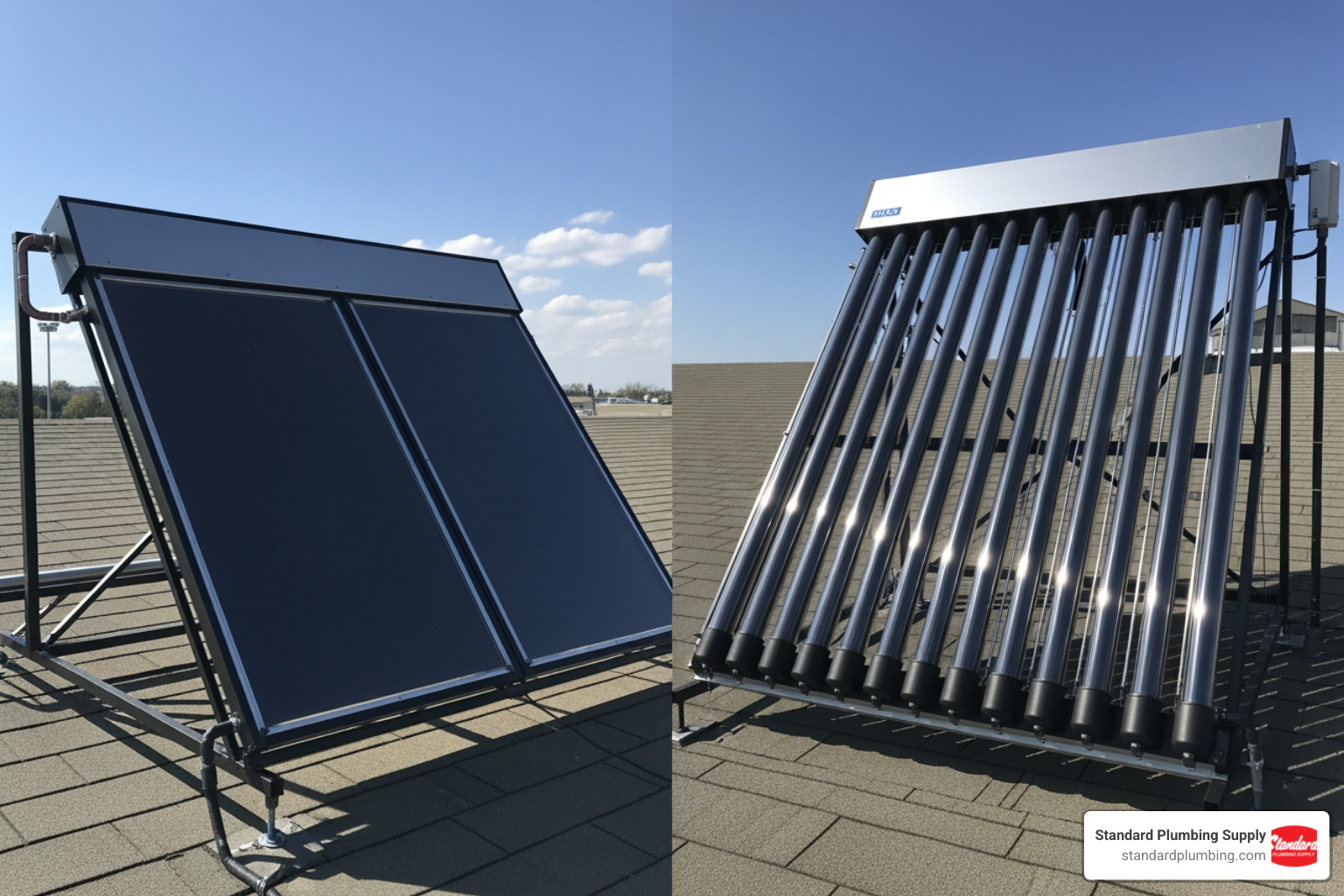
Collector Comparison: Flat-Plate vs. Evacuated Tube
The collector type impacts efficiency, cost, and performance.
| Feature | Flat-Plate Collectors | Evacuated Tube Collectors |
|---|---|---|
| Description | Copper tubes on an absorber plate in an insulated, glass-covered box. | Multiple glass tubes with a vacuum layer, enclosing an absorber. |
| Efficiency | Good, but lose more heat to ambient air. | Very high, as the vacuum minimizes heat loss. Works well in cold, overcast conditions. |
| Cold Climate Performance | Good in mild climates; requires antifreeze in freezing weather. | Excellent. Can work in temperatures as low as -40°F and in overcast conditions. |
| Cost (per sq. ft.) | Generally less expensive. | More expensive, but overall system cost may be comparable for larger systems. |
| Durability | Robust, but glass can break from severe hail. | Individual tubes can be replaced if damaged. |
| Best Use Case | Domestic hot water in average climates, pool heating. | Domestic hot water in colder, cloudier climates; high-temp applications. |
- Glazed Flat-Plate Collectors: The most common for residential hot water, they are durable and cost-effective.
- Unglazed Flat-Plate Collectors: Simpler plastic or rubber collectors used for heating swimming pools.
- Evacuated Tube Collectors: The most efficient choice for cold climates like Idaho, Wyoming, and mountain regions. The vacuum layer acts like a thermos, preventing heat loss. While the upfront cost is higher, their superior performance in cold weather can make them a worthwhile investment.
The Benefits and Drawbacks of Going Solar
Investing in solar water heating comes with significant advantages and a few important considerations.
Advantages: Cost Savings and Environmental Impact
Tapping into the sun’s free energy brings many benefits:
- Lower Utility Bills: A solar installation can cut your water heating bills by 50% to 80%.
- Protection from Fuel Price Fluctuation: Sunlight is free, shielding you from unpredictable swings in electricity or gas prices.
- Reduced Greenhouse Gas Emissions: Using solar energy significantly reduces your home’s carbon footprint. A solar system can have half the environmental impact of a gas heater and just 20% of an electric one.
- Rapid Energy Payback: The energy used to manufacture a system is typically recovered within 2 to 3 years of use.
- Increased Property Value: Homes with renewable energy systems are attractive to buyers. An ENERGY STAR certified system uses 60% less energy than a standard model, adding to your home’s appeal.
- Improved Energy Independence: Generating your own hot water makes you less dependent on the grid.
Disadvantages and Limitations to Consider
It’s also important to be aware of the practicalities:
- Upfront Cost: The initial investment can be substantial, typically ranging from $60 to $150 per square foot of collector area. However, incentives and long-term savings help offset this.
- Roof Space Requirements: Collectors need adequate, unshaded, south-facing roof space. Ground mounts are an alternative if roof space is limited.
- Sunlight Dependency: Performance fluctuates with sunlight. A backup heater is necessary for cloudy days and nighttime use.
- Potential for Freezing or Overheating: Proper system design is crucial. Systems need freeze protection (antifreeze or drainback systems) in cold climates and overheat protection in hot climates to prevent damage.
- Longer Payback Period in Some Climates: The financial payback period varies. It’s faster in sunny areas with high energy costs and slower in regions with less sun or cheaper conventional energy, though incentives can shorten this time.
Making the Switch: A Buyer’s Guide
Deciding to invest in solar water heating is a great step. Here’s how to start the process and make an informed decision.
Choosing the Right Solar Water Heating System for Your Home
Matching the technology to your needs is key:
- Household Size and Hot Water Usage: Your usage determines the system size. A one-collector system often works for 1-3 people, while a two-collector system is better for 2-7 people.
- Climate Considerations: In colder regions like Idaho and Wyoming, systems with robust freeze protection (indirect or drainback) are essential. In milder areas like Arizona, simpler flat-plate collectors may suffice.
- System Compatibility: Ensure the new system integrates seamlessly with your existing plumbing and backup water heater.
Before deciding, it’s wise to evaluate your site’s solar resource, determine the correct system size, and investigate local codes.
Costs, Payback Periods, and Financial Incentives
The upfront cost is an investment in long-term savings.
- Typical System Cost: Installed costs for residential systems range from $60 to $150 per square foot of collector area.
- Payback Period: This can range from 4 to 15 years, depending on your system cost, local energy prices, solar resource, and available incentives. Payback is fastest when replacing expensive fuels like electricity.
- Financial Incentives: These can dramatically reduce your net cost. Look for:
- Federal tax credits
- State and local rebates
- Utility company incentives
- Property or sales tax exemptions
Researching these opportunities is crucial. A great resource for finding incentives in your area is the DSIRE database.
Geographic and Climatic Factors for Solar Water Heating
Your location dictates the best system design.
- Solar Resource: Most of the Western U.S. has excellent solar resources, making it ideal for solar water heating.
- Collector Orientation and Tilt: For best performance, collectors should face true south (or close to it) and be tilted at an angle roughly equal to your latitude.
- Freeze Protection: As emphasized, this is non-negotiable in climates with freezing temperatures (common in California, Colorado, Idaho, Utah, Nevada, Oregon, and Wyoming). Indirect or drainback systems are required.
- Overheat Protection: In hot climates like Arizona, systems need features to prevent overheating during periods of low use, which protects components and extends system life.
Installation, Maintenance, and System Longevity
Professional installation and routine maintenance are key to maximizing your system’s performance and 20+ year lifespan.
Finding a Qualified Installer and Understanding Certifications
Installing a solar water heating system requires plumbing, electrical, and roofing expertise, making it a job for a professional.
- Look for Certifications: Prioritize installers with NABCEP (North American Board of Certified Energy Practitioners) certification. Also, ensure the equipment itself is certified by the SRCC (Solar Rating and Certification Corporation), which guarantees performance and quality.
- Screen Your Contractor: Ask about their years of experience with solar water heating, their familiarity with your chosen system type, and for references. Always verify they are properly licensed and insured in your state (Arizona, California, Colorado, Idaho, Nebraska, Nevada, Oregon, Utah, Wyoming). This protects you from liability.
- Find Certified Products: You can start by identifying certified equipment using resources like the ENERGY STAR Product Finder.
Maintenance Tips for Your Solar Water Heating System
Modern systems are low-maintenance, but some care ensures longevity.
- Annual Inspection: Have a qualified professional check fluid levels, pressure, and pump operation annually.
- Clean Collectors: In dusty climates, rinse collectors annually to maintain efficiency. Rain is often sufficient elsewhere.
- Check Fluids: In indirect systems, the antifreeze fluid may need to be checked and replaced every few years (though some last up to 10 years). Drainback systems avoid this by using plain water.
- Component Lifespan: Be aware that components like pumps and controllers may need replacement after about 10 years, while collectors often have 10-year warranties and last much longer.
- Maintenance Frequency: Simple passive systems may only need a check-up every 3–5 years. Active systems benefit from annual checks.
- Storage Tank Care: Flush the storage tank annually to remove sediment, just as you would with a conventional water heater.
Frequently Asked Questions about Solar Water Heating
We hear a lot of great questions about solar water heating, and we’re always happy to provide clear, straightforward answers. Here are some of the most common inquiries we receive:
What is the expected lifespan of a solar water heating system?
A: Most systems have a lifespan of 20 years or more. Collectors and heat exchange modules often have 10-year warranties, while other components may have shorter warranties. Regular maintenance can extend the system’s life.
Do solar water heaters work on cloudy days or at night?
A: Solar water heaters are less effective on heavily overcast days and do not work at night. This is why nearly all systems include a well-insulated storage tank to hold hot water and a backup heating system (electric or gas) to ensure hot water is always available.
Can I use solar water heating for my swimming pool?
A: Yes, solar pool heaters are a very popular and cost-effective use of solar technology. They typically use unglazed collectors to heat a large volume of water to a lower temperature, significantly extending the swimming season.
Conclusion
We’ve covered a lot of ground today, from the basic principles of how solar water heating works to the different types of systems, their benefits and drawbacks, and the practicalities of choosing, installing, and maintaining one.
In summary, solar water heating offers a compelling package: significantly reduced energy bills, protection from fluctuating fuel prices, a smaller carbon footprint, and improved energy independence. It’s a long-term investment that pays dividends for your wallet and the planet. While the upfront cost requires consideration, the array of financial incentives and the system’s extended lifespan make it an increasingly attractive and responsible choice for homeowners and businesses across Arizona, California, Colorado, Idaho, Nebraska, Nevada, Oregon, Utah, and Wyoming.
At Standard Plumbing Supply, we’re committed to helping our communities accept sustainable living solutions. With locations across the Western U.S., including cities like Phoenix, Las Vegas, Salt Lake City, Boise, and Sacramento, we’re more than just a supplier; we’re your partner in finding the right solar water heating solutions. Our local experts can help you find the right parts, connect you with qualified installers, and provide the professional support you need to make your solar water heating project a success.
Ready to harness the sun for your hot water needs? Let us help you take the first step towards a brighter, warmer, and more sustainable future.
Find a store near you to get started with your solar water heating project
