
Is a Kitchen Pot Filler Worth It? Here’s What You Need to Know
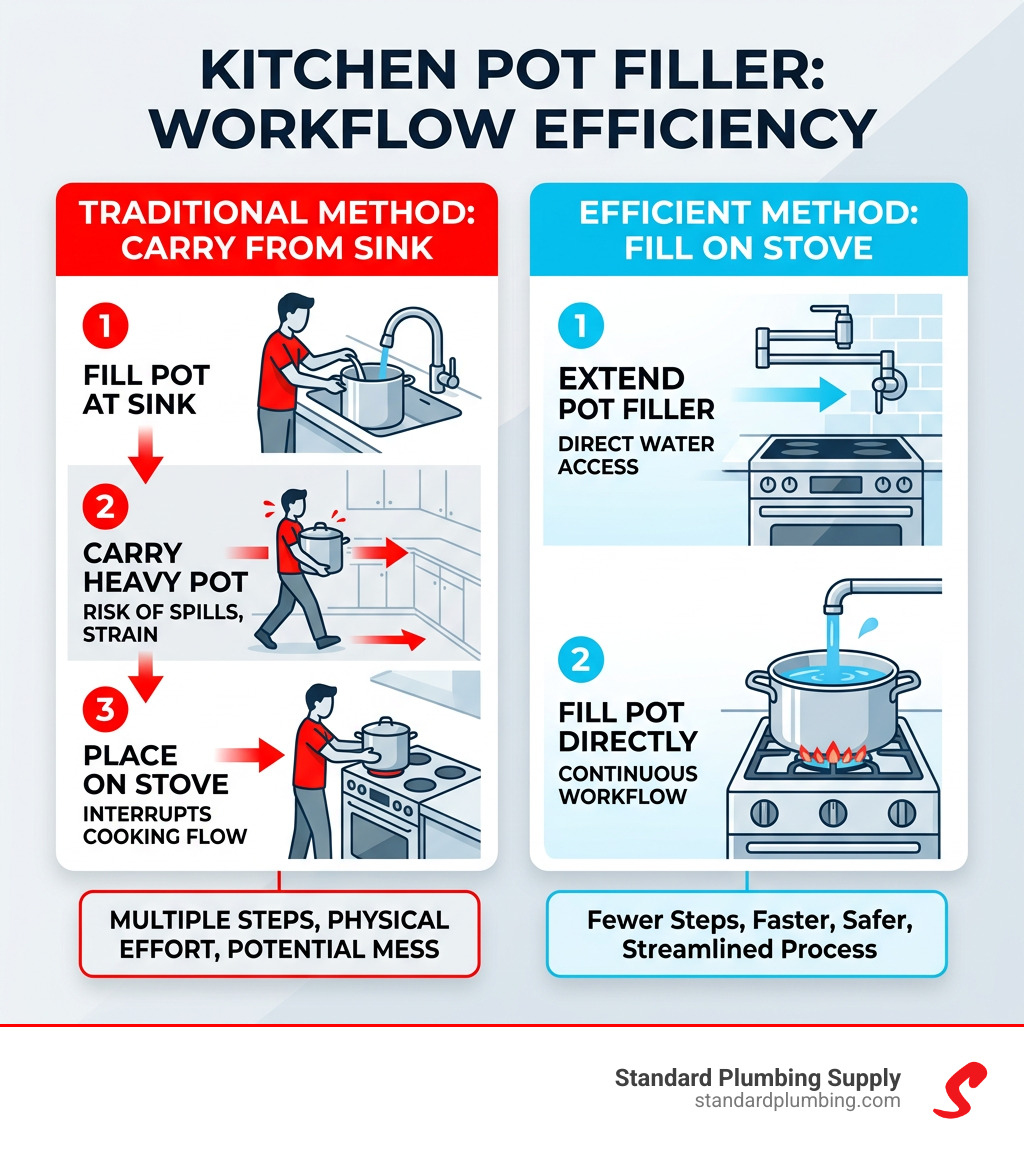
A kitchen pot filler is a wall-mounted faucet installed above your stove that lets you fill pots with water directly on the burner — no more hauling heavy pots from the sink.
Quick answer for busy cooks:
- What it does: Delivers water right over your range, so you never carry a full pot across the kitchen
- Who it’s for: Home cooks, serious chefs, and anyone who regularly boils large amounts of water
- Cost range: $50 to $1,000 depending on brand, finish, and features
- Mount types: Wall-mount (most common) or deck-mount
- Worth it? Yes — especially if you cook frequently or have limited mobility
If you’ve ever struggled to carry a pot of water from the sink to the stove without spilling, you already understand the problem a kitchen pot filler solves. It’s a small upgrade that makes a real difference — both in daily convenience and kitchen safety. The change is simple, but the impact on your cooking routine can be significant.
I’m Jacob Reese, Vice President of Standard Plumbing Supply, and with decades of hands-on experience in the plumbing supply industry, I’ve helped countless contractors and homeowners source the right kitchen pot filler for their needs. In this guide, I’ll walk you through everything you need to make a smart, confident choice.
What is a Kitchen Pot Filler and How Does It Work?
At its core, a kitchen pot filler (sometimes called a stove faucet or pasta arm) is a specialized fixture designed for one specific task: delivering high volumes of water directly to your cooking surface. Unlike your standard kitchen sink faucet, which sits over a basin, this beauty lives on the wall behind your range or on the countertop next to it.
The magic lies in the swing-arm design. Most models feature a dual-jointed arm that allows the faucet to extend far out over your burners and then fold back flat against the backsplash when you’re finished. This articulating spout ensures that whether you are using the front-left burner for a massive stockpot or the back-right for a smaller saucepan, the water goes exactly where it needs to.
When we talk about how it works, simplicity is the name of the game. These faucets are typically connected to a single cold water line. Since you’ll be boiling the water anyway, there’s no need to run a hot water line to the stove. At Standard Plumbing Supply, we see these becoming a standard “must-have” in modern kitchen remodels across the West, from Salt Lake City to Phoenix and out to the California coast.
Understanding the kitchen pot filler Mechanism
The engineering behind a quality kitchen pot filler is more sophisticated than it might appear. Because these faucets sit over a heat source and don’t have a sink basin underneath to catch drips, they are built with redundant safety features.
- Dual Shut-off Valves: Most high-end models feature two handles. One is located at the wall (the primary shut-off) and one is at the end of the spout (the flow control). This “double-valve” system is a safety precaution; if one valve were to fail or leak, the second one prevents a flood on your expensive range.
- Reach Extension: A standard kitchen pot filler offers a significant reach extension, often spanning up to a 24-inch span. This allows it to service even the largest six-burner professional ranges.
- High Flow Rate: While a standard kitchen faucet might be restricted to 1.5 or 1.8 Gallons Per Minute (GPM) to save water during dishwashing, a pot filler is built for speed. Many models boast flow rates of 4 GPM to 5.2 GPM, allowing you to fill a gallon-sized pot in seconds rather than minutes.
Key Benefits of Adding a Faucet to Your Stove
If you’re on the fence about whether your kitchen needs another “gadget,” consider the physical toll of cooking. A gallon of water weighs about 8.3 pounds. By the time you fill a large stockpot for Sunday night pasta, you might be carrying 15 to 25 pounds of sloshing liquid across a potentially slick kitchen floor.
Ergonomic safety is the primary driver here. For individuals with back issues, arthritis, or limited mobility, eliminating the “heavy lifting” portion of meal prep is a game-changer. It’s not just about convenience; it’s about making the kitchen a safer, more accessible space for everyone in the family.
Beyond the physical benefits, there is the undeniable factor of time savings. When you’re in the middle of a complex recipe, being able to top off a steaming pot without turning your back on the stove is invaluable. It streamlines your movements and keeps your focus where it belongs: on the food.
Streamlining Your Cooking Workflow
Think about the tasks that require large vessels. Whether you are:
- Boiling water for a massive seafood boil.
- Filling a pressure cooker for Sunday roast.
- Engaging in seasonal canning (which requires huge amounts of water).
- Simply filling the tea kettle for a morning brew.
A kitchen pot filler handles these tasks with ease. Because of the high flow rates mentioned earlier, you aren’t standing at the sink waiting for a slow stream to fill a 12-quart pot. You can set the pot on the burner, swing the arm out, and fill it right then and there. This allows you to start the heating process immediately, shaving minutes off your total prep time.
Choosing the Best kitchen pot filler for Your Design
When you start browsing the options at one of our Standard Plumbing Supply showrooms, you’ll notice two main categories: wall-mount and deck-mount.
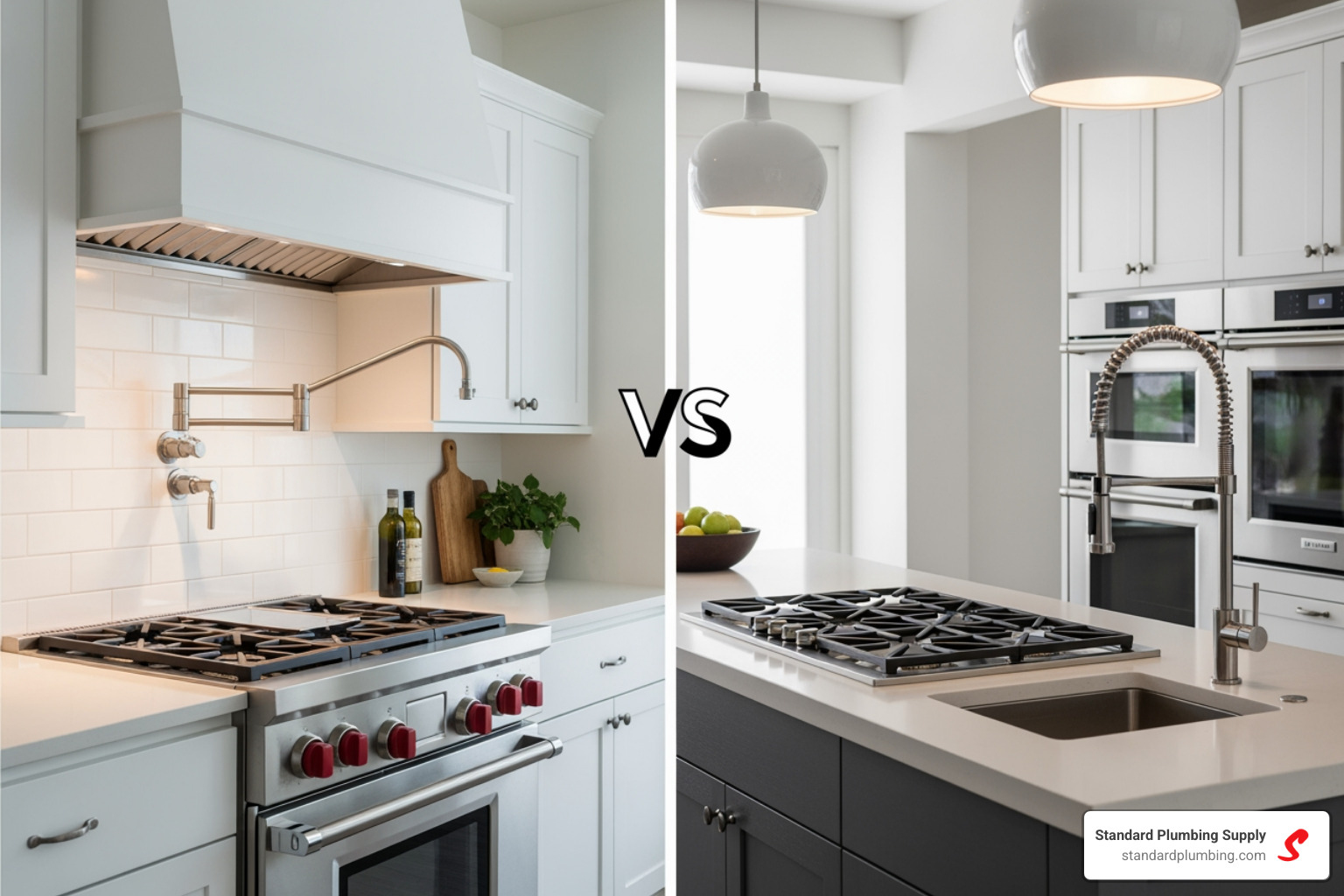
- Wall-Mount: This is the classic look. The plumbing comes through the backsplash. It saves precious countertop space and offers that “professional chef” aesthetic.
- Deck-Mount: If your stove is on an island or you don’t want to cut into your beautiful tile backsplash, a deck-mount model installs directly into the countertop.
You also need to consider handle configurations. Some prefer a single lever for simplicity, while others want the traditional look of a double-handle cross design. Regardless of the look, ensure the spout reach is sufficient for your specific range dimensions. A 20-inch reach might be fine for a standard four-burner stove, but a professional 48-inch range will likely require a 24-inch reach model like the ZLINE Rembrandt.
Selecting Finishes for Your kitchen pot filler
Matching your kitchen pot filler to your existing decor is easier than ever. Most manufacturers now use PVD technology (Physical Vapor Deposition), which creates a finish that is incredibly resistant to scratches, tarnishing, and corrosion—essential for a fixture living so close to steam and heat.
Here is a quick look at how to match your style:
| Kitchen Style | Recommended Finish | Key Features |
|---|---|---|
| Modern | Matte Black or Chrome | Clean lines, geometric joints, high-shine or ultra-flat textures. |
| Traditional | Polished Nickel or Oil-Rubbed Bronze | Ornate detailing, porcelain handle accents, warm tones. |
| Farmhouse | Champagne Bronze or Brushed Brass | Soft gold hues, rustic but refined, pairs well with apron-front sinks. |
Popular models like the Delta Broderick or the KOHLER Artifacts offer a variety of these finishes, ensuring your stove faucet looks like a natural extension of your kitchen design rather than an afterthought.
Installation and Maintenance Essentials
We often get asked: “Can I do this myself?” While we love a good DIY project, we generally recommend professional installation for a kitchen pot filler.
The reason is simple: there is no “safety net.” If a sink faucet leaks, the water goes into the sink and down the drain. If a pot filler leaks, the water goes onto your stove, into your oven, or behind your cabinets. A professional plumber will ensure the mounting height is perfect (usually 12 to 18 inches above the cooking surface) and that the plumbing rough-in is rock-solid.
Quality components matter here. Look for faucets with ceramic disc valves. These are the industry gold standard for leak prevention and provide a smooth turning action that lasts for decades.
Long-Term Care and Troubleshooting
Maintaining your pot filler is relatively straightforward, but consistency is key.
- Cleaning Finishes: Avoid harsh chemicals. A soft cloth and mild soap are usually all you need to keep that matte black or brushed nickel looking new.
- Aerator Maintenance: Over time, mineral deposits can clog the aerator, slowing down your flow rate. Simply unscrew the tip of the spout and soak the aerator in white vinegar for an hour to dissolve buildup.
- O-Ring Replacement: If you notice the joints of the arm becoming difficult to move or starting to weep water, it may be time for new O-rings. This is a simple fix that restores the “like-new” feel of the articulating arm.
- Shut-off Protocols: We always recommend turning off both valves when the faucet is not in use. This habit provides an extra layer of protection against accidental leaks.
Frequently Asked Questions
How much does a pot filler cost?
The price range for the fixture itself typically falls between $50 and $1,000. Entry-level models are functional but may use more plastic components. Mid-to-high-range models, like those from Delta or KOHLER, usually fall in the $600 to $900 range and feature solid brass construction and premium finishes. Don’t forget to budget for installation labor, which can vary depending on your existing plumbing access.
Can I install a pot filler in an existing kitchen?
Yes, but it’s a bit more involved than a new build. It often requires backsplash removal to run the new water line and some drywall repair on the opposite side of the wall. If you are already planning a tile upgrade or a full remodel, that is the perfect time to “retrofit” a pot filler.
What is the standard flow rate for these faucets?
While standard faucets are often 1.8 GPM, pot fillers are designed for rapid filling. You’ll typically see rates of 4 GPM or even 5.2 GPM. This high capacity is specifically designed to handle water pressure needs for large-scale cooking.
Conclusion
Adding a kitchen pot filler is one of those upgrades that moves your home from “standard” to “chef-ready.” It provides attainable luxury that pays dividends in ergonomic comfort and kitchen efficiency. Whether you’re in a farmhouse in Idaho or a modern condo in San Diego, the convenience of a stove-side faucet is universal.
At Standard Plumbing Supply, we take pride in helping our neighbors across the Western United States find the perfect fixtures for their dream kitchens. From the initial design inspiration to the final nut and bolt, we’ve got you covered.
Ready to upgrade your culinary workspace? View our full catalog of Moen faucets and kitchen fixtures or visit one of our many locations to see these beautiful faucets in person. Your back (and your pasta) will thank you!
