
Understanding Hot Water on Demand Systems
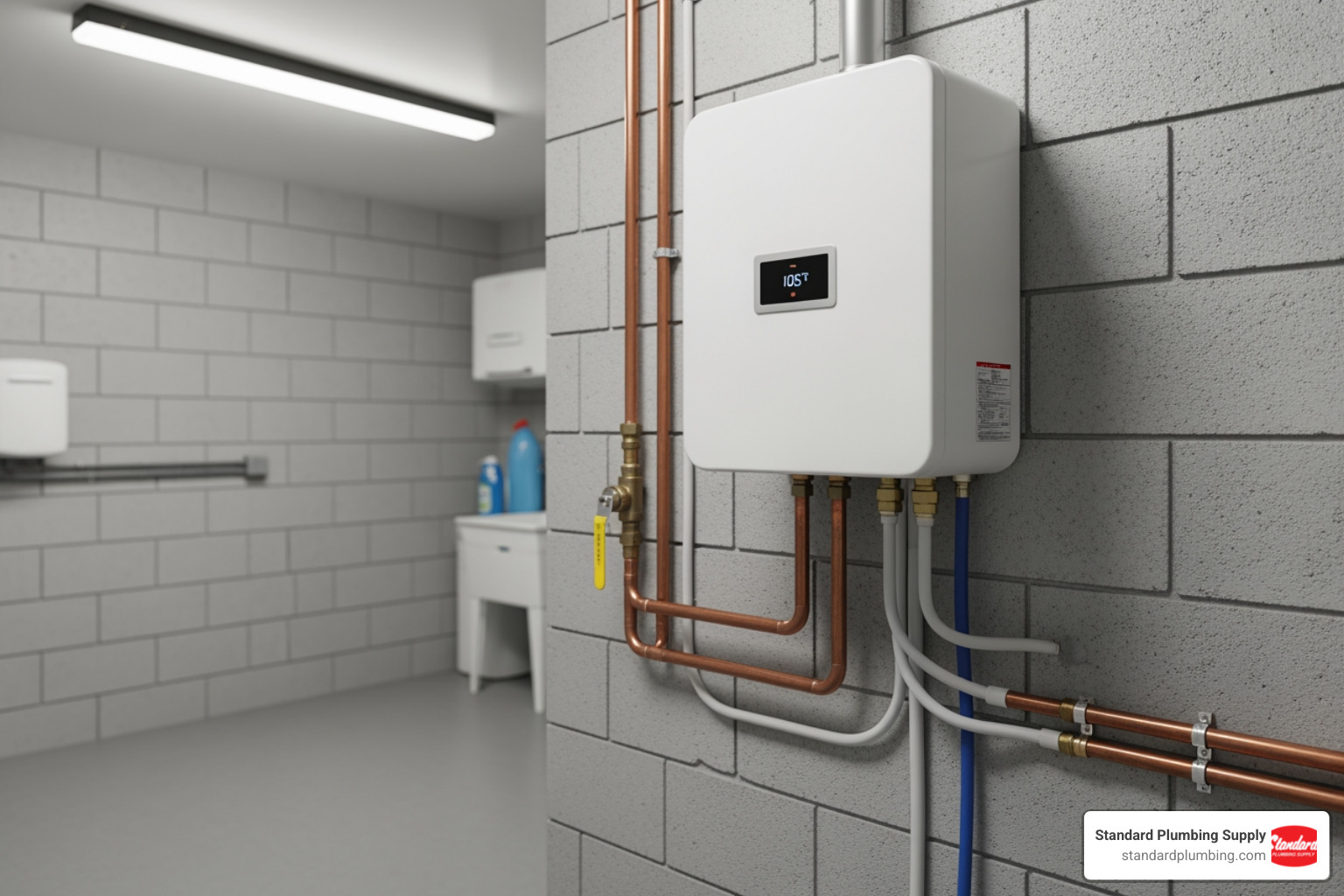
Hot water on demand systems are tankless water heaters that heat water instantly as it flows through the unit, rather than storing hot water in a tank. Here’s what you need to know:
What They Are:
- Compact units that heat water only when you turn on a tap
- Also called “tankless water heaters” or “on-demand water heaters”
- Use gas burners or electric elements to heat water as it passes through
Key Benefits:
- Energy savings of up to 30% compared to traditional tank heaters
- Longer lifespan of over 20 years (vs. 10-15 years for tank heaters)
- Space-saving design – roughly the size of a small suitcase
- Endless hot water supply within flow rate limits
Main Considerations:
- Higher upfront cost than traditional heaters
- Require proper sizing based on household demand
- Flow rate measured in Gallons Per Minute (GPM), typically 2-5 GPM
- May need electrical or gas line upgrades for installation
The biggest misconception about these systems is the term “on demand.” While the unit itself heats water in about 5-10 seconds, you’ll still wait for hot water to travel through your pipes to reach the faucet. This is true for any water heater, not just tankless models.
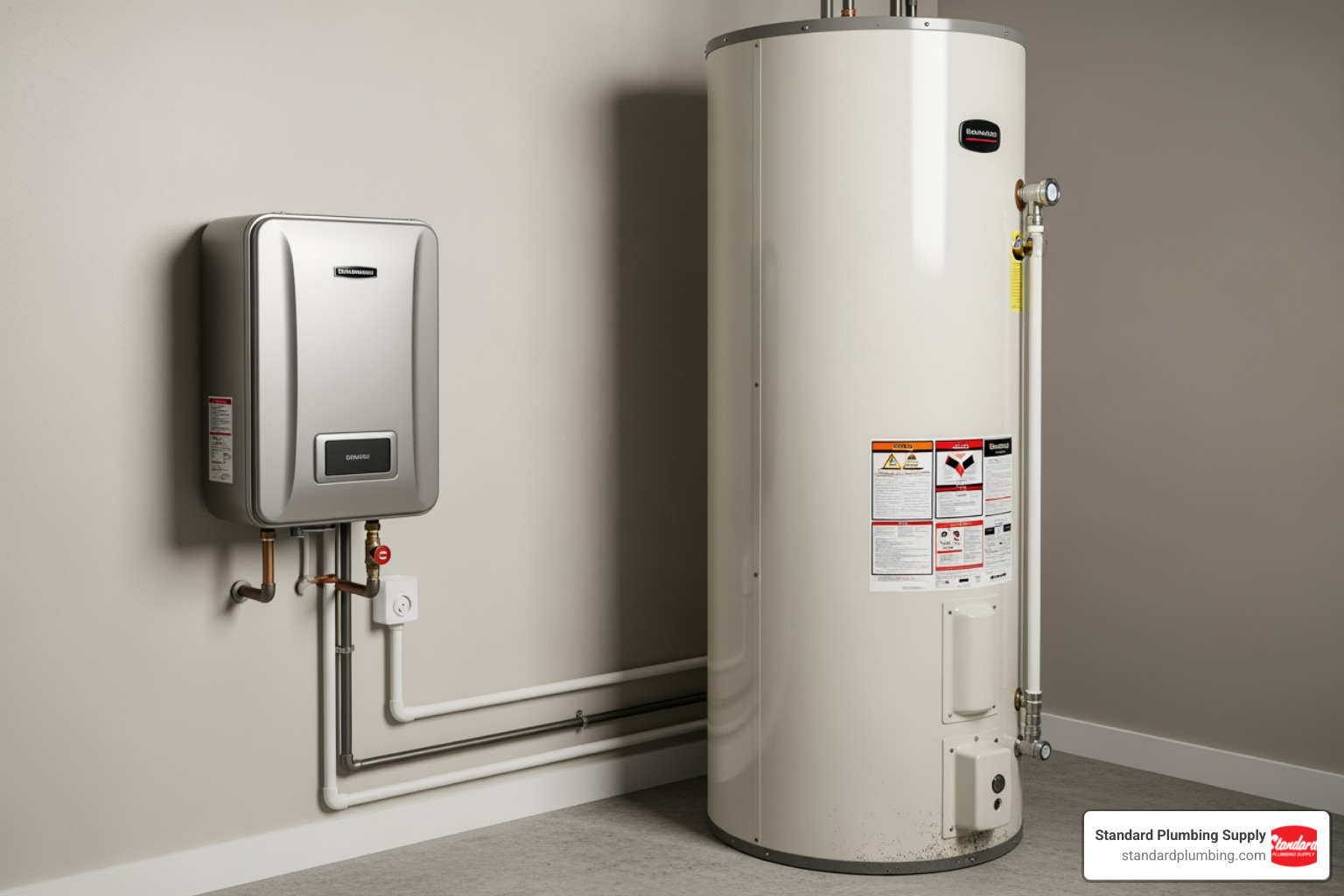
Traditional tank water heaters continuously heat and reheat stored water even when you’re not using it – a process called standby heat loss. This wastes energy 24/7. Tankless systems eliminate this waste by heating water only when needed.
I’m Jacob Reese, Vice President of Standard Plumbing Supply, and I’ve worked with hot water on demand systems throughout my career in the plumbing industry, helping contractors and homeowners select and install the right equipment for their specific needs. In this guide, I’ll walk you through everything you need to know to make an informed decision about whether a tankless system is right for your home.
How Tankless Heaters Work and Their Core Benefits
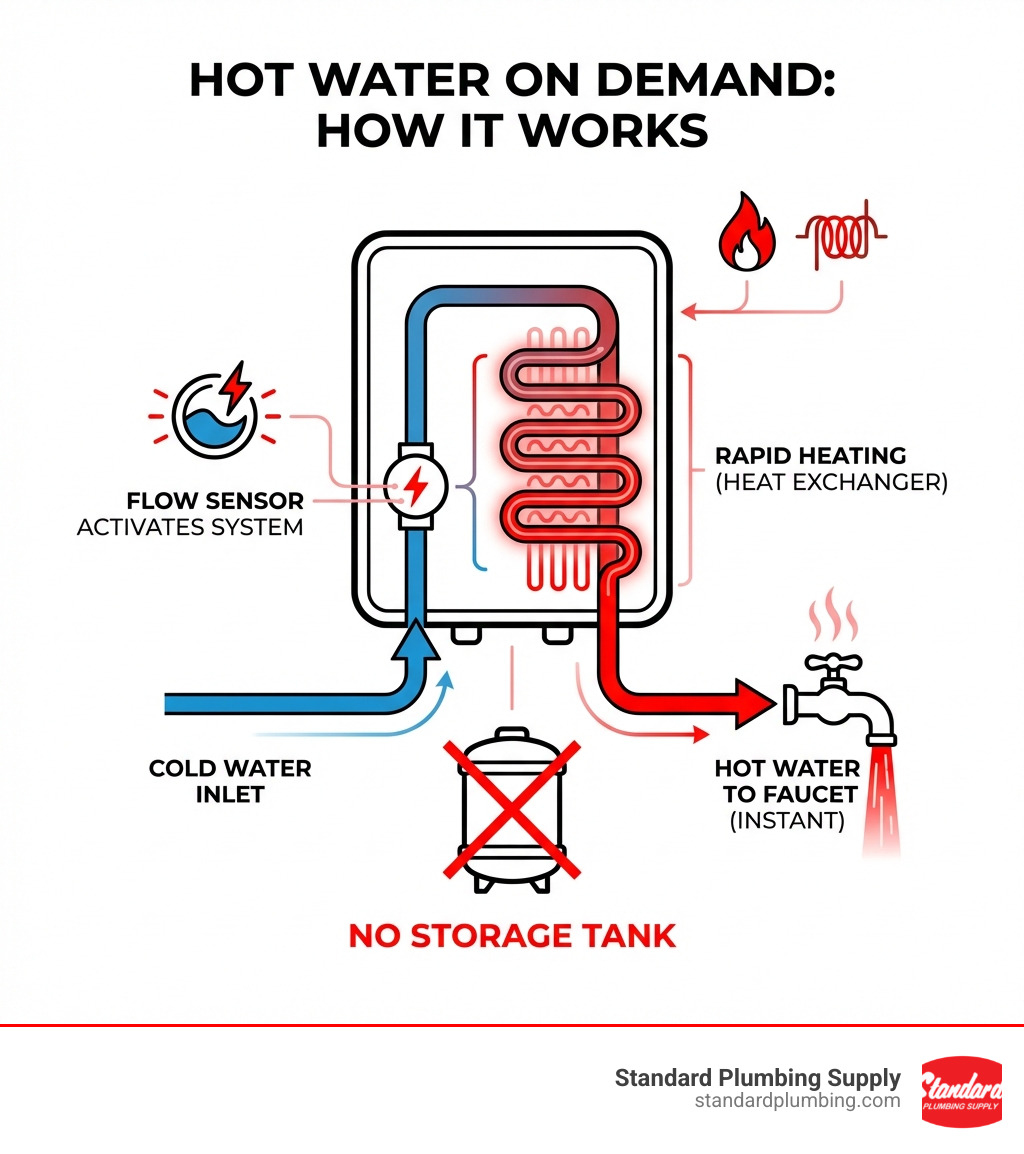
At their core, hot water on demand systems, or tankless water heaters, operate on a simple yet ingenious principle: they heat water as it’s needed, rather than storing it. When you turn on a hot water tap, cold water flows into the unit. A sophisticated flow sensor detects this movement, signaling the unit to activate its heating mechanism. For gas models, a powerful gas burner ignites, while electric models use robust electric elements. This heating element then rapidly transfers heat to the water as it passes through a heat exchanger coil. The result? Instantaneously heated water delivered directly to your faucet. When you turn off the tap, the flow sensor detects the cessation of water movement, and the heating process stops. It’s truly “on demand” heating.
This neat design allows tankless units to be significantly smaller than their traditional tank counterparts. Imagine a device roughly the size of a small suitcase, mounted neatly on a wall, providing all the hot water your household needs. This compact size frees up valuable floor space in your utility closet, basement, or garage – a welcome change for many homeowners.
Understanding the Benefits of Hot Water on Demand Systems
The switch to a tankless system brings a wealth of advantages that go beyond just saving space:
- Energy Savings: This is often the primary driver for homeowners. Traditional tank water heaters constantly heat a large volume of water, even when you’re not using it, leading to “standby heat loss.” Hot water on demand systems eliminate this waste by heating water only when you need it. ENERGY STAR-certified tankless water heaters can lead to significant energy savings—up to 30% compared to traditional water heaters. This translates directly into lower monthly utility bills, making them an excellent long-term investment for energy-conscious households.
- Longer Lifespan: While the initial investment might be higher, tankless systems are built to last. They typically have a lifespan of over 20 years, often double that of traditional tank units, which usually last 10-15 years. This extended durability means fewer replacements and a better return on your investment over time.
- Reduced Risk of Leaks: Without a large tank storing dozens of gallons of water, the risk of a catastrophic tank burst and the subsequent water damage is virtually eliminated. This provides peace of mind, especially if your water heater is located in an area where leaks could cause significant damage.
- Continuous Hot Water Supply: Perhaps the most celebrated benefit is the endless supply of hot water. As long as the unit is properly sized for your home’s needs, you’ll never run out of hot water, no matter how many showers are taken, or how many loads of laundry are washed back-to-back. No more cold showers for the last person in the family!
Potential Drawbacks and Limitations
While the benefits are compelling, it’s important to understand the potential drawbacks and limitations of hot water on demand systems:
- Higher Initial Cost: The upfront purchase price of a tankless unit is generally higher than a conventional tank water heater. This can be a barrier for some homeowners, though the long-term energy savings and extended lifespan often offset this cost.
- Installation Complexity: Installation can be more complex and, therefore, more expensive than replacing a traditional tank. This is because gas models may require larger gas lines, and electric models may need significant electrical panel upgrades. Proper venting is also critical for gas units.
- Flow Rate Limitations: Tankless units are rated by their Gallons Per Minute (GPM) output. If too many hot water fixtures are used simultaneously (e.g., two showers and a dishwasher), the system might struggle to keep up, leading to a drop in water temperature or flow. Most tankless water heaters provide hot water at a rate of 2 to 5 GPM, which is sufficient for many homes, but careful sizing is crucial.
- “Cold Water Sandwich”: In some scenarios, particularly when a hot water tap is turned off and then quickly back on, you might experience a brief slug of cold water before the hot water returns. This is because the water already in the pipes cools down, and the tankless unit needs a moment to reactivate and heat the new incoming water.
- Simultaneous Use Challenges: As mentioned with flow rate, if your household frequently uses multiple hot water appliances at once (e.g., showers, washing machine, dishwasher), you’ll need a higher-capacity unit or potentially multiple smaller units to ensure consistent performance.
Key Considerations for Choosing Hot Water on Demand Systems
Selecting the right hot water on demand system for your home involves more than just picking a brand. It requires careful consideration of your household’s specific hot water needs, your local climate, and the utilities available in your area.
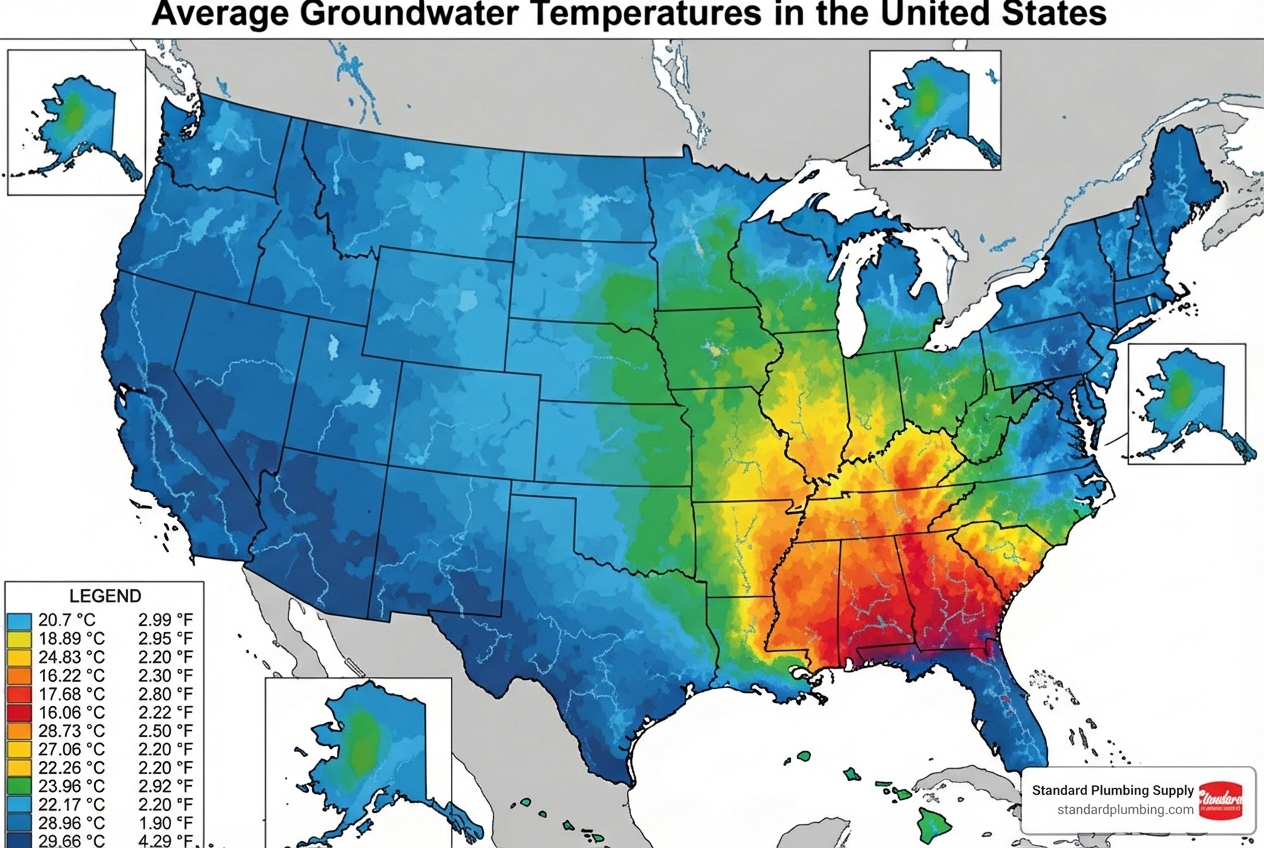
When we help our customers size a unit, we look at factors like the number of residents, typical hot water usage patterns, and the number of fixtures that might demand hot water simultaneously. The climate’s impact, particularly the ground water temperature, is a critical factor we’ll dive into next.
Calculating Your Required Flow Rate (GPM)
The performance of a tankless water heater is primarily measured by its Gallons Per Minute (GPM) output. This tells you how much hot water the unit can deliver at a specific temperature rise. To ensure you never run out of hot water, we need to calculate your household’s peak GPM demand.
First, let’s understand the concept of temperature rise. This is the difference between the incoming cold water temperature (ground water temperature) and your desired hot water temperature (typically 100-115°F). For example, if your groundwater is 50°F and you want 110°F water, you need a 60°F temperature rise. The colder your incoming water, the more BTU (for gas) or kilowatts (for electric) the unit needs to generate to achieve your desired temperature at a given GPM.
Here’s how to calculate your GPM and temperature rise:
- Determine your groundwater temperature: This varies significantly by region and season. For our areas in Arizona, California, Colorado, Idaho, Nebraska, Nevada, Oregon, Utah, and Wyoming, groundwater temperatures can range from the low 30s°F in winter in colder states to the mid-60s°F in summer in warmer states. Always consider the coldest likely groundwater temperature for accurate sizing.
- Identify simultaneous usage: Think about which hot water fixtures you’re likely to use at the same time during peak demand. This might be a shower and a dishwasher, or two showers.
- Estimate fixture GPM:
- Shower: 1.5 – 2.5 GPM
- Faucet: 0.5 – 1.5 GPM
- Dishwasher: 1.0 – 2.0 GPM
- Washing Machine: 1.5 – 3.0 GPM
- Bathtub: 2.0 – 4.0 GPM (during filling)
- Add them up: Sum the GPM of the fixtures you identified in step 2. For example, if you anticipate one shower (2.0 GPM) and a kitchen faucet (1.0 GPM) running simultaneously, you’d need a minimum of 3.0 GPM from your tankless unit.
A practical way to measure the GPM of your individual fixtures is the “bucket method”:
- Grab a one-gallon bucket and a stopwatch.
- Turn on the hot water tap of the fixture you want to measure to full hot.
- Place the bucket under the tap and time how long it takes to fill the bucket.
- Divide 60 by the number of seconds it took to fill the bucket. This gives you the GPM for that fixture. For instance, if it takes 30 seconds to fill, 60/30 = 2 GPM.
The flow rate of a hot water on demand system directly affects its performance. If your combined GPM demand exceeds the unit’s capacity for your specific temperature rise, you’ll experience a drop in hot water temperature or flow. It’s always better to slightly overestimate your needs to ensure comfort.
Gas vs. Electric: Which is Right for You?
One of the most fundamental decisions when choosing a tankless system is the fuel source: gas or electric. Both have their advantages and ideal use cases.
| Feature | Gas Tankless Heaters | Electric Tankless Heaters |
|---|---|---|
| Cost (Unit) | Generally higher upfront | Generally lower upfront |
| Cost (Operation) | Can be lower depending on local gas prices | Can be higher depending on local electricity rates |
| GPM Output | Higher, better for whole-home applications | Lower, often better for point-of-use or smaller homes |
| Installation | May require larger gas line, specific venting | May require significant electrical panel upgrades |
| Venting | Required (condensing or non-condensing) | Not required |
| Energy Efficiency | High efficiency, measured in UEF | Very high (99%), no standby loss, measured in UEF |
| Power | Measured in BTUs | Measured in Kilowatts (kW) |
Gas Tankless Heaters: These units use either natural gas or propane. They typically offer higher GPM outputs, making them ideal for larger homes or households with high hot water demand. However, they require proper venting for combustion gases and may necessitate a larger gas line, which can add to installation costs. Rheem, a leading brand, carries super high efficiency condensing tankless heaters that can be up to 34% more efficient than a standard 50-gallon tank.
Electric Tankless Heaters: These units are popular for their compact size and lack of venting requirements, which simplifies installation. They are often chosen for point-of-use applications (e.g., a single sink or shower) or smaller homes with modest hot water needs, particularly in areas where electricity is relatively inexpensive. However, whole-home electric tankless units can draw a significant amount of power, often requiring substantial electrical panel upgrades, which we can help you assess. EcoSmart is known for its focus on electric options and eco-friendly features.
The choice between gas and electric depends on your home’s existing utility infrastructure, local fuel costs, and your hot water demand. We can help you evaluate these factors to determine the best fit for your needs in Arizona, California, Colorado, Idaho, Nebraska, Nevada, Oregon, Utah, or Wyoming.
Installation, Maintenance, and Achieving True “Instant” Hot Water
Investing in a hot water on demand system is a significant home improvement, and ensuring proper installation and regular maintenance is key to maximizing its efficiency and lifespan.
Installation and Venting Requirements
Due to the technical nature of these systems, professional installation is highly recommended. Our network of experienced plumbers across Arizona, California, Colorado, Idaho, Nebraska, Nevada, Oregon, Utah, and Wyoming can ensure your tankless unit is installed correctly and safely.
- Plumbing Modifications: While tankless units connect to your existing water lines, some modifications may be necessary, especially if you’re upgrading from an old tank unit. This could involve rerouting pipes or installing service valves for maintenance.
- Gas Line Upgrades: For gas tankless heaters, the existing gas line might be too small to supply the necessary BTU output, requiring an upgrade to a larger diameter line.
- Electrical Requirements: Electric tankless heaters, especially whole-home models, demand a significant amount of electricity. This often means installing new, dedicated circuits and potentially upgrading your home’s electrical panel capacity. Even gas models require a standard electrical outlet for their electronic controls.
- Venting: This is crucial for gas units.
- Condensing Tankless Heaters: These highly efficient units capture heat from exhaust gases, making the exhaust cooler. This allows them to use less expensive PVC venting, which is easier to install.
- Non-Condensing Tankless Heaters: These units have hotter exhaust gases and typically require more robust, specialized metal venting (often stainless steel).
- Indoor vs. Outdoor Installation: Many tankless units can be installed outdoors, which eliminates the need for indoor venting and frees up even more space. However, they must be rated for outdoor use and properly protected from the elements, especially freezing temperatures common in parts of our service areas like Colorado, Idaho, and Wyoming. Safety clearances around the unit are also important for proper operation and maintenance.
Maintenance for Your Hot Water on Demand Systems
Just like any other major appliance, your tankless water heater needs regular maintenance to perform optimally and last its full lifespan.
- Annual Descaling: This is perhaps the most critical maintenance task, especially in areas with hard water, which is common across many of our service regions. Hard water contains minerals (like calcium and magnesium) that can build up inside the heat exchanger, reducing efficiency and potentially damaging the unit. Descaling (flushing with a vinegar solution or a specialized cleaner) removes these mineral deposits. We recommend annual descaling, or more frequently if you have very hard water. You can find the right tankless water heater cleaner at Standard Plumbing Supply.
- Water Softeners: If you live in an area with particularly hard water, installing a water softener can significantly reduce mineral buildup in your tankless heater, extending the time between descaling treatments and prolonging the unit’s life.
- Inlet Filter Cleaning: Most tankless units have an inlet filter to catch sediment before it enters the heat exchanger. This filter should be periodically cleaned to ensure unrestricted water flow.
- Professional Inspections: We recommend an annual professional inspection by a qualified plumber. They can check for proper operation, identify any potential issues, and perform necessary adjustments or repairs. Should you need any plumbing repair parts, we have a comprehensive selection available.
Eliminating the Wait with Recirculation Systems
While hot water on demand systems heat water quickly, the “wait” for hot water at the tap is primarily due to the distance the water has to travel through your pipes from the heater to the fixture. This is where a hot water recirculation system comes into play.
A recirculation system works by continuously or intermittently circulating hot water through your plumbing lines. This means hot water is always close to your fixtures, significantly reducing or even eliminating the wait time.
- How They Work: Instead of waiting for cold water in the pipes to drain out, a small pump moves hot water from the heater through the hot water lines and back to the heater (either via a dedicated return line or through the cold water line using a crossover valve).
- Demand-Activated Systems: To maximize energy and water savings, we highly recommend demand-activated recirculation systems. Unlike older, continuously running systems that waste energy by constantly heating water, demand-activated systems only run when you need hot water. They can be triggered by a push button, a motion sensor, or even learn your usage patterns. These systems can save upwards of 10,000 gallons of water per year at a cost of less than $2.00 in energy to operate annually, with pump run times often less than 15 minutes per day. This aligns perfectly with the principles of designing efficient hot water delivery systems to reduce wait times and maximize water efficiency.
- Water Savings: By getting hot water faster, you’ll waste less water down the drain while waiting for it to heat up, contributing to both environmental conservation and lower water bills.
- Faster Hot Water Delivery: With a properly installed recirculation system, the delay for hot water can be reduced to just a few seconds, truly giving you “instant” hot water at your faucet.
Frequently Asked Questions about On-Demand Hot Water
We often hear similar questions from homeowners considering the switch to hot water on demand systems. Let’s address some of the most common ones.
Do tankless water heaters really provide endless hot water?
Yes, they do provide a continuous supply of hot water. Unlike a traditional tank heater that holds a finite amount of hot water which can be depleted, a tankless unit heats water as it flows through. This means as long as water is flowing through the unit, it will continue to heat it.
However, it’s crucial to understand that their output is limited by their GPM (Gallons Per Minute) flow rate and the required temperature rise. If you simultaneously use too many hot water fixtures that exceed the unit’s GPM capacity for your specific groundwater temperature, you might experience a drop in water temperature or a reduced flow. This isn’t running out of hot water, but rather the unit struggling to meet an excessive demand. Proper sizing, as we discussed earlier, is key to avoiding this.
How long does it take to get hot water?
This is a common point of confusion. The tankless unit itself heats the water very quickly—typically in about 5-10 seconds from when the water begins to flow through it. So, the unit is indeed providing “hot water on demand.”
However, the total wait time you experience at your faucet depends entirely on the distance the hot water has to travel through your pipes from the heater to that specific faucet. If your water heater is in the basement and you’re waiting for hot water in an upstairs bathroom at the other end of the house, it will still take time for that newly heated water to push out the cold water that was sitting in the pipes.
To truly eliminate this wait time and get hot water almost instantly, you would need to install a hot water recirculation system, as discussed in the previous section. These systems keep hot water circulating in the pipes, ensuring it’s readily available at your fixtures.
Are there rebates available for installing a tankless system?
Yes, absolutely! We encourage all our customers in Arizona, California, Colorado, Idaho, Nebraska, Nevada, Oregon, Utah, and Wyoming to explore available incentives. Many local utilities, state energy programs, and even federal initiatives offer rebates or tax credits for installing high-efficiency, ENERGY STAR-certified hot water on demand systems. These incentives are designed to encourage homeowners to adopt more energy-efficient technologies, helping to offset the initial purchase and installation costs.
To find out what’s available in your specific area, we recommend checking with your local utility providers and state energy offices. For example, Rheem offers a Rebate Finder on their website which can help you locate local rebates for your new Rheem water heater. These programs can change, so it’s always a good idea to check for the most current information before making a purchase.
Conclusion: Is an On-Demand System Right for You?
We’ve covered a lot of ground today, from how hot water on demand systems work to their benefits, limitations, and key considerations for installation and maintenance. The decision to switch from a traditional tank water heater to a tankless system is a personal one, but for many, the advantages are clear.
We’ve seen that these systems offer significant energy savings, a longer lifespan, space-saving design, and the luxury of a continuous supply of hot water. While the initial investment might be higher and installation more complex, the long-term value, coupled with potential rebates and reduced utility bills, often makes it a worthwhile upgrade.
At Standard Plumbing Supply, we are committed to helping you find the perfect plumbing solutions for your home. We understand the nuances of water heating technology and are here to guide you through the selection process, ensuring you get a system that perfectly matches your household’s needs and budget. Our team serves communities across Arizona, California, Colorado, Idaho, Nebraska, Nevada, Oregon, Utah, and Wyoming, and we’re ready to assist you.
Don’t let the idea of a “cold water sandwich” or installation complexity deter you. With proper planning, professional installation, and the right accessories like a recirculation system, you can truly transform your home’s hot water experience.
Ready to explore your options and potentially say goodbye to cold showers forever? We invite you to explore a wide range of tankless water heater options on our website or visit one of our many locations. Our experts are always on hand to answer your questions and help you make an informed decision.
