
Why Your Bathroom Shower Tray Is the Foundation of a Leak-Free Shower
A bathroom shower tray is the waterproof base installed at the bottom of your shower enclosure to collect and drain water safely away from your floor and subfloor.
Here’s a quick overview of what you need to know:
| Topic | Quick Answer |
|---|---|
| What it does | Collects water and channels it to the drain |
| Common materials | Acrylic, stone resin, mineral cast, solid surface |
| Main types | Low-profile, walk-in, semi-recessed, surface-mounted |
| Common sizes | 32″x32″ up to 60″x36″ (or 800x800mm to 1600x900mm) |
| Key features to check | Slip resistance, drain location, installation height |
| Price range | Roughly $200 to $2,500 depending on material and size |
Most people don’t think twice about their shower tray — until water starts showing up where it shouldn’t. A failed or poorly chosen tray can mean damaged subfloors, mold growth, and costly repairs. Getting it right from the start saves you serious headaches.
I’m Jacob Reese, Vice President of Standard Plumbing Supply, and with decades of hands-on experience in the plumbing supply industry — including sourcing and distributing bathroom shower tray products across the Western U.S. — I’ve seen what separates a long-lasting shower installation from a problematic one. Let’s walk through everything you need to make a confident choice.
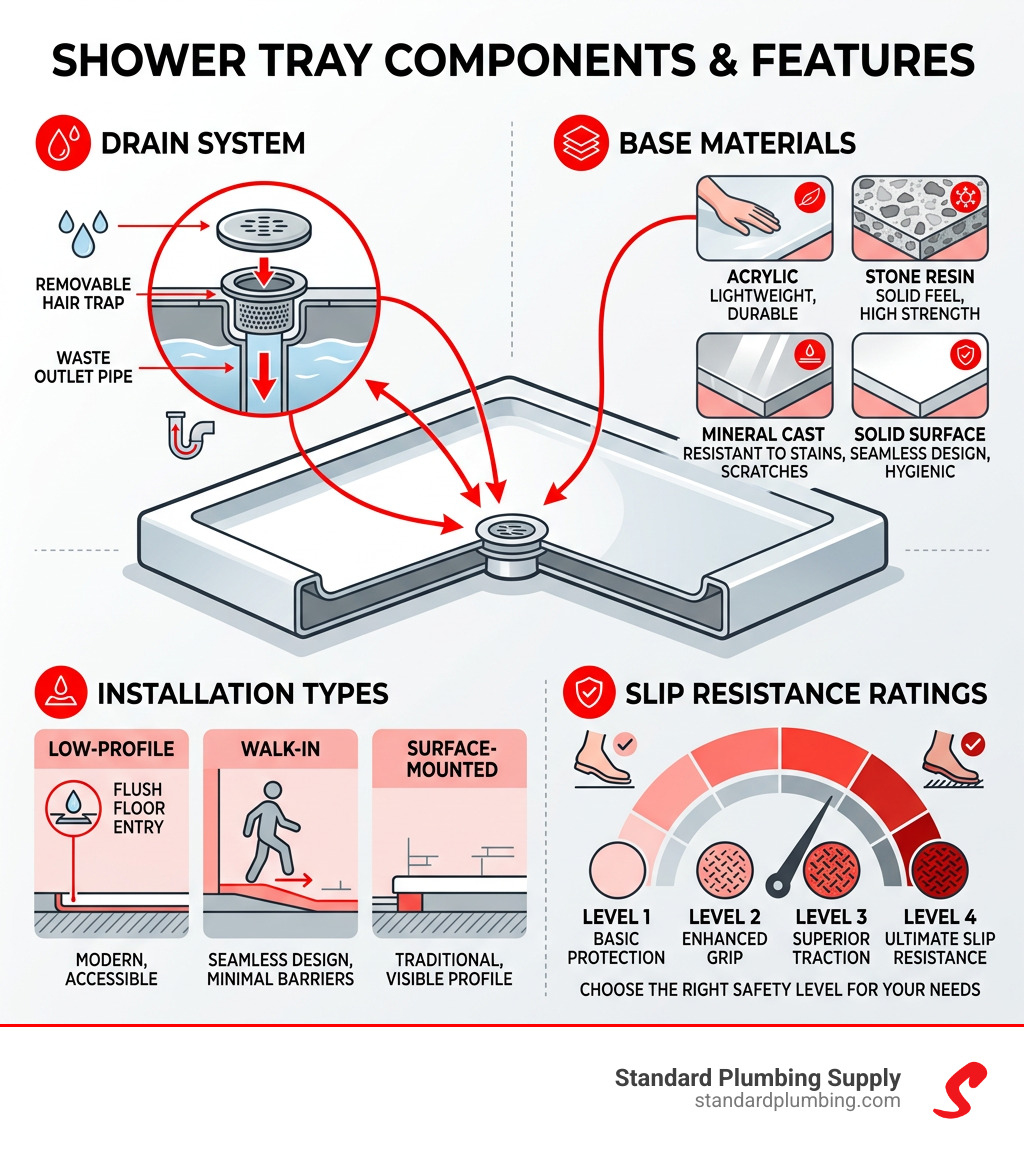
Choosing the Perfect bathroom shower tray Material
Selecting the right material for your bathroom shower tray is about more than just aesthetics; it’s about durability, safety, and how the floor feels under your feet on a cold Monday morning. We see customers across our locations in Utah, Idaho, and Arizona often debating between the “classic” feel of acrylic and the “heft” of stone resin.
| Material | Pros | Cons | Best For |
|---|---|---|---|
| Acrylic | Lightweight, warm to touch, affordable | Can flex if not installed correctly | Budget-friendly renovations |
| Stone Resin | Extremely durable, rigid, high-end feel | Heavy, can be colder to the touch | High-traffic family bathrooms |
| Solid Surface | Seamless, repairable, luxury finishes | Higher price point | Modern, designer bathrooms |
| Mineral Cast | Precision edges, eco-friendly options | Requires specific cleaning agents | Flush-to-floor installations |
Acrylic and Thermal Cast
Acrylic is the most common material you’ll find. It’s non-porous and naturally slip-resistant. Some high-end versions, often referred to as thermal cast acrylic, are designed to maintain a stable temperature. This is a fantastic feature for families with children or seniors who are sensitive to cold surfaces. It’s also much easier to haul up a flight of stairs during a DIY project than a heavy stone slab!
Stone Resin and Mineral Cast
If you want something that feels “solid as a rock,” stone resin is the way to go. These trays are often made from a mixture of natural minerals and resin, capped with an ABS or acrylic layer. This construction makes them virtually unbreakable and prevents the “bouncing” sensation sometimes felt in cheap acrylic trays. Mineral cast trays, such as those using Dolomite stone, offer incredible sound insulation—meaning the “drumming” sound of water hitting the floor is greatly reduced.
Solid Surface and Advanced Materials
For those looking for the “wow” factor, materials like KRION® or Silestone offer custom colors and textures. These materials are often through-colored, meaning if you happen to chip it (though it’s hard to do!), the color remains the same underneath. Many of these premium options feature advanced “Grip+” or Nanocoat finishes that provide Class A or B slip resistance without the rough texture of traditional anti-slip coatings.
Exploring Main Types and Installation Styles
The way your bathroom shower tray sits in your room determines the entire “vibe” of the space. Whether you are building a new home in Las Vegas or remodeling an older home in Boise, the subfloor height and plumbing access will dictate which type you can use.
- Low-Profile Trays: These are typically between 25mm and 40mm (approx. 1 to 1.5 inches) in height. They offer a sleek, modern look and make stepping into the shower much easier.
- Walk-In / Flush-to-Floor: This is the gold standard for modern design. The tray is recessed into the floor so the tiling and the tray are at the same level. This is perfect for “barrier-free” access, essential for universal design.
- Semi-Recessed: A middle ground where part of the tray is hidden in the floor, but a small lip remains. This is often a lifesaver in renovations where you can’t quite get the drain low enough for a full flush install.
- Surface-Mounted: The tray sits directly on top of the floor. This is the easiest installation for DIYers because you don’t have to cut into the subfloor or joists.
For a reliable, sturdy option, many of our pros recommend the 34×48 Durabase Shower Flr. It provides a solid foundation that stands up to years of daily use.
Selecting the Right Size for Your bathroom shower tray
Size matters—not just for your comfort, but for the footprint of your bathroom. If you’re working with a tight space in a downtown apartment, a quarter-circle (quadrant) tray can save precious floor area. If you have the luxury of space, a large rectangular tray can replace an old bathtub perfectly.
Common dimensions include:
- Square: 32″ x 32″, 36″ x 36″ (900mm x 900mm)
- Rectangular: 48″ x 32″, 60″ x 30″, 60″ x 36″
- Large Format: 1200mm x 700mm or even 1600mm x 800mm for those “spa-style” walk-ins.
A popular choice for standard alcove replacements is the Single Threshold Center Drain Shower Base, which fits the footprint of most standard 5-foot bathtubs.
Essential Factors for Selection and Accessibility
Before you click “buy,” there are three technical factors that can make or break your installation:
- Drain Location: Does the tray have a center, left, right, or corner drain? Matching this to your existing plumbing can save you hundreds in pipe-rerouting costs.
- Weight Capacity: If you are using a lightweight tray, ensure it has a “torsion beam” or stone-resin core to prevent cracking under weight.
- ADA Compliance: For those planning for the future, look for trays with a “low threshold” (usually 0.5 inches or less) to ensure the shower is accessible for wheelchairs or those with limited mobility.
Essential Accessories for a bathroom shower tray
A tray is just a piece of plastic or stone without the right hardware. To keep your bathroom dry, you need a high-quality waste system. We suggest a Round Shower Base Drain to ensure a watertight seal at the most vulnerable point of the shower.
Other must-haves include:
- Leg Kits / Riser Kits: These allow you to raise the tray off the floor to run plumbing horizontally if you can’t go through the floor.
- Hair Snares: Save yourself a plumbing bill by using a Shwr Hair Snare.
- Sound Insulation: Pads that stick to the underside of the tray to dampen the sound of water.
- Flexi-Seal Strips: Waterproof tape that creates a bridge between the tray and the wall before you tile.
Maintenance, Longevity, and Frequently Asked Questions
To keep your bathroom shower tray looking like the day it was installed, stay away from “scrubbing bubbles” or abrasive powders. These can create microscopic scratches that trap dirt and harbor mold.
- Nanocoat Finishes: Many modern trays come with a factory-applied Nanocoat. This makes the surface non-porous and anti-bacterial. Water simply beads off, taking soap scum with it.
- Hard Water Protection: In areas like Arizona or Southern Utah, hard water is the enemy of a clean shower. Installing a Aquifer Shower Filter can help reduce mineral buildup on your tray and fixtures.
What is the difference between a shower tray and a shower base?
In the plumbing world, these terms are often used interchangeably. However, “shower base” or “shower pan” is more common in North America, while “shower tray” is the preferred term in Europe. Structurally, a “tray” often refers to lower-profile, modern designs, while a “base” might refer to a more traditional, deeper unit.
Can I install a low-profile tray on a wooden floor?
Yes, but you must ensure the floor is 100% level and rigid. If the wooden joists flex, the seal between the tray and the wall will break, leading to leaks. Many pros will “over-board” a wooden floor with marine-grade plywood or a cement backer board before installing the tray. You also need to ensure there is enough clearance between the joists for the waste trap.
How do I ensure my shower tray is 100% waterproof?
The secret isn’t just the tray; it’s the “upstand” or “flange.” A tray with a built-in tile flange allows the wall board to sit over the lip of the tray, so water running down the wall has no choice but to go into the tray. Always use a high-quality sanitary silicone and consider a flexible sealing strip for extra insurance.
Conclusion
A bathroom shower tray is the unsung hero of your home. It protects your structure while providing the foundation for your daily routine. At Standard Plumbing Supply, we’ve spent years helping homeowners from California to Wyoming find the exact right fit for their unique bathroom layouts.
Whether you need a heavy-duty stone resin base for a busy family bathroom or a sleek, low-profile tray for a master suite renovation, we have the expertise to guide you. Don’t leave your subfloor to chance—visit one of our many locations or Shop all bathroom fixtures online today to find the perfect foundation for your leak-free life.
