
Why Choosing the Right Drain Cleaner Matters for Your Garbage Disposal
The best drain cleaner for kitchen sink with garbage disposal depends on your specific clog and maintenance needs. Here’s a quick breakdown:
| Cleaner Type | Best For | Safe for Disposals? | Works On |
|---|---|---|---|
| Enzymatic/Enzyme-Based | Regular maintenance, odor control | Yes | Grease, food debris, preventative care |
| Thick Gel (Chemical) | Tough grease clogs, standing water | Yes (check label) | Heavy grease buildup, food particles |
| Foaming Cleaners/Pods | Cleaning disposal unit itself | Yes | Disposal chamber, blades, odors |
| DIY (Baking Soda + Vinegar) | Minor clogs, chemical-free option | Yes | Light buildup, maintenance |
A rising water level, a gurgling disposal, and a foul smell—these are the classic signs of a kitchen sink clog. Kitchen sink clogs are a frustrating household problem, especially with a garbage disposal. Food debris, grease, and starchy particles create stubborn blockages that slow drainage to a crawl. Unlike bathroom clogs, kitchen issues often involve grease that solidifies, trapping other debris.
Not all drain cleaners are safe for garbage disposals. Harsh chemicals can damage the unit’s components or connected pipes. The right drain cleaner, however, can solve these problems safely. Chemical drain cleaners dissolve clogs with powerful reactions, while enzymatic cleaners use bacteria to break down organic matter over time.
Safety is critical when using any drain cleaner. Never mix different products, as the reaction can create toxic gas. Always wear gloves and eye protection, ensure good ventilation, and follow the manufacturer’s instructions.
I’m Jacob Reese, a third-generation plumbing professional at Standard Plumbing Supply. With decades of experience, I’ve seen which drain cleaners work for kitchen sinks with disposals and which don’t. This guide will walk you through the different types, their uses, safety precautions, and when to call a pro. Whether you have a current clog or want to prevent future ones, you’ll find your answers here.
Quick look at best drain cleaner for kitchen sink with garbage disposal:
Understanding Drain Cleaners Safe for Garbage Disposals
When your kitchen sink backs up, the clog is often in the pipes, not the disposal itself. A true disposal clog involves a physical jam, usually with a humming noise. Regardless of the location, choosing the right drain cleaner is crucial to avoid damage.
Drain cleaners fall into two main categories:
- Chemical Cleaners: These use strong reactions to dissolve organic matter like grease and food. They can be caustic (like lye), oxidative (like bleach), or acid-based (harshest on pipes). Products like Drano Max Gel are designed to cut through tough clogs, even in standing water. The Drano Kitchen Gel is specifically formulated for greasy kitchen clogs and is safe for disposals.
- Enzymatic Cleaners: These are gentler, using bacteria and enzymes to digest organic material. They don’t create heat, making them safer for pipes and septic systems. They are slower-acting and best for maintenance or minor clogs, not emergencies. Green Gobbler is a popular enzyme-based option.
Many harsh chemicals can damage pipe linings over time, especially in older homes. That’s why reading labels is non-negotiable. Look for products explicitly marked “safe for garbage disposals” and “safe for all pipes.” A garbage disposal is an electric motor with grinding parts; you can see a diagram of a garbage disposal to understand its components. The right cleaner won’t corrode these parts or their seals.
What to Look For in a Disposal-Safe Cleaner
When searching for the best drain cleaner for kitchen sink with garbage disposal, prioritize safety and effectiveness:
- Safe for All Pipes: The product must be safe for metal and plastic (PVC, copper) pipes to prevent corrosion.
- Septic-Safe Formulas: If you have a septic system, choose a compatible cleaner, often an enzymatic one, to protect the system’s bacteria.
- Non-Corrosive Ingredients: The formula should break down clogs without damaging the disposal’s rubber seals, gaskets, and metal parts.
- Biodegradable Options: Enzyme-based cleaners are a great eco-friendly choice for tackling organic clogs.
Chemical vs. Enzymatic: Which is Right for You?
The choice depends on urgency and clog type.
- Chemical Cleaners: Best for speed. For a stubborn, standing-water clog, a thick gel chemical cleaner offers the fastest solution. They work quickly but can be tough on plumbing and require careful handling.
- Enzymatic Cleaners: Best for maintenance. For long-term pipe health and preventing minor clogs, enzymatic cleaners are ideal. They use natural enzymes to “eat” organic buildup. They are gentler and safer for septic systems but take much longer to work—often overnight.
For a sudden, severe clog, a chemical gel is effective. For ongoing maintenance, enzymatic cleaners are the superior choice.
The Best Drain Cleaner for Kitchen Sink with Garbage Disposal: A Roundup of Top Solutions
To find the best drain cleaner for kitchen sink with garbage disposal, look for products that are effective on grease, safe for disposals and pipes, and easy to use. Here’s a breakdown of the top categories for different needs.
Best for Regular Maintenance & Odor Control: Enzymatic Drain Cleaners
Enzymatic cleaners are the heroes of sink maintenance, gently preventing problems before they start.
- How They Work: They use beneficial bacteria and enzymes to “digest” organic matter like grease and food particles that build up in drains.
- Why They’re Great for Disposals: They are safe for all disposal components, pipes, and septic systems. They also eliminate odors by breaking down the source bacteria. Options like Refresh Disposer and Pipe Cleaner pods, CLR Clear Pipes and Drains, and Green Gobbler sticks are designed for monthly preventative use.
- Use Case: Use monthly to maintain clear drains, control odors, and tackle minor slow-draining issues. They are not designed for major, existing clogs.
Best for Tough Grease & Food Clogs: Thick Gel Drain Cleaners
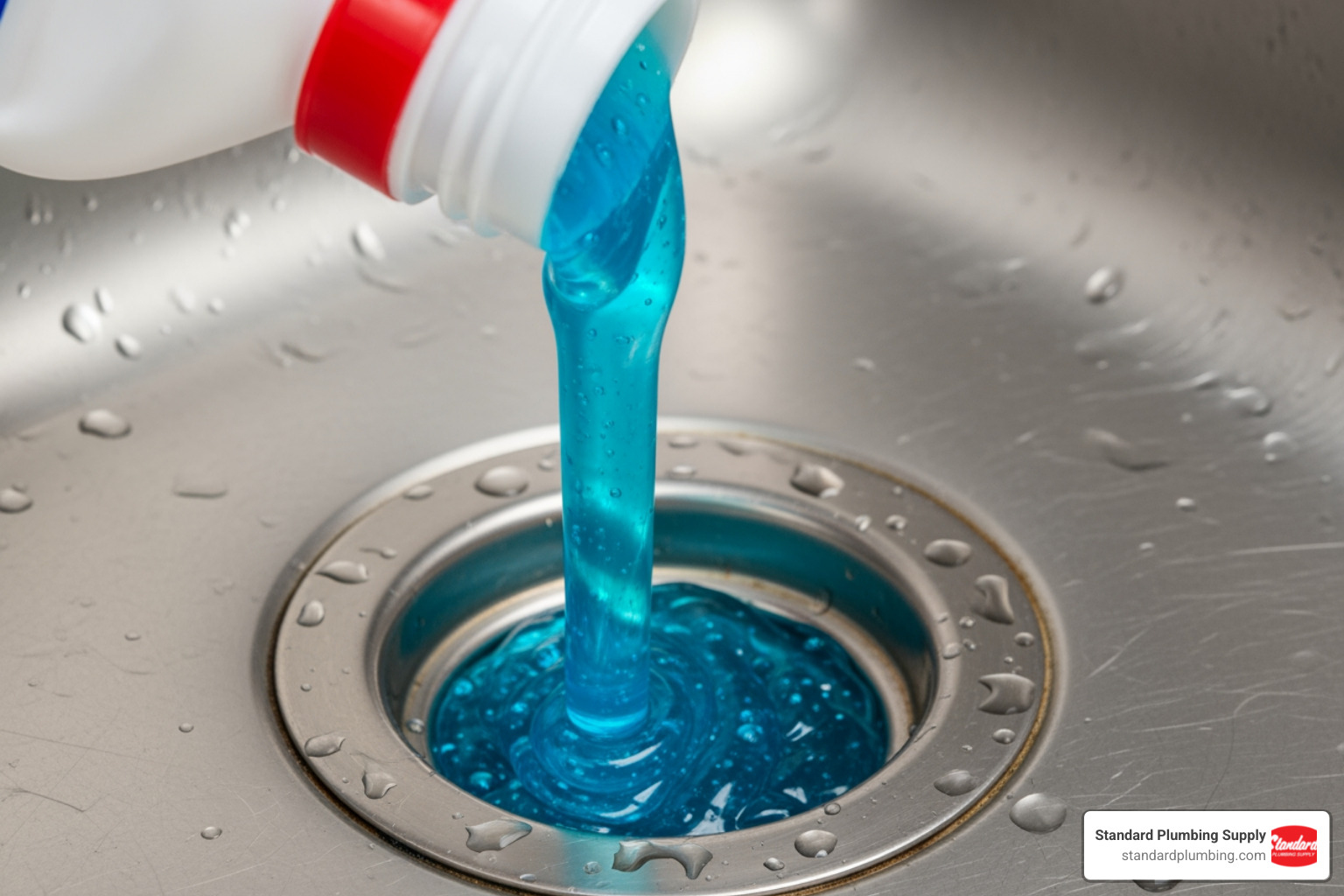
For a stubborn clog with standing water, a thick gel cleaner is your best bet.
- How They Work: These gels are heavier than water, sinking directly to the clog. They cling to pipes and the blockage, using powerful chemicals to dissolve grease, oil, and food debris.
- Why They’re Great for Disposals: Many gels, like Drano Kitchen Gel and Liquid-Plumr Pro-Strength Clog Destroyer Gel, are formulated for kitchen clogs and labeled as safe for disposals and all pipes. Drano Max Gel Drain Clog Remover and Instant Power Hair and Grease Drain Opener are also effective choices that work quickly and safely.
- Use Case: Use these for emergencies when a clog has already formed and needs to be cleared fast. Always follow the label’s instructions for timing and flushing.
Best for Cleaning the Disposal Unit: Foaming Cleaners & Pods
Sometimes the problem is buildup inside the disposal unit, causing odors and poor performance.
- How They Work: These products create a thick foam that expands to coat the entire disposal interior, including the grinding chamber, blades, and splash guard, scrubbing away grime.
- Why They’re Great for Disposals: Designed specifically for disposals, they are safe for all components. They excel at deodorizing and cleaning the unit. Refresh Disposer and Pipe Cleaner pods and Drano Foaming Disposal Strips are convenient options.
- Use Case: Use for routine maintenance to eliminate odors and keep the disposal clean. While they help prevent clogs, they lack the power to clear deep pipe blockages.
Safety First: How to Use Drain Cleaners Without Damaging Your System
Safety is paramount when using powerful drain cleaners. Misuse can harm you and your plumbing.
- Personal Protective Equipment (PPE): Always wear rubber gloves and eye protection to prevent chemical burns from splash-back.
- Ventilation: Open windows and use fans. Fumes from chemical cleaners can be dangerous to inhale.
- Follow Label Directions: Read and follow all instructions precisely, including the amount, wait time, and flushing method. Leaving cleaner in too long can cause significant damage to your pipes.
- Never Mix Cleaners: This is the most critical rule. Mixing different drain cleaners or other chemicals can create toxic gas or an explosion.
- Hot Water Flush: After the wait time, flush with hot tap water, not boiling water, which can damage plastic pipes.
Best Practices for Using Drain Cleaners
- Read the Label: Every product is different.
- Turn Disposal Off: Ensure the garbage disposal is off before pouring any cleaner.
- Pour Slowly: Pour the recommended amount directly into the drain to minimize splashing.
- Wait Patiently: Allow the cleaner to work for the recommended time (e.g., 15-30 minutes for many gels).
- Flush Thoroughly: Use plenty of hot tap water to clear the dissolved clog and any remaining chemicals.
- Never Use a Plunger After Chemicals: If the clog remains, do NOT use a plunger. It can splash caustic chemicals back at you. At this point, consider manual methods or call a professional.
What NOT to Put Down Your Garbage Disposal
Prevention is the best strategy. Avoid putting these items down your disposal:
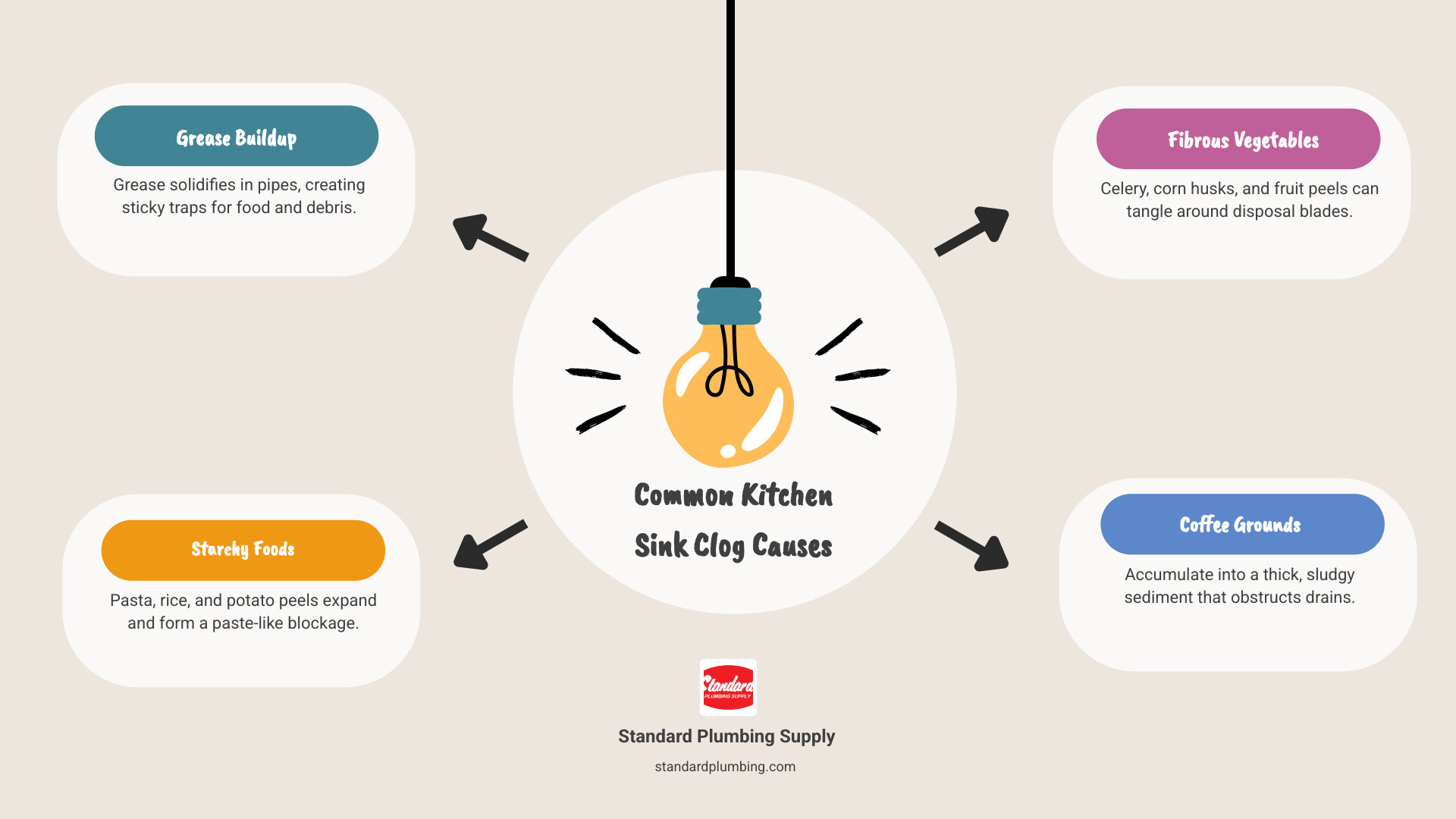
- Grease and Oil: Solidifies in pipes, creating sticky blockages. Wipe greasy pans before washing.
- Starchy Foods (Pasta, Rice): Expand with water and create a paste-like clog.
- Fibrous Vegetables (Celery, Corn Husks): Tangle around the disposal’s blades and cause jams.
- Coffee Grounds: Accumulate and form a thick, sludgy sediment.
- Eggshells: The membrane can stick to disposal parts and contribute to clogs.
- Bones, Fruit Pits, Nuts: Too hard for most disposals to grind, causing jams and damage.
Beyond the Bottle: Natural and Manual Unclogging Methods
Before using chemicals, try safer, chemical-free alternatives. These methods are your first line of defense and are often effective for common kitchen clogs.
The Best Natural Drain Cleaner for Kitchen Sink with Garbage Disposal: A DIY Recipe
For minor clogs or routine maintenance, this homemade solution works well and is safe for disposals and pipes.
DIY Recipe: Baking Soda and Vinegar
- Remove Standing Water: Bail out any standing water from the sink.
- Add Baking Soda: Pour about 1/2 cup of baking soda down the drain.
- Add Vinegar: Follow with 1 cup of white vinegar. The fizzing reaction helps loosen grime.
- Cover and Wait: Cover the drain with a stopper to direct the reaction downwards. Let it sit for 15-30 minutes.
- Flush: Flush the drain with hot tap water for several minutes.
Manual Tools: When to Use a Plunger or Drain Snake
When a clog needs physical force, manual tools are invaluable.
- The Kitchen Sink Plunger: Use a flat-bottomed kitchen plunger.
- Add 3-4 inches of water to the sink.
- Seal the second drain in a double sink with a wet rag.
- Place the plunger over the clogged drain, ensuring a tight seal, and plunge vigorously for 20-30 seconds.
- Check if the water drains and repeat if needed.
- Using Tongs for Visible Objects: If an object has jammed the disposal, ALWAYS turn off the power first. Use a flashlight and tongs to retrieve the item. Never put your hand down the drain.
- The Drain Snake (or Auger): For deeper clogs, a drain snake can physically break up or retrieve the blockage. Feed the flexible cable into the drain to reach the clog. Use caution near a garbage disposal to avoid damaging it.
If these methods fail or you suspect a serious issue, it’s time to call a professional plumber.
Frequently Asked Questions about Drain Cleaners and Garbage Disposals
Here are answers to common questions about keeping kitchen sinks and disposals running smoothly.
How often should I use a drain cleaner for maintenance?
Frequency depends on the cleaner type:
- Enzymatic Cleaners: Use these for prevention. Products like Refresh pods or Green Gobbler sticks are ideal for monthly or bi-weekly use to prevent buildup and control odors.
- Chemical Cleaners: Use these reactively for existing clogs. We don’t recommend strong chemical cleaners for routine maintenance due to their harshness on pipes.
What are the signs my garbage disposal is jammed, not just clogged?
A jam is different from a simple clog. Look for these signs:
- Humming Noise, No Grinding: The motor hums, but the blades aren’t spinning. This indicates a physical blockage.
- Unit Won’t Turn On: The internal safety switch may have tripped due to a jam.
- Bad Smell: Decaying food is stuck inside the unit.
What to Do for a Jammed Disposal:
- Turn Off Power: Flip the wall switch to “off.”
- Check Reset Button: Push the small red reset button on the bottom of the disposal unit.
- Use an Allen Wrench: Insert the disposal’s Allen wrench into the hexagonal hole on the bottom of the unit. Turn it back and forth to free the grinding plates.
- Retrieve Obstruction: With the power still off, use tongs to remove any visible obstructions.
What should I do if the first attempt with a drain cleaner doesn’t work?
If a drain cleaner fails, follow these steps:
- DO NOT Add a Different Chemical: Mixing cleaners is extremely dangerous and can produce toxic fumes or an explosion.
- Repeat if Allowed: Some products, like Drano Max Gel, may allow for a second application. Only do this if the label explicitly says it’s safe.
- Try a Manual Method: Switch to a plunger or drain snake if chemicals fail. (Warning: Do not plunge if caustic chemicals are still in the standing water).
- Call a Professional Plumber: If the clog persists, it’s time to call a pro. It could be a more serious issue in your pipes or main sewer line.
Conclusion: Keeping Your Kitchen Sink Flowing Freely
Choosing the right drain cleaner for a kitchen sink with a garbage disposal is simple when you know your options. Use gentle enzymatic cleaners for maintenance, powerful gels for tough clogs, and foaming cleaners for the disposal unit itself. This approach protects your plumbing and keeps your kitchen running smoothly.
Above all, prioritize safety: wear protective gear, ensure good ventilation, and follow label instructions. Never mix chemicals, and know when to call a professional.
Prevention is the best drain cleaner for kitchen sink with garbage disposal. Being mindful of what goes down your drain and performing regular maintenance is the best way to avoid clogs.
For persistent clogs, replacement parts, or any plumbing supplies, trust the experts at Standard Plumbing Supply. We’re here to help you find the right tools and clog removers for your project at our locations across Arizona, California, Colorado, Idaho, Nebraska, Nevada, Oregon, Utah, and Wyoming. From Boise to Las Vegas, and Salt Lake to Phoenix, we’ve got your back!
