
Understanding How Boilers and Hot Water Tanks Work Together
A boiler with hot water tank system combines a central heating boiler with a separate insulated storage tank to provide both space heating and domestic hot water. Here’s what you need to know:
Quick Answer:
- What it is: An indirect-fired water heater system where your boiler heats water that circulates through a coil inside a separate storage tank.
- How it works: Hot water from the boiler transfers heat through a heat exchanger to the domestic water stored in the tank.
- Best for: Large families, homes with multiple bathrooms, or properties with high hot water demand.
- Key advantage: High hot water output without the boiler constantly cycling on and off.
If you’ve ever wondered why some homes have a separate hot water tank while others use a combination boiler, you’re not alone. Over half of a typical household’s fuel bills are spent on heating and hot water, so understanding these systems can help you make smarter decisions.
A boiler with hot water tank system uses your main heating boiler to warm water that flows through a heat exchanger inside a separate storage tank. This differs from a combi boiler (which heats water on demand) or a standard water heater (which has its own heating element). The beauty of this system is thermal stratification, where hot water stays at the top of the tank. It’s drawn off for your shower or dishwasher, letting you draw multiple times before the boiler needs to fire up again.
This guide will walk you through how these systems work, when they make sense for your home, and what you need to know about installation and maintenance.
I’m Jacob Reese, Vice President of Standard Plumbing Supply. With two decades of experience, I’ve helped countless homeowners install boiler with hot water tank systems for reliable comfort and efficiency. This guide draws from hands-on experience to give you the complete picture.
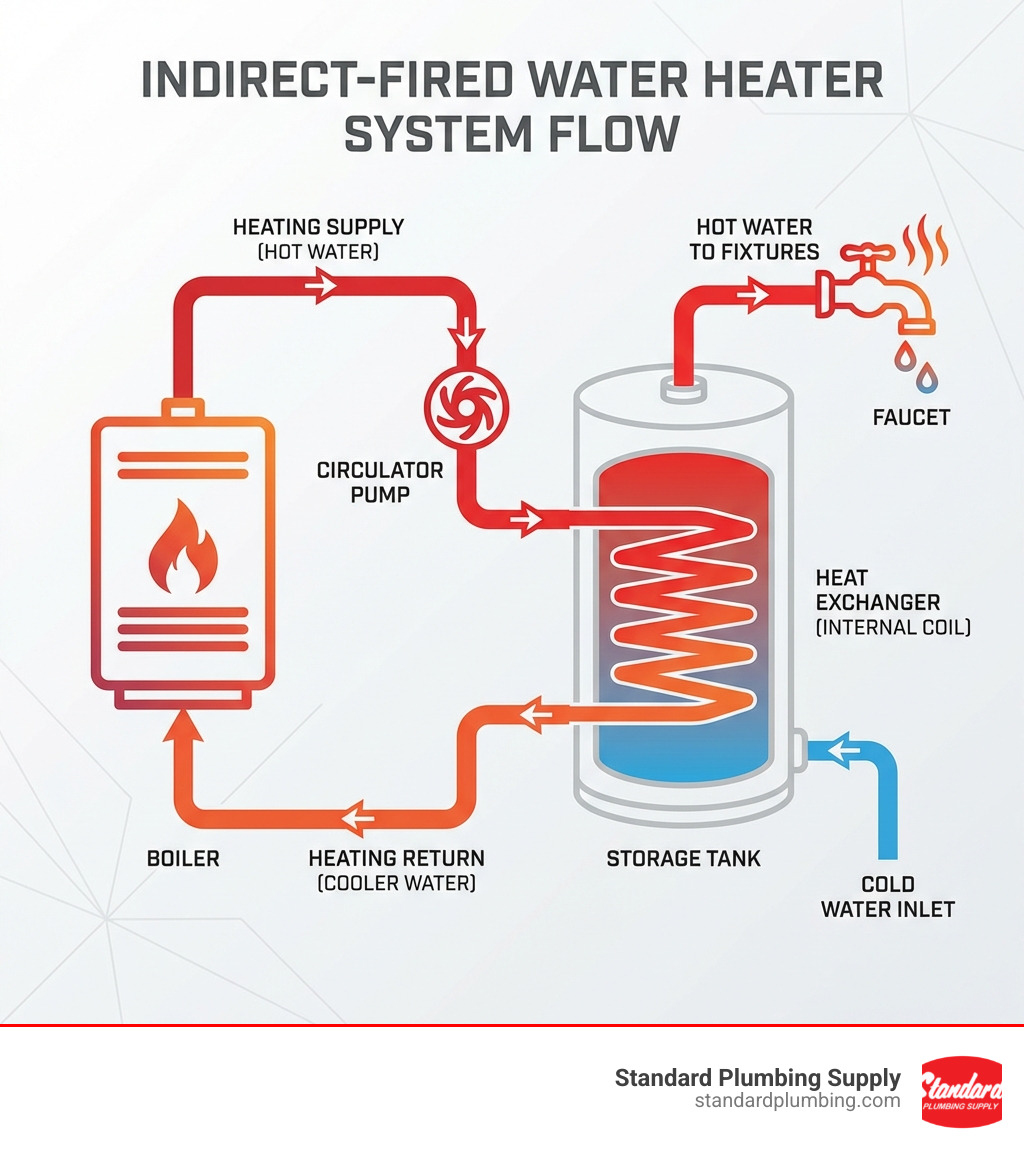
What is a Boiler with a Hot Water Tank System?
A boiler with hot water tank system, or an indirect-fired water heater system, is an efficient way to provide both space heating and domestic hot water. Instead of a dedicated burner, an indirect system uses your home’s existing heating boiler.
A portion of the hot water from your boiler is diverted to a separate, insulated storage tank. This tank contains a heat exchanger, typically a coil, through which the hot boiler water circulates. The heat transfers to the colder domestic water in the tank without the two water supplies ever mixing.
This process heats the domestic water to a set temperature (usually 150-180°F) and stores it until needed. The boiler serves two functions: warming your home and heating your water. This setup is beneficial for homes in our service areas across Arizona, California, Colorado, Idaho, Nebraska, Nevada, Oregon, Utah, and Wyoming, where reliable heating is essential.
For more general information on boiler types, you can refer to resources like Boiler types explained.
Key Components of the System
Understanding the parts of a boiler with hot water tank system helps clarify how they work together:
- Boiler (Heat Source): The heart of your heating system, the boiler (gas or oil-fired) heats water for both space heating and your domestic hot water.
- Indirect Hot Water Tank (Storage): A highly insulated tank that stores domestic hot water. It uses the boiler for heat, not its own burner, and its insulation minimizes heat loss.
- Heat Exchanger (Internal Coil): Usually a coiled pipe inside the tank. Hot water from the boiler flows through it, transferring heat to the domestic water without mixing the two supplies.
- Thermostat (Aquastat): Monitors the water temperature in the tank. When the water cools, it signals the boiler to send hot water to the heat exchanger.
- Piping and Valves: Pipes carry water between the boiler and the tank. Valves control the flow and allow for system isolation during maintenance.
- Circulator Pump: A small pump that moves hot water from the boiler through the tank’s heat exchanger coil.
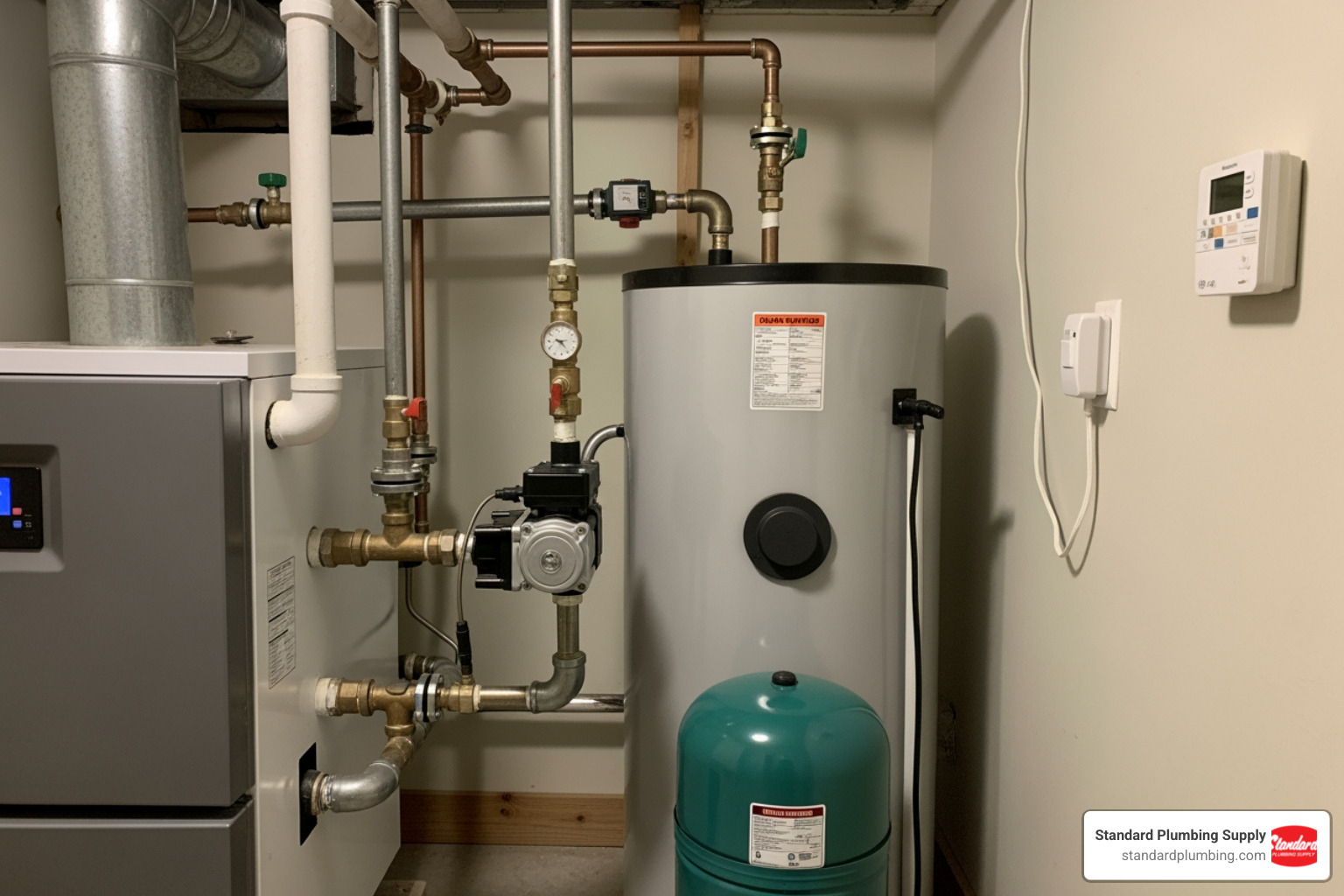
How a boiler with a hot water tank provides hot water
Here’s a step-by-step look at how your boiler with hot water tank system works:
- Boiler Heats Water: The boiler heats water to 150-180°F for both space heating and the hot water tank.
- Hot Water Circulates to Tank: If the tank’s water temperature drops, the aquastat activates a circulator pump, which sends hot boiler water to the tank.
- Heat Exchanger Transfers Heat: The hot boiler water flows through the heat exchanger coil, radiating heat to the domestic water in the tank.
- Domestic Water Gets Hot: The domestic water heats up. The now-cooler boiler water returns to the boiler to be reheated.
- Stored Until Needed: When the tank water is hot enough, the aquastat signals the boiler to stop. The insulated tank stores the hot water, with the hottest water at the top for efficient use (thermal stratification).
- Thermostat Controls Temperature: The aquastat maintains a consistent hot water supply by monitoring the tank’s temperature, which reduces boiler cycling and saves energy.
System Boilers vs. Combi Boilers: A Head-to-Head Comparison
When choosing a heating system, homeowners often weigh a boiler with hot water tank (a system boiler with an indirect tank) against a combi boiler. Both are excellent, but they serve different needs.
A combi (or “combination”) boiler is an all-in-one unit that provides central heating and on-demand hot water without a storage tank. When you turn on a faucet, it heats water instantaneously. Brands like A. O. Smith offer options such as their ProLine® Combi Boilers for Heat & Hot Water, which combine heating and hot water in one compact unit.
In contrast, a boiler with hot water tank system keeps a ready supply of hot water stored in its insulated tank.
Here’s a comparison to help you decide which is best for your home:
- On-Demand Heating (Combi Boiler): Combi boilers heat water as you need it, which is efficient for smaller homes as there’s no standby heat loss from a tank. However, flow rates can drop with simultaneous use.
- Stored Hot Water (Boiler with Tank): This system’s stored hot water reserve ensures a strong, consistent flow, ideal for large families or homes with multiple bathrooms and soaking tubs.
- Space Requirements: Combi boilers are compact and wall-mounted, saving space. A boiler with a tank requires room for both the boiler and the tank, which can be a challenge in smaller homes.
- Hot Water Flow Rate: A boiler with a tank excels here, delivering high flow rates to multiple outlets at once. Combi boilers can struggle with simultaneous high demand, though modern units have improved.
- Suitability for Home Size: Combi boilers suit smaller homes with 1-2 bathrooms. A boiler with a tank is better for larger homes with high hot water demand.
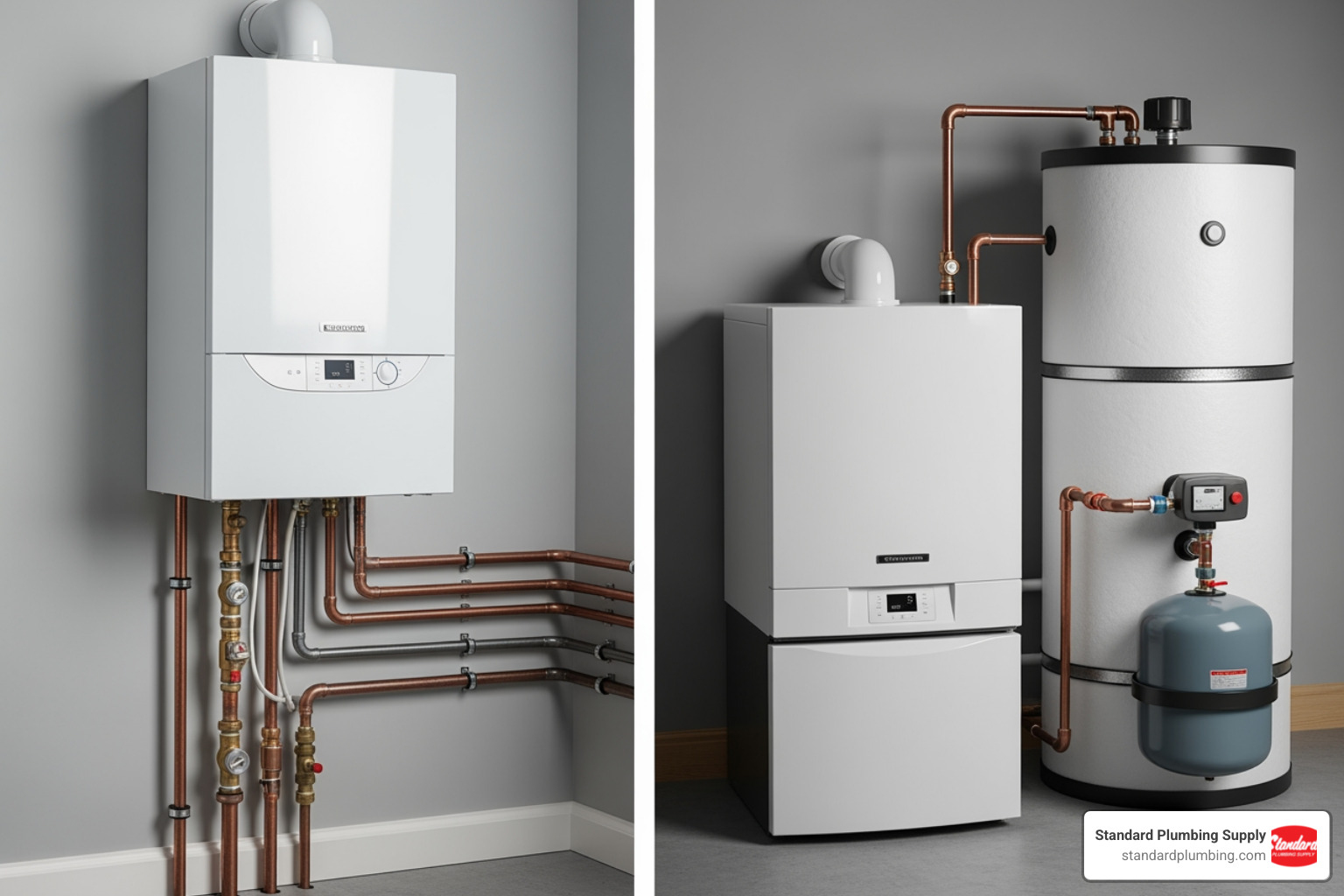
To summarize the differences, we’ve put together this table:
| Feature | System Boiler + Indirect Tank | Combi Boiler |
|---|---|---|
| Hot Water Supply | Stored, high volume, consistent flow for multiple users | On-demand, instantaneous, can reduce flow with multiple simultaneous uses |
| Space | Requires space for both boiler and separate tank | Compact, wall-mounted, no separate tank needed |
| Initial Cost | Often higher due to two main components and more complex piping | Generally lower initial cost for the unit itself |
| Operating Cost | Efficient, less cycling due to stored energy, minimal standby loss with good insulation | Highly efficient due to on-demand heating, no standby losses |
| Best Use Case | Large homes, high hot water demand, multiple bathrooms, soaking tubs, radiant heating | Smaller to medium homes, limited space, 1-2 bathrooms, lower simultaneous hot water demand |
| Flow Rate | Excellent, capable of supplying multiple showers simultaneously | Good for single point of use, can drop with multiple simultaneous demands |
Advantages and Disadvantages of This Setup
Choosing the right heating and hot water system is a significant decision. A boiler with hot water tank system offers a unique set of benefits and some considerations to explore.
Advantages of a Boiler with a Hot Water Tank System
- High Hot Water Output: The system provides a robust, continuous supply of hot water from its large storage tank. It’s perfect for large families, homes with multiple bathrooms, or those with soaking tubs that have high peak demand.
- Energy Efficiency: These systems are highly efficient. The stored energy reduces boiler cycling, saving energy. The boiler runs at peak efficiency when it fires up to heat both the home and water, unlike less efficient tankless-coil systems.
- Reduced Boiler Cycling: The stored hot water means the boiler fires up less often—only when the tank temperature drops significantly. This reduces wear and extends the boiler’s lifespan.
- System Longevity: A well-maintained boiler and indirect tank system is built for longevity. Even periodic summer firing to heat the tank helps prevent corrosion and maintain the boiler’s health.
- Supports Large Homes: This system is ideal for large homes or those with hydronic systems like radiant floor heating, as it consistently provides both space heating and ample hot water.
- Versatility: The system is adaptable and integrates easily with various boiler types and heating systems, including radiant heat.
Potential Drawbacks to Consider
While there’s a lot to love about this system, it’s important to be aware of its potential downsides:
- Higher Initial Cost: The initial cost is higher than other options. An indirect water heater can cost over $1,000, plus the boiler and more complex installation.
- Space Requirements for the Tank: The system requires space for both the boiler and the tank, which can be a problem in homes with limited utility space, unlike compact combi boilers.
- Standby Heat Loss (from the Tank): Even with good insulation, some standby heat loss from the tank occurs, causing the boiler to cycle occasionally to maintain temperature. Modern tanks minimize this loss.
- More Complex Installation: Installation is more complex, involving plumbing for heating and domestic hot water, electrical wiring, and venting, which requires a professional.
- Slower Recovery Time Than Tankless: If the tank is fully depleted, it takes time to reheat the water. In contrast, a tankless heater provides endless hot water, but at a more limited flow rate.
Installation, Maintenance, and Efficiency Considerations
Proper installation, regular maintenance, and an understanding of energy efficiency are required to ensure your boiler with hot water tank system operates at peak performance. We want you to get the most out of your investment in our service areas of Arizona, California, Colorado, Idaho, Nebraska, Nevada, Oregon, Utah, and Wyoming.
Energy Efficiency
When we talk about energy efficiency, several factors come into play:
- AFUE Ratings: A boiler’s Annual Fuel Utilization Efficiency (AFUE) rating measures its efficiency. High-efficiency models with AFUE ratings of 95% or more significantly cut operational costs.
- Condensing Boilers: Modern condensing boilers are highly efficient, recovering extra heat from exhaust gases. They are often identifiable by a plastic flue and a drain pipe.
- Outdoor Reset Technology: This smart tech saves energy by adjusting the boiler’s water temperature based on the outdoor temperature, ensuring efficient and consistent comfort.
- Tank Insulation: Crucial for minimizing standby heat loss, good tank insulation reduces boiler cycling. We recommend adding extra insulation wrap to the tank to save more energy.
- Proper Sizing: Properly sizing the boiler and tank is vital. An undersized system fails to meet demand, while an oversized one wastes energy by cycling too often. We can help you find the right size.
- Professional Installation: Professional installation is key to long-term efficiency, ensuring all parts are correctly integrated and calibrated.
Installation Requirements for a boiler with a hot water tank
Installing a boiler with hot water tank system is a job for qualified professionals.
- Venting Requirements: Gas or oil boilers need proper venting. Modern condensing boilers often use PVC or CPVC pipes instead of older metal flues.
- Plumbing Connections: Plumbing is needed for the boiler’s heating loop, the tank’s cold water inlet, and the hot water outlet to fixtures.
- Electrical Wiring: Electrical wiring connects the boiler controls, circulator pumps, and the tank’s aquastat.
- Separate Heating Zone: The tank is usually plumbed as a separate heating “zone,” allowing the boiler to prioritize hot water production when needed.
- Finding a Qualified Installer: Always use a certified, licensed, and insured installer. In our service areas, we ensure installers have the proper state and local licenses for gas fitting and plumbing. A qualified electrician should handle any electrical work.
Maintenance and Longevity
Regular maintenance is the key to a long-lasting and efficient boiler with hot water tank system.
- Annual Boiler Service: Schedule an annual service with a qualified technician to inspect the burner, heat exchanger, controls, and safety devices.
- Checking the Pressure Relief Valve: Periodically check the pressure relief valve to ensure it works correctly and prevents dangerous pressure buildup.
- Flushing the Tank: Flush the tank annually to remove sediment buildup, which can reduce efficiency.
- Descaling the Heat Exchanger: In hard water areas, descale the heat exchanger coil if you notice reduced hot water output, as mineral deposits can impair efficiency.
- Anode Rod Inspection: Inspect and replace the tank’s anode rod every 3-5 years. It protects the tank from corrosion and extends its life.
- Chemical Inhibitors: Using chemical inhibitors in your boiler’s heating loop can help maintain its efficiency and prevent corrosion within the system.
Is This System the Right Choice for Your Home?
Deciding if a boiler with hot water tank system is right for you involves weighing costs, operational expenses, and your household’s needs.
Cost Implications
Understanding the financial picture is key:
- Initial Purchase: The boiler cost varies by type, brand, and BTU output. The indirect hot water tank is an additional purchase, often costing over $1,000.
- Installation Costs: Installation costs are higher due to the system’s complexity, but it’s a one-time cost for a long-lasting system.
- Ongoing Operational Costs: Operational costs depend on fuel type and system efficiency. Natural gas is often the most economical. For homes without gas access in our service areas, propane (LPG) or heating oil are alternatives. We advise comparing local fuel prices to find the most cost-effective option. High-efficiency condensing boilers always offer lower running costs.
- Fuel Types:
- Natural Gas: Often the cheapest fuel, widely available in our service areas.
- Propane (LPG): A clean-burning option for homes without natural gas access; requires a storage tank.
- Heating Oil: An alternative for homes without natural gas; also requires a storage tank.
- Warranty and Support Options: Reputable manufacturers offer warranties, often 10 years. Product registration is usually required for support. Choose brands with strong local support and available parts, like those we offer at Standard Plumbing Supply.
Best Applications for a Boiler and Tank System
Based on our experience, a boiler with hot water tank system truly shines in specific scenarios:
- Large Families: The large volume of stored hot water ensures everyone in a large family can get a hot shower without waiting.
- Homes with Multiple Bathrooms: The system easily handles simultaneous use of multiple showers, baths, and appliances, maintaining consistent temperature and pressure.
- High Peak Hot Water Demand: If your family uses a lot of hot water at once (e.g., during morning routines), the stored volume is invaluable.
- Properties with Large Soaking Tubs or Jacuzzis: This system can quickly fill large soaking tubs or jacuzzis, a task most on-demand systems struggle with.
- Radiant Floor Heating Systems: For homes with radiant floor heating (common in colder areas like Idaho and Wyoming), adding an indirect tank is a natural and efficient way to get hot water.
Conclusion
The boiler with hot water tank system is a robust solution for homes needing reliable heating and abundant hot water. We’ve seen how it excels over combi boilers for larger households or those with high demand, thanks to its ability to supply multiple outlets simultaneously. Its high output, efficiency, and longevity make it a smart investment. We’ve also covered key installation, maintenance, and cost factors to consider.
If your home demands a powerful, consistent flow of hot water, this system delivers. At Standard Plumbing Supply, our experts across Arizona, California, Colorado, Idaho, Nebraska, Nevada, Oregon, Utah, and Wyoming are ready to help you select the perfect system.
Explore our full range of residential water heating solutions and let us help you find your ideal home comfort system.
