
What You Need to Know About the 10 Drain Pipe Before You Buy or Install
A 10 drain pipe is one of the most common choices for large-diameter culvert and stormwater drainage — but picking the right type, and keeping it clear, makes a huge difference in how long it lasts.
Quick answer: Key facts about 10-inch drain pipe
| Question | Answer |
|---|---|
| What is it used for? | Culvert drainage, stormwater management, yard drainage |
| Main material options | Corrugated HDPE (dual wall) or PVC |
| Typical length | 20-foot sections |
| Cost (HDPE corrugated) | ~$7.76 per foot ($155.15 per 20 ft) |
| Cost (PVC) | As low as $1.00 per foot |
| Lifespan (corrugated) | 5–7 years before obstruction is common |
| Lifespan (PVC) | 100+ years underground |
| Max temp (PVC) | 140°F |
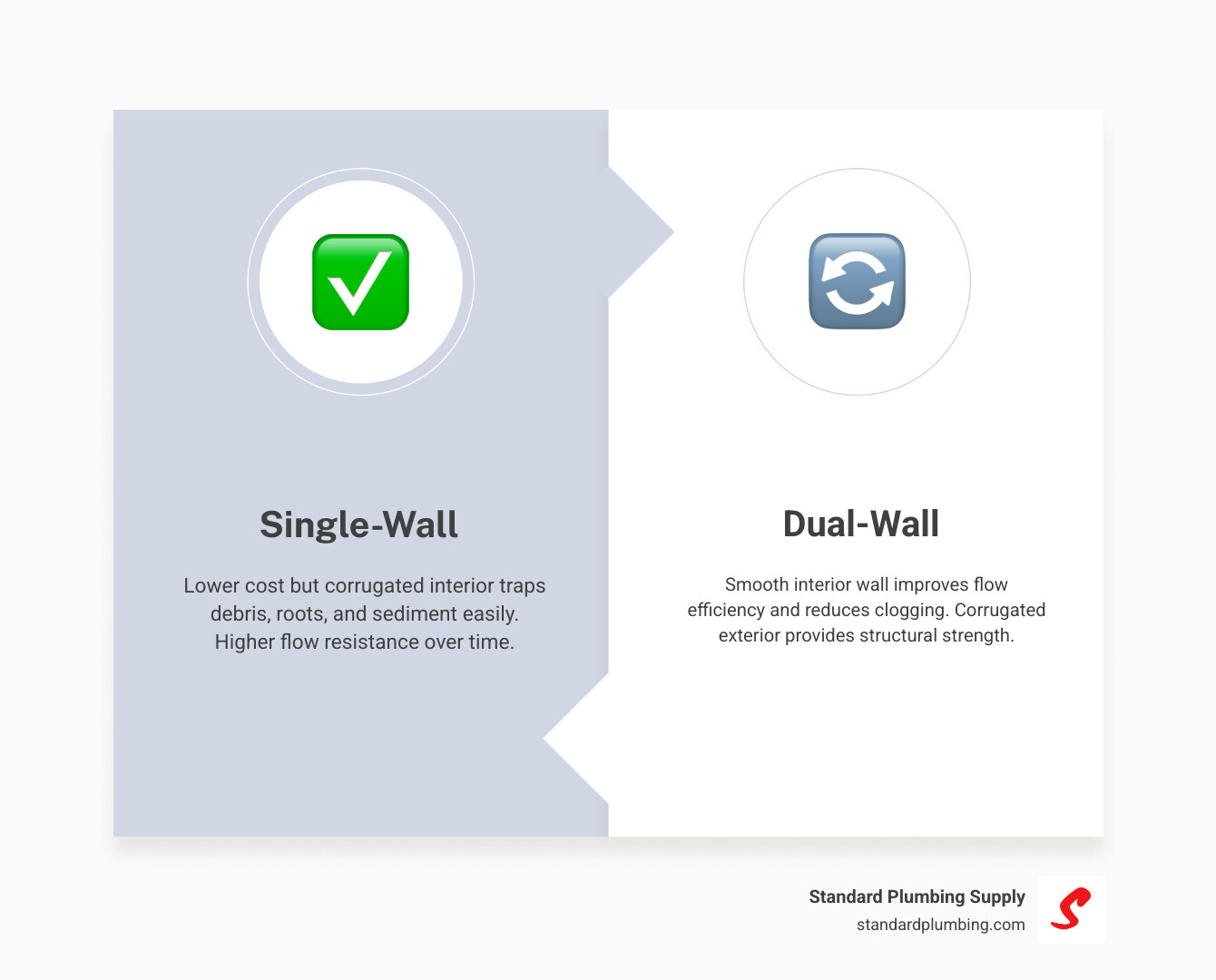
Here is the honest truth about corrugated pipe: it works, but it has real weaknesses. The ribbed interior catches debris, roots, and sediment faster than smooth-wall pipe. Many homeowners and contractors find themselves dealing with a fully blocked pipe within just a few years of installation.
This guide covers everything — from clearing a clog without digging, to choosing the right pipe material, to knowing when it is time to replace.
I’m Jacob Reese, VP of Standard Plumbing Supply and a third-generation leader in the family business — I’ve helped contractors and DIYers source and spec the right 10 drain pipe solutions for decades. Let’s get into what actually works.
Understanding Large Diameter Drainage: HDPE vs. PVC
When you are looking for a 10 drain pipe, you generally have two main contenders: High-Density Polyethylene (HDPE) and Polyvinyl Chloride (PVC). At our locations across the West, from Salt Lake City to Riverside, we see customers weighing these options every day.
The Corrugated HDPE Option
Most 10-inch corrugated pipes are “dual wall.” This means they have a corrugated exterior for structural strength and a smooth interior liner to help water flow. Even with that smooth liner, they aren’t quite as slick as PVC.
A standard 10″ x 20′ Corrugated Culvert Dual Wall Solid Drainage Pipe is typically priced around $155.15 per length, which breaks down to roughly $7.76 per foot. These are fantastic for culverts because they are lightweight and can handle significant weight when buried properly.
The PVC Alternative
PVC comes in several flavors, such as SDR 35 or Schedule 40. While smaller 3-inch PVC pipes can be found for as low as $1.00 per foot (Pro Pricing), scaling up to a full 10-inch diameter increases the price significantly. However, PVC offers a massive advantage in longevity. While corrugated pipes often struggle with obstructions after 5-7 years, PVC is rated to last over 100 years underground.
| Feature | Corrugated HDPE (Dual Wall) | PVC (SDR 35 / Sch 40) |
|---|---|---|
| Interior | Smooth (mostly) | Glass-smooth |
| Lifespan | 5-7 years (until obstruction) | 100+ years |
| Max Temp | Varies | 140°F |
| Chemical Resistance | High | High |
| Installation | Easier (lighter) | Heavier / Rigid |
For smaller auxiliary lines, you might even consider a 6 Corr Plain Drain Pipe 06510100 if 10 inches is overkill for your specific flow requirements.

Common Causes of Clogs in 10-Inch Corrugated Pipes
If your 10 drain pipe is backing up, you aren’t alone. These pipes are notorious for catching “hitchhikers.”
- Debris and Leaf Buildup: This is the #1 killer. Leaves, twigs, and grass clippings enter through catch basins and get snagged on the internal ribs or joints.
- Sediment Traps: Because corrugated pipe can “snake” or settle unevenly in the trench, low spots (bellies) form. These spots collect silt and mud, eventually turning into a solid plug.
- Root Intrusion: If you used perforated pipe (often called weeping tile) without a protective sleeve, tree roots will find those holes and fill the pipe with a “root mat” that no amount of water can push through.
- Structural Collapse: Corrugated HDPE relies on the soil around it for strength. If it wasn’t buried with the right “minimum cover,” heavy traffic (like a delivery truck) can crush the pipe, creating a physical block that looks like a clog.
- The 5-7 Year Wall: Statistics show that in many residential yard applications, these pipes become completely obstructed within 5 to 7 years if not maintained.
How to Unclog a 10-Foot Section of 10 drain pipe Without Digging
Before you rent a backhoe, try these non-destructive methods. If you are dealing with a short 10-foot section (like a small culvert under a walkway), you have a high chance of success.
The Shop Vac and Agitation Method
If the clog is near the end of the pipe, a heavy-duty shop vac can sometimes pull out the leaf mass. Use a long PVC pipe as a “wand” to reach in and break up the debris while the vacuum is running.
Garden Hose Flushing
Don’t just stick the hose in. Use a high-pressure nozzle. For better results, try flushing from the exit side (the downstream end). This pushes the debris back out the way it came, rather than packing it tighter into the clog. For smaller lines that might be feeding into your main drain, a 1/2 ID Drain Line CLR 10 CDL-10 can help keep auxiliary connections clear.
The Tennis Ball / Rope Pull
This is a classic “old school” trick. If you can get a string through the pipe (using a fish tape or even a leaf blower to blow a light string through), tie a tennis ball or a slightly smaller-than-pipe-diameter ball to the rope. Pull it back and forth to scrape the interior walls.
Mechanical Augers
A standard drain snake can work, but be careful! The metal head of a snake can easily snag on the plastic corrugations or even punch a hole through the wall of the pipe if it’s an older, thinner-walled single-wall pipe.
Advanced Cleaning: Using Pressure Washers and Jetters Safely
When the garden hose fails, it’s time for the “big guns”: the sewer jetter. This is a specialized hose with a nozzle that has front-firing and rear-firing jets. The rear jets propel the hose forward into the pipe while the front jet blasts through the clog.
Safety and Pressure Limits
Most HDPE pipes can handle a standard pressure washer, but you should aim for around 2800 PSI. Higher pressures are great for concrete, but on a 10 drain pipe made of plastic, you don’t want to sit in one spot too long or you might score the material.
- Snagging Risks: The biggest challenge with jetting corrugated pipe is that the nozzle can get stuck in the “valleys” of the corrugations.
- GPM Matters: For a 10-inch pipe, Gallons Per Minute (GPM) is actually more important than PSI. You need a high volume of water to wash the loosened mud and debris out of a pipe that large.
- Mitigating Damage: Always use a “ball” style jetter head that is less likely to snag. Ensure your joints are secure by referring to the HDPE Dual Wall Couplers Fittings Manual to understand how the sections are held together.
Installation and Maintenance for Long-Term Performance
To prevent your 10 drain pipe from becoming a 20-foot-long planter box, follow these professional installation tips.
Proper Bedding and Cover
According to ADS manuals, “minimum cover” is essential. If you are running a pipe under a driveway where a single-axle truck might drive, you need to follow specific burial depths to prevent crushing.
- Review the 111A Minimum Cover Temporary Single Axle HDPE Pipe Detail for engineering specs.
- Properly bed the pipe in gravel or sand, not just native soil, to prevent shifting.
Prevention is Key
- Debris Separators: Install a catch basin with a “sand trap” or a debris grate before the water enters the pipe.
- Landscape Fabric: If you are using perforated pipe, wrap it in high-quality landscape fabric to keep silt out.
- Annual Flushing: Every spring, run a high-volume hose through your culverts to wash out the winter’s accumulation of sediment before it hardens.
Frequently Asked Questions about 10-Inch Drainage
When should I replace my 10 drain pipe with PVC?
If you find yourself unclogging your corrugated pipe every single year, or if you’ve discovered the pipe is “pancaked” (crushed) in the middle, it is time to switch to PVC. While the upfront cost of 10-inch PVC is higher, its 100-year durability and smooth interior mean you will likely never have to dig it up again in your lifetime. If flow efficiency is your main goal, PVC is the undisputed king.
What are the best tools for a 10 drain pipe?
For a pipe this large, a standard “sink snake” won’t do much. You need:
- A Sewer Jetter Attachment: For your pressure washer.
- High-Flow Nozzles: To move large amounts of water.
- A Heavy-Duty Shop Vac: For localized debris.
- A Catch Basin Kit: Something like the 9 2 Outlet Drainage Kit With Green Gate And Sand Trap 090-K is perfect for catching debris before it ever enters your 10-inch line.
Where can I find 10-inch corrugated culvert fittings?
Fittings for 10-inch pipe aren’t always at the local “big box” store. You typically need to visit a specialized supplier like Standard Plumbing Supply. We carry everything from 20-foot lengths to specialized couplers and tees. If you are doing a complex layout, check the HDPE Dual Wall Fabricated Tees Fittings Manual to see the range of configurations available for your project.
Conclusion
Whether you are installing a new culvert or trying to save an old one, understanding the limits of your 10 drain pipe is the first step to a dry property. Corrugated HDPE is a cost-effective, tough solution, but it requires a bit of “TLC” and the right installation techniques to last.
At Standard Plumbing Supply, we’ve been the go-to resource for contractors from Boise to Phoenix and all across the West. We don’t just sell pipe; we help you find the right solution for your specific soil and traffic conditions.
Ready to start your project? Use our store locator to find a location near you, or Shop our full selection of drainage pipes and fittings online to get the parts you need to do the job right the first time.
