
Why Barrier Pipe Fittings Are Essential for Safe Water Delivery
Barrier pipe fittings are specialized connectors designed to join barrier pipes—multi-layer pipes with an aluminum core that prevent external contaminants from seeping into potable water supplies. These fittings are critical for maintaining water quality in challenging environments like brownfield sites or areas with contaminated soil.
Quick Answer: Choosing the Right Barrier Pipe Fitting
| Fitting Type | Best For | Key Benefit |
|---|---|---|
| Mechanical Compression | General installations, repairs | End-load bearing, all-weather use, simple tools |
| Press-Fit Systems | Fast installations, professional projects | No hot works, quick connection, specialized tools required |
| Universal Connectors | Joining different pipe brands | Connects various manufacturers’ barrier pipes reliably |
| Transition Fittings | Connecting to copper/PE/PEX | Maintains barrier integrity when switching pipe types |
Common sizes available: 25mm, 32mm, 40mm, 63mm for residential and commercial applications.
Key standards to look for: WRAS approval, KIWA UK certification, BS 8588 (barrier pipes), BS 8561 (universal fittings).
When you’re working with water supply systems on contaminated land, the connection points are just as important as the pipe itself. A barrier pipe can protect drinking water from chemical permeation, but only if the fittings maintain that protective seal. Whether you’re a professional plumber tackling a brownfield development or a facilities manager upgrading an older system, understanding your fitting options means the difference between a reliable installation and a potential contamination risk.
I’m Jacob Reese, Vice President of Standard Plumbing Supply, and I’ve spent years helping contractors and builders select the right barrier pipe fittings for challenging installations across the Western United States. Through hands-on experience with hundreds of projects—from residential service lines to large commercial developments—I’ve learned which fittings deliver long-term reliability and which standards truly matter for protecting water quality.
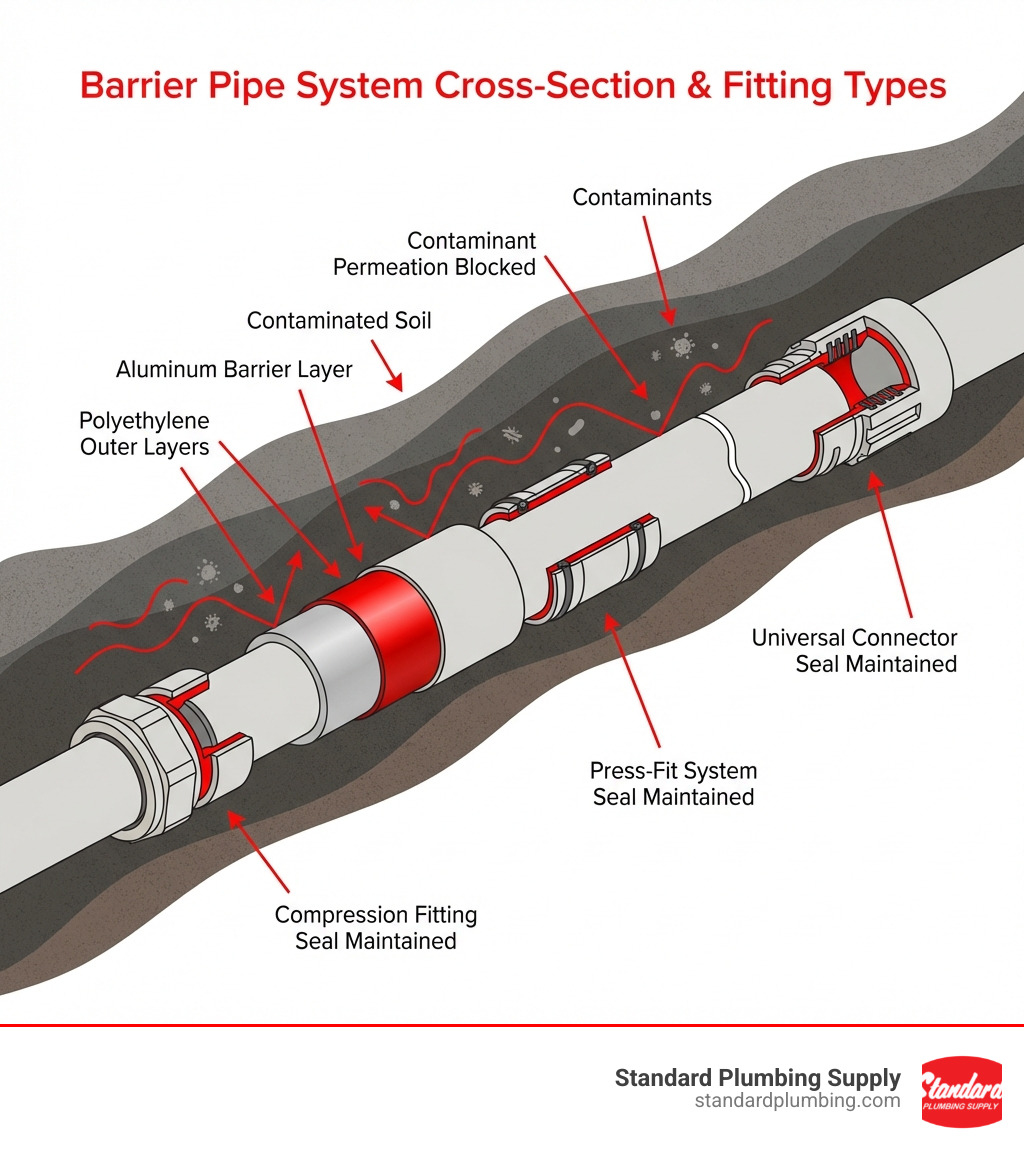
Understanding Barrier Pipe: The First Line of Defense
Imagine drinking water that has traveled through soil contaminated by old industrial waste, chemicals, or even fuel. Sounds unpleasant, right? That’s where barrier pipe comes in! It’s our first line of defense, specifically engineered to ensure that contaminants from the surrounding ground can’t permeate into our precious potable water supply.
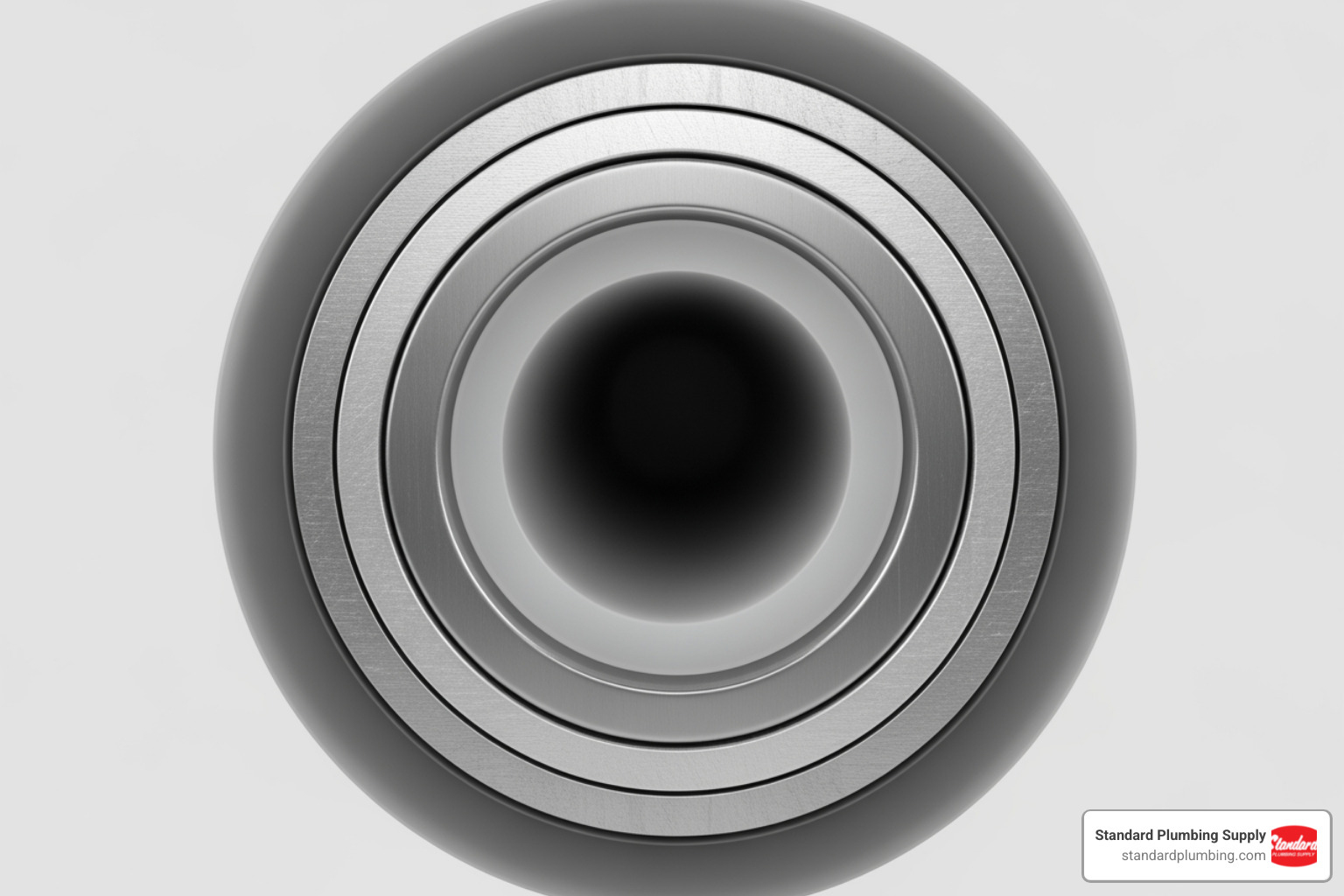
At its heart, a barrier pipe isn’t just a simple plastic tube. It’s a marvel of multi-layer construction, typically featuring an inner and outer layer of polyethylene (PE) plastic, but with a crucial aluminum barrier layer sandwiched in between. This aluminum layer acts as an impermeable shield, stopping harmful substances from passing through the pipe wall and compromising water quality. Think of it as a tiny, yet mighty, fortress for your water.
These specialized pipes are indispensable for installations in environments known as brownfield sites or other contaminated land. These are areas that may have been previously used for industrial or commercial purposes and, as a result, contain a cocktail of potential pollutants. Whether it’s an old factory site in Oakland, a former gas station in Boise, or a redeveloped commercial plot in Salt Lake City, if there’s a risk of ground contamination, a barrier pipe system is the go-to solution. For instance, the Polyguard system, a well-known barrier pipe, is explicitly designed for these types of locations, even featuring brown marker stripes on its exterior for easy identification of installed pipework. Our goal is always to maintain a clean potable water supply, and these pipes are fundamental to achieving that, even when faced with challenging soil conditions.
A Deep Dive into Barrier Pipe Fittings: Types and Technologies
This section explores the various connection methods available, helping you select the best option for your project’s specific needs, from simple repairs to large-scale developments.
Choosing the right barrier pipe fittings is as crucial as selecting the barrier pipe itself. A weak link in the chain can compromise the entire system’s integrity. Fortunately, manufacturers have developed a range of innovative solutions to ensure secure, contaminant-proof connections.
Mechanical Compression Fittings
Mechanical compression fittings are a tried-and-true method for joining pipes, and their application to barrier pipes brings a robust solution to contaminated land scenarios. They work by compressing a seal against the pipe, creating a watertight and end-load-bearing joint. This means the fitting can withstand the pulling forces within the pipe system without coming apart.
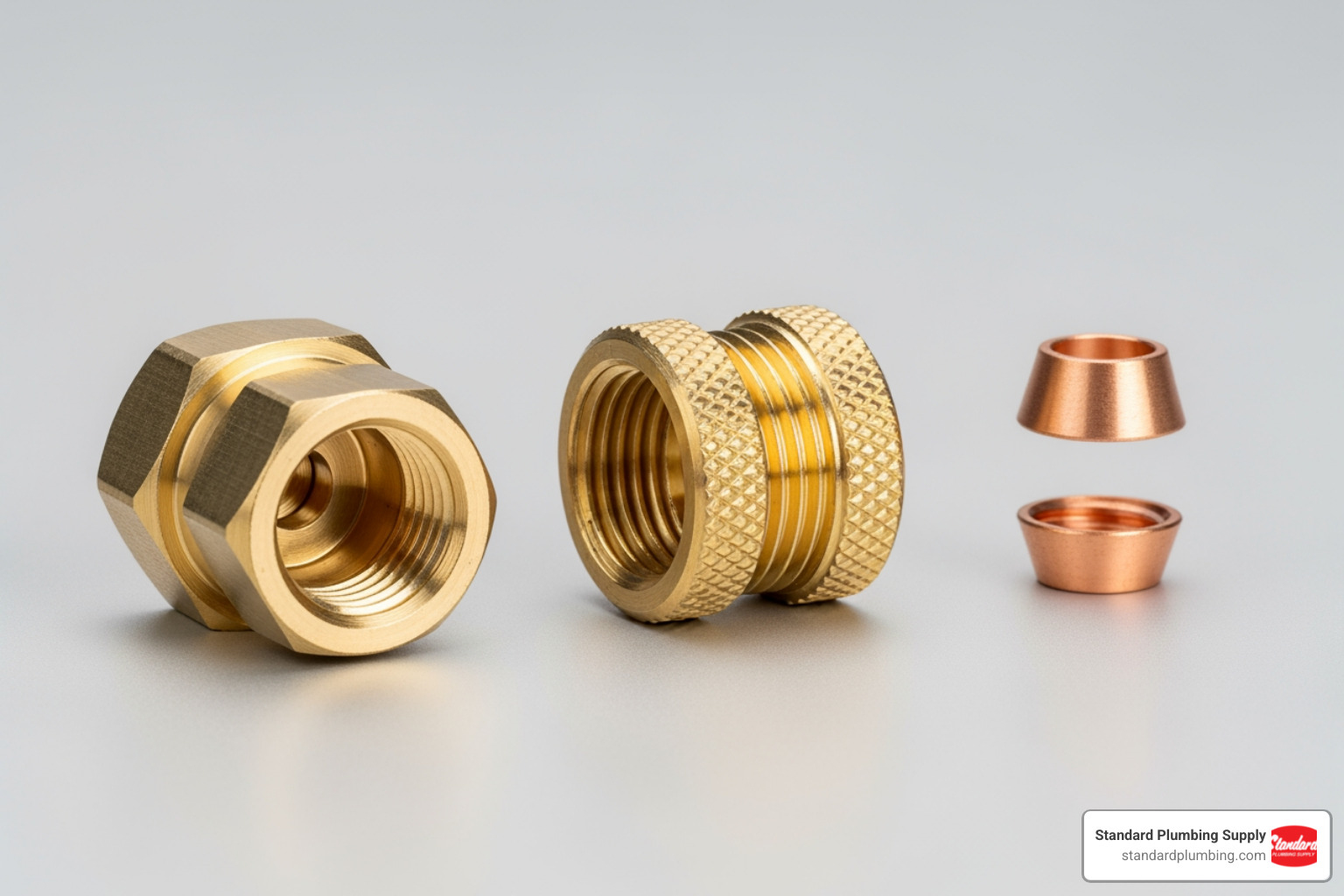
One of the significant advantages of these fittings is their ease of installation, often requiring only simple hand tools like wrenches. This makes them incredibly versatile, as jointing can often be made in all weather conditions, even with water in the pipeline, which can be a lifesaver on a busy job site in, say, a rainy Oregon winter. Materials commonly used for these fittings include gunmetal and DZR (Dezincification Resistant) brass, chosen for their durability and corrosion resistance.
For larger diameter barrier pipes, we see systems like Redman Fittings, which are available in diameters from 63 mm up to 180 mm. These hydraulic compression fittings are praised for being a “fit and forget” solution, offering improved resistance to chemicals and corrosion. They provide a robust, leak-free jointing method for potable water conveyance, giving us peace of mind that our water supply is protected.
Common sizes for mechanical compression fittings in our service areas of Arizona, California, Colorado, Idaho, Nebraska, Nevada, Oregon, Utah, and Wyoming typically range from 25mm and 32mm for residential service lines, up to 63mm and larger for main distribution lines.
Push-Fit and Press-Fit Systems
If speed, simplicity, and safety are at the top of your priority list, then push-fit and press-fit systems are game-changers for barrier pipe fittings. These technologies have revolutionized pipe installation by eliminating the need for traditional hot works like soldering or welding, which means no open flames and a safer work environment—a huge benefit on any construction site.
Push-to-connect fittings, as the name suggests, allow you to simply push the pipe into the fitting to create a secure seal. Press-fit systems, on the other hand, use specialized press tools and jaws to mechanically crimp a fitting onto the pipe. This method creates an incredibly strong and reliable joint in seconds. For instance, STÖRNCH Hybrid Barrier Press Fittings are designed for rapid installation, with specific press fit jaws available for 25mm, 32mm, and 40mm pipe sizes, compatible with specific K N RLS tools.
The key benefits include:
- Speed of Installation: Joints can be made in seconds, significantly reducing labor time.
- No Hot Works: Eliminates fire risks, making them ideal for sensitive environments.
- Joint Security: Once pressed, the joint is incredibly secure and leak-free.
- System Integrity: These fittings are often made from composite materials, maintaining the multi-layer barrier integrity of the pipe itself.
Using press-fit technology allows us to make quick, clean, and consistent connections, ensuring the integrity of the barrier system. When considering the overall protection of your pipe systems, it’s also worth noting that proper insulation and vapor barriers play a critical role in preventing external factors from affecting your pipes. For more information on protecting your pipe systems, you can check out details on vapor barrier covers.
Universal and Specialized Barrier Pipe Fittings
Sometimes, a project requires connecting different types or brands of barrier pipe, or even transitioning from a barrier pipe to another material like copper or standard polyethylene (PE). This is where universal and specialized barrier pipe fittings shine.
Universal connectors, such as the AquaShield® system, are designed to solve the challenge of joining pipe systems from different manufacturers. This has historically been a “key unsolved client issue” in the industry. AquaShield® fittings are non-permeable and work by sealing the barrier pipe from within, ensuring that contaminants cannot enter the water network. They feature a unique gripping mechanism for end-load restraint and can connect various major barrier pipe brands. AquaShield® fittings are available in larger diameters like DN90, DN125, and DN180, are rated to 16 bar working pressure, and boast an impressive 50-year design life expectancy.
Specialized transition fittings are equally vital. These fittings allow us to seamlessly connect barrier pipe to other common plumbing materials while maintaining the integrity of the barrier protection. For example, MCP Barrier x Cu/PB/PEX fittings are specifically designed to connect barrier pipe to copper, polybutylene (PB), or cross-linked polyethylene (PEX) pipes. These are often available in common sizes like 25mm diameter and are engineered to maintain a PN16 pressure rating, ensuring compatibility across different pipe systems.
Flange adaptors are another form of specialized fitting, used to connect barrier pipes to flanged components in a system, providing a robust and secure connection point, particularly useful in commercial or industrial applications. Whether it’s coupling Puriton to Puriton, Protecta-Line to Puriton, or SLA to PE, these fittings ensure our connections are as secure as the pipes themselves.
Installation Best Practices and Common Challenges
Proper installation is key to a leak-free, long-lasting barrier system. Following best practices ensures the integrity of the water supply and prevents costly future repairs.
Even the highest quality barrier pipe fittings are only as good as their installation. A meticulous approach during fitting ensures that the system performs as intended, safeguarding the water supply for years to come.
Step-by-Step Installation Guide
Installing barrier pipe fittings might seem straightforward, but precision is key. Here’s a general guide to ensure a robust, leak-free connection:
-
Pipe Preparation:
- Cut Cleanly: Use a sharp, appropriate pipe cutter to make a straight, clean cut.
- Deburr: Remove any burrs or rough edges from both the inside and outside of the pipe end. This prevents damage to O-rings and ensures a smooth fit.
- Clean: Ensure the pipe end is free from dirt, debris, or moisture.
-
Assembling Fittings:
- Mechanical Compression: For these fittings, you’ll typically loosen the nut, slide it onto the pipe, then insert the pipe fully into the fitting body until it bottoms out. The grip ring and seal will then be in place.
- Push-Fit: Simply push the pipe firmly and squarely into the fitting until it clicks or reaches a stop. Many push-fit fittings have a visual indicator to confirm a secure connection.
- Press-Fit: Insert the pipe fully into the fitting. Then, using the correct press tool and jaws for the specific fitting size (e.g., 25mm, 32mm, 40mm for STÖRNCH), activate the tool to create the crimped connection.
-
Correct Torque (for compression fittings): Tighten the nut on mechanical compression fittings according to the manufacturer’s specifications. Do not overtighten, as this can damage the seal, or undertighten, which can lead to leaks. A torque wrench is often recommended for consistency.
-
Using Visual Indicators: Some advanced fittings, like AquaShield®, feature an indicator window. This allows us to visually confirm that the pipe has been inserted to the correct depth, ensuring a proper seal.
-
Required Tools: While some mechanical fittings might only need a couple of wrenches, press-fit systems require specialized press tools with specific jaw sizes. Always have the right tools for the job to ensure a professional and reliable installation.
Avoiding Common Pitfalls with Barrier Pipe Installations
Even with the best intentions, installations can face challenges. Here’s how we can avoid common pitfalls:
- Leak Prevention and Joint Integrity: The primary goal is a leak-free system. This means adhering strictly to manufacturer instructions, using the correct tools, and ensuring proper pipe preparation. For instance, Redman Fittings are known for their “fit and forget” nature, providing a robust and leak-free jointing solution.
- Working in Wet Conditions: Some fittings, like certain mechanical compression types, are designed for all-weather installation, even with water in the pipeline. This flexibility is invaluable when dealing with unexpected weather or existing water in the system.
- Addressing Chemical Resistance: Always confirm that the chosen barrier pipe fittings material is compatible with any potential contaminants in the soil. The aluminum layer in barrier pipes is key, but the fitting materials must also resist chemical attack.
- Protecting Exposed Pipework: While barrier pipe is robust, any exposed sections should be protected from physical damage, UV degradation, and extreme temperatures. This can include using protective casings or insulation.
Here’s a quick list of pre-installation checks to keep us on track:
- Verify Pipe and Fitting Compatibility: Ensure the pipe’s diameter and material match the fitting’s specifications.
- Inspect for Damage: Check both pipe ends and fittings for any cracks, deformities, or foreign objects.
- Confirm Material Suitability: Especially important for transition fittings, ensure the materials are compatible with the different pipe types being joined (e.g., barrier to copper, barrier to PE).
- Review Manufacturer Instructions: Every fitting can have slight nuances in its installation procedure.
- Gather All Necessary Tools: Before starting, make sure all wrenches, press tools, deburring tools, and measuring tapes are on hand.
- Consider Environmental Factors: Plan for working in trenches or wet conditions if applicable, choosing fittings designed for such environments.
Standards, Certifications, and Ensuring Compliance
Certifications are not just paperwork; they are your assurance that the products you install meet rigorous safety and performance standards for protecting public health.
When we’re talking about drinking water, there’s no room for guesswork. That’s why industry standards and certifications are so vital for barrier pipe fittings. They provide an independent assurance that the products we use have been rigorously tested and meet strict quality and safety criteria.
Key UK and International Approvals
While we operate primarily in the Western United States, understanding international benchmarks helps us appreciate the global commitment to water quality. Key certifications like WRAS approval (Water Regulations Advisory Scheme) and KIWA UK certification, commonly seen for products like Redman Fittings and AquaShield®, indicate compliance with stringent UK water regulations. These approvals confirm that a product will not contaminate drinking water and is fit for purpose.
Furthermore, standards such as BS 8588 for barrier pipes and BS 8561 for universal fittings establish specific performance requirements for these products, including resistance to permeation from contaminants. Products meeting these standards provide a high level of confidence in maintaining potable water quality, a goal we share universally.
Understanding US Standards for Water Systems
Closer to home, our focus is on US-specific standards that directly impact water systems in states like Arizona, California, Idaho, and Utah.
One of the most critical is NSF/ANSI 61: Drinking Water System Components – Health Effects. This standard is paramount, as it certifies that products coming into contact with drinking water do not leach harmful contaminants into the water itself. For any component, including barrier pipe fittings, used in our water distribution networks, NSF/ANSI 61 compliance is a non-negotiable requirement.
For PVC pressure pipe and fabricated fittings, the AWWA C900 PVC Pipe Standard (ANSI/AWWA C900-07) sets forth minimum requirements for materials, dimensions, and performance. This standard is crucial for water transmission and distribution systems and defines important concepts like:
- Pressure Class (PC): The maximum working pressure rating for the pipe at a given temperature. For example, a pipe might be rated for 165 psi, 235 psi, or 305 psi.
- Dimension Ratio (DR): The ratio of the pipe’s outer diameter to its wall thickness, which directly impacts its pressure capacity. Common DRs are 14, 18, and 25.
Compliance with these standards is not just about ticking a box; it’s about ensuring public health and safety. It ensures that the pipes and fittings we install can withstand the pressures of water distribution, resist environmental stresses, and most importantly, keep our drinking water clean and safe. Manufacturers like Swagelok also adhere to demanding standards such as ASME B31.3 for their pressure ratings, demonstrating a commitment to high-performance components across various applications. When we select products that meet these rigorous criteria, we’re building systems that are reliable, durable, and trustworthy.
Frequently Asked Questions about Barrier Pipe Fittings
We often get excellent questions about barrier pipe fittings, and we’re happy to clear up any confusion. Here are some of the most common inquiries we receive:
Can I connect a barrier pipe to a standard copper or plastic pipe?
Yes, absolutely! This is a very common requirement, especially when extending existing systems or transitioning to different materials. Specialized transition fittings and universal connectors are specifically designed for this purpose. These fittings ensure a secure, leak-proof seal between the different pipe materials (e.g., barrier pipe to copper, PEX, or standard PE) while maintaining the crucial barrier integrity against contamination. For example, MCP Barrier x Cu/PB/PEX fittings are made exactly for these types of connections, allowing for seamless integration.
What are the most common sizes of barrier pipe used for home water service lines?
For residential properties and typical service lines in areas like Chula Vista, Lehi, or Boise, the most frequently used diameters for barrier pipe are 25mm and 32mm. These sizes are ideal for conveying potable water to individual homes. For larger projects, such as main distribution lines in a new development or commercial applications, you’ll often see larger diameters like 63mm, DN90, DN125, and even DN180.
Do I need special tools to install all types of barrier pipe fittings?
It depends on the specific type of barrier pipe fittings you choose. Many mechanical compression fittings are designed for ease of use and typically only require standard hand tools, such as wrenches, for a secure connection. This makes them quite versatile for on-site adjustments or repairs. However, for press-fit systems, which offer rapid and highly secure joints, you will absolutely need a specific pressing tool along with the correct jaw size that matches the diameter of your fittings (e.g., 25mm, 32mm, or 40mm jaws for STÖRNCH systems). Always consult the manufacturer’s instructions for the recommended tools to ensure a proper and compliant installation.
Conclusion
Choosing the correct barrier pipe fitting is a critical decision for safeguarding potable water in any environment, especially on contaminated land. By understanding the different types, installation methods, and governing standards, you can ensure a safe, durable, and compliant installation. From the multi-layered protection of the pipe itself to the robust connections made by mechanical compression, press-fit, or universal fittings, every component plays a vital role in maintaining water quality.
At Standard Plumbing Supply, we understand the importance of reliable water systems. We’re proud to serve our communities across Arizona, California, Colorado, Idaho, Nebraska, Nevada, Oregon, Utah, and Wyoming, providing the essential products and expertise you need for your projects. For a comprehensive selection of fittings and expert advice for your next project, trust a reliable supplier. Explore our full range of plumbing fittings.
