
Why Reliable Well Pump Supplies Matter for Your Water System
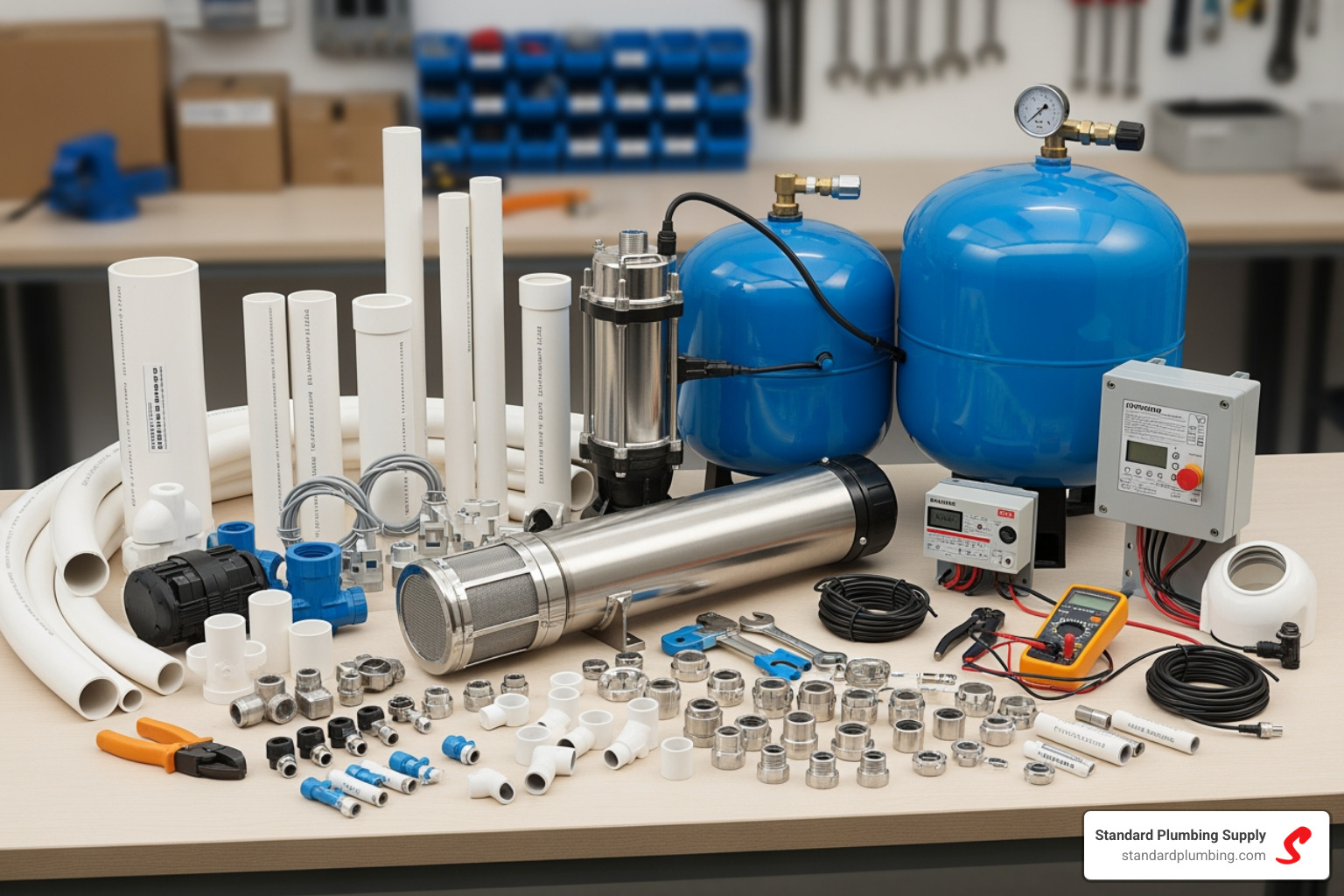
Well pump supplies are the essential components and accessories needed to install, maintain, and repair your well water system. Whether you’re replacing a failing pump, upgrading your system, or building a new well, having the right supplies ensures reliable water access for your home or property.
Essential well pump supplies include:
- Pumps: Submersible pumps (for deep wells), jet pumps (for shallow wells), and hand pumps (for backup)
- System Components: Pressure tanks, pressure switches, check valves, well caps and seals
- Installation Supplies: Pitless adapters, torque arrestors, well pump wire, splice kits, pipe fittings
- Maintenance Items: Pressure gauges, replacement switches, O-rings, seals, and specialized tools
Access to clean water isn’t something most of us think about—until the tap runs dry. For the millions of North American households relying on well water, a properly functioning pump system is the lifeline between groundwater reserves and everyday needs like drinking, bathing, and irrigation. The global well pump market, valued at $3.5 billion in 2022, is projected to reach $5.2 billion by 2030, reflecting the critical role these systems play in residential and agricultural water management.
As Jacob Reese, Vice President of Standard Plumbing Supply and a third-generation leader in the plumbing industry, I’ve spent decades helping contractors and homeowners source the right well pump supplies for reliable water systems. From my earliest days learning the business at age eight to now managing our extensive inventory across the Western United States, I’ve seen how the right components make all the difference in system performance and longevity.
Understanding the Main Types of Well Pumps
Choosing the right well pump is the first and most critical step in establishing a reliable water supply. It’s not just about getting water out of the ground; it’s about matching the pump to your specific well conditions and water demands. Think of it as finding the perfect pair of shoes – the right fit makes all the difference!

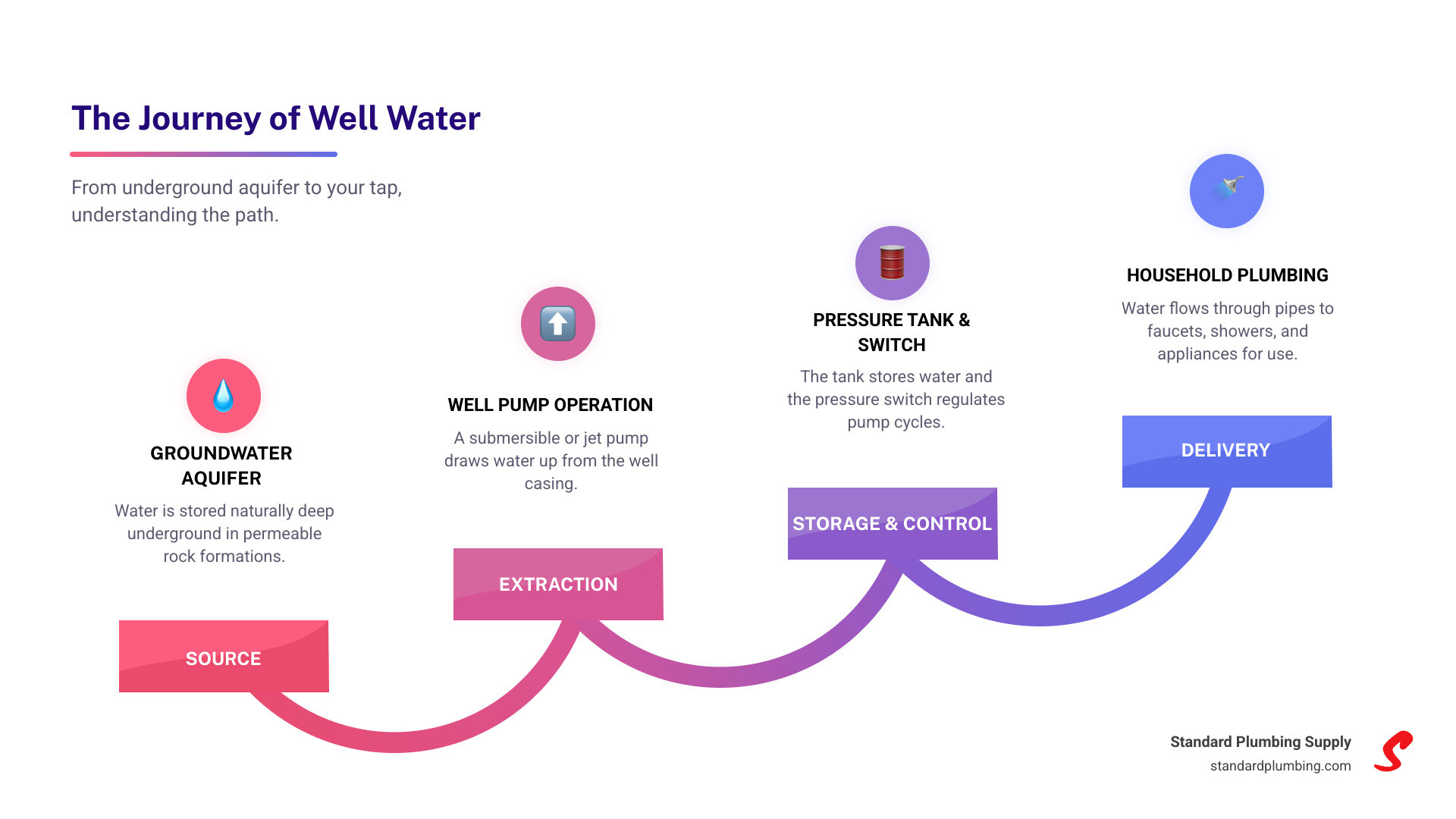
The primary function of any well pump is to move water from your well to your storage tank or directly into your home’s plumbing system. The type of pump you need largely depends on the depth of your well and your desired flow rate. Deeper wells require more powerful solutions, while shallower wells offer more flexibility. Understanding these basics helps us narrow down the options and ensure long-term efficiency. According to the EPA’s information on private wells, over 13 million households in the United States rely on private wells for drinking water, making proper pump selection crucial for water safety and reliability.
Submersible Well Pumps
When we talk about well pumps, submersible pumps often come to mind first, and for good reason. They are, by far, the most common type, accounting for over 60% of the market share. These workhorses are designed to be fully submerged in the water inside your well casing, pushing water upward rather than pulling it. This “push” mechanism makes them incredibly efficient for deep well applications, often reaching hundreds of feet below the surface.
One of the biggest advantages of submersible pumps is their quiet operation. Since the motor is underwater, any noise it produces is effectively muffled, making for a more peaceful environment around your home or property. They are also highly efficient because they don’t have to work against atmospheric pressure to lift water, which is a major factor for above-ground pumps.
If you are interested in how different styles of pumps move water through a system, you can find More info about plumbing pumps, which helps illustrate key concepts like flow, head, and efficiency that also apply when you are choosing and sizing well equipment.
Submersible pumps are typically installed within a 4-inch or larger well casing, ensuring a snug fit and optimal performance.
Jet Pumps (Shallow and Convertible)
For shallower wells, typically those with a static water level of 25 feet or less, jet pumps are a popular choice. Unlike their submersible cousins, jet pumps are installed above ground, usually in a pump house or basement. This makes them much easier to access for maintenance and repairs, a definite plus for many homeowners.
Jet pumps operate using a venturi system. They create a vacuum by forcing water through a small nozzle (the jet) and then a diffuser. This suction pulls water from the well up to the pump.
We categorize jet pumps into two main types:
- Shallow-Well Jet Pumps: These are used for wells where the water table is consistently above 25 feet. They use a single pipe to draw water from the well.
- Convertible Jet Pumps: These are more versatile as they can be configured for either shallow or deep well applications (up to about 90-100 feet, though efficiency drops significantly at greater depths). For deep well configurations, a convertible jet pump uses an ejector assembly placed in the well, connected by two pipes to the pump above ground. This allows them to “push” water from deeper levels, similar to a submersible, but with the main pump unit remaining accessible.
A key consideration for jet pumps is priming. They need to be filled with water before they can start pumping, which can be a minor inconvenience compared to self-priming submersibles. However, their easy access and suitability for many shallow well scenarios make them a solid option.
Hand-Operated and Backup Pumps
While modern electric pumps offer incredible convenience, we always emphasize the importance of having a backup plan, especially for those relying solely on well water. This is where hand-operated pumps come into their own.
A hand pump provides a completely manual way to draw water from your well. It is a simple, robust solution that doesn’t rely on electricity, making it an invaluable asset during power outages, equipment failures, or for off-grid living solutions. Imagine a major storm knocking out power for days – a hand pump could be your family’s savior, providing essential water for drinking, cooking, and sanitation.
The beauty of many modern hand pump systems is their modularity. Some can be installed alongside an existing submersible pump and even converted from manual to motorized operation if desired. With the right configuration, a quality hand pump can move water from substantial static depths and, in many cases, provide enough pressure to feed a residential pressure tank. It is a practical way to add redundancy to your well system and increase your water independence.
How to Choose the Right Well Pump System
Selecting the ideal well pump system is a blend of science and art, ensuring your water needs are met efficiently and sustainably. It’s about more than just picking a pump off the shelf; it’s about designing a system that works in harmony with your well and your lifestyle.

The importance of proper system sizing cannot be overstated. An undersized pump will struggle to meet demand, leading to premature wear and frustration. An oversized pump, while seemingly powerful, can cycle too frequently, wasting energy and potentially damaging components. Our goal at Standard Plumbing Supply is to help you achieve long-term efficiency, which ultimately impacts your operating costs and the longevity of your well pump supplies.
Sizing Your Pump: Depth, Flow Rate, and Pressure
The three pillars of pump sizing are well depth, desired flow rate, and required water pressure.
- Well Depth Measurement: This is perhaps the most crucial factor. You need to know your static water level (the level of water in the well when the pump isn’t running) and the total vertical distance the water needs to be lifted to your storage tank or pressure tank. For very deep wells, a submersible pump is almost always the answer. For wells deeper than 135 feet, even DIY installation of a hand pump might warrant professional assistance.
- Calculating Household GPM Needs: This determines the flow rate (Gallons Per Minute) your pump needs to deliver. A typical household might need 8-12 GPM, but if you have multiple bathrooms, a large family, or plan for irrigation, your GPM needs will increase. Agricultural applications, like watering livestock or large fields, will require significantly higher GPM.
- Water Pressure (PSI) Requirements: Most residential systems aim for a pressure range of 40-60 PSI. Your pressure tank, discussed below, plays a key role here. The pump needs to be powerful enough to deliver water at this pressure, overcoming any friction loss in the pipes.
Finally, consider your power source options. Most pumps are electric (110V, 220V, or 480V for larger systems), but solar-powered systems are gaining popularity, especially in remote areas or for those seeking energy independence.
Essential System Components
A well pump is just one part of a complete well water system. Several other crucial well pump supplies work in concert to deliver water seamlessly to your home.
- Pressure Tank: This is arguably the second most important component after the pump itself. The pressure tank stores water under pressure, preventing the pump from cycling on and off every time you open a faucet. This reduces wear and tear on the pump, saving energy and extending its lifespan.
- Pressure Switch: This electrical device monitors the water pressure in your system and tells the pump when to turn on and off. It’s typically set to a specific range (e.g., turn on at 30 PSI, turn off at 50 PSI).
- Check Valves and Backflow Prevention: A check valve is essential to prevent water from flowing back down into the well when the pump turns off. Backflow prevention devices are critical for protecting your well water from contamination by preventing non-potable water from entering your drinking water system.
- Well Caps and Seals: These components protect your well from surface contaminants, insects, and debris. A properly sealed well cap is vital for maintaining water quality.
- Well Casing: This is the pipe that lines the borehole, preventing the well from collapsing and keeping contaminants out of the water.
- Piping and Venting: The pipes transport water from the pump to the pressure tank and then throughout your property, and connected venting components on your plumbing or mechanical systems help everything operate safely. Standard Plumbing Supply can help you with Piping and venting options that integrate well with your overall system design.
Choosing Brands and Modern Technologies
When it comes to selecting well pump supplies, the brand you choose can significantly impact performance, reliability, and the availability of repair parts. We work with reputable brands known for their quality and durability. Key brand selection criteria include:
- Reputation and Reliability: Look for brands with a long history of producing dependable pumps.
- Warranty and Parts Availability: A good warranty provides peace of mind, and readily available replacement parts ensure your system can be easily serviced.
- Customer Support: Having access to knowledgeable support can be invaluable during installation or troubleshooting.
The well pump industry is also seeing exciting innovations. The increasing adoption of smart home technology is leading to a rise in demand for connected and automated well pump systems. This includes:
- Smart Pump Technology: These systems can monitor water usage, detect leaks, and even alert you to potential issues, offering greater control and efficiency.
- Variable Frequency Drive (VFD) Pumps: VFDs adjust the pump’s motor speed to match water demand, providing consistent water pressure and significant energy savings. Instead of the pump constantly turning on and off, a VFD pump can run at varying speeds, reducing wear and tear.
- Solar-Powered Systems: Ideal for remote locations or those seeking to reduce their carbon footprint, solar pumps use photovoltaic panels to power the pump.
- Energy Efficiency: Higher efficiency ratings translate to lower electricity bills over the life of the system, an important consideration for any long-term investment in your water supply.
A Guide to Essential Well Pump Supplies
Beyond the main pump and tank, a myriad of other well pump supplies are crucial for a complete, functional, and long-lasting system. The demand for well pump accessories, such as tanks, controls, and pipes, is expected to grow steadily, highlighting their indispensable role.
Whether you’re tackling a new installation or performing routine maintenance, having the right ancillary components is key. These supplies ensure proper installation, reliable operation, and easy repair, making your water system as robust as possible.
Installation and Connection well pump supplies
Getting your well pump system up and running requires a specific set of well pump supplies to connect everything safely and efficiently.
- Pitless Adapters: These ingenious devices allow the water line to exit the well casing below the frost line, helping prevent freezing and allowing access to the pump without digging up the entire wellhead.
- Torque Arrestors: For submersible pumps, a torque arrestor keeps the pump centered in the well casing, helping prevent it from spinning and damaging the pump or wiring during startup.
- Well Pump Wire: Specialized waterproof wire is needed to power submersible pumps. Selecting the correct gauge and type for your pump’s horsepower and well depth is essential for safe operation.
- Splice Kits: If the pump wire needs to be extended, waterproof splice kits ensure a secure and durable electrical connection.
- Poly Pipe: Often used for the drop pipe in the well and for underground water lines due to its flexibility and resistance to corrosion.
- Well Seals: These are vital for helping prevent surface water contamination from entering the well, supporting the purity of your drinking water.
- Check Valves: As mentioned earlier, these help prevent backflow and maintain prime for jet pumps.
- Foot Valves: Located at the bottom of the suction line, a foot valve keeps the pipe full of water, which is essential for jet pump priming.
- Plumbing Fittings: A variety of tees, couplings, and other connectors are needed to tie all the components together. Standard Plumbing Supply offers Pipe hangers and fasteners to secure piping runs and Fittings and connectors appropriate for many system layouts.
Maintenance and Repair well pump supplies
Even the most robust well pump system will eventually require maintenance or repair. Having the right well pump supplies on hand or knowing where to get them quickly can help you avoid extended water outages.
Essential maintenance and repair items include:
- Pressure Gauges: Allow you to monitor your system’s pressure, providing an early warning for potential issues.
- Replacement Pressure Switches: A common wear item; having a spare or knowing where to get one quickly can save you a lot of hassle.
- O-rings and Seals: Small but critical, these help ensure watertight connections and prevent leaks.
- General Plumbing Tools: From wrenches to pipe cutters, a good set of tools is indispensable for any well system owner. You can find A variety of plumbing tools suited for installation and service work.
- Related Control Components: In systems that tie into HVAC or condensate handling equipment, having compatible safety and control devices is important. For example, Replacement condensate switches can help keep associated equipment operating safely.
Many Standard Plumbing Supply locations across the West stock a wide array of repair parts for well and groundwater pumps, so you can keep your system running smoothly with minimal downtime.
Well Pump Maintenance, Troubleshooting, and Safety
A well-maintained well pump system is a long-lasting well pump system. Proactive care not only extends its lifespan but also helps ensure a consistent and safe water supply. Just like a car needs regular oil changes, your well pump system thrives on attention.
Proactive Maintenance for System Longevity
To help your well pump supplies and system components last as long as possible, a consistent proactive maintenance schedule is important:
- Regular Inspection Schedule: Periodically check visible components like the pressure tank, pressure switch, and well cap for any signs of corrosion, leaks, or damage. Listen for unusual noises from the pump or pressure tank area.
- Water Quality Testing: Annual testing of your well water, especially for bacteria (coliform) and nitrates, is a good practice. This helps confirm your water remains safe to drink and can indicate potential issues with your well seal or casing.
- Cleaning Sediment Filters: If your system includes sediment filters, clean or replace them regularly according to the manufacturer’s recommendations. This prevents sediment buildup that can reduce flow and strain your pump.
- Annual Professional Check-ups: Consider having a qualified well technician or plumber in your area perform an annual inspection. They can check electrical connections, pump performance, and overall system health, often catching small issues before they become expensive problems.
Common Issues and Troubleshooting Tips
Below are some typical well pump problems, along with possible causes and solutions. Always turn off power to the pump before inspecting electrical components.
| Problem | Potential Causes | Solutions |
|---|---|---|
| No water at tap | Tripped breaker, failed pressure switch, pump failure, dry well, broken pipe | Check and reset breaker; inspect or replace pressure switch; have pump and wiring tested; contact a well professional if you suspect a dry well or broken drop pipe. |
| Low pressure | Clogged sediment filter, partially closed valve, pressure tank issues, undersized pump | Clean/replace filters; verify all valves are fully open; check tank pressure and precharge; consult with a pro about resizing the pump if demand has increased. |
| Constant cycling | Waterlogged pressure tank, incorrect pressure switch setting, small leak in system | Check tank air charge and recharge or replace tank if needed; verify switch cut-in/cut-out settings; inspect for leaks at fixtures, pipes, and outside hose bibbs and repair as needed. |
If basic checks do not resolve the issue, or you are unsure about electrical work or lifting equipment out of the well, it is safest to contact a licensed professional.
Safety When Working with Well Systems
Working around wells and pump equipment involves both electrical and physical hazards, so safety should always come first.
- Electrical Safety: Before servicing any pump controls, pressure switches, or wiring, turn off power at the breaker and verify it is off. Avoid working on live circuits and use properly rated tools.
- Handling Heavy Components: Submersible pumps, drop pipe, and pressure tanks can be heavy and awkward to move. Use proper lifting techniques and get help or use lifting equipment so you do not lose control of the components or damage the well.
- Preventing Well Contamination: Keep the area around the wellhead clean and graded so surface water drains away. When opening the well cap, take care not to drop tools, insects, or debris into the casing. After any work on the well, follow appropriate disinfection steps recommended for your area.
Safe practices protect both your health and the long-term performance of your well system.
