
Why Quality Backflow Preventer Parts Matter for Water Safety
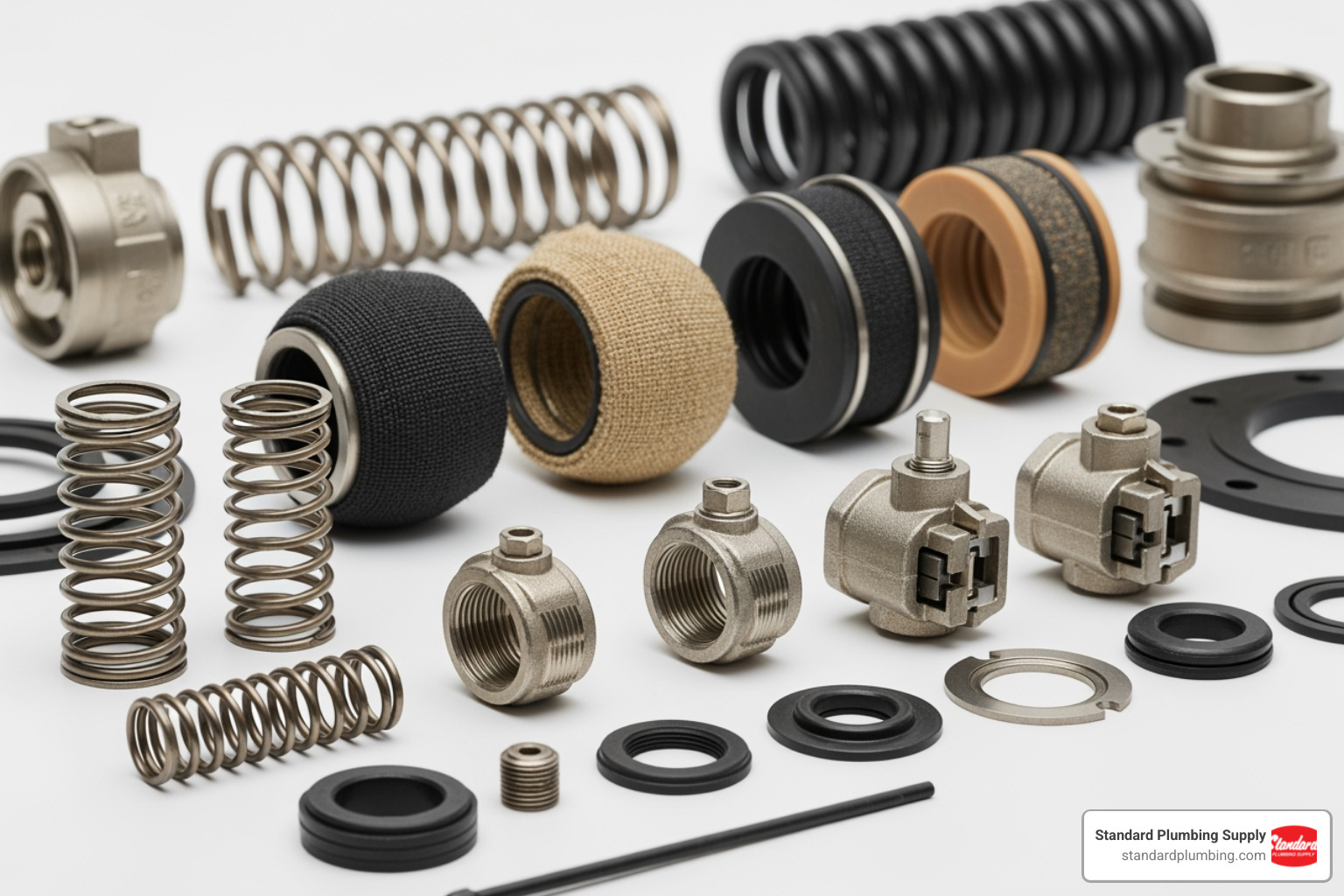
Backflow preventer parts are the essential components that keep your water supply safe from contamination. Whether you’re a professional plumber, facility manager, or DIY homeowner, finding the right parts quickly can mean the difference between a simple repair and a costly emergency.
Top places to buy backflow preventer parts:
- Wholesale plumbing distributors – Best for OEM parts, expert guidance, and deep inventory (like Standard Plumbing Supply)
- Specialized backflow suppliers – Carry extensive repair kits and hard-to-find legacy parts
- Online plumbing retailers – Convenient for common repair kits and standard components
- Big-box home improvement stores – Limited selection, mainly for basic residential models
Key considerations when buying:
- OEM vs. aftermarket – Original equipment manufacturer parts ensure proper function and maintain certifications
- Model compatibility – Each backflow preventer model requires specific parts (check your data plate)
- Local availability – Having a nearby supplier means faster repairs and less downtime
Backflow preventers are health safety valves that must work reliably. As one major distributor notes, “If it seems cheap, and too good to be true, it probably is” when it comes to replacement parts. Using non-OEM parts can affect performance and even void your assembly’s approval.
The most common parts you’ll need include rubber repair kits (O-rings, seals, gaskets), check valve assemblies (poppets, springs, seats), and relief valve components. Larger assemblies may also need check covers, retaining bolts, or complete bonnet kits.
I’m Jacob Reese, Vice President of Standard Plumbing Supply, where I’ve worked in nearly every role since I was eight years old, learning the plumbing industry from the ground up. Through decades of hands-on experience, I’ve helped countless contractors and facility managers source the right backflow preventer parts to keep their systems compliant and their water safe.
If you are working near the Wasatch Front or anywhere along the I-15 corridor, it is especially important to have a dependable local source for backflow parts. Standard Plumbing Supply operates multiple branches throughout Utah, including in and around Salt Lake City, so you can quickly get the OEM kits and assemblies you need.
Easy backflow preventer parts glossary:
Understanding the Anatomy: A Breakdown of Key Backflow Preventer Parts
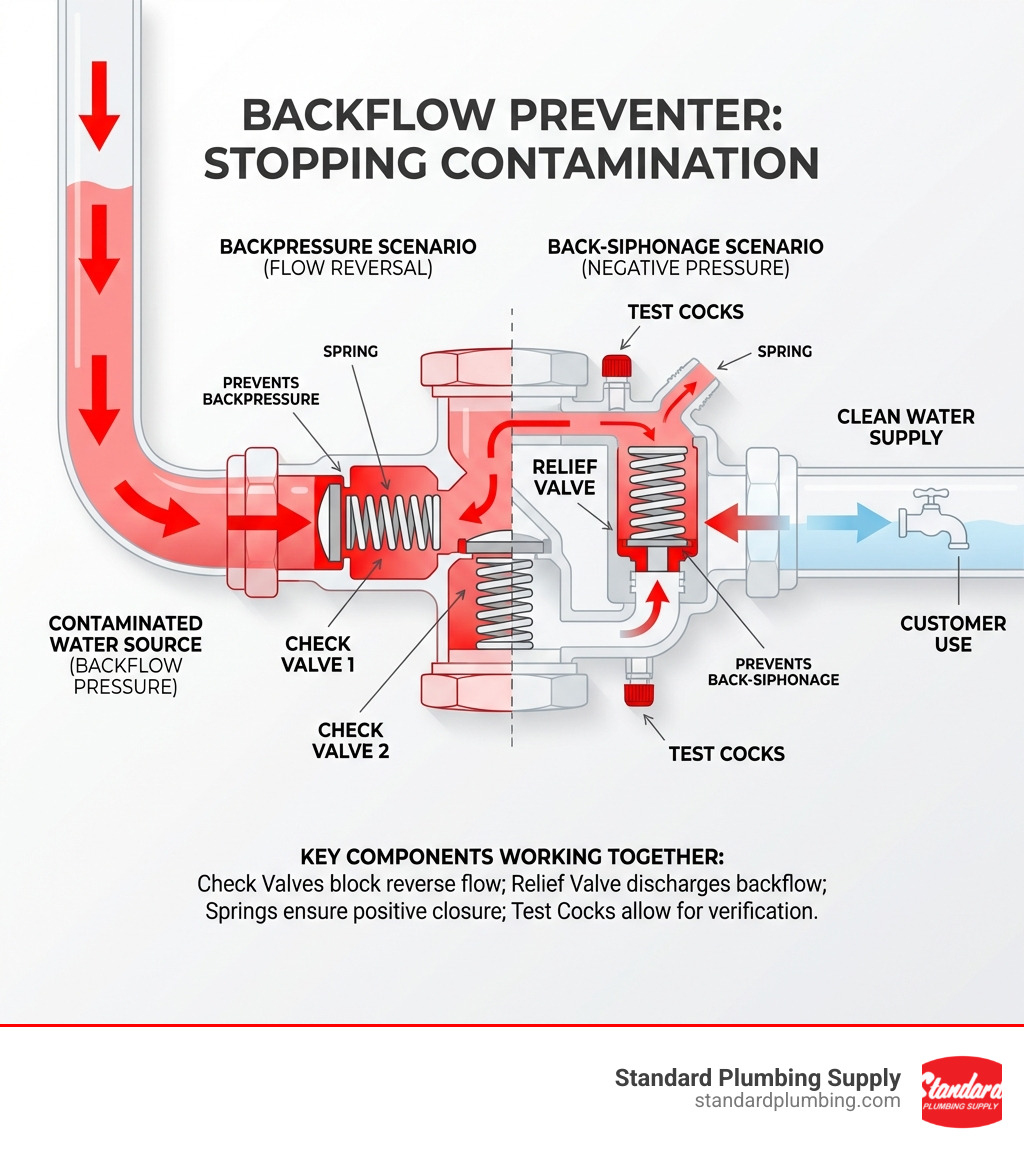
Backflow preventers are ingenious devices designed to protect our potable water supply from contamination. They achieve this by preventing water from flowing backward (backflow) into the clean water lines. This can happen due to two main reasons: back-siphonage (a drop in supply pressure creating a vacuum) or backpressure (downstream pressure exceeding supply pressure). To combat these threats, backflow preventers rely on a complex interplay of various backflow preventer parts.
The main types of backflow preventer parts available fall into several categories, each playing a crucial role:
- Check Valves: These are the heart of a backflow preventer. They allow water to flow in one direction only. Most backflow assemblies use one or two check valves, often with internal components like rubber discs, poppets, and springs.
- Relief Valves: Found in Reduced Pressure Zone (RPZ) assemblies, these valves automatically open to vent water to the atmosphere when a pressure differential indicates a potential backflow condition, preventing contaminated water from entering the supply.
- O-rings and Gaskets: These flexible rubber seals are vital for maintaining a watertight seal between different components, preventing leaks and ensuring proper pressure retention within the device.
- Springs: Often made of stainless steel, springs provide the necessary tension for check valves and relief valves to operate correctly, holding them in their default (closed or open) positions until pressure changes occur.
- Poppets: These are the moving elements within a check valve that seat against an opening to stop water flow. They are typically made of rubber or plastic and are crucial for the sealing function.
- Test Cocks: Small valves strategically placed on the backflow preventer, these allow certified testers to connect a test kit and accurately measure pressure differentials to ensure the device is functioning correctly.
- Shut-off Valves: Located at the inlet and outlet of the backflow preventer, these allow the device to be isolated from the water supply for maintenance, testing, or repair.
- Bonnet Assemblies: These are the covers that house the internal components of check valves or relief valves, protecting them and allowing access for servicing.
Each of these components is carefully engineered to work in harmony, forming a robust defense against water contamination. When one of these backflow preventer parts begins to wear, the integrity of the entire system is at risk.
The Role of Different Repair Kits
When it comes to maintaining backflow preventers, repair kits are our best friends. Instead of replacing the entire, often costly, backflow assembly, we can often restore its functionality by replacing specific worn-out components using these kits. Understanding the different types is key to efficient maintenance:
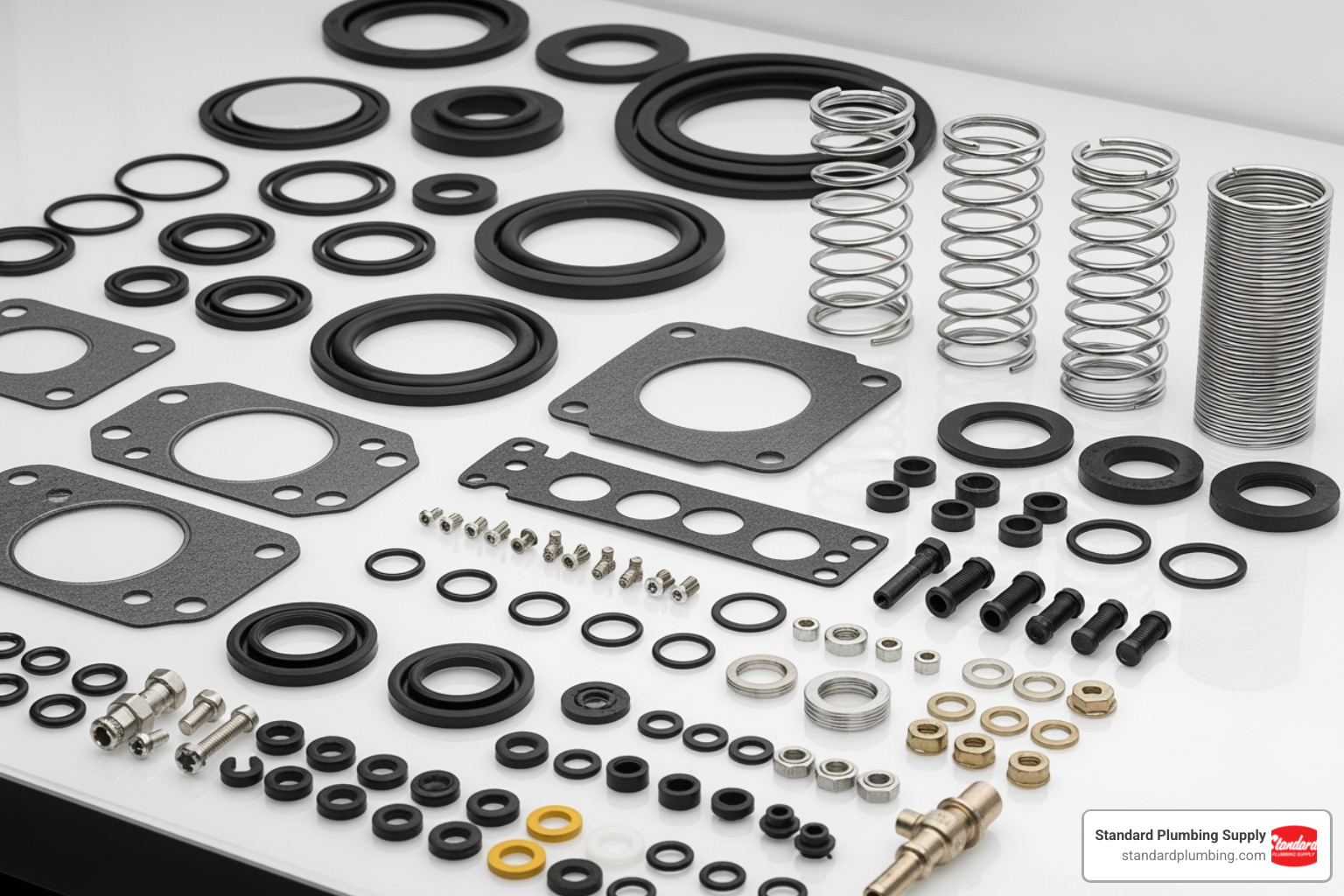
- Rubber Kits: These are arguably the most frequently used. They typically contain all the rubber components within a specific section of the backflow preventer, such as O-rings, disc rubbers, and gaskets. Rubber, being a flexible material, is prone to wear, hardening, or tearing over time due to water chemistry, temperature fluctuations, and operational stresses. Replacing these small parts can often resolve leaks and restore proper sealing.
- Check Kits: These kits usually include the entire internal check assembly for one or both checks. This means you’ll find the disc holder, disc rubber, and spring, sometimes even the entire poppet assembly. These are crucial when the check valve itself is failing to hold pressure or is chattering.
- Bonnet Kits: A bonnet kit typically contains the bonnet assembly and its associated O-rings or seals. These are used when the bonnet itself is damaged or leaking, or when deeper access to the internal components is required.
- Complete Repair Kits: As the name suggests, these are comprehensive and include all the necessary backflow preventer parts for a full overhaul of a specific section or even the entire device. For instance, a repair kit for a Zurn 375 Series might include check and relief components, while a Watts repair kit for a 009 Reduced Pressure Zone Assembly would contain all elements for its checks and relief valve.
- Seal Kits: These are similar to rubber kits but might be more specialized, focusing on specific seals for relief valves or other delicate areas.
The benefits of using these repair kits are significant. They promote maintenance efficiency by providing all necessary backflow preventer parts in one package, reducing the time spent identifying individual components. This also leads to cost-effectiveness, as replacing a few worn parts is far more economical than replacing an entire backflow assembly.
A list of components typically found in a complete repair kit might include:
- Check discs or disc rubbers
- Check springs
- Relief valve diaphragm or disc
- Relief valve spring
- O-rings for bonnets, seats, and stems
- Gaskets for covers
- Lubricant (silicone grease)
- Sometimes, even new test cocks or seats
Why You Need Specific Backflow Preventer Parts for Your Model
You wouldn’t put a square peg in a round hole, and the same principle applies to backflow preventer parts. Model compatibility is paramount. Each backflow preventer, whether it’s a Reduced Pressure Zone (RPZ), Double Check Valve Assembly (DCVA), Pressure Vacuum Breaker (PVB), or Atmospheric Vacuum Breaker (AVB), is engineered with precise tolerances and unique internal designs.
For example, a Febco poppet assembly for their 1″ 710 Series Atmospheric Vacuum Breaker is specifically designed for that model and size. You can’t use it in a Watts 009 RPZ or even a different Febco series. The size differences are obvious – a 2-inch part won’t fit a 1-inch assembly. However, less obvious are the series variations and subtle design changes manufacturers make over time. Even within the same brand, a Watts 007 part might not be compatible with a Watts 007M1.
These specific designs ensure performance standards are met and that the device functions exactly as intended to prevent contamination. Manufacturer specifications are not just suggestions; they are critical for maintaining the device’s certification and effectiveness as a health safety valve. Using an incorrect part, even if it seems to fit, can compromise the device’s ability to prevent backflow, leading to potential water contamination and regulatory non-compliance.
At Standard Plumbing Supply, we understand this complexity. That’s why we emphasize the importance of identifying the correct model and series. Our expert guidance is available to help you steer these nuances, ensuring you always get the right part the first time.
The Critical Role of OEM Parts in Maintaining Water Safety
When it comes to backflow preventer parts, the choice between Original Equipment Manufacturer (OEM) parts and aftermarket alternatives is not just a matter of preference—it’s a matter of public health and safety. We cannot stress enough the critical importance of using genuine OEM backflow preventer parts.
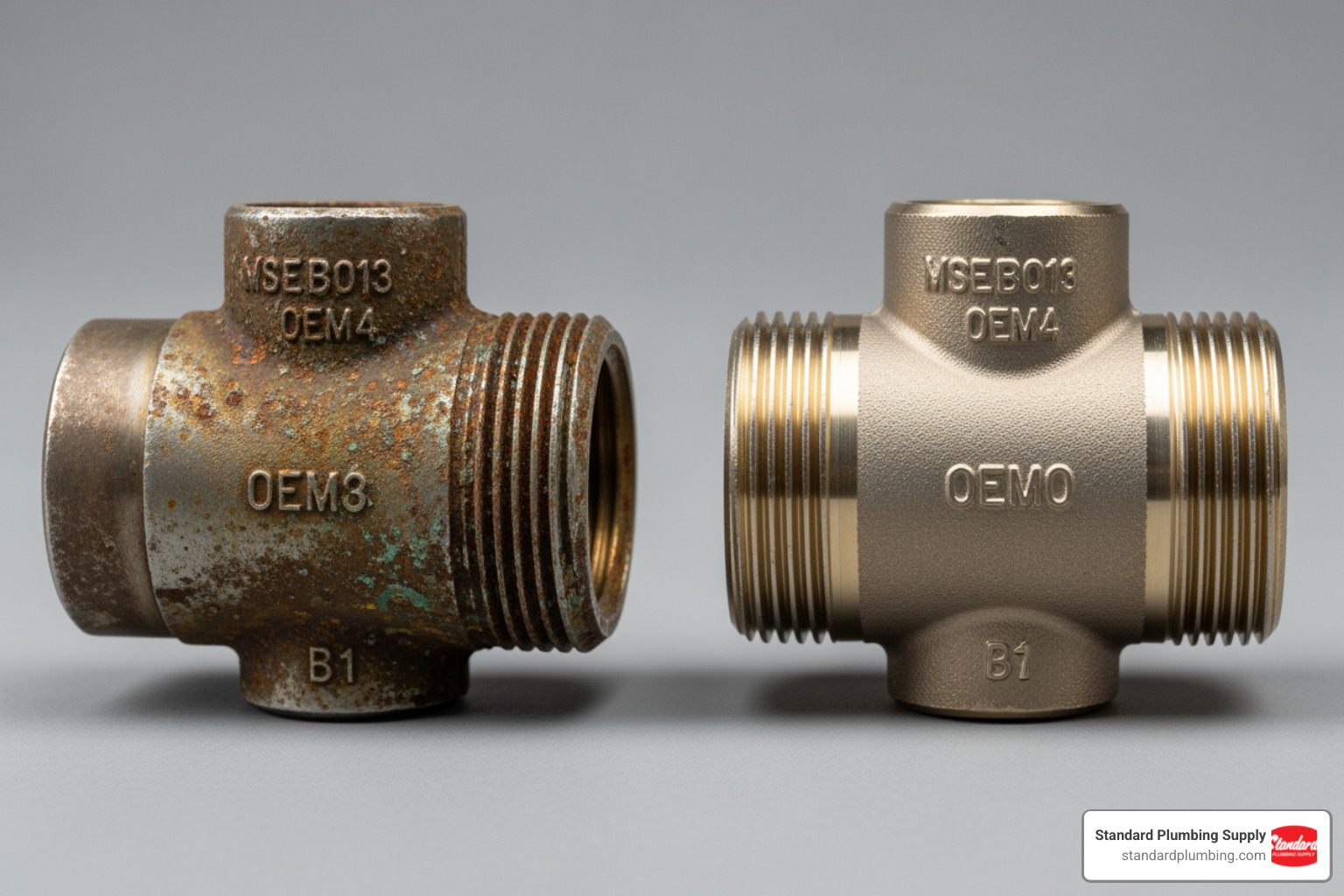
OEM parts are manufactured by the original company that made your backflow preventer assembly. This means they are designed to exact specifications, using the same materials and manufacturing processes as the components originally installed in your device. This ensures:
- Guaranteed Compatibility: OEM parts fit perfectly, eliminating guesswork and potential installation issues. This is especially crucial given the precise engineering of backflow preventers.
- Material Quality: OEM parts are made from high-quality, tested materials that are proven to withstand the specific conditions within your backflow preventer, such as water pressure, temperature, and chemical composition. Aftermarket parts may use inferior materials that degrade faster or fail unexpectedly.
- Reliable Performance: Since backflow prevention assemblies are health safety valves, their reliable performance is non-negotiable. OEM parts ensure the device functions as certified, providing the necessary protection against back-siphonage and backpressure. As one expert source states, using non-OEM parts “will affect the performance of backflow prevention assemblies.”
- Warranty Protection: Using non-OEM parts can often void the manufacturer’s warranty on your backflow preventer, leaving you liable for future repairs.
- Extending Device Lifespan: Quality OEM parts contribute to the overall longevity of your backflow preventer, reducing the frequency of repairs and replacements.
While aftermarket parts might seem like a cost-saving option upfront, the risks associated with compromised water safety, potential regulatory fines, and shorter component lifespan far outweigh any initial savings. When the health of a community’s water supply is at stake, there’s no room for compromise.
Common Issues That Require Quality Repair Parts
Even the most robust backflow preventers require maintenance, and certain issues commonly signal the need for quality backflow preventer parts. Recognizing these signs early can prevent more significant problems and ensure continuous water safety.
Here are some common issues that often lead to the need for repair parts:
- Failed Tests: This is perhaps the most definitive indicator. Annual backflow tests, mandated in many areas we serve like Arizona, California, and Utah, will reveal if the check valves are holding pressure correctly or if the relief valve is opening at the wrong differential. A failed test almost always points to worn internal components.
- Leaks: Visible leaks from the body, bonnets, or test cocks are a clear sign that O-rings, gaskets, or seals have failed. Leaks from the relief valve typically indicate an issue with the relief valve diaphragm, spring, or seat.
- Dripping: A constant drip, especially from the relief valve, suggests that the relief valve components are not seating properly, possibly due to debris, wear, or a faulty spring.
- Chattering Noises: If your backflow preventer makes a chattering or vibrating noise, particularly when water is flowing, it could indicate worn check valve discs or springs that are not seating firmly.
- Low Pressure: While not always directly related to backflow preventer parts, a significant drop in water pressure through the device can sometimes be caused by internal components becoming dislodged or partially obstructed, requiring inspection and repair.
- Water Contamination (Rare but Serious): In the worst-case scenario, if a backflow preventer fails completely and a backflow event occurs, it can lead to water contamination. This is why regular testing and timely repairs with quality parts are so crucial.
The importance of timely repairs cannot be overstated. Addressing these issues promptly with genuine OEM backflow preventer parts sourced from trusted suppliers like Standard Plumbing Supply ensures that the device continues to protect our precious potable water supply effectively.
A Practical Guide to Identifying the Right Backflow Preventer Parts
Identifying the correct backflow preventer parts for your specific device is the most crucial step in any repair. It’s like finding the right key for a lock – without it, you’re stuck! A little detective work can save you a lot of time, money, and frustration.
The first and most important step is to locate the data plate on your backflow preventer. This metal tag, usually attached to the body of the device, holds all the vital information you need. Look for:
- Manufacturer Name: This is usually prominent (e.g., Zurn, Watts, Febco).
- Model Number: This is a specific identifier for the type of backflow preventer (e.g., 975XL, 009, 860).
- Series Number: Sometimes, a model will have different series (e.g., 975XL3 vs. 975XL).
- Pipe Size: Crucial for ensuring the correct dimensions of replacement parts (e.g., 1″, 2″, 4″).
- Production Years: For older or legacy models like the Febco 865 (produced 1978-1997), knowing the production year can help identify specific part revisions.
Once you have this information, you’re well on your way to finding the right backflow preventer parts. If the data plate is missing or unreadable, you might need to take photos of the entire unit and any visible markings, or even measure the pipe size, before consulting with a knowledgeable supplier.
Navigating Different Brands and Series
The backflow prevention market is dominated by several reputable brands, including Zurn, Watts, and Febco. Each brand offers a wide array of models and series, and understanding these distinctions is vital when sourcing backflow preventer parts.
- Zurn Wilkins: Known for models like the 975XL and 375XL series. Their 975XL3, for instance, is highlighted for its compact design and EZSWAP modular check, indicating specialized internal parts.
- Watts: A very common brand, with models such as the 007, 009, 800, and 188A/288A/388T series. Watts parts range widely in price and availability, and specific repair kits are designed for each series.
- Febco: Famous for models like the 710 and 860 series. The Febco 865, an older model, is noted for its glass fiber reinforced nylon body, differing from the bronze 805Y, which means different internal parts.
- Other major brands include Ames, Conbraco-Apollo, Hersey, and Wilkins (now part of Zurn).
Part interchangeability between brands is almost non-existent due to proprietary designs and certifications. Even within the same brand, as mentioned, parts for different series or even different production years of the same model might not be interchangeable. Legacy models often require diligent searching for available parts, although major distributors usually stock components for a wide range of older devices.
Material differences, such as the nylon body of some older Febco models compared to bronze, can also influence the types of backflow preventer parts needed or their durability.
At Standard Plumbing Supply, we pride ourselves on our ability to assist customers in identifying the correct backflow preventer parts for a vast array of models and series. Our knowledgeable staff across our locations in Arizona, California, Colorado, Idaho, Nebraska, Nevada, Oregon, Utah, and Wyoming are ready to help, whether you visit us in-store or reach out online. We stock parts for the brands you trust because we know you need reliable solutions.
What to Look for When Sourcing Backflow Preventer Parts
When you’re in need of backflow preventer parts, choosing the right supplier is almost as important as choosing the right part itself. Here’s what we believe you should look for:
- Large Inventory: A comprehensive inventory means a higher chance of finding the exact part you need, whether it’s a common rubber kit or a specialized check assembly for a specific model. At Standard Plumbing Supply, we strive to offer a similar breadth of selection, with thousands of items in stock.
- Expert Staff: Backflow prevention is a specialized field. Having access to knowledgeable staff who can help identify obscure models, troubleshoot issues, and ensure you’re getting the correct OEM part is invaluable. Our teams are trained to provide this level of expertise.
- OEM Part Distributor: As discussed, genuine OEM parts are critical for performance and safety. A reliable supplier will prioritize and stock original factory repair parts for all major manufacturers.
- Local Availability: Especially for urgent repairs, having a local branch can be a lifesaver. Our extensive network of stores across the Western US, including cities like Salt Lake City, Las Vegas, Phoenix, Boise, and Sacramento, means we’re often just a short drive away. This reduces downtime and gets your system back online faster.
- Online Catalogs and Resources: For convenience, a well-organized online catalog or product listing page allows you to browse and research parts efficiently. Many suppliers also offer reference manuals or technical specifications online, which can be incredibly helpful.
- Commitment to Quality and Service: Look for a supplier that stands behind its products and offers excellent customer service. This includes honoring manufacturer warranties and providing support beyond the sale.
At Standard Plumbing Supply, our commitment is to provide quality backflow preventer parts and unparalleled service. We understand the critical nature of these devices and are dedicated to helping you maintain water safety.
Frequently Asked Questions about Backflow Preventer Parts
We hear a lot of questions about backflow preventers and their components. Here are some of the most common ones we encounter, along with our expert answers.
What are the most common parts that fail in a backflow preventer?
In our experience, the most common backflow preventer parts to fail are those made of flexible materials or those under constant mechanical stress. These include:
- Rubber Components: This is a big one! O-rings, seals, and gaskets are constantly exposed to water, chemicals, and temperature fluctuations, causing them to harden, crack, or swell over time. These are the primary culprits behind leaks and failed tests. Disc rubbers within check valves also fall into this category.
- Springs: The springs in check valves and relief valves are under continuous compression and expansion. Over time, they can lose their tension, corrode, or break, leading to improper valve operation.
- Check Valve Poppets (or Discs): These are the moving parts that seal against the valve seat. They can wear down, become fouled by debris, or warp, preventing a tight seal and causing chattering or backflow.
Regular inspection and timely replacement of these components, often available in convenient repair kits, are key to preventing complete device failure.
How often should I perform maintenance on my backflow preventer?
The golden rule for backflow preventer maintenance is annual testing. Most jurisdictions, including many cities in Utah, Idaho, and California, legally require backflow prevention assemblies to be tested by a certified technician at least once a year. This test verifies that the device is functioning correctly and providing the necessary protection.
Beyond the annual test, we recommend:
- Visual Inspection: Periodically (e.g., quarterly or semi-annually), visually inspect your backflow preventer for any obvious leaks, corrosion, or signs of damage.
- Manufacturer Recommendations: Always refer to the specific manufacturer’s guidelines for your model, as some may have unique maintenance requirements.
- Local Regulations: Always check with your local water authority or plumbing code enforcement. Regulations can vary by city and state, specifying not just testing frequency but also who can perform the tests and repairs.
Proactive maintenance and testing ensure that any failing backflow preventer parts are identified and replaced before they compromise water safety.
Can I use a repair kit from a different brand on my backflow preventer?
Absolutely not! We strongly advise against using a repair kit or any individual backflow preventer parts from a different brand or even a different model/series on your backflow preventer. Here’s why:
- OEM Importance: As we’ve highlighted, backflow preventers are precision-engineered health safety devices. OEM parts are manufactured to exact specifications, ensuring perfect fit, material compatibility, and reliable performance. Aftermarket or “universal” parts rarely meet these stringent requirements.
- Voided Approvals and Warranties: Using non-OEM or incompatible parts can void the device’s critical approvals from organizations like ASSE International, UPC, or others. This means your backflow preventer is no longer certified to protect the water supply, potentially leading to regulatory fines and liability. It will also likely void any manufacturer warranties.
- Performance Issues: An ill-fitting or incorrectly designed part can lead to leaks, improper pressure differentials, chattering, or even complete failure of the backflow prevention function. This puts the potable water supply at risk of contamination.
- Safety Risks: Compromising the integrity of a backflow preventer is a serious safety risk. The device is there to protect against hazardous substances entering our drinking water.
Always, always use genuine OEM backflow preventer parts that are specifically designed for your backflow preventer’s manufacturer, model, and size. If you’re unsure, our expert team at Standard Plumbing Supply is always ready to help you identify the correct parts.
Conclusion
The importance of well-maintained backflow prevention systems and the quality backflow preventer parts that keep them running cannot be overstated. From protecting our potable water supply from dangerous contaminants to ensuring compliance with local health and plumbing codes, these devices are silent guardians of public health.
By understanding the anatomy of these critical components, recognizing the signs of wear, and prioritizing genuine OEM parts, we can all contribute to a safer water future. Proactive maintenance, coupled with the use of quality repair parts, is not just a best practice—it’s an essential responsibility.
At Standard Plumbing Supply, we are committed to being your reliable partner in this endeavor. With our extensive inventory of genuine backflow preventer parts from trusted brands like Zurn, Watts, and Febco, and our team of knowledgeable experts across Arizona, California, Colorado, Idaho, Nebraska, Nevada, Oregon, Utah, and Wyoming, we ensure you have access to the right solutions when you need them most. We’re here to help you keep your water safe, one part at a time.
To get personalized help with backflow preventer parts or to locate the nearest branch, use the Standard Plumbing Supply store locator on our website or call your local SPS store for current hours, inventory, and service options.
