
Understanding the Bathroom Air Fan: More Than Just Odor Control
#
A bathroom air fan is one of the hardest-working fixtures in your home — and one of the most overlooked.
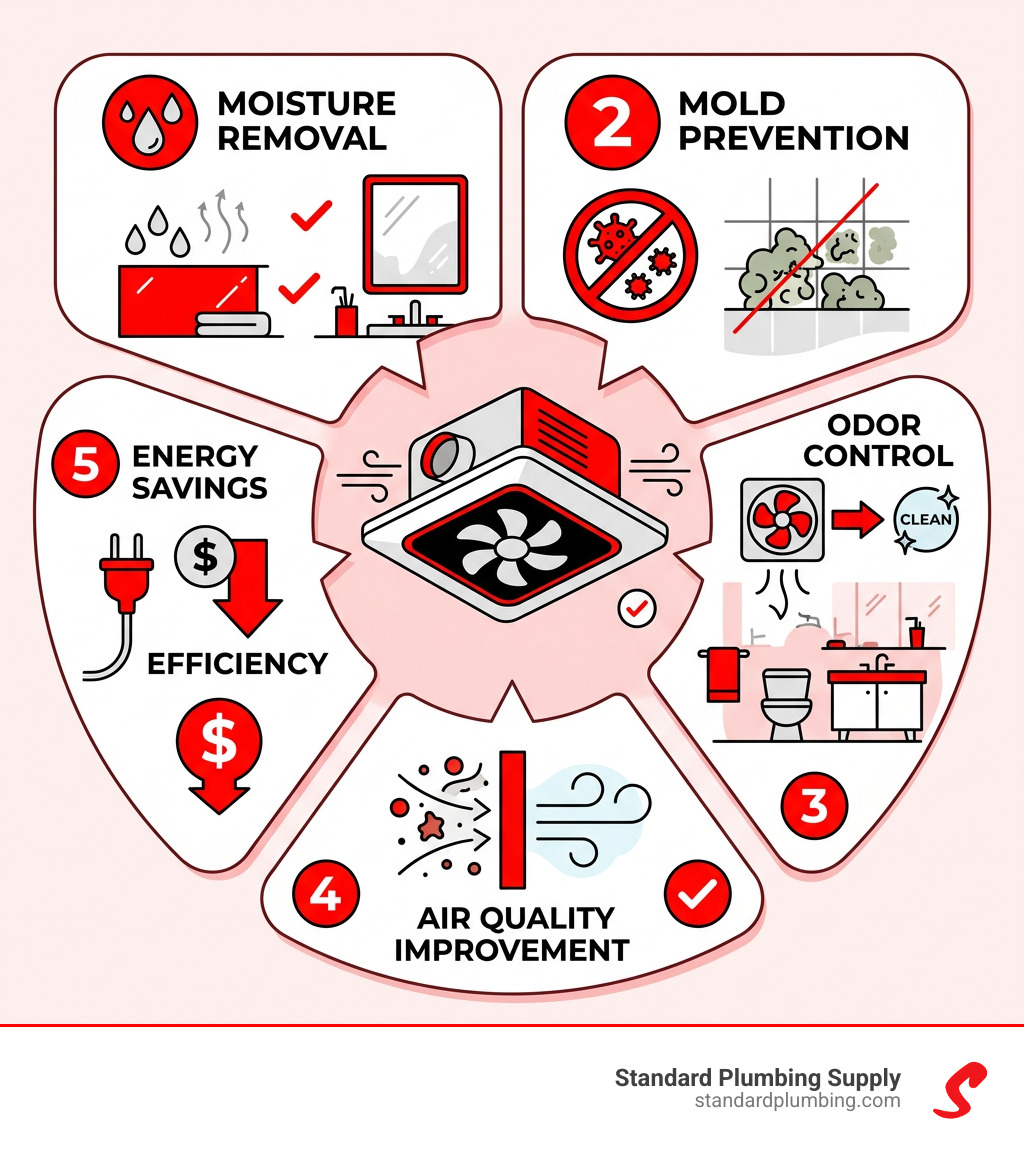
Quick answer: A bathroom exhaust fan removes steam, moisture, odors, and airborne pollutants from your bathroom. It prevents mold growth, protects surfaces, and improves air quality. Here’s what you need to know at a glance:
| What It Does | Why It Matters |
|---|---|
| Removes steam and humidity | Prevents mold, mildew, and bacteria |
| Exhausts odors | Keeps air fresh and breathable |
| Protects surfaces | Stops wood rot, peeling paint, and wallpaper damage |
| Improves air quality | Removes volatile organic compounds (VOCs) |
| Saves energy (ENERGY STAR models) | Lowers utility bills over time |
Without proper ventilation, a bathroom becomes a breeding ground for moisture damage. Mirrors fog up. Paint peels. Mold quietly spreads behind walls. These aren’t just cosmetic problems — they’re structural and health risks.
The good news? The right exhaust fan solves all of it.
I’m Jacob Reese, Vice President of Standard Plumbing Supply, where I’ve spent my career working alongside contractors and tradespeople who rely on quality ventilation products every day — and choosing the right bathroom air fan is one of the most common questions we help customers answer. Let’s walk through everything you need to know to make a confident decision.
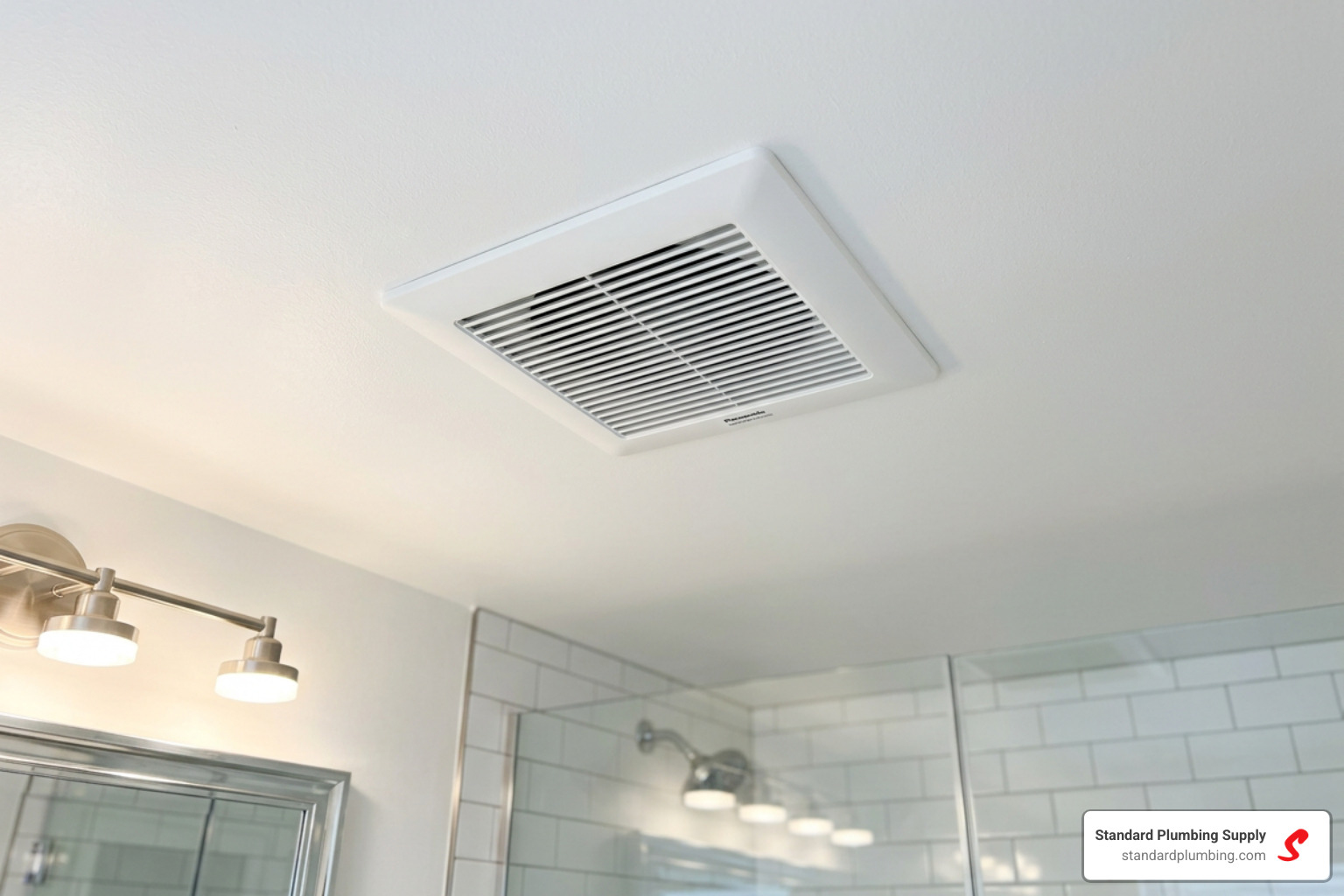
When most people think of a bathroom air fan, they think of it as a way to clear out “bathroom smells.” While odor control is certainly a perk, the primary job of a ventilation fan is moisture extraction. Every time you take a hot shower, you release gallons of water vapor into a relatively small, enclosed space. Without a mechanical way to pull that wet air out, it settles on every surface it can find.
Modern high-performance ventilation systems are designed to move a high volume of air quickly and quietly. By creating a consistent flow of air, these fans pull dampness out of the room and exhaust it safely to the exterior of your home. This process is vital for structural protection; moisture is the natural enemy of drywall, wood framing, and insulation.
Why Ventilation is Essential
High humidity levels are more than just uncomfortable; they are an invitation for trouble. When steam lingers, it creates the perfect environment for bacteria and mold growth. You might notice black spots appearing on your grout or ceiling — that is a clear sign your current fan isn’t doing its job.
Beyond biology, excess moisture causes physical damage. We often see bathrooms where the wallpaper is peeling at the seams or the wooden vanity is starting to warp and rot. Even something as simple as persistent mirror fogging is a symptom of poor airflow that, over time, can lead to expensive home repairs.
How Exhaust Fans Improve Air Quality
A bathroom air fan also acts as a lung for your bathroom. It facilitates a fresh air exchange, removing not just odors but also volatile organic compounds (VOCs) from cleaning chemicals and hairsprays. This is particularly important for respiratory health. If you have family members with asthma or allergies, a high-quality fan ensures they aren’t breathing in trapped pollutants or mold spores every time they brush their teeth.
How to Size Your Fan: CFM and Sone Ratings Explained
One of the biggest mistakes we see at Standard Plumbing Supply is homeowners choosing a fan based on the price tag rather than the performance specs. To get the results you want, you need to understand two key numbers: CFM and Sones.
- CFM (Cubic Feet per Minute): This measures how much air the fan can move.
- Sones: This measures how loud the fan is.
Choosing the Right Bathroom Air Fan for Your Space
The industry rule of thumb is simple: you need at least 1 CFM per square foot of bathroom area. For example, if your bathroom is 8 feet by 10 feet (80 square feet), you need a fan rated for at least 80 CFM.
For small bathrooms under 50 square feet, a standard 50 CFM fan is usually sufficient. However, for master suites or bathrooms with high ceilings, you may need a more powerful unit, such as the Invent Series Single Speed Fan 80 CFM, which provides efficient airflow for mid-sized rooms while maintaining an ENERGY STAR qualification. If your bathroom is extra-large (over 150 square feet), we often recommend installing multiple fans or a single high-capacity unit to ensure no “dead zones” of trapped moisture remain.
Understanding Sone Ratings for Quiet Operation
In the past, bathroom fans sounded like jet engines. Today, motor quality has improved so much that some fans are nearly silent.
- Ultra-quiet models (0.3 to 0.8 sones): These are so quiet you might forget they are on.
- Moderate noise (1.5 to 2.5 sones): Similar to the hum of a modern refrigerator.
- Loud fans (3.0+ sones): These are generally older or budget models that can be heard through closed doors.
If you value a peaceful, spa-like atmosphere, investing in a fan with a lower sone rating is worth every penny.
Advanced Features: From Humidity Sensors to LED Lighting
The modern bathroom air fan has evolved into a multi-functional smart device. You are no longer limited to a basic plastic box that spins.
Smart Technology in a Modern Bathroom Air Fan
One of the most popular upgrades we sell is the humidity-sensing fan. Using technologies like Sensaire, these fans automatically detect when moisture levels rise and turn themselves on. This is a lifesaver for kids’ bathrooms or for those of us who forget to flip the switch before hopping in the shower.
Other advanced features include:
- Motion Sensors: Turns the light or fan on the moment you walk in.
- Automatic Timers: Ensures the fan runs for the recommended 20 minutes after a shower to fully clear the air, then shuts off to save power.
- Bluetooth Speakers: For those who like to listen to the news or music while getting ready.
- Dimmable LED Lighting: Like the 80cfm Fan Dimmable LED Light, which combines high-efficiency ventilation with customizable illumination.
Energy Efficiency and Cost Savings
Choosing an ENERGY STAR certified fan isn’t just good for the planet; it’s good for your wallet. These models often feature brushless DC motors, which are significantly more efficient than traditional AC motors. In fact, some energy-efficient ventilation models use up to 70% less energy than standard fans. Over the life of the fan, these savings on your utility bills can actually pay for the unit itself. Plus, DC motors tend to run cooler and last longer, providing better long-term durability.
Installation and Maintenance for Long-Term Performance
Whether you are a seasoned DIYer or hiring a pro, the installation method matters. If you are replacing an old fan, look for “remodel” or “roomside installation” models.
DIY Installation Tips and Troubleshooting
In the past, you often needed attic access to install a fan. Today, innovations like the Flex-Z Fast bracket and articulating joints allow you to install the entire unit from the roomside (below the ceiling). This eliminates the need to crawl through insulation in a hot attic.
Pro-Tips for Installation:
- Duct Sizing: Ensure your ductwork matches the fan’s outlet (usually 4 or 6 inches). Using a duct that is too small will make the fan louder and less effective.
- Shortest Path: Run the duct as straight as possible to the outside wall or roof. Every bend in the duct reduces airflow.
- Backdraft Dampers: Ensure your fan has a functioning damper to prevent cold outdoor air from blowing back into your bathroom.
Maintenance for Optimal Airflow
A bathroom air fan is “out of sight, out of mind” until it stops working. To keep it performing optimally, we recommend a simple maintenance routine:
- Clean the Grille: Every six months, pull the cover down and vacuum away the dust.
- Check for Blockages: Ensure the exterior roof cap or wall vent isn’t blocked by bird nests or debris.
- Motor Care: If the fan starts making a grinding noise, the motor may need cleaning or replacement.
A clogged fan is a fire safety risk. Dust buildup can cause the motor to overheat, so keeping it clean is essential for home safety.
Frequently Asked Questions about Bathroom Ventilation
How do I calculate the CFM for my bathroom?
Measure the length and width of your room. Multiply them to get the square footage (e.g., 10′ x 10′ = 100 sq. ft.). You need 1 CFM for every square foot, so a 100 sq. ft. bathroom needs a 100 CFM fan. If you have a separate toilet room or a very high ceiling, you may want to add an extra 20-30 CFM to your total.
What is the quietest sone rating available?
The quietest fans on the market today are rated at 0.3 sones. At this level, the fan is virtually inaudible. For context, a rating of 1.0 sones is roughly equivalent to the sound of a quiet whisper.
Can I install a bathroom fan without attic access?
Yes! Look for fans labeled “Roomside Installation” or “Remodel Fans.” These are designed with special brackets and detachable adapters that allow you to do all the wiring and duct connections from inside the bathroom.
Conclusion
At Standard Plumbing Supply, we’ve seen how a simple upgrade to a quality bathroom air fan can transform a home. It’s not just about a clear mirror — it’s about protecting your investment, preventing mold, and ensuring your family breathes clean air. Whether you’re in Utah, Arizona, Idaho, or any of our other Western locations, our team is here to help you find the professional-grade hardware you need.
Ready to clear the air? Browse our full selection of bathroom ventilation solutions or visit one of our stores to speak with an expert today. Your bathroom — and your lungs — will thank you!
