
Why a 55-Gallon Water Heater Is a Smart Investment for Your Home
A 55 gallon water heater is the ideal choice for households of 3-5 people who need consistent, reliable hot water throughout the day. Here’s what you need to know before buying:
Quick Buying Guide for 55-Gallon Water Heaters:
- Best for: Households with 3-5 people
- First-Hour Rating (FHR): Typically 72-120 gallons depending on model
- Types Available: Electric (4,500W-5,500W) or Gas (45,000-50,000 BTU)
- Energy Efficiency (UEF): Electric models: 0.93-0.94, Gas models: 0.69
- Warranty Options: 6-year, 9-year, 12-year, or lifetime coverage
- Dimensions: Standard 56.5″ height x 24″ diameter
- Price Range: $749-$1,886 for individual units
When you’re choosing a water heater, size matters more than you might think. Too small, and you’ll run out of hot water mid-shower. Too large, and you’re paying to heat water you’ll never use. A 55-gallon capacity hits the sweet spot for most medium to large households, providing enough hot water for back-to-back showers, laundry, and dishes without the inefficiency of oversizing.
The key metric you need to understand is the First-Hour Rating (FHR), which tells you how many gallons of hot water the heater can deliver in one hour starting with a full tank. For example, many 55-gallon electric models deliver a 72-gallon FHR, while some gas models can reach 120 gallons. This means a family of four can typically enjoy 2-3 consecutive showers without running out of hot water.
Modern 55-gallon water heaters come packed with features that weren’t available even a few years ago. Smart technology with leak detection and WiFi control, self-cleaning systems that reduce sediment buildup, and Ultra Low NOx (ULN) technology for gas models that reduces emissions. Whether you choose electric or gas depends on your home’s infrastructure, energy costs in your area, and personal preferences.
I’m Jacob Reese, Vice President of Standard Plumbing Supply, and over my years in the plumbing industry—starting from sweeping warehouses at age eight to now leading our Vendor Managed Inventory program—I’ve helped thousands of contractors and homeowners select the right 55 gallon water heater for their specific needs. In this guide, I’ll walk you through everything you need to know to make a confident purchase decision.
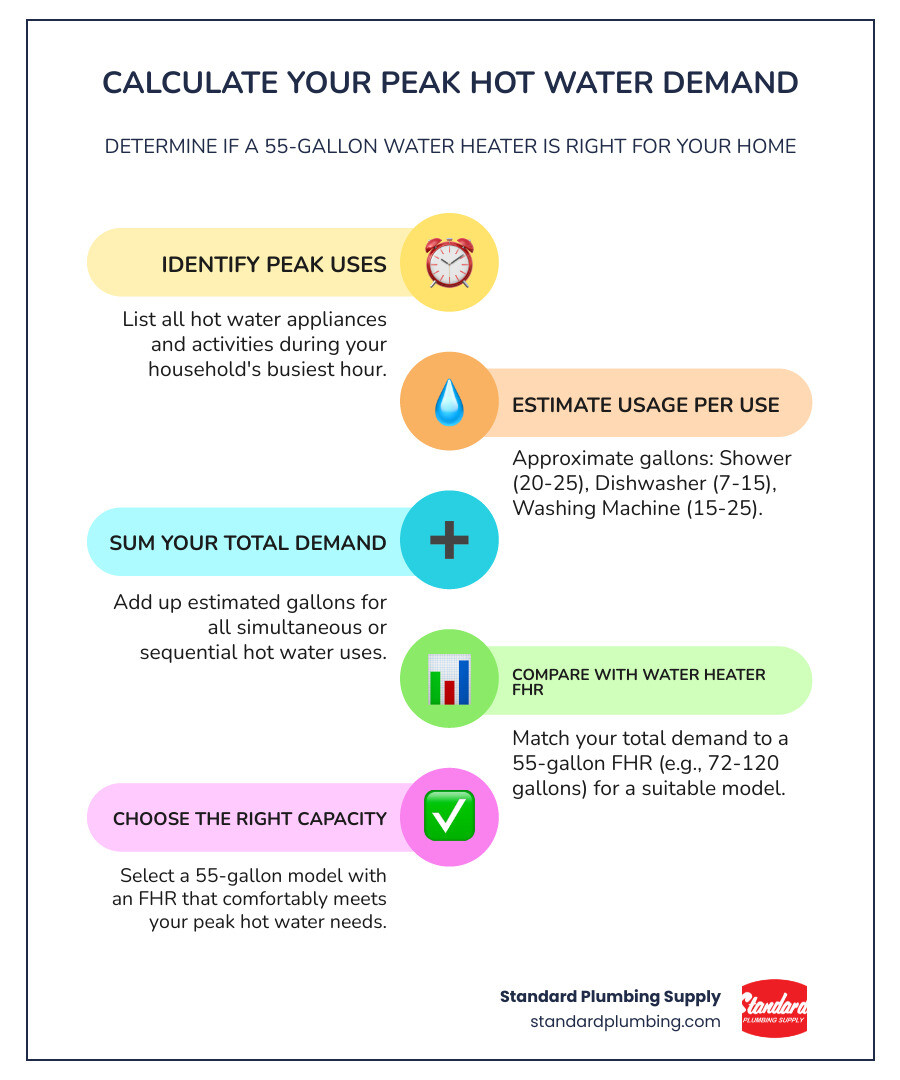
55 gallon water heater terms at a glance:
Is a 55-Gallon Water Heater Right for Your Home?
Choosing the right size water heater is crucial. For most households of 3-5 people, a 55 gallon water heater is the perfect fit. Our experience shows a 55-gallon tank is ideal for meeting daily hot water demands. For instance, the A. O. Smith Signature 55 Gallon Tall Electric Water Heater is designed for 3-4 people, while the Bradford White RG1PV55H6N is suitable for 3-5 people.
Why is this capacity so often recommended? It all comes down to hot water demand and peak hour usage. Imagine a busy morning in your home in Las Vegas, Nevada, or Boise, Idaho. Multiple family members might be showering, the dishwasher could be running, and maybe someone’s even doing a load of laundry. A smaller 40-gallon tank might struggle to keep up, leaving you with a chilly surprise. However, a 55-gallon unit is designed to handle these simultaneous demands without breaking a sweat, or rather, without running out of hot water!
When comparing a 40-gallon vs. a 55-gallon water heater, the extra 15 gallons in a 55-gallon unit can make a significant difference in your family’s comfort. While a 40-gallon tank might suffice for 1-2 people, once you hit 3 or more, especially with teenagers who love long showers, that additional capacity becomes a necessity. It ensures that everyone gets a hot shower and your appliances have the hot water they need, even during those high-demand times.
Sizing Your Water Heater Correctly
To truly determine if a 55 gallon water heater is the right size for your household, we need to look beyond just the tank capacity. Key metrics like First-Hour Rating (FHR), Gallons Per Minute (GPM), and temperature rise are crucial. For tank water heaters, FHR is our guiding star, telling us how much hot water the unit can deliver in an hour, starting with a full tank. On the other hand, for tankless (or demand-type) water heaters, we focus on GPM, which indicates how much hot water it can supply continuously.
Temperature rise is another important factor, especially for tankless heaters. This is the difference between your incoming cold water temperature and your desired hot water temperature. For most uses, we aim for an output of around 120 degrees F, and if your incoming water is typically 50 degrees F (common in many of our service areas like Wyoming or Oregon), you’ll need a water heater capable of a 70-degree F temperature rise.
To calculate your household’s specific needs, we recommend using a simple worksheet. Consider activities like showering (a typical shower uses about 2 gallons per minute, or 20 gallons per use), running a front-loading washing machine (around 10 gallons per load) or an agitator top-loader (about 20 gallons per load), and using the dishwasher (around 7 gallons per use). By tallying up your peak hour usage, you can determine the FHR you’ll need. The U.S. Department of Energy’s Energy Saver website offers excellent resources on [sizing a new water heater](https://www.energy.gov/energysaver/sizing-new-water-heater#:~:text=A%20small%20(50%2D%20to%2060,for%20three%20to%20four%20people.) that we often refer our customers to.
Benefits of a 55-Gallon Capacity
The primary benefit of a 55 gallon water heater is the ample hot water supply it provides. For families in places like Salt Lake City, Utah, or Sacramento, California, with busy mornings and evenings, this means no more waiting for the water to heat up between showers. You can enjoy multiple simultaneous uses, such as someone showering while the dishwasher is running and another person washing their hands. This significantly reduces the risk of running out of hot water, which, let’s be honest, can be a major household crisis!
Beyond showers and everyday appliances, a 55-gallon capacity is also ideal for homes with larger bathtubs. For example, some 55-gallon models can handle filling a tub up to 53 gallons, ensuring a luxurious bath experience without the worry of the water turning cold before the tub is full. It’s about comfort, convenience, and ensuring your home’s plumbing system can keep up with your family’s lifestyle.
Key Metrics: Understanding FHR, UEF, and Energy Costs
Beyond tank size, key metrics determine a 55 gallon water heater‘s performance. First-Hour Rating (FHR), Uniform Energy Factor (UEF), and annual energy costs—all found on the EnergyGuide label—provide a clear picture of a unit’s performance and efficiency.
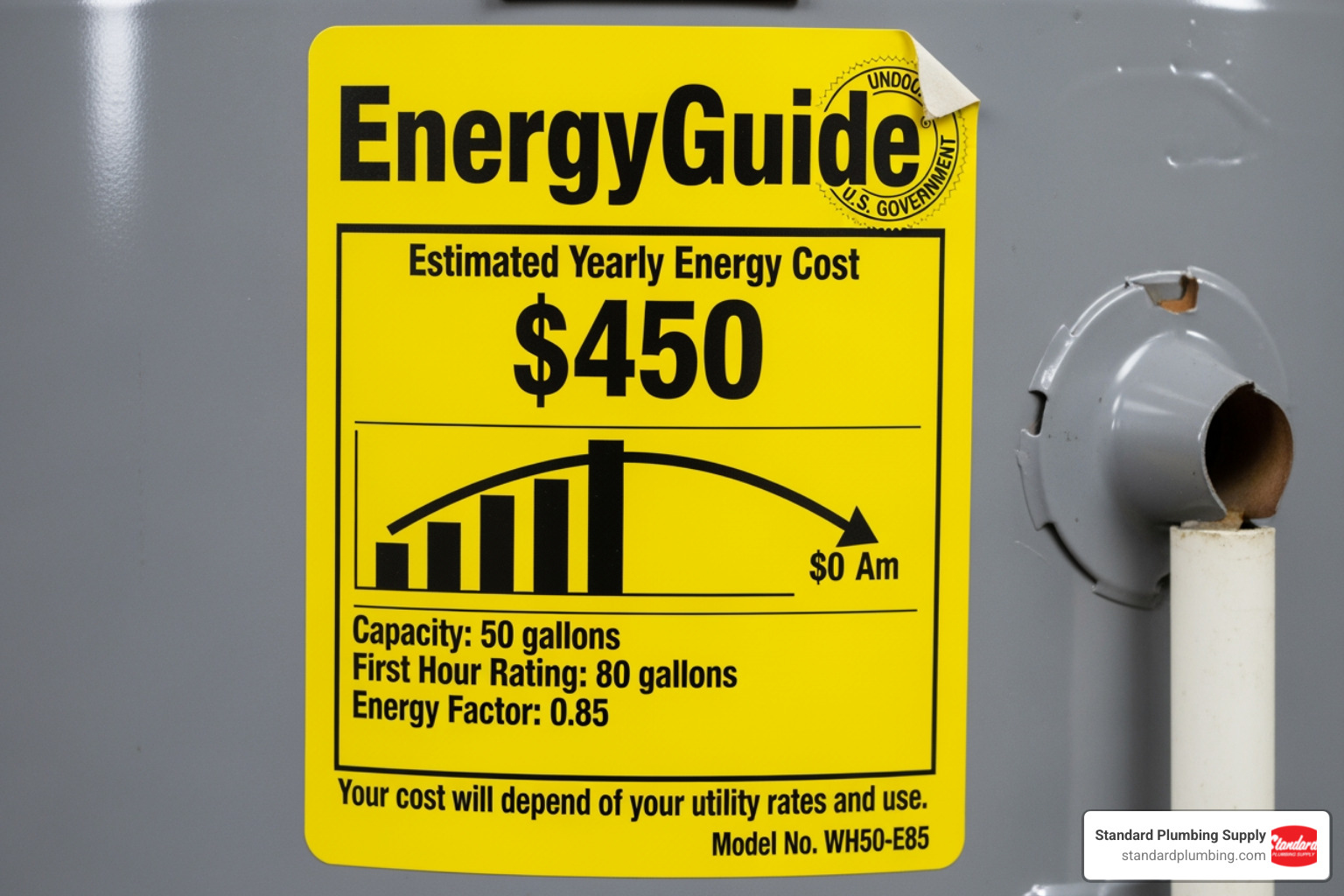
The EnergyGuide label, mandated by the Federal Trade Commission for all new conventional storage water heaters, is your go-to source for understanding these vital statistics. It helps us compare electric and gas efficiency, understand BTU ratings for gas models, and wattage for electric units.
What is First-Hour Rating (FHR)?
The First-Hour Rating (FHR) is arguably the most critical performance metric for a tank water heater. It tells us the number of gallons of hot water the heater can deliver in an hour, starting with a full tank of hot water. Think of it as a water heater’s sprint capacity! This rating is crucial because it directly reflects how well the unit can handle your household’s peak demand for hot water.
For a 55 gallon water heater, FHRs can vary significantly depending on whether it’s an electric or gas model, and its heating capabilities. For example, many electric 55-gallon models, like the A. O. Smith Signature and ProLine, boast a first-hour delivery of 72 gallons. This means they can provide 72 gallons of hot water in that initial hour. On the other hand, some high-performance gas models, such as the Bradford White RG1PV55H6N, can achieve an impressive FHR of approximately 120 gallons. This higher FHR means a gas model can often recover faster and deliver more hot water during periods of heavy use.
Understanding how to use FHR for sizing is vital. The goal is to match your water heater’s FHR to your household’s estimated peak hour demand. If your family typically uses 80 gallons of hot water during your busiest hour, a water heater with a 72-gallon FHR might leave you a bit short, while a 120-gallon FHR would easily cover your needs. The Energy Saver website provides an excellent guide on how to use FHR for sizing that we highly recommend consulting.
Understanding Efficiency with UEF
While FHR tells us how much hot water we can get, the Uniform Energy Factor (UEF) tells us how efficiently the water heater converts energy into hot water. UEF is a standardized metric used across the industry, making it easy to compare the energy efficiency of different models. A higher UEF rating indicates greater efficiency, meaning less energy waste and, ultimately, lower utility bills for your home in areas like Phoenix, Arizona, or Carson City, Nevada.
For 55 gallon water heater models, we see a range of UEF ratings. Electric models often lead in efficiency, with many units like the A. O. Smith Signature and ProLine boasting UEFs of 0.93 or 0.94. This means they are highly efficient at heating water. Gas models, while powerful in FHR, generally have slightly lower UEFs due to the nature of combustion heating. For instance, the Bradford White RG1PV55H6N gas model has a 0.69 UEF rating.
The impact of UEF on your utility bills can be substantial over the lifespan of the water heater. While we can’t give an exact figure without knowing your specific energy rates and usage patterns in your area (like Cheyenne, Wyoming, or Denver, Colorado), consider this: a high-efficiency model, even with a slightly higher upfront cost, can save you hundreds of dollars in energy costs over its lifetime. For example, some models have an estimated annual energy cost of around $573, which can be significantly reduced by choosing a unit with a higher UEF. It’s an investment that pays for itself in the long run!
Types of 55-Gallon Water Heaters
When it comes to choosing a 55 gallon water heater, you’ll primarily find two main types: electric and gas. Each has its own set of advantages, ideal for different home setups and energy preferences. Beyond the energy source, we also consider venting systems like power vent and atmospheric vent, and advanced technologies such as Ultra Low NOx (ULN) compliance for gas models.
Electric 55 Gallon Water Heater Models
Electric 55 gallon water heater models are a popular choice, especially in homes where natural gas isn’t readily available or preferred. These units typically feature dual heating elements, which are fantastic for ensuring a consistent and quick recovery of hot water. You’ll commonly find models with two 4,500-watt elements, like the A. O. Smith Signature and ProLine series, or even more powerful 5,500-watt elements in units such as the Rheem Gladiator. These powerful elements ensure your hot water supply is always ready for action.
A crucial consideration for electric models is the electrical connection: they almost always require a 240-volt connection. So, before you fall in love with an electric model, it’s wise to ensure your home’s electrical system can support it. Many modern electric 55-gallon water heaters also come equipped with smart features, adding convenience and peace of mind. Think leak detection systems that can alert you to potential problems before they become major floods, or WiFi control that lets you manage your hot water settings from your smartphone, whether you’re in the living room or away on vacation.
Gas 55 Gallon Water Heater Models
Gas 55 gallon water heater models, typically powered by natural gas, are often favored for their rapid recovery rates and generally lower operating costs in areas where natural gas is affordable, such as many communities we serve across California or Idaho. These units are rated by their BTU (British Thermal Unit) output. For a 55-gallon capacity, you’ll commonly see BTU ratings around 45,000 BTU to 50,000 BTU, like the Rheem Performance 50,000 BTU Natural Gas Water Heater. This high BTU output translates to impressive recovery rates; for instance, the Bradford White RG1PV55H6N boasts a recovery rate of 53 gallons per hour at a 90-degree F rise, meaning it can quickly reheat a substantial amount of water.
Venting is a key difference for gas models. Atmospheric vent models use the natural rise of hot gases to expel exhaust, requiring a vertical chimney. Power vent systems, on the other hand, use a fan to force exhaust gases out, offering much greater installation flexibility. This means they can be vented horizontally or vertically using PVC, ABS, or CPVC pipe, which can be a game-changer if your traditional venting options are limited. This flexibility is a huge plus for homeowners in varied housing types across our service areas.
Many gas models also come with advanced safety systems and compliance features. Look for Ultra Low NOx (ULN) compliant models, such as the Rheem Performance 45,000 BTU Ultra Low NOx (ULN) Natural Gas Water Heater, which are designed to reduce nitrogen oxide emissions, making them more environmentally friendly. Advanced safety systems, like the Bradford White RG1PV55H6N’s Defender Safety System, actively prevent the ignition of flammable vapors outside the heater, providing an extra layer of protection for your home and family.
Top Features to Look for in a 55 Gallon Water Heater
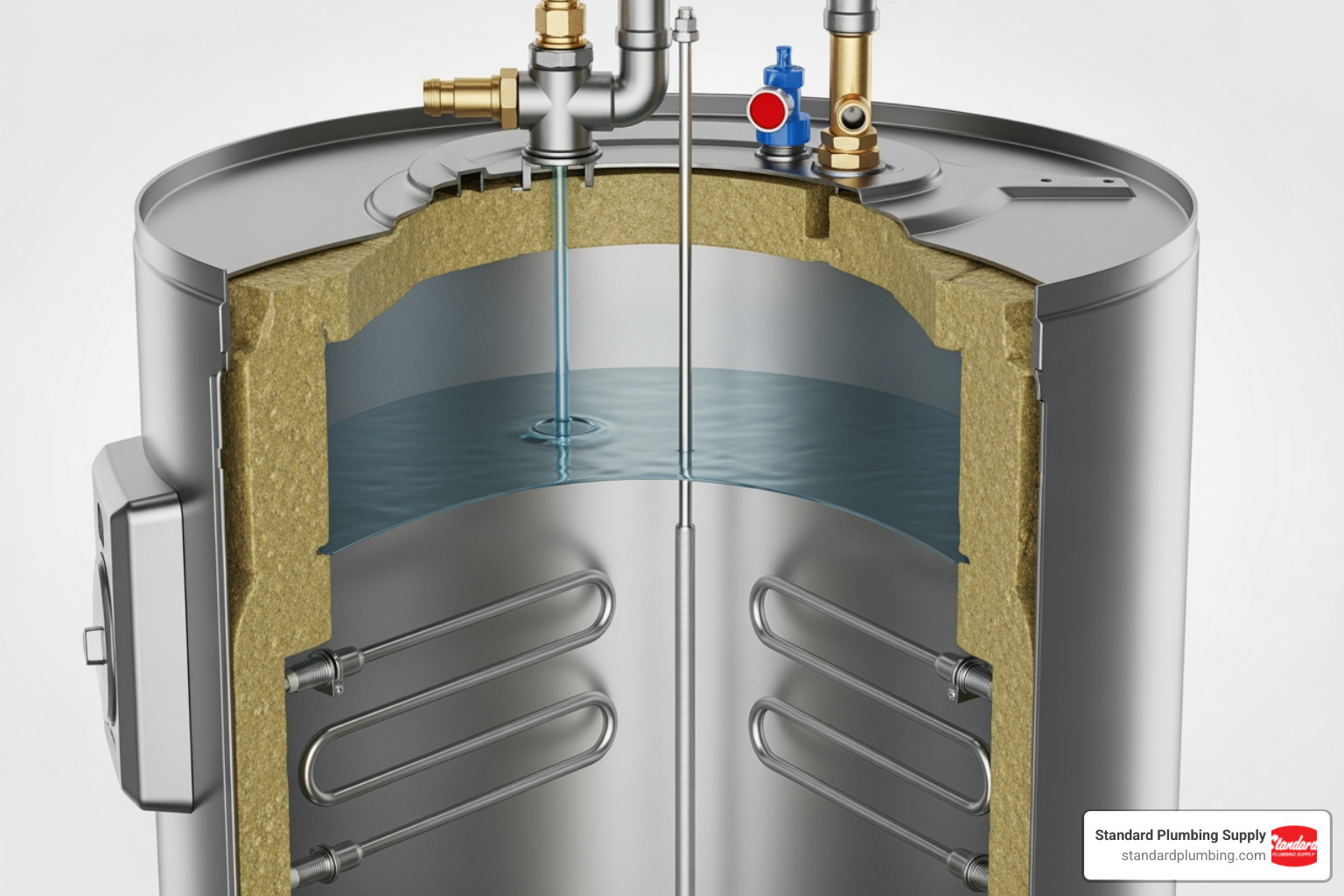
Beyond the basic choice between electric and gas, a 55 gallon water heater comes with a host of features that can significantly impact its performance, durability, and your overall satisfaction. When you’re making this important investment for your home in places like Orem, Utah, or Fresno, California, it’s wise to consider the warranty duration, the materials used in the tank’s construction, the presence and quality of the anode rod, the type of drain valve, the insulation, and any smart technology integration.
Comparing Key Specifications
To help you make an informed decision, let’s look at a quick comparison of key specifications between typical electric and gas 55-gallon models.
| Feature | Electric 55-Gallon Models (e.g., A.O. Smith, Rheem) | Gas 55-Gallon Models (e.g., Bradford White, Rheem) |
|---|---|---|
| First-Hour Rating (FHR) | Typically 72 gallons | Approximately 120 gallons |
| Uniform Energy Factor (UEF) | 0.93 – 0.94 | 0.69 |
| Typical Warranty | 6-12 years (some lifetime) | 6-12 years |
| Key Features | Dual 4500W-5500W elements, Smart features, Leak detection, WiFi control | 45,000-50,000 BTU, Low NOx, Power Vent options, Defender Safety System, Hydrojet |
As you can see, electric models tend to have higher UEF ratings, indicating greater energy efficiency in heating, while gas models often boast higher FHRs, meaning they can deliver more hot water in the first hour due to their faster recovery. The best choice for you will depend on your specific needs, local energy costs, and existing home infrastructure.
Essential Durability and Maintenance Features
We believe a good 55 gallon water heater should be built to last, especially in areas with varying water qualities like we see across Arizona to Wyoming. Look for features that improve durability and simplify maintenance, ensuring your investment serves you well for years to come.
Here’s a list of features that contribute to longevity and ease of maintenance:
- Advanced Tank Linings: Many high-quality tanks feature specialized linings for corrosion resistance. For example, the Bradford White RG1PV55H6N uses a Vitraglas enamel-lined tank, while A. O. Smith ProLine models feature a patented Blue Diamond glass tank lining and a Fused Ceramic Shield. These linings act as a protective barrier against the corrosive effects of water.
- Anode Rod: This often-overlooked component is crucial for tank protection. A heavy-duty anode rod, sometimes with a stainless steel core like in the A. O. Smith models, sacrifices itself to protect the steel tank from corrosion, extending its life.
- Self-Cleaning Systems & Sediment Reduction: Sediment buildup at the bottom of the tank can reduce efficiency and shorten the water heater’s life. Features like the Bradford White’s Hydrojet Total Performance System and A. O. Smith’s DynaClean automatic cleaning system or self-cleaning diffuser dip tube actively work to reduce sediment accumulation.
- Commercial-Grade Components: Some residential units incorporate commercial-grade copper heating elements and durable brass drain valves, which are designed for tougher conditions and offer improved reliability.
- Insulation: High-quality, environmentally-friendly non-CFC polyurethane foam insulation, often combined with heat trap nipples, reduces heat loss, keeping your water hotter for longer and improving efficiency.
Warranty: What to Expect
The warranty offered on a 55 gallon water heater is a strong indicator of the manufacturer’s confidence in their product’s durability. We see a range of warranty periods, and understanding what’s covered is key.
- 6-Year Warranty: This is a common standard, offered on many models like the A. O. Smith Signature and ProLine electric heaters, the Bradford White RG1PV55H6N, and several Rheem Performance gas and electric units. This typically covers the tank and parts.
- 9-Year Warranty: Some models, such as the Rheem Performance Plus Electric, offer an extended 9-year warranty, providing a bit more peace of mind.
- 12-Year Warranty: For those seeking longer protection, 12-year warranties are available on premium models like the Rheem Gladiator Electric and Rheem Performance Platinum Gas water heaters. This often reflects improved tank construction and components.
- Lifetime Warranty: While rare, some specialized models, like the Ariston Suprema Electric Water Heater, offer a lifetime warranty, which is exceptional coverage.
It’s important to distinguish between tank vs. parts coverage and labor warranty. Most warranties cover the tank and major components for the specified period. However, a labor warranty, like the 1-year labor warranty offered on some A. O. Smith ProLine models, is less common but can be very valuable if an issue arises shortly after installation. Always read the fine print to understand the full scope of your warranty.
Installation and Maintenance Essentials
Bringing a new 55 gallon water heater into your home, whether in a busy city like Las Vegas or a quieter community in Wyoming, involves more than just picking a model. Proper installation and ongoing maintenance are crucial for ensuring its efficiency, longevity, and safe operation.
One of the first things to consider is installation space. Newer, more efficient water heaters often come with increased insulation, which can make them slightly wider or taller than older models. While many 55-gallon units share a typical profile of approximately 56.5 inches in height and 24 inches in diameter (like the A. O. Smith Signature and ProLine models), it’s always best to measure your available space before purchasing.
Venting requirements are critical for gas models. Atmospheric vent heaters need a chimney, while power vent models offer flexibility, allowing for horizontal or vertical venting through PVC, ABS, or CPVC pipes. Electric models, of course, have no venting needs but require a dedicated 240-volt electrical connection. All water heaters will also require proper plumbing connections, typically a 3/4-inch water connection size. For detailed guidance on installation, we often refer our customers to resources that provide more info about professional installation.
Installation Checklist
Before you or a professional tackle the installation of your new 55 gallon water heater, here’s a handy checklist:
- Measuring Space: Double-check the height, width, and depth of your installation area. Remember to account for clearance around the unit for maintenance and airflow.
- Checking Connections: Ensure your home has the correct electrical (240V for electric) or gas line connections, and that plumbing lines are in good condition.
- T&P Relief Valve: A temperature and pressure (T&P) relief valve is a critical safety device that prevents excessive pressure buildup. Most units come with a factory-installed T&P valve.
- Expansion Tank: In many locations, an expansion tank is required by code. This device absorbs the expanding water as it heats, preventing stress on your plumbing system.
- Local Building Codes: Always consult local building codes in your area (whether it’s Boise, Idaho, or Carlsbad, California) to ensure compliance. Codes can vary, and adhering to them is essential for safety and inspections.
- Professional Installation Benefits: While some DIY enthusiasts might consider installing a water heater, we strongly recommend professional installation. Our experienced plumbers understand local codes, can handle complex venting or electrical work, and ensure your unit is installed safely and efficiently. This also often preserves your warranty!
Long-Term Maintenance for Efficiency
Once your 55 gallon water heater is installed, a little regular care goes a long way in ensuring its longevity and maintaining its energy efficiency. Think of it like tuning up your car – a small effort now prevents bigger problems later.
Here are some key maintenance tasks:
- Annual Tank Flushing: Sediment buildup at the bottom of the tank can reduce efficiency and lead to premature failure. We recommend flushing the tank annually to remove these mineral deposits. Models with self-cleaning systems like the Hydrojet Total Performance System or DynaClean can help, but a manual flush is still beneficial.
- Anode Rod Inspection: The anode rod is your tank’s sacrificial lamb, corroding itself to protect the tank. Inspect it every 2-3 years (more often in areas with hard water, such as much of Utah or Nevada) and replace it if it’s significantly depleted.
- Checking the T&P Valve: Periodically test the T&P relief valve by carefully lifting and lowering the lever. You should hear a rush of water entering the drainpipe. If no water comes out or it drips continuously, it may need replacement.
- Thermostat Setting: Ensure your thermostat is set to a safe and efficient temperature, typically around 120 degrees F. This prevents scalding and saves energy.
- Sediment Buildup Prevention: If your water heater doesn’t have a self-cleaning system, consider installing a water softener in areas with very hard water to minimize mineral buildup.
By following these simple maintenance steps, you can significantly extend the life of your 55 gallon water heater and keep it running efficiently, providing reliable hot water for your family for many years to come.
Find Your Ideal Water Heater Today
Choosing the right 55 gallon water heater is a significant decision for your home and family. We’ve explored the benefits, key metrics, different types, and essential features to look for, as well as critical installation and maintenance considerations. The goal is to find a model that perfectly balances efficiency and performance for your household’s unique hot water demands, offering long-term value and comfort.
Whether you’re in need of a robust gas water heater with a high FHR for a busy household in Phoenix, Arizona, or an energy-efficient electric model with smart features for your tech-savvy home in Boise, Idaho, we have options to suit your needs.
At Standard Plumbing Supply, we’re dedicated to helping you make the best choice. Our expert team is ready to guide you through the selection process, ensuring you find a 55 gallon water heater that’s not just a purchase, but a smart investment in your home’s comfort and efficiency.
Ready to take the plunge? Explore our full range of Residential Water Heaters today. We look forward to helping you find the perfect fit!
