
Why Choosing the Right Home Drain Cleaner Matters

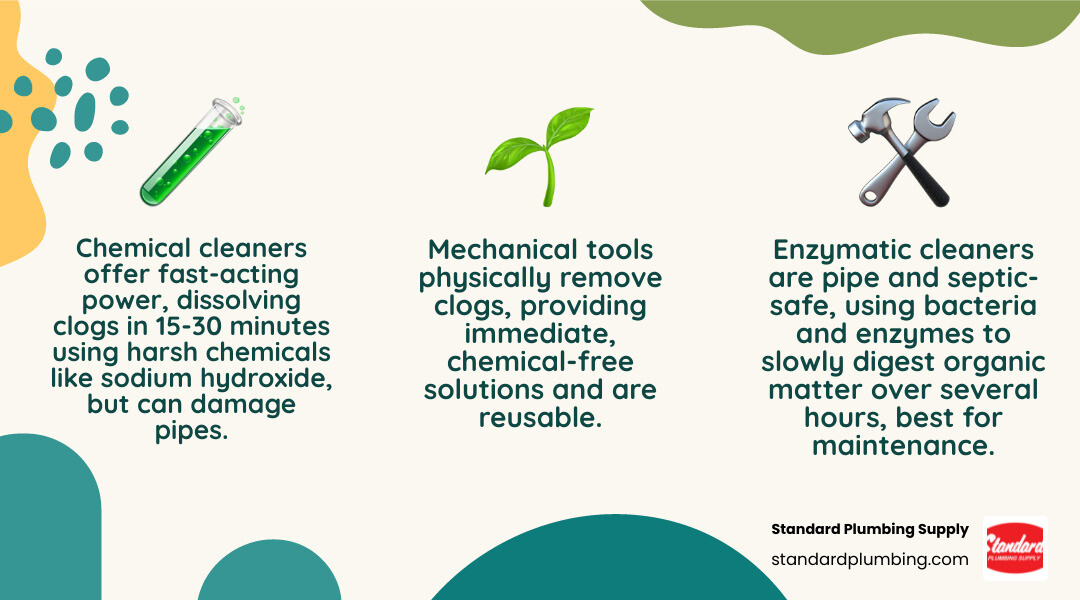
Best home drain cleaners come in three main types, each suited for different clogs:
| Cleaner Type | Best For | Speed | Key Benefit |
|---|---|---|---|
| Chemical | Stubborn hair, grease | 15-30 minutes | Fast-acting power |
| Enzymatic | Maintenance, food waste | Several hours to overnight | Safe for pipes and septic systems |
| Mechanical | All clogs, foreign objects | Immediate (with effort) | No chemicals, reusable |
There’s nothing worse than watching water pool around your ankles in the shower or backing up in your kitchen sink. A clogged drain is frustrating, messy, and can damage your plumbing if left untreated. But with so many drain cleaning products and methods available, how do you know which one will actually work for your specific clog?
The truth is, not all drain cleaners are created equal. Chemical cleaners work fast but can be harsh on older pipes. Enzymatic cleaners are gentler and eco-friendly but take longer to work. Mechanical tools like snakes and augers require elbow grease but offer a chemical-free solution. Choosing the wrong product can waste your time and money—or worse, damage your plumbing system.
Understanding the difference between these options is the first step to clearing your drains quickly and safely.
I’m Jacob Reese, Vice President of Standard Plumbing Supply and a third-generation plumbing professional who has spent decades helping contractors and homeowners find the best home drain cleaner for every situation. From working in our warehouses as a kid to managing our Vendor Managed Inventory program across 60+ locations, I’ve seen what works and what doesn’t when it comes to clearing stubborn clogs.
Understanding the Common Causes of Clogged Drains
Before we dive into solutions, let’s get to the root of the problem: why do drains clog in the first place? Understanding the common culprits will help us choose the right cleaner and, more importantly, prevent future blockages.
Most clogs are caused by a buildup of organic material and debris that gradually narrows your pipes.
- Hair Buildup: This is the most common cause of clogs in bathroom sinks and shower drains. Hair combines with soap scum and other grime to form stubborn blockages. We’ve all seen that slimy, hair-filled mess you pull out of a shower drain – not a pretty sight!
- Grease and Oil: In the kitchen, grease, cooking oils, and fats are major offenders. When poured down the sink, they cool and solidify, clinging to pipe walls and catching other food particles. This creates a sticky, expanding blockage that can be incredibly tough to remove.
- Soap Scum: Made from the fatty acids in soap reacting with minerals in water, soap scum is a sticky residue that coats pipes. It’s not just unsightly in your shower; it’s a prime component of many bathroom clogs, trapping hair and other debris.
- Food Waste: Even with a garbage disposal, small food particles can accumulate in kitchen drains, especially if they’re starchy (like pasta or rice) or fibrous (like fruit and vegetable peels). These can contribute to blockages, particularly when mixed with grease.
- Mineral Buildup: Hard water, common in many areas like Arizona, Utah, and Nevada, contains high levels of minerals like calcium and magnesium. Over time, these minerals can create a hard scale inside pipes, reducing their diameter and making them more prone to catching debris.
- Foreign Objects: Sometimes, clogs are caused by non-dissolvable items accidentally (or intentionally!) dropped down the drain. Toys, jewelry, cotton swabs, or excessive amounts of “flushable” wipes (which often aren’t truly flushable) can create immediate, severe blockages that chemical cleaners can’t touch.
How to Prevent Clogs Before They Start
Prevention is always better than cure, especially when it comes to plumbing. A few simple habits can save you a lot of hassle and expense.

- Use Drain Covers: This is one of the easiest and most effective prevention methods. Place screens or drain covers over all your drains—kitchen, bathroom, and shower—to catch hair, food particles, and other debris before they enter your pipes. We use these in our own homes, and they make a huge difference!
- Clear Hair After Showers: Make it a habit to remove any visible hair from the drain cover after every shower. It takes seconds but prevents significant buildup over time.
- Proper Grease Disposal: Never pour cooking grease, oil, or fat down any drain. Instead, pour it into an old can or a grease jar, let it solidify, and then dispose of it in the trash.
- Avoid Flushing Non-Flushable Items: Only flush human waste and toilet paper. “Flushable” wipes, paper towels, and other hygiene products should always go in the trash.
- Regular Maintenance Cleaning: Even without an active clog, regular maintenance can keep your pipes clear. We’ll discuss drain maintainers later, but a simple hot water flush once a week can help. For kitchen sinks, running hot water for a minute after using the disposal can help clear residual food particles.
- Use a Grease Jar or Container: This tip is worth repeating! Having a dedicated container by your sink makes it easy to properly dispose of grease.
The Main Types of Home Drain Cleaners
When a clog does occur, it’s time to consider your options. There are three primary types of home drain cleaners, each with unique mechanisms, pros, and cons. Knowing these differences is key to making an informed choice that’s safe for your plumbing system.
Chemical Drain Cleaners: The Fast-Acting Solution
Chemical drain cleaners are what most people think of when they picture a “drain cleaner.” They’re designed for speed and power, often working in as little as 15 minutes.
How They Work: These cleaners rely on powerful chemical reactions to break down organic clogs. They generally fall into two categories:
- Caustic Cleaners (Alkaline): These are the most common type. They contain highly alkaline chemicals like sodium hydroxide (lye) or potassium hydroxide. When poured down the drain, they react with the clog, generating heat. This heat helps to melt grease and fat, and the alkaline chemicals “saponify” or turn fats into soap, which can then be flushed away. They also dissolve proteins found in hair and food. Drano Max Gel Drain Clog Remover and Thrift Drain Cleaner are examples of popular caustic formulas.
- Oxidizing Cleaners: These cleaners often contain ingredients like bleach (sodium hypochlorite), peroxides, or nitrates. They work by causing a chemical reaction that oxidizes or breaks down the clog material. This process also generates heat and gas bubbles, which help to dislodge the clog. Liquid-Plumr Pro-Strength Hair Eliminator Gel is an example of an oxidizing cleaner.
Key Ingredients to Look For/Avoid:
- Look for: Sodium hydroxide, potassium hydroxide, sodium hypochlorite. These are the workhorses.
- Avoid: Sulfuric or hydrochloric acid. While extremely powerful, these are highly corrosive and generally reserved for professional use due to their extreme hazards and potential to damage pipes. As chemical engineers have shown in dissolution tests, adding water to sulfuric acid can generate hazardous fumes and heat.
Pros:
- Speed: Many chemical cleaners work quickly, often in 15-30 minutes, like Drano Max Gel.
- Power: Highly effective at dissolving common clogs like hair, grease, and soap scum.
- Convenience: Easy to use – just pour and wait.
Cons:
- Harsh on Pipes: The heat and corrosive nature can be tough on certain pipe materials, especially older, corroded pipes or light-gauge plastic (like some PVC) if left to sit too long.
- Safety Hazards: They are toxic, can cause chemical burns, and release harmful fumes. Never mix different chemical cleaners, as this can create dangerous gases or even an explosion.
- Environmental Impact: Their harsh chemicals can be detrimental to the environment.
Enzymatic Drain Cleaners: The Safer, Greener Choice
Enzymatic drain cleaners offer a gentler, more environmentally friendly alternative to harsh chemicals.
How They Work: Unlike chemical cleaners that use corrosive reactions, enzymatic cleaners use beneficial bacteria and enzymes to digest organic matter. These bacteria produce enzymes that break down proteins, fats, and carbohydrates into smaller, water-soluble substances that can be easily flushed away. Think of them as tiny, hungry clog-eaters!
Pros:
- Pipe Safe: They are non-corrosive and won’t harm any type of pipe material, including PVC and older metal pipes.
- Septic Safe: Enzyme-based formulas are excellent for homes with septic systems, as they replenish beneficial bacteria, aiding in the breakdown of waste in the septic tank.
- Eco-Friendly: They are biodegradable and generally much safer for the environment and household use.
- Odor Control: Many also help eliminate unpleasant drain odors by breaking down the source of the smell.
Cons:
- Slow-Acting: They are not fast-acting solutions for immediate, severe clogs. They often need several hours, or even overnight, to work effectively. Some, like Bio-Clean Drain Treatment, may take up to 5 days for severe clogs.
- Better for Maintenance: While they can clear minor clogs, they are generally more effective as preventative drain maintainers to prevent clogs from forming in the first place.
- Specific Clog Types: Primarily effective on organic clogs (hair, grease, food waste) and less so on inorganic blockages or foreign objects.
Organic Materials Enzymatic Cleaners Can Break Down:
- Hair (proteins)
- Grease and Oils (fats)
- Food particles (carbohydrates, proteins, fats)
- Soap scum
- Toilet paper and other paper products
Popular choices in this category include Green Gobbler Enzyme Drain Cleaner and Bio-Clean Drain Treatment.
Mechanical Tools: The Chemical-Free Alternative
Sometimes, the simplest solution is the best. Mechanical tools physically remove clogs without relying on any chemicals at all.
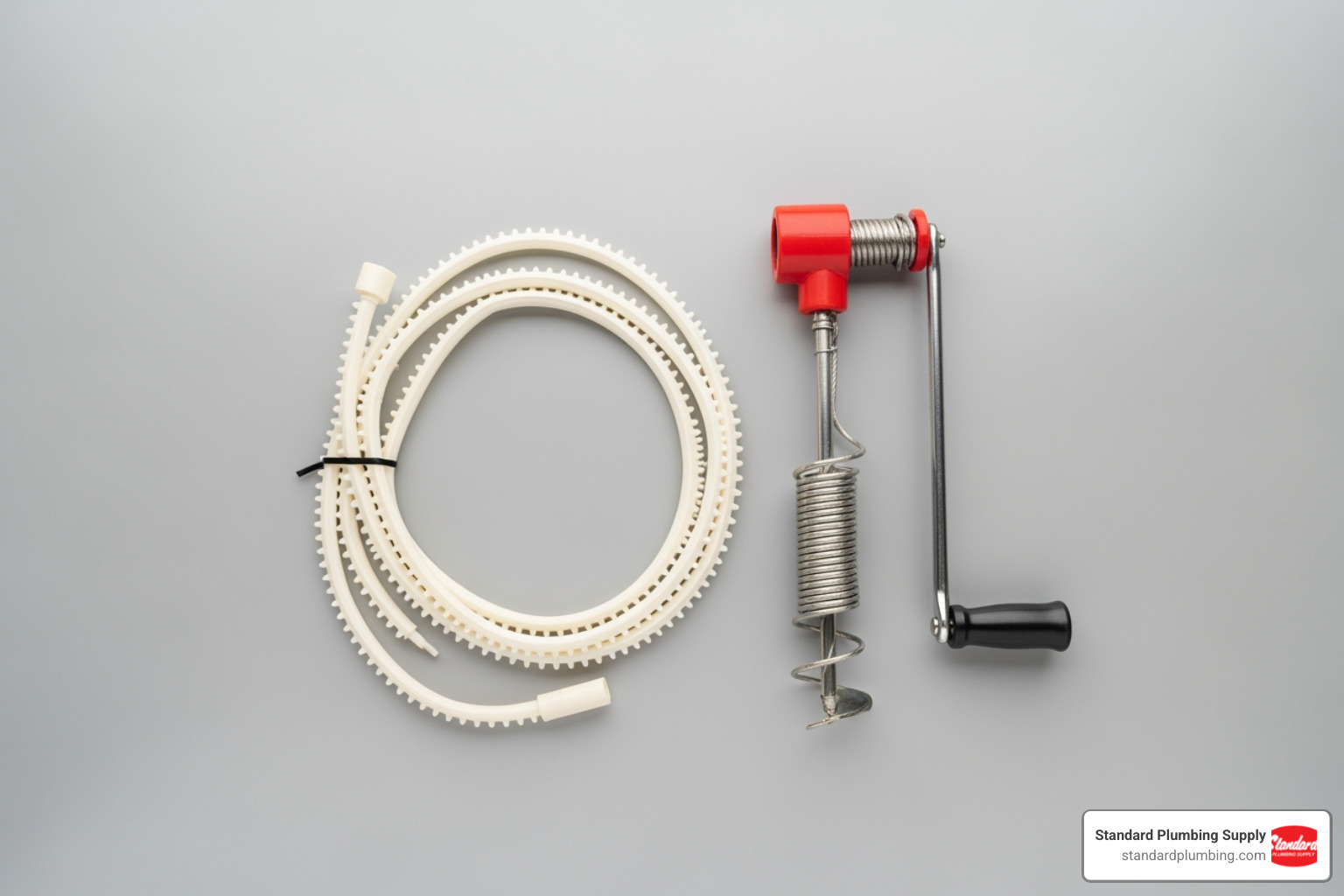
How They Work: These tools physically break apart, retrieve, or push through blockages.
- Plungers: The first line of defense for many clogs. A plunger creates a vacuum seal over the drain and uses suction and pressure to dislodge the clog. Cup plungers work well for sinks and tubs, while flange plungers are designed for toilets to create a better seal.
- Drain Snakes (or Drain Augers): These are flexible cables with a small auger or hook on the end. You feed the snake down the drain until it reaches the clog, then crank a handle to either break up the clog or retrieve it. There are manual, hand-crank, battery-operated, and electric versions. A simple plastic drain snake can often grab hair clogs effectively.
- Toilet Augers: Specifically designed for toilets, these have a protective vinyl coating to prevent scratching the porcelain bowl.
Pros:
- No Chemicals: Completely chemical-free, making them safe for all pipes, septic systems, and the environment.
- Effective for Many Clogs: Can remove solid obstructions and break apart even stubborn organic clogs that chemicals might struggle with.
- Reusable: A one-time purchase that can be used repeatedly.
- Immediate Results: Once the clog is cleared, the drain typically flows freely right away.
Cons:
- Manual Effort: Requires some physical effort and technique.
- Can’t Dissolve Clogs: While they break up or retrieve, they don’t dissolve the buildup, so some residue might remain.
- Skill Required: Using a drain snake or auger effectively can take some practice, and improper use can potentially damage pipes.
How to Choose the Best Home Drain Cleaner for Any Clog
Choosing the best home drain cleaner boils down to understanding your specific clog, your plumbing system, and your priorities (speed vs. safety vs. environmental impact). Here’s a quick comparison to help guide your decision:
| Cleaner Type | Speed | Pipe Safety | Septic Safety | Best For Clog Type |
|---|---|---|---|---|
| Chemical | Fast (15-30 min) | Moderate-Low | No | Stubborn hair, grease, soap scum (use with caution, especially on older pipes) |
| Enzymatic | Slow (hours-days) | High | Yes | Organic matter, grease, food waste (best for maintenance or minor clogs) |
| Mechanical | Immediate | High | Yes | Hair, foreign objects, heavy grease (requires manual effort) |
The Best Home Drain Cleaner for Stubborn Hair Clogs
Hair clogs are notorious for their resilience. They intertwine and trap soap scum, creating a dense, often slimy blockage.
- For Fast Action: Caustic or Oxidizing Chemical Cleaners are often the quickest solution for hair clogs. Their strong chemical reactions generate heat and break down the keratin in hair. Liquid-Plumr Pro-Strength Hair Eliminator Gel is specifically formulated for hair clogs and works quickly. Drano Max Gel is also highly rated for hair and soap scum.
- For Physical Removal: A drain snake is an excellent chemical-free alternative. The barbed edges of a plastic drain snake can effectively grab and pull out hair clogs. For tougher clogs deeper in the pipe, a hand-crank auger can bore through the blockage. These are particularly effective in showers and bathroom sinks where hair is the primary issue.
The Best Home Drain Cleaner for Kitchen Grease and Food
Kitchen clogs are often a greasy, food-filled mess. Different approaches work best depending on the severity.
- For Grease Buildup: Caustic Chemical Cleaners are very effective against grease, as they “saponify” fats, turning them into a soap-like substance that can be flushed away. Green Gobbler Drain Clog Remover & Cleaner is often recommended for grease clogs.
- For Food Waste and Prevention: Enzymatic Cleaners are ideal for kitchen sinks, especially those with garbage disposals. They digest food particles, grease, and other organic matter. Products like Green Gobbler Enzyme Drain Cleaner or Bio-Clean Drain Treatment are excellent choices for slowly breaking down these types of clogs and preventing future buildup.
- For Solid Food Blockages: If a large piece of food or a foreign object is causing the clog, a mechanical tool like a drain snake or even a plunger might be more effective at physical removal than a chemical solution. Thrift Drain Cleaner, a crystal-based caustic cleaner, is also cited as effective for food clogs.
The Best Option for Regular Maintenance and Odor Control
Prevention is key to keeping your drains flowing smoothly and smelling fresh. This is where drain maintainers shine.
- Drain Maintainers vs. Drain Cleaners: A drain cleaner is for an active clog, a reactive solution. A drain maintainer is a proactive measure, used regularly to prevent clogs from forming.
- Enzymatic Formulas: These are the best home drain cleaner for maintenance and odor control. They contain beneficial bacteria and enzymes that continuously break down organic buildup (grease, food, soap scum) before it can form a significant clog. This also eliminates the source of drain odors. Green Gobbler Drain Cleaner and Deodorizer sticks, for example, are designed for monthly use.
- Benefits: Regular use of an enzymatic drain maintainer keeps pipes cleaner, reduces the frequency of clogs, and is safe for all plumbing and septic systems. Gary Hickel, a plumbing manager, recommends using drain cleaners like Zep Drain Defense Enzymatic Drain Cleaner Powder quarterly for maintenance.
Safety First: How to Use Drain Cleaners Without Risk
Using drain cleaners, especially chemical ones, requires a healthy respect for their power. Safety should always be your top priority to protect yourself, your family, and your plumbing.
- Personal Protective Equipment (PPE): Always wear rubber gloves and safety glasses or goggles. Chemical drain cleaners are corrosive and can cause severe skin and eye irritation. Some experts even recommend a face shield.
- Proper Ventilation: Ensure the area is well-ventilated. Open windows and turn on exhaust fans. The fumes from chemical reactions can be hazardous.
- Reading Labels and Following Instructions: This is non-negotiable. Every product has specific directions for use, including how much to use, how long to let it sit, and how to flush. Deviating from these can be dangerous or ineffective. Never leave chemical drain cleaners in the drain longer than instructed.
- Never Mixing Chemicals: This is a critical warning. Never mix different drain cleaners, or use them in conjunction with other household chemicals like bleach. Mixing chemicals can create dangerous gases (like chlorine gas) or even cause an explosion.
- Pipe Material Considerations: Be mindful of your pipe materials. While most chemical cleaners are generally safe for modern PVC and metal pipes when used according to directions, they can be problematic for older or corroded pipes. The heat generated can soften or melt light-gauge plastic pipes if the cleaner sits too long. For older homes, or if you’re unsure of your pipe material, enzymatic cleaners or mechanical tools are often a safer bet.
- Older Plumbing Risks: If you have very old plumbing (e.g., galvanized steel that is heavily corroded), the pipes might already be weakened. The corrosive action of chemical cleaners could exacerbate existing damage.
- Finding a product’s Safety Data Sheet (SDS): For detailed safety information on any chemical drain cleaner, you can consult its Safety Data Sheet (SDS). This document provides comprehensive data on hazards, safe handling, and emergency procedures.
Frequently Asked Questions about Home Drain Cleaners
We often hear similar questions from our customers about drain cleaners. Let’s tackle some of the most common ones.
Are DIY solutions like baking soda and vinegar effective?
Ah, the classic baking soda and vinegar trick! It’s a popular natural remedy, and for minor clogs, it can certainly help.
- How it works: When baking soda (a base) and vinegar (an acid) are mixed, they react to produce carbon dioxide gas. These bubbles help to break up minor clclogs and dislodge debris. Pouring boiling water down the drain first, then following with baking soda and a vinegar-water mix, can add to the effect.
- Effectiveness: This method is best for very minor clogs, soap scum buildup, or as a general freshener and preventative measure. It’s gentle on pipes and safe for septic systems.
- Limitations: For tough, stubborn clogs involving significant hair, grease, or foreign objects, baking soda and vinegar are unlikely to be strong enough. As Eliana Coca, owner of E.C. House Cleaning, notes, drain cleaners can’t fix all clogs.
- When to use a stronger solution: If your drain is still slow or completely blocked after a baking soda and vinegar treatment, it’s time to move on to a commercial drain cleaner or a mechanical tool.
What’s the difference between a drain cleaner and a drain maintainer?
This is a crucial distinction that often gets overlooked!
- Drain Cleaner: This is a product designed to remove an existing clog. It’s a reactive solution. Examples include the chemical (caustic or oxidizing) and enzymatic formulas we’ve discussed. They are used after a clog has formed to break it down.
- Drain Maintainer: This product is used preventatively to keep drains clear and prevent clogs from forming. It’s a proactive solution. Most drain maintainers are enzymatic formulas, designed for regular, often monthly, use. They work by continuously digesting organic buildup before it can accumulate and cause a problem.
- When to use each: Use a drain cleaner when you have an active blockage. Use a drain maintainer regularly (e.g., monthly or quarterly) to prevent future clogs and maintain healthy pipes, especially in kitchen sinks and areas prone to hair.
When should I stop and call a professional plumber?
While many clogs can be tackled with home solutions, there are times when it’s best to call in the pros. Knowing when to wave the white flag can save you from bigger headaches and costly repairs.
- Persistent Clogs: If you’ve tried plunging, a chemical cleaner, or an enzymatic cleaner, and the clog remains, it’s a sign that the blockage is beyond your capabilities. Josh Mitchell, a plumbing technician at Plumbing Lab, advises that if a drain cleaner isn’t working, it’s time to call a plumber.
- Multiple Clogged Drains: If several drains in your home are clogged simultaneously (e.g., a toilet, shower, and sink), this often indicates a blockage in a main sewer line, which requires specialized equipment and expertise.
- Foreign Object in Drain: If you know a non-dissolvable item has fallen down the drain (e.g., a child’s toy, a piece of jewelry), a chemical cleaner won’t help, and a drain snake might just push it further. A plumber has the right tools, like motorized drain snakes or hydro-jetting equipment, to safely remove such obstructions.
- Suspected Main Line Issue: Signs like sewage backing up into tubs or showers, or a gurgling toilet when you run the sink, point to a main line clog. These are serious and need immediate professional attention.
- After Failed DIY Attempts: If you’ve tried various methods and the clog is still there, or if you suspect you’ve damaged your pipes during your attempts, don’t hesitate. A plumber can inspect your pipes and resolve the issue. We’ve seen it all, and it’s always better to call before a small problem becomes a major flood!
- Professional Tools: Plumbers have access to powerful tools like motorized drain snakes, inspection cameras, and hydro-jetting equipment that can clear even the most stubborn and deeply embedded clogs. For example, local plumbers in Phoenix, Salt Lake City, and other areas we serve offer professional drain cleaning services for these exact situations.
Conclusion: Keep Your Drains Flowing Freely
Dealing with a clogged drain is never fun, but by understanding the different types of best home drain cleaner solutions available, you’re now equipped to tackle most blockages effectively and safely.
We’ve explored the fast-acting power of chemical cleaners for tough clogs like hair and grease, the gentle, eco-friendly approach of enzymatic cleaners for maintenance and organic waste, and the physical force of mechanical tools for immediate, chemical-free clog removal. The key is to match the cleaner to the clog and always prioritize safety by wearing protective gear, ensuring ventilation, and strictly following product instructions.
But the absolute best home drain cleaner strategy? Prevention! Regular maintenance, mindful disposal of waste, and simple drain covers can keep your pipes flowing freely and reduce your reliance on intensive cleaning methods.
For all your plumbing supply needs, from the right drain cleaner for a stubborn clog to the best preventative solutions, Standard Plumbing Supply is here to help. We’re proud to serve our communities across Arizona, California, Colorado, Idaho, Nebraska, Nevada, Oregon, and Utah.
Find the right drain cleaning products for your home and keep your plumbing happy!
