
Why Your Water Heater Element Matters for Hot Water Comfort
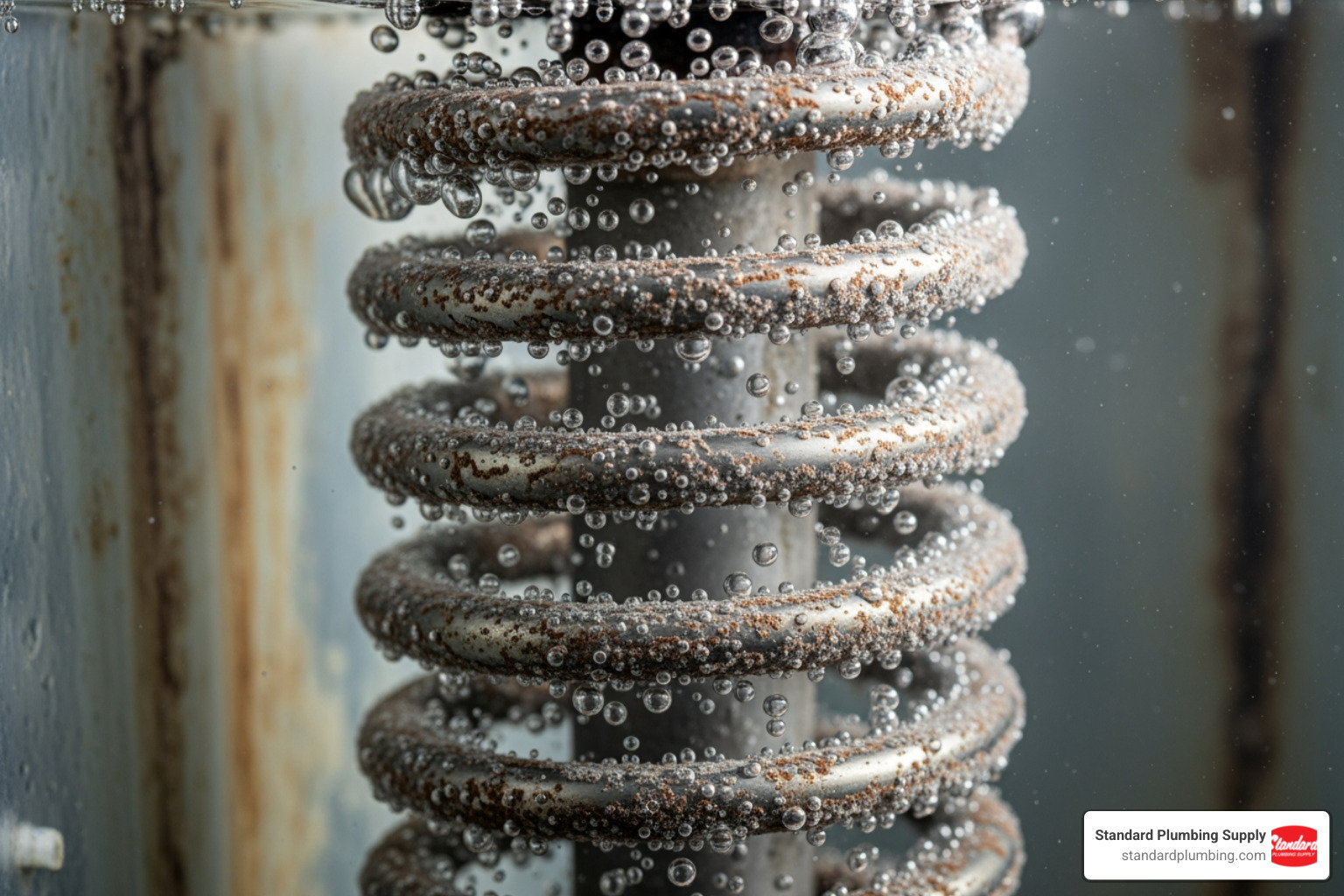
Water heater elements are the workhorses of your electric water heater, converting electrical energy into heat to warm the water in your tank. When they fail, you’re left with cold showers and frustration. Here’s what you need to know:
Quick Answer: Replacing Water Heater Elements
- What they are: Most electric water heaters have two heating elements—one at the top and one at the bottom of the tank
- Signs of failure: Lukewarm water, no hot water, hot water running out quickly, or tripped circuit breakers
- Typical cost: $100-$200 for professional replacement, or $20-$50 for DIY parts
- Lifespan: Elements last until they fail (usually due to sediment buildup or mineral deposits)
- DIY-friendly: Yes, if you’re comfortable with basic electrical work and safety precautions
Nothing disrupts your morning routine quite like turning on the shower and getting hit with ice-cold water. The good news? A failed heating element doesn’t mean you need to replace your entire water heater. In fact, replacing an element is one of the most straightforward water heater repairs you can tackle.
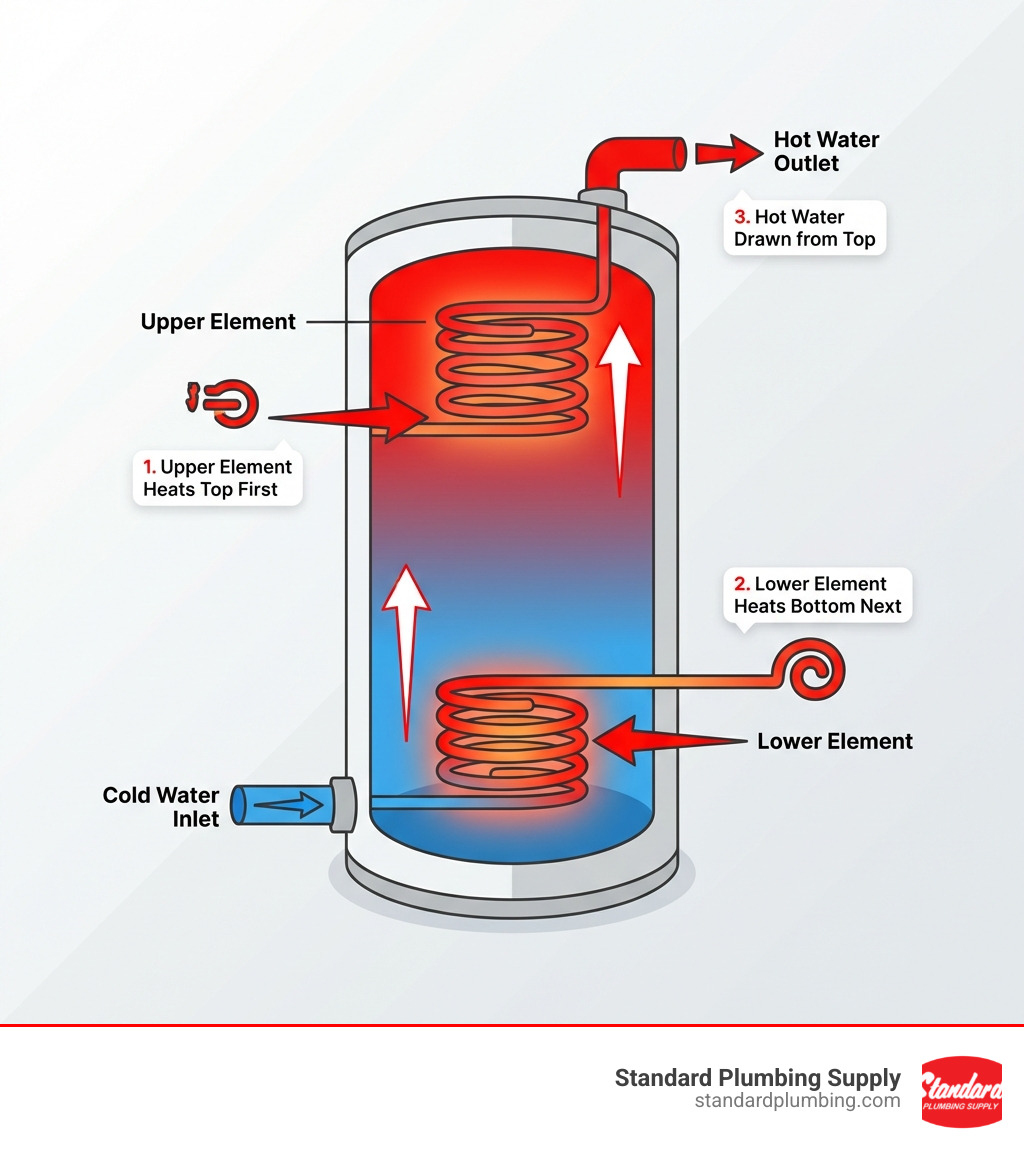
Most electric water heaters contain two heating elements—one at the top and one at the bottom. The upper element heats first, then the lower element kicks in to heat the full tank. When one fails, you might get lukewarm water (because only half the tank is heating). When both fail, you get no hot water at all.
The typical signs are hard to miss: water that never gets truly hot, hot water that runs out much faster than usual, or a circuit breaker that keeps tripping. Sometimes you’ll even hear popping or hissing sounds as sediment-covered elements struggle to heat the water around them.
This guide will walk you through everything: diagnosing the problem, testing your elements with a multimeter, choosing the right replacement parts, and completing the repair safely. We’ll also help you decide when it makes more sense to replace the whole unit instead of just the element.
I’m Jacob Reese, Vice President of Standard Plumbing Supply and a third-generation plumbing professional who has spent decades helping contractors and DIYers solve water heater problems. From my early days sweeping warehouse floors to now managing our company’s operations, I’ve seen thousands of water heater elements fail—and helped customers get their hot water flowing again. Whether you’re a seasoned DIYer or tackling your first plumbing repair, this guide will give you the confidence to troubleshoot and replace water heater elements like a pro.
Diagnosing the Problem: Is Your Heating Element to Blame?
Before we dive into replacing anything, it’s crucial to confirm that a faulty water heater element is indeed the culprit behind your hot water troubles. This section will help you pinpoint the issue with confidence.
Telltale Signs of a Failing Element
When a water heater element begins to fail, your water heater will send you clear signals. Recognizing these signs early can guide you towards a targeted repair.
- Lukewarm Water: If one of the two heating elements in your tank fails, the other can only heat a portion of the water. This results in lukewarm water or hot water that doesn’t last as long.
- No Hot Water: If both the upper and lower water heater elements fail, you’ll have no hot water. While a faulty thermostat can also be the cause, failed elements are a common culprit.
- Hot Water Runs Out Quickly: If your hot water depletes much faster than usual, it often means one of your heating elements isn’t pulling its weight, or both are struggling to keep up.
- Tripped Circuit Breakers: A failing heating element can short-circuit, causing the circuit breaker for your water heater to trip. If you’re constantly resetting the breaker, the element is a strong suspect and needs immediate attention.
- Popping or Hissing Sounds: Popping or hissing sounds often mean sediment has built up on the heating elements. The noise is from the element overheating as it struggles to heat water through the mineral layer.
- Slow Water Heating: If water takes much longer to heat up or recover after use, your water heater elements are likely losing their efficiency.
How Sediment Buildup Affects Your Element
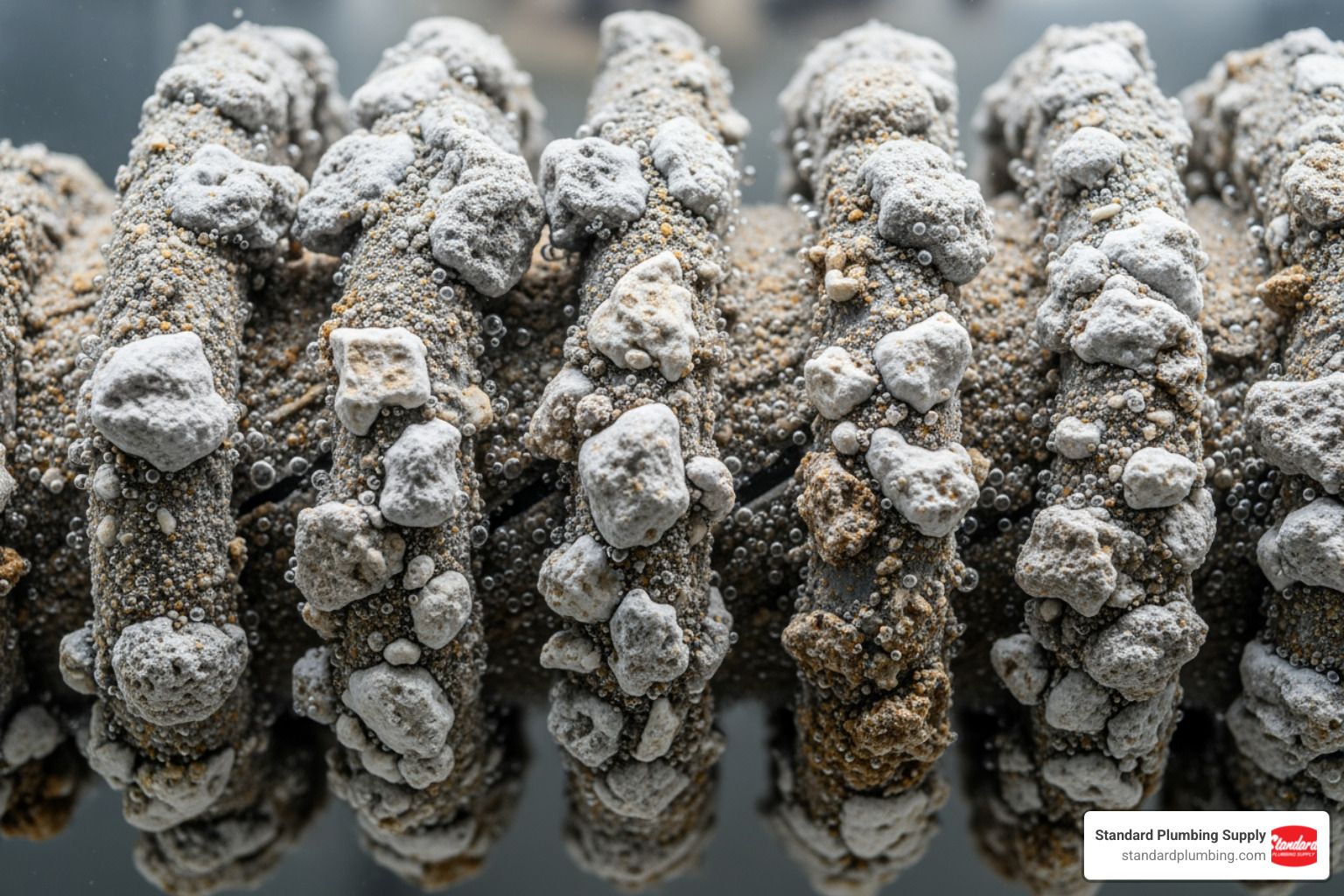
Sediment is the silent killer of water heater elements. In areas with hard water, like many we serve in Arizona, Nevada, and Utah, minerals like calcium and magnesium accumulate in the tank. This scale insulates the lower heating element, forcing it to work harder and overheat. This leads to premature failure and the popping or hissing sounds mentioned earlier. Regular tank flushing is the best way to mitigate this problem and extend the life of your elements.
How to Test a Water Heater Heating Element
Before you consider replacing any parts, testing your water heater elements is a critical diagnostic step. This will confirm whether the element is truly faulty or if another component, like a thermostat, is to blame.
Safety First: This is non-negotiable when working with electricity.
- Turn Off Power: Locate your home’s main electrical panel and turn off the circuit breaker that controls your water heater. It’s often a double-pole breaker (240V) for electric water heaters.
- Verify Power is Off: Remove the access panel(s) on your water heater. You’ll typically find two panels, one for the upper element and one for the lower. Use a multimeter set to AC voltage to test the wires connected to the element terminals. There should be no voltage reading. If there is, double-check your breaker.
Testing the Element:
- Disconnect Wires: Carefully disconnect the two wires leading to the heating element. Take a photo of the wiring configuration before you disconnect anything – this will be invaluable when reconnecting!
- Set Multimeter to Ohms (Ω): Turn the dial on your multimeter to the ohms setting (usually represented by the Greek letter omega, Ω).
- Continuity Test: Place one probe of the multimeter on each of the two screw terminals of the heating element.
- Good Element: A reading between 10 and 30 ohms (e.g., 15.5 ohms for 3500W, 13.0 ohms for 4500W, 10.0 ohms for 5500W) typically indicates a functioning element. The exact reading will depend on the element’s wattage and voltage.
- Bad Element: If your multimeter shows no reading, an infinite reading (often “OL” or “1”), or a reading outside the typical range, the element is likely faulty and needs replacement. This means the internal coil is broken (an open circuit).
- Short Circuit Test: While still on the ohms setting, place one probe on one of the element terminals and the other probe on the metal body of the heating element (the flange or outer metal casing). Repeat this for the other terminal.
- Good Element: You should get no reading (infinite, “OL”, or “1”).
- Bad Element: If you get any reading (a low ohm value), it indicates a short circuit, meaning the element’s internal coil is touching the outer sheath. This is a definite sign the element needs to be replaced.
Once you’ve tested both the upper and lower water heater elements, you’ll know exactly which one (or both) needs to be replaced.
Choosing the Right Replacement Water Heater Elements
Selecting the correct replacement water heater element is crucial for a successful and safe repair. Using the wrong element can lead to poor performance, electrical hazards, or even void your water heater’s warranty.
Matching Wattage and Voltage
This is arguably the most important step in choosing a replacement water heater element.
- Check Your Water Heater Label: The most reliable way to find the correct wattage and voltage is to check the manufacturer’s label on the side of your water heater tank. This label provides essential specifications for your unit.
- Common Wattages: For residential electric water heaters, common wattages for heating elements include 1,500W, 3,500W, 4,500W, and 5,500W.
- Common Voltages: The most common voltages are 120V and 240V. It’s critical to match the voltage exactly. A 240V element in a 120V system won’t heat properly, and a 120V element in a 240V system will quickly burn out.
- Do Not Increase Wattage: We strongly advise against installing a higher wattage element for faster heating. Doing so can overload your home’s wiring, create a fire hazard, and void your water heater’s warranty. Always choose a replacement with the same wattage and voltage as the original. If you can’t find an exact match, choose a wattage that is lower than the original to avoid overloading the wiring.
Understanding Different Types of Water Heater Elements
Beyond wattage and voltage, water heater elements come in various designs and materials, each suited for different conditions.

- Screw-in vs. Flange (Bolt-on):
- Screw-in Elements: These are the most common type, featuring a threaded base that screws directly into a port on the water heater tank. They require a specialized element wrench for installation.
- Flange (Bolt-on) Elements: Less common in modern residential units, these elements are secured by bolts around a flange. If you have this type, you’ll need a direct replacement.
- Watt Density: This refers to the amount of heat energy transferred per square inch of the element’s surface.
- High-Density (HD) Elements: These elements heat water quickly but operate at higher surface temperatures, making them more susceptible to scale buildup and premature failure, especially in hard water.
- Low-Watt Density (LWD) Elements: These elements have a larger surface area, resulting in lower surface temperatures. This helps reduce scale buildup and extends the element’s lifespan, particularly in hard water.
- Ultra-Low Watt Density (ULWD) Elements: These are the best choice for extremely hard water, offering the lowest surface temperatures and maximum resistance to scale and mineral deposits.
- Fold-back/Ripple Style: These elements feature a bent or folded design, increasing their surface area. This design helps reduce the watt density, making them more durable and efficient in hard water conditions.
- Material:
- Most standard heating elements are made of copper tubing with nickel plating.
- Incoloy: This is a high-grade stainless steel alloy used for premium heating elements. Incoloy elements offer superior resistance to the corrosive effects of minerals, significantly extending their lifespan. An Incoloy element is an excellent choice for maximum durability, especially in hard water.
When choosing, consider your water quality. For hard water, we highly recommend LWD, ULWD, or fold-back/ripple style elements, possibly made from Incoloy, to ensure longevity and efficiency.
How to Replace a Water Heater Element: A Step-by-Step Guide
Replacing a water heater element is a manageable DIY project, but it requires careful attention to safety and detail. Follow our step-by-step guide for a smooth and effective repair.
Essential Tools and Safety Precautions
Before you begin, gather all necessary tools and prioritize safety above all else.
Tools You’ll Need:
- Water Heater Element Wrench: This specialized wrench fits the large hex nut of screw-in elements.
- Multimeter: Essential for verifying power is off and testing elements.
- Phillips and Flathead Screwdrivers: For removing access panels and disconnecting wires.
- Garden Hose: To drain the water heater tank.
- Bucket or Wet/Dry Vacuum: To catch any residual water.
- New Water Heater Element(s): Ensure it matches the correct wattage and voltage and is the right type (screw-in, LWD, etc.).
- New Rubber Gasket/O-ring: A new gasket is crucial for a watertight seal; the old one will likely be deteriorated. Most new elements come with one.
- Teflon Tape or Pipe Dope (optional): For threaded connections, though the gasket is the primary seal for the element itself.
- Wire Brush: For cleaning around the element opening.
- Work Gloves and Safety Glasses: Always a good idea.
Safety Precautions (DO NOT SKIP THESE!):
- Turn Off Power: Go to your main electrical panel and switch off the circuit breaker for your water heater. It’s usually a 240V double-pole breaker.
- Verify Power is Off: Use your multimeter to confirm there is no voltage at the element terminals. This step is critical, as circuit breaker labels can sometimes be inaccurate.
- Shut Off Cold Water Supply: Locate the cold water inlet valve at the top of your water heater (usually on the right side) and turn it off. This prevents new water from entering the tank while you work.
- No Hot Water: Ensure no hot water faucets are running in your home.
The Replacement Process
With safety established and tools ready, let’s get that old element out and the new one in!
- Drain the Tank: Connect your garden hose to the drain valve at the bottom of the water heater. Route the other end of the hose to a floor drain, utility sink, or outside. Open the drain valve completely. To help the water drain faster, open a hot water faucet in your kitchen or bathroom. This allows air into the tank, preventing a vacuum. The tank must be completely drained before you proceed.
- Access the Element: Remove the access panel(s) covering the element(s) you need to replace. You might need to peel back some insulation.
- Disconnect Wires: Once again, use your multimeter to ensure no power. Then, carefully disconnect the electrical wires from the heating element terminals. Pro tip: Take a clear photo of the wiring before you disconnect anything! This will be your roadmap for reconnection.
- Remove Old Element: Place your element wrench over the hex nut of the water heater element. Turn counter-clockwise to loosen and remove the element. Be prepared for a small amount of residual water to escape as the element comes out – have your bucket or wet/dry vacuum ready.
- Clean the Opening: Use a wire brush or rag to clean any sediment or debris from around the element opening. A clean surface is essential for a good seal.
- Install New Gasket: Place the new rubber gasket or O-ring onto the threads of the new heating element. Ensure it sits properly. This gasket is vital for preventing leaks.
- Install New Element: Carefully insert the new water heater element into the tank opening. Hand-tighten it clockwise until snug. Then, use your element wrench to tighten it an additional quarter to half turn. Avoid overtightening, as this can damage the gasket or the tank threads, making future removal difficult.
- Reconnect Wires: Refer to your photo and reconnect the electrical wires to the new heating element terminals. Ensure connections are tight and secure. Replace the access panel(s) and insulation.
Refilling and Testing Your Work
You’re almost done! The final steps involve refilling the tank and verifying your repair.
- Close Drain Valve: Disconnect the garden hose and securely close the drain valve at the bottom of the water heater.
- Turn On Water Supply: Slowly open the cold water inlet valve at the top of the water heater. You’ll hear the tank begin to fill.
- Bleed Air from System: Go to the nearest hot water faucet in your home and turn it on. Let it run until all air has been purged from the water heater and a steady stream of water flows out. This prevents dry firing the elements, which can instantly burn them out.
- Check for Leaks: While the tank is filling and water is running from the faucet, carefully inspect around the newly installed heating element for any signs of leaks. Tighten slightly with the element wrench if you see any drips.
- Restore Power: Once you’ve confirmed there are no leaks and water is flowing steadily from the hot water faucet, return to your electrical panel and switch the water heater’s circuit breaker back on.
- Wait for Water to Heat: Allow 1-2 hours for the water heater to fully heat the tank. Then, test a hot water faucet to ensure you have hot water again!
Congratulations, you’ve successfully replaced your water heater element!
Repair or Replace? Making the Right Call
While replacing a water heater element is a common and cost-effective repair, sometimes it’s smarter to consider replacing the entire water heater. Knowing when to repair and when to replace can save you money and headaches in the long run.
Element Repair vs. Full Water Heater Replacement
The decision hinges on several factors, primarily the age and overall condition of your unit.
- Water Heater Lifespan: Most water heaters have a lifespan of about 10-15 years. If your unit is less than 7-8 years old and otherwise in good condition, replacing a faulty heating element is usually the most economical solution. The cost of replacing an element is generally inexpensive, costing between $100 and $200, including parts and labor if you hire a professional, or even less for a DIY project (parts alone are often $20-$50).
- Age of Your Unit: If your water heater is approaching or has exceeded its typical 10-15 year lifespan, a failing element might be a sign of other components nearing the end of their life. Investing in a new element for an old, worn-out unit might only provide a temporary fix, buying you a year or two at best.
- Frequency of Repairs: Has your water heater required multiple repairs recently? If you’re constantly fixing one issue after another, it’s a strong indicator that the unit is past its prime, and a full replacement would be more cost-effective than patching it up.
- Signs of Tank Corrosion: While not always visible, internal tank corrosion is a serious issue. If you notice rusty water, leaks from the tank itself (not just fittings), or significant sediment buildup despite regular flushing, these are signs the tank liner is compromised. In such cases, replacing the entire unit is necessary, as an element replacement won’t address the underlying tank issues.
- Energy Efficiency of New Models: Older water heaters are often less energy-efficient than modern units. If your current water heater is an energy hog, replacing it with a new, energy-efficient model can lead to significant savings on your utility bills over time, offsetting the initial replacement cost. Modern units often come with better insulation and more advanced controls.
If your water heater is old, frequently needs repairs, or shows signs of tank deterioration, we recommend considering a full replacement. However, for a relatively new unit with a single element failure, a DIY replacement is a smart choice.
For those considering a complete system overhaul or exploring different heating solutions, we also offer information on other options: More info about Water Heating Boilers.
Frequently Asked Questions about Water Heater Elements
We get a lot of questions about water heater elements, and for good reason—they’re vital to your home’s hot water supply! Here are answers to some of the most common inquiries.
Can a DIYer replace a water heater element?
Absolutely! Replacing a water heater element is a common DIY task, and with basic tools and a careful approach to safety, most homeowners can successfully complete the repair. We’ve designed this guide to empower you to do just that. However, it’s crucial to assess your comfort level with electrical work and plumbing. If you lack electrical experience, are uncomfortable working with water and electricity, or simply prefer to ensure the job is done by a certified professional, we always recommend calling a plumber. Your safety is our top priority.
Why does my new heating element not work?
If you’ve installed a new water heater element and still don’t have hot water, here are a few common reasons:
- Thermostat Issue: The problem might not have been the element at all, but a faulty thermostat. The upper thermostat (which controls both) could be the issue, or the corresponding thermostat for the element you replaced.
- High-Limit Reset Button: Electric water heaters have a high-limit reset button (usually red) that trips if the water gets too hot. If this button is tripped, the elements won’t receive power. Press the button to reset it after turning off power to the unit. If it keeps tripping, there’s an underlying problem that needs diagnosis.
- Incorrect Wiring: Double-check your wiring connections against the photo you took (or a wiring diagram). Loose or incorrect wiring will prevent the element from heating.
- Air in the Tank / Dry Firing: If you turned the power back on before the tank was completely full of water and all air bled out, the new element could have “dry fired” and instantly burned out. This is why bleeding air from a hot water faucet before restoring power is so important.
- Defective New Part: While rare, a new water heater element could be defective. If you’ve ruled out all other possibilities, contact the supplier for a replacement.
- Sediment Buildup: If your water heater elements are quickly failing, it could be due to heavy scale or lime buildup, or even a deteriorated anode rod.
How often should I replace my water heater elements?
Water heater elements don’t have a fixed replacement schedule; they are replaced when they fail. Their lifespan varies greatly depending on several factors:
- Water Quality: Areas with hard water (high mineral content) will cause elements to fail more quickly due to scale buildup. Using low-watt density or Incoloy elements can help extend their life in these conditions.
- Usage: Heavy hot water usage means the elements cycle more frequently, leading to more wear and tear.
- Sediment Management: Regular flushing of your water heater tank helps remove sediment that insulates and overheats elements. Neglecting this maintenance can significantly shorten an element’s life.
You replace an element when it stops working effectively. For preventative measures, consider annual tank flushing. You may need to install Adobe Acrobat Reader to view maintenance documents.
Conclusion: Get Your Hot Water Flowing Again
Dealing with a malfunctioning water heater can be a huge inconvenience, but a faulty water heater element doesn’t have to spell disaster. As we’ve seen, with careful diagnosis, the right parts, and adherence to safety protocols, replacing these crucial components is a repair you can often tackle yourself. We’ve walked through the telltale signs of failure, how to test for a bad element, selecting the correct replacement, and the step-by-step process for a safe and effective swap. We’ve also helped you weigh the decision between a simple repair and a full unit replacement, ensuring you make the most economical and practical choice for your home.
Empowering homeowners and professionals with the knowledge and tools they need is what we do best. At Standard Plumbing Supply, we’re here to support you in maintaining your home’s essential systems. For professional-grade parts, expert advice, and everything you need to keep your water heater running smoothly, we’re your trusted partner.
Find your nearest Standard Plumbing Supply location for parts and expert advice
