
Why You Should Understand Continuous Hot Water Systems Before Your Next Upgrade
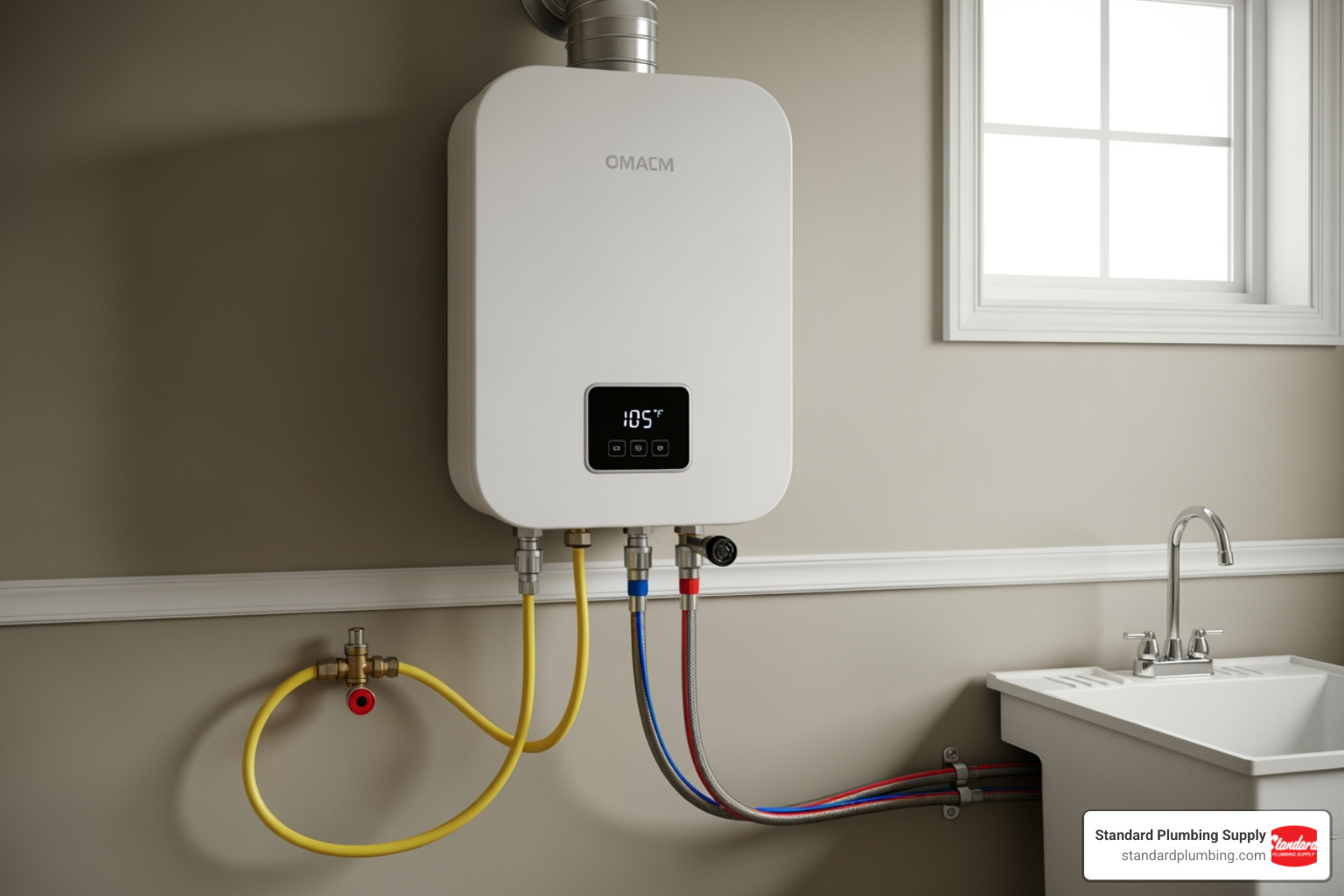
A continuous hot water system heats water on-demand as you use it, rather than storing it in a tank. Here’s a quick overview:
Key Differences:
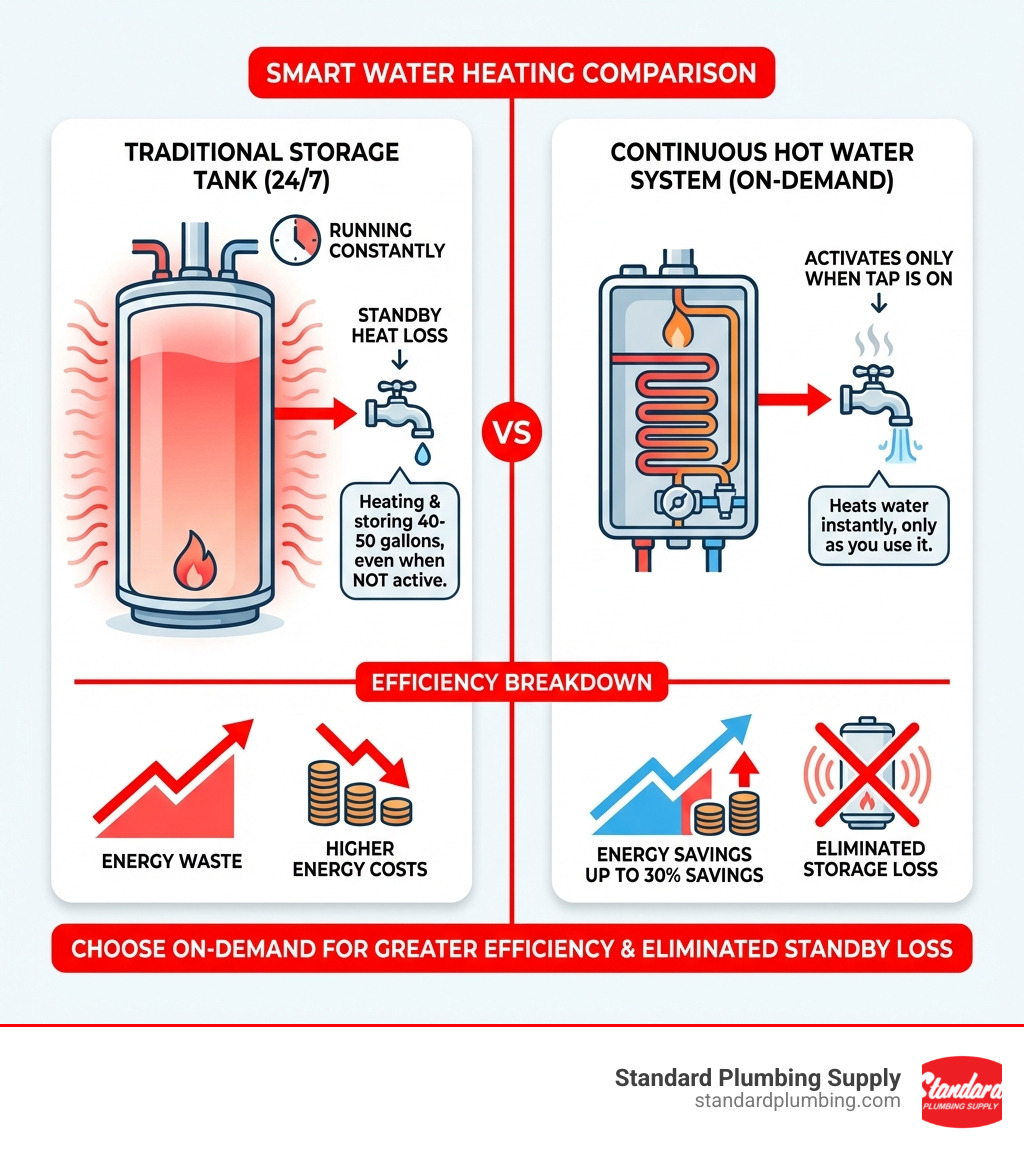
- Traditional tank systems heat and store 40-50 gallons of water 24/7.
- Continuous systems (also called tankless or on-demand) heat water only when you turn on a faucet.
- Recirculation systems use smart pumps to keep hot water ready in your pipes.
Main Benefits:
- Never run out of hot water.
- Save up to 30% on energy costs.
- Last 20+ years, roughly twice as long as tank systems.
- Free up valuable floor space.
Important Considerations:
- Higher upfront cost than traditional tanks.
- May require electrical or gas line upgrades.
- Flow rate can limit simultaneous use (e.g., a shower and dishwasher).
This guide covers how these systems work, gas vs. electric models, installation, and comparisons to other high-efficiency options to help you make an informed decision.
I’m Jacob Reese, Vice President of Standard Plumbing Supply. With over two decades in the plumbing industry, I’ve helped thousands of contractors and homeowners transition to continuous hot water systems, from selecting the right unit to understanding long-term maintenance.
What Are Continuous Hot Water Systems and How Do They Work?
Imagine never running out of hot water, no matter how many showers your family takes. That’s the promise of a continuous hot water system, also known as a tankless or on-demand water heater. Unlike traditional tanks that constantly heat and store water, these innovative units heat water only when it’s needed.
What is a continuous hot water system?
A continuous hot water system heats water instantaneously as it flows through the unit. When you turn on a hot water tap, cold water enters the heater, and a powerful heat exchanger rapidly brings it to your desired temperature. This process provides an endless supply of hot water from a compact, wall-mounted unit, eliminating the bulky storage tank and the risk of running out of hot water during peak usage.
How do recirculation pumps provide instant hot water?
While tankless heaters provide endless hot water, there can be a slight delay as cold water in the pipes is pushed out. On-demand recirculation systems solve this problem.
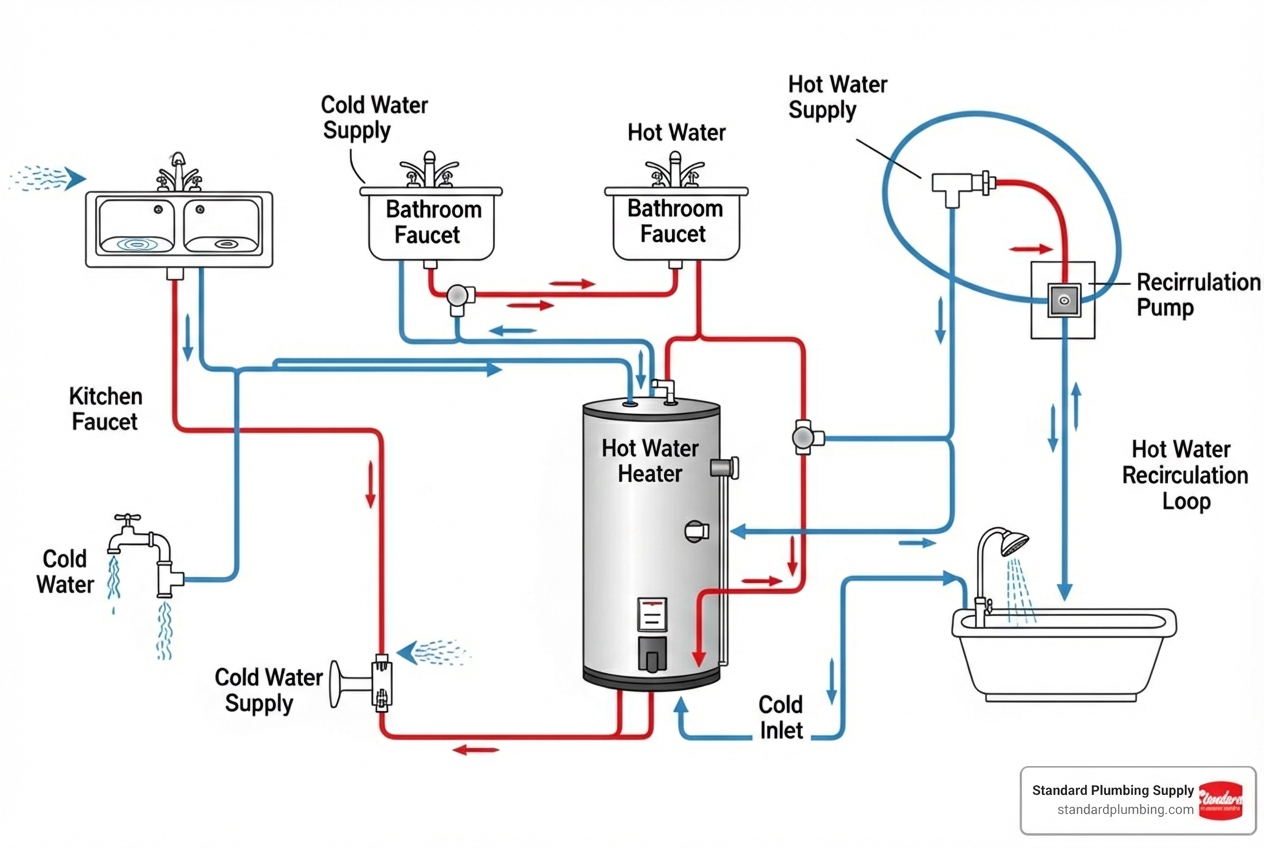
A recirculation system uses a small pump to create a loop, sending cool water from the pipes back to the heater. Smart, on-demand systems like the AutoHot system activate only when you need hot water and there isn’t any already in the line, so they don’t waste energy. This means the system stays off when you’re away or sleeping.
Key benefits include:
- Instant hot water: Eliminates the wait at any faucet.
- Water savings: Saves thousands of gallons of water per year by not running the tap while you wait. This is a major advantage in states like Arizona, California, and Nevada.
- Energy savings: On-demand pumps run for less than 15 minutes per day, costing less than $2.00 annually to operate.
- Pipe protection: In cold climates, recirculation helps prevent pipes from freezing.
Integrating an on-demand recirculation system offers superior convenience and efficiency. You can learn more about these systems at Residential On Demand Recirculation Residential .
The Major Benefits and Potential Drawbacks
Switching to a continuous hot water system is a big decision. It’s important to weigh the advantages against the practical considerations to see if it’s right for your home.
Key Advantages of Upgrading
-
Endless Hot Water: Because water is heated on demand, you can’t run out. This is a game-changer for large families or homes with high hot water demands.
-
Significant Energy Savings: These systems eliminate “standby heat loss” common with tanks. An ENERGY STAR-certified unit can cut energy use by up to 30%, lowering utility bills.
-
Space-Saving Design: The compact, wall-mounted design frees up valuable floor space in a utility room or garage.
-
Longer Lifespan: Tankless systems can last over 20 years, often double the lifespan of traditional tank heaters (10-15 years), offering better long-term value.
-
Reduced Environmental Impact: Using less energy means a smaller carbon footprint, aligning with modern sustainability goals.
Important Considerations Before You Buy
While the benefits are compelling, consider these potential drawbacks:
-
Higher Initial Cost: The upfront cost for a tankless unit and installation is higher than for a traditional tank. However, long-term energy savings often offset this investment.
-
Installation Complexity: Retrofitting a home may require larger gas lines, new venting, or electrical upgrades, adding to the overall cost. Professional installation is essential.
-
Flow Rate Limitations: A tankless unit has a maximum flow rate (Gallons Per Minute). Running too many fixtures at once (e.g., two showers and a dishwasher) can sometimes overwhelm the unit if it’s not sized correctly.
-
Water Hardness Impact: In areas with hard water, like parts of Utah and Arizona, mineral buildup can reduce efficiency. Regular descaling maintenance is essential, and a water softener may be recommended.
-
Renting vs. Owning: Renting may seem cheaper initially, but owning the unit is typically more cost-effective in the long run, as rental fees can add up over time.
Understanding these pros and cons will help you make an informed decision for your home.
Choosing Your Ideal Continuous Hot Water System
Selecting the right continuous hot water system requires understanding the different types and how they fit your home’s needs.
Gas vs. Electric Tankless Heaters
The primary choice is between a gas or electric model. Each has distinct characteristics:
| Feature | Gas Tankless Heaters | Electric Tankless Heaters |
|---|---|---|
| Fuel Source | Natural Gas or Propane (LPG) | Electricity |
| Flow Rate (GPM) | Generally higher (5-11+ GPM) | Lower to moderate (2-6 GPM) |
| Operating Cost | Can be lower, depending on local gas vs. electricity rates | Can be higher, depending on local electricity rates |
| Installation | Requires gas line, venting, and electrical outlet | Requires dedicated electrical circuits, no venting |
| Venting | Mandatory for combustion gases | Not required |
| Efficiency (UEF) | Up to 0.82-0.96 (condensing models) | Up to 0.96-0.99 |
| Best For | Larger homes, high demand, multiple simultaneous uses | Smaller homes, point-of-use, areas without gas access |
Gas models offer a higher flow rate, making them ideal for larger households that may run multiple showers and appliances at once. They require proper gas line sizing and venting.
Electric models are often easier and cheaper to install because they don’t need venting. They are a great fit for smaller homes, apartments, or point-of-use applications (like a single sink), but larger units may require an electrical panel upgrade. For most homes with significant hot water needs, gas models are generally recommended.
Understanding Condensing vs. Non-Condensing Units
If you choose a gas model, you’ll decide between non-condensing and condensing units.
-
Non-Condensing: These are the standard gas tankless models. They are efficient but lose some heat through hot exhaust, which requires specialized stainless steel venting.
-
Condensing: These are the most efficient models. A second heat exchanger captures extra heat from the exhaust gases, boosting efficiency (UEF ratings of 0.96+). The cooler exhaust allows for less expensive PVC venting. While the initial cost is higher, condensing units offer greater long-term energy savings.
When comparing models, also look for features like Wi-Fi capabilities and self-modulating technology, which adjusts heating output to match demand and save energy.
Installation, Venting, and Maintenance Essentials
Once you’ve chosen your continuous hot water system, proper installation and ongoing maintenance are critical to ensure its longevity and optimal performance. This is where our expertise at Standard Plumbing Supply truly shines.
Do tankless water heaters require venting?
The answer to this question depends on the type of tankless water heater you choose:
-
Gas Tankless Water Heaters: Yes, absolutely. Gas models burn fuel (natural gas or propane), and this combustion process produces exhaust gases, including carbon monoxide, which must be safely vented outside your home. Proper venting is a non-negotiable safety requirement.
- Direct Vent: Many modern gas tankless units are direct-vent, meaning they draw combustion air from outside and exhaust gases directly outside, often through a dedicated pipe that runs through a wall or roof.
- Power Vent: These units use a fan to push exhaust gases out, allowing for longer vent runs and more flexible installation options.
- Considerations: Venting requires careful planning and adherence to local building codes. The type of vent material (e.g., stainless steel for non-condensing, PVC/polypropylene for condensing) and the length of the vent run are critical. This is a complex task that demands professional expertise to ensure safety and efficiency.
-
Electric Tankless Water Heaters: No, electric models do not require venting. Since they use electric heating elements rather than combustion, they do not produce any exhaust gases. This makes them simpler to install in terms of venting, though they often require substantial electrical upgrades (dedicated circuits, higher amperage) to meet their power demands.
Regardless of the fuel source, professional installation is almost always necessary for a continuous hot water system. Our licensed plumbers in California, Oregon, and throughout our service areas ensure that your unit is properly sized, plumbed, vented (if gas), and electrically connected, adhering to all local building codes and energy standards like IECC (International Energy Conservation Code) and California Title 24 (CA T24). These codes increasingly mandate efficient hot water systems, and professional installation ensures compliance.
Maintenance for your continuous hot water system
Just like any major appliance, your tankless water heater needs regular care to perform its best and last for decades. The primary maintenance task is descaling, also known as flushing:
- Descaling (Flushing): This process removes mineral buildup (limescale) from inside the heat exchanger. Hard water, prevalent in many areas like Arizona, Utah, and Nevada, can lead to significant mineral accumulation, reducing efficiency and eventually damaging the unit. We recommend descaling your tankless unit annually, or more frequently if you have very hard water or notice a decline in performance. This involves circulating a descaling solution through the unit.
- Hard Water Effects: If your water hardness exceeds 7.5 grains per gallon, we highly recommend installing a water softener to protect your tankless system and other appliances.
- Filter Cleaning: Many tankless units have an inlet water filter that should be periodically cleaned to ensure optimal water flow.
- Professional Inspection: An annual professional inspection by a qualified plumber can catch potential issues early, verify proper operation, and ensure all components are functioning correctly.
By following these maintenance steps, you can ensure your continuous hot water system continues to provide endless hot water efficiently for many years to come. And if you ever need parts for your Rheem equipment or other brands, we can help you Find parts for your system.
How Continuous Flow Compares to Other High-Efficiency Systems
While continuous hot water systems are a leading choice, it’s helpful to see how they compare to other modern technologies like heat pump and solar water heaters.
Tankless vs. Heat Pump Water Heaters
Heat pump water heaters (HPWHs) don’t create heat; they move it. Working like a refrigerator in reverse, they pull heat from the surrounding air and transfer it to water in a storage tank.
- Efficiency: HPWHs are extremely energy-efficient, using about a third of the electricity of a standard electric tank heater. This makes them cheap to run and environmentally friendly.
- Hot Water Supply: Because they use a tank, they don’t provide an endless supply like a tankless unit and can run out during high-demand periods.
- Space: HPWHs are large, tank-based units that require significant floor space and airflow, unlike compact, wall-mounted tankless heaters.
- Best Use: HPWHs are great for homeowners focused on the absolute lowest operating cost, while tankless systems are better for those who prioritize an endless supply of hot water and saving space.
Tankless vs. Solar Hot Water Systems
Solar hot water systems use collectors on a roof to capture the sun’s energy, which is then used to heat water stored in a tank. They often require a gas or electric booster for cloudy days.
- Energy Source: Solar uses free, renewable energy from the sun, offering the lowest possible operating costs in sunny climates like Arizona and California. Tankless systems rely on the utility grid.
- Hot Water Supply: Like HPWHs, solar systems are tank-based and can run out of hot water. Tankless systems provide a truly continuous supply.
- Reliability: Solar performance depends entirely on the weather. Tankless systems provide consistent performance year-round, regardless of sunshine.
- Installation: Solar systems are complex and expensive to install, requiring roof panels, a storage tank, and extra plumbing.
Each system has its place. The best choice depends on your priorities, budget, and climate. We can help you explore options like the Velocity Tankless Water system to find what’s right for you.
Frequently Asked Questions about Continuous Hot Water
Here are answers to some of the most common questions about continuous hot water systems.
How long does it take to get hot water with a tankless system?
While a tankless unit heats water instantly, it still takes time for that water to travel through the pipes to your faucet. You may experience a short delay (sometimes called the “cold water sandwich” effect) as the cold water in the pipes is flushed out. To get hot water almost instantly, a hot water recirculation pump is the best solution.
Can a tankless system keep up with a large family?
Yes, if it’s sized correctly. A tankless system is often ideal for large families. Proper sizing involves two factors:
- Gallons Per Minute (GPM): Calculate your home’s peak hot water demand by adding up the flow rates of fixtures you might use at the same time (e.g., two showers + a sink).
- Temperature Rise: This is the difference between the incoming cold water temperature and your desired hot water temperature. Colder climates require a greater temperature rise, which affects the unit’s GPM output.
A properly sized unit will provide an endless supply of hot water for everyone.
What does GPM and UEF mean for a water heater?
These are two key ratings to understand when shopping for a water heater:
-
GPM (Gallons Per Minute): This measures the maximum flow rate of hot water the unit can produce. A higher GPM is needed for homes that run multiple hot water appliances at once. An 8-10 GPM unit is often suitable for a home with 3-4 bathrooms.
-
UEF (Uniform Energy Factor): This is the official energy efficiency rating. A higher UEF number means the unit is more efficient and will have lower operating costs. For example, a UEF of 0.96 means 96% of the energy is converted into hot water. Condensing tankless models have the highest UEF ratings.
Understanding GPM and UEF helps you choose the most effective and efficient model for your home.
Conclusion
The journey to understanding continuous hot water systems reveals a clear path to improved home comfort, significant energy savings, and a reduced environmental footprint. From the immediate luxury of endless hot showers to the long-term benefits of lower utility bills and more available space, these systems offer a compelling upgrade for any home.
We’ve explored how these innovative units work, their distinct advantages over traditional tank heaters, and the practical considerations for installation and maintenance. We’ve also compared them to other high-efficiency options, providing you with a comprehensive overview to make an informed decision.
At Standard Plumbing Supply, we’re dedicated to helping our customers in Arizona, California, Colorado, Idaho, Nebraska, Nevada, Oregon, Utah, and Wyoming find the perfect water heating solution. Our expertise ensures you get not just a product, but a system custom to your unique needs, professionally installed, and carefully maintained.
Ready to experience the future of hot water and never run cold again? We invite you to explore our range of high-efficiency tankless water heaters and speak with our experts to find the ideal continuous hot water system for your home.
