
Why Every Homeowner Needs to Know About Their Water Main Shutoff
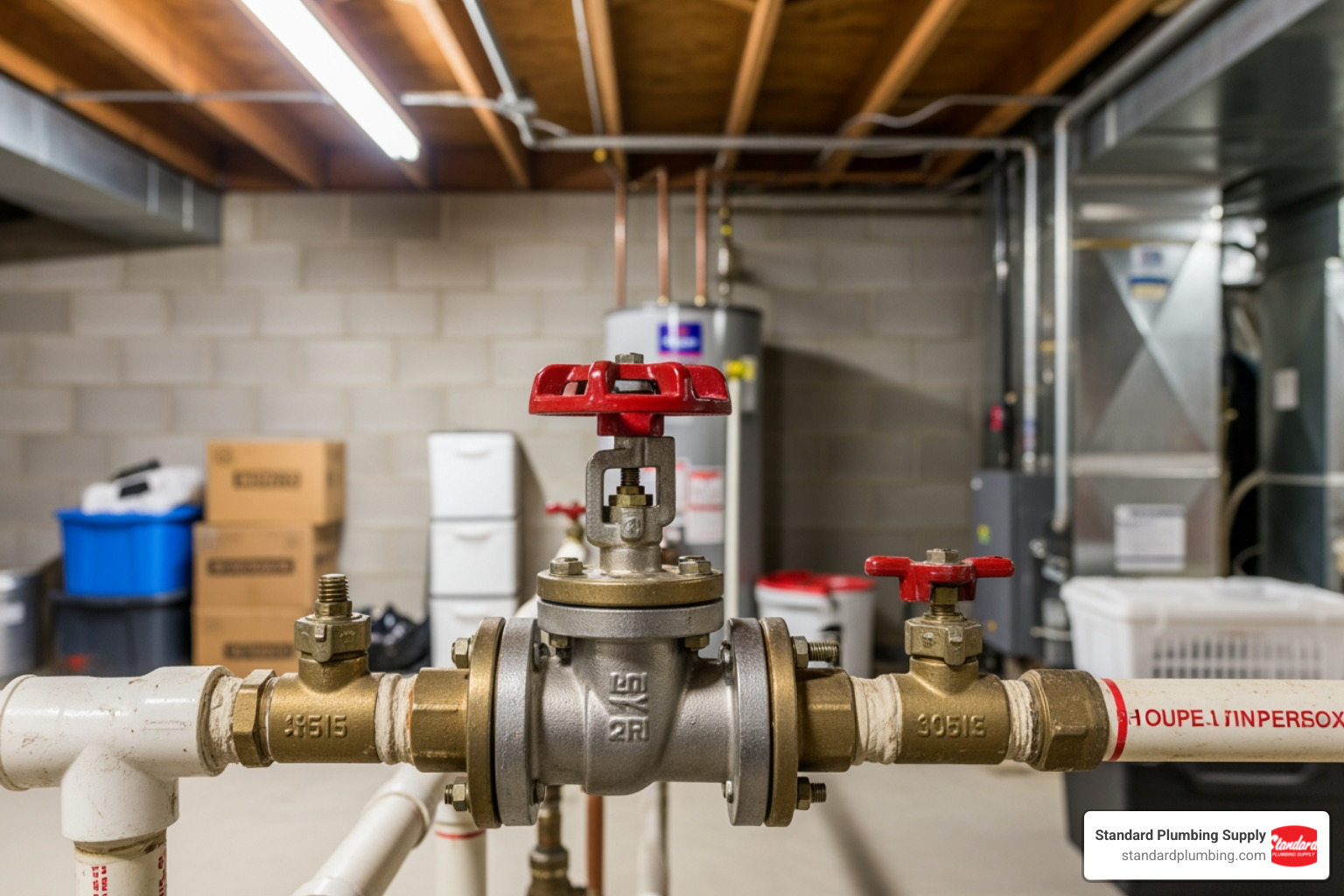
Water main shutoff is the critical process of stopping all water flow into your home at the main supply valve. Here’s what you need to know:
Quick Answer: Locating and Operating Your Water Main Shutoff
- Where to Look: Check your basement near the street-facing wall, crawl space, utility closet, or in an outdoor meter box
- Two Main Types: Gate valves (round handle, multiple turns) or ball valves (lever handle, quarter turn)
- How to Shut Off: Turn clockwise for gate valves, or turn lever perpendicular to the pipe for ball valves
- When to Use: Burst pipes, major leaks, before extended vacations, or during plumbing repairs
Knowing where your water main shutoff valve is located and how to operate it could save you thousands of dollars in water damage. According to industry data, water damage accounts for a huge portion of insurance claims paid out each year—so much so that many insurers now require homeowners to install automatic water shut-off systems.
Water gushing from a broken or frozen pipe can cause substantial damage inside your home in just minutes. Yet most homeowners have never located their main shutoff valve, let alone practiced using it. This knowledge gap can turn a minor plumbing issue into a major disaster.
I’m Jacob Reese, Vice President of Standard Plumbing Supply, and I’ve spent my entire life in the plumbing industry, from sweeping warehouses at age eight to helping contractors solve complex water main shutoff challenges across the Western United States. Through three generations of serving the trades, I’ve seen how knowing your home’s shutoff valve location can mean the difference between a quick fix and catastrophic damage.
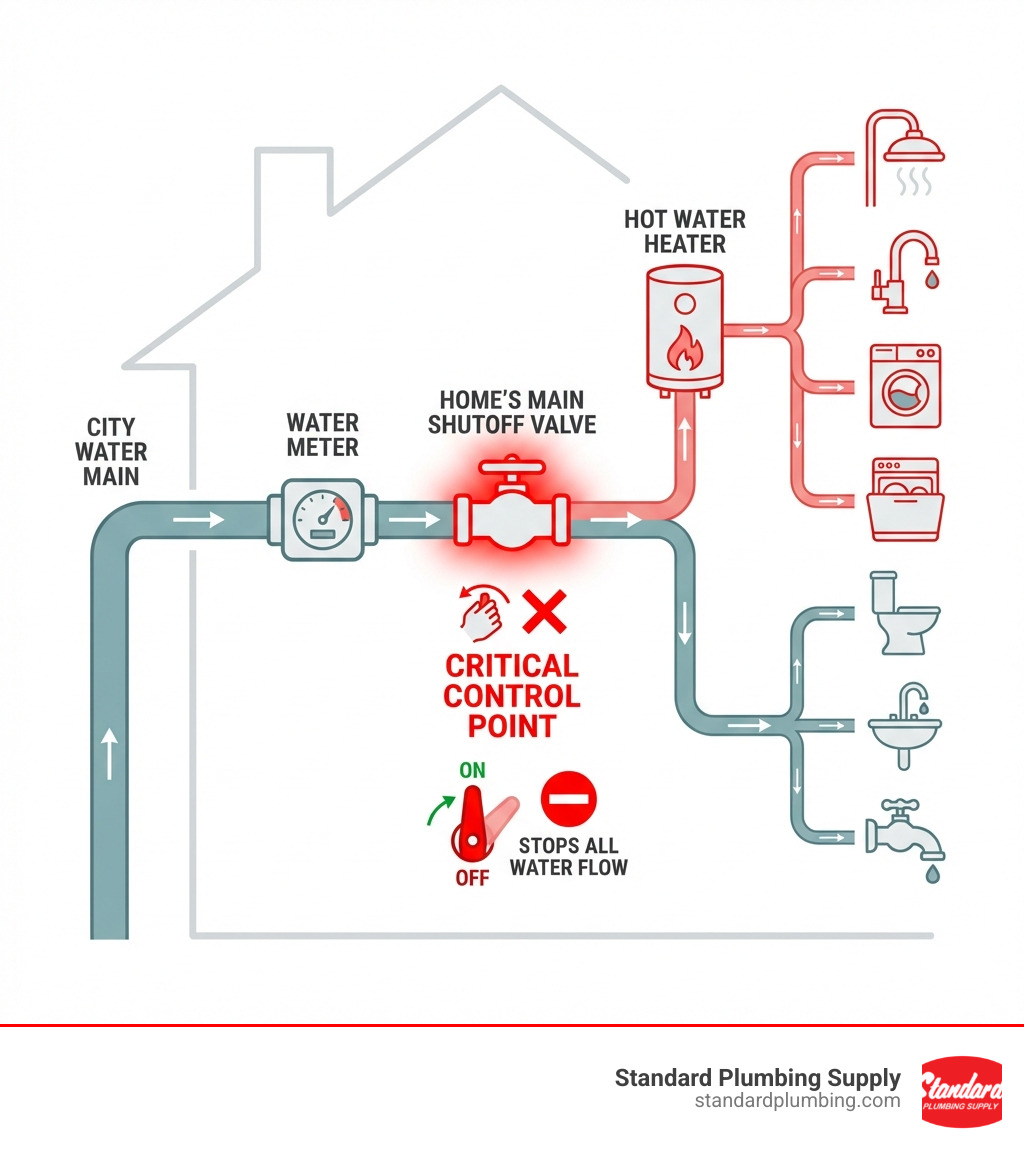
What is a Main Water Shutoff Valve and Why is it Crucial?
The main water shutoff valve is the master control for your home’s entire water supply. Think of it as the ultimate “off” switch for all the water coming into your house from the municipal supply line or your well. Its primary function is to allow you to stop the flow of water to your entire home quickly and efficiently. This whole-house control is incredibly important for several reasons, mainly to prevent devastating water damage.
In an emergency, like a burst pipe or a major leak, every second counts. Knowing where this valve is and how to operate it can literally save your home from extensive flooding, costly repairs, and the headache of dealing with insurance claims. As we mentioned in the introduction, water damage is a leading cause of insurance claims, making this simple piece of knowledge a powerful tool in your homeowner’s arsenal.
While you might have individual shutoff valves for fixtures like toilets or sinks, the main water shutoff valve gives you complete peace of mind that you can cut off the source of any water disaster immediately.
The Difference Between Main and Fixture Valves
It’s essential to understand the distinction between your main water shutoff valve and the smaller, individual fixture shutoff valves (often called stop valves or isolation valves).
The main water shutoff valve controls the entire house. When you turn this valve off, every faucet, toilet, shower, and appliance in your home that uses water will stop receiving water. This is your go-to valve for any major plumbing emergency, when you’re leaving for an extended period, or when you need to perform significant plumbing work that affects multiple areas of your home.
Individual fixture shutoff valves, on the other hand, are designed to isolate single fixtures. You’ll typically find these small valves under sinks, behind toilets, and near appliances like washing machines or dishwashers. Their purpose is to allow you to turn off the water to just that specific fixture for repairs, replacement, or maintenance without interrupting the water supply to the rest of your house. For example, if your toilet is overflowing, you can simply turn off its dedicated shutoff valve, keeping water flowing to your kitchen sink and shower. These are excellent for strategic repairs, but they won’t help if the main supply line bursts.
The High Cost of Water Damage
The financial and emotional toll of water damage can be immense. A burst pipe or a leaky appliance can quickly release hundreds of gallons of water, leading to flooded basements, ruined flooring, damaged electronics, and even structural issues. Beyond the immediate destruction, water damage often leads to secondary problems like mold growth, which can pose serious health risks and require even more extensive and expensive remediation.
Industry facts highlight this grim reality: water damage accounts for a significant portion of insurance claims each year. Some insurance providers are even beginning to require homeowners to install automatic water main shutoff systems as a preventative measure. This underscores just how costly these incidents can be, not just for homeowners but for insurers as well. Turning off your water using the main shutoff valve when you will be away from home for a long time can prevent costly leaks, saving you thousands of dollars and countless headaches.
Locating Your Home’s Main Water Shutoff Valve
Finding your main water shutoff valve is one of the most important tasks a homeowner can undertake. While its exact location can vary, there are common places to check. A good first step is to consult your property inspection report from when you purchased your home; these often detail the location of the main valve. If that’s not available, we’ll need to do a little detective work by following the main water line as it enters your property.
Generally, the main water shutoff valve will be located near your water meter, which is where the water supply enters your property. Climate plays a significant role in where this valve is situated. In colder regions, such as Idaho, Wyoming, Colorado, or parts of Nebraska and Utah, the water line and valve are often located indoors or buried deeper underground to prevent freezing. In warmer climates, like Arizona, California, or Nevada, you might find the valve and meter exposed outside.
Common Indoor Locations
For many homes, especially those in areas prone to freezing temperatures, the main water shutoff valve is found indoors.
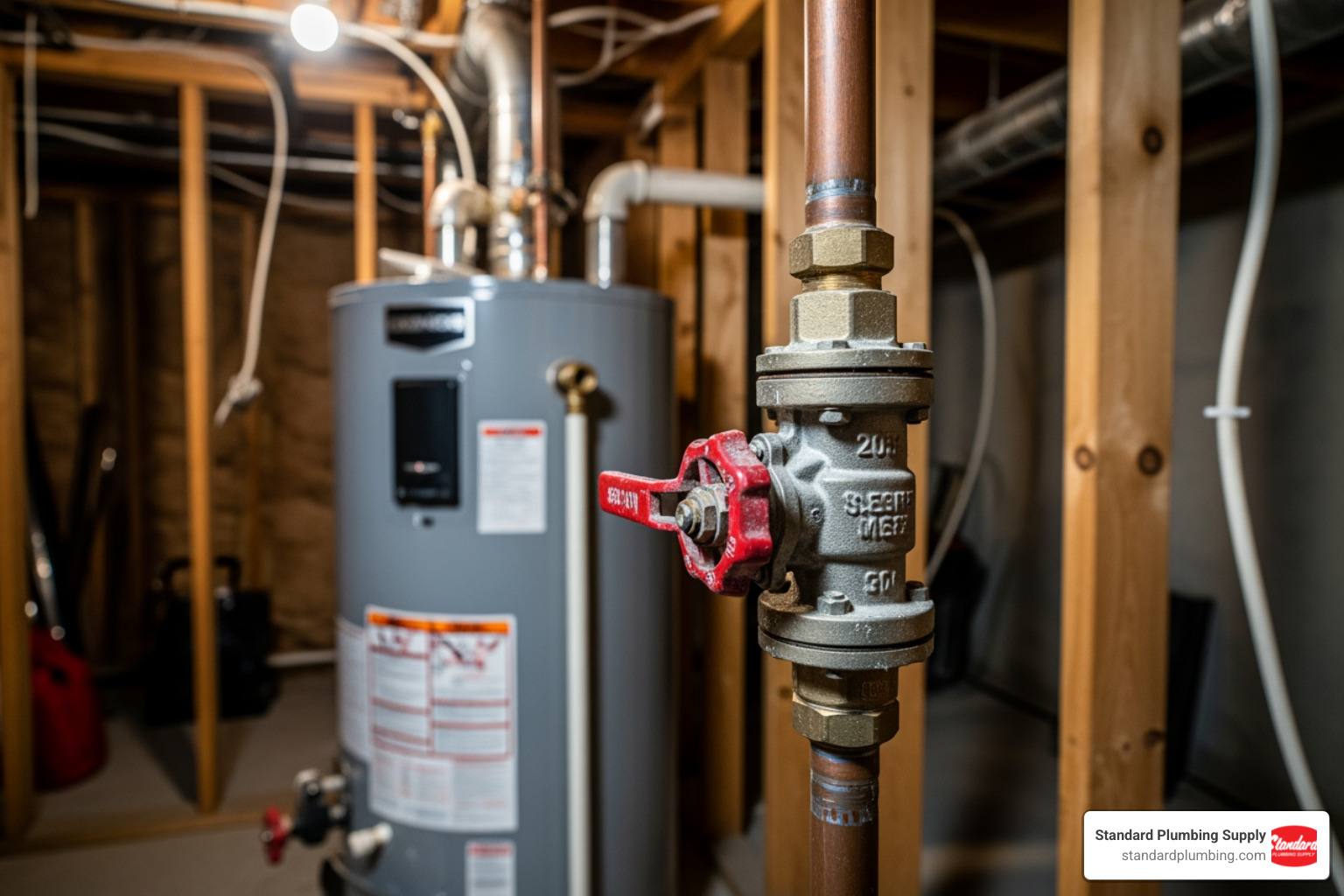
Some of the most common indoor locations include:
- Basements or Crawl Spaces: Often, the water line will enter through the foundation wall closest to the street. Look along this wall for a pipe coming in from the ground, and your main valve will typically be located shortly after it enters.
- Utility Closets or Garages: In homes built on a slab, like many found in Arizona or parts of California, the main water shutoff valve might be located near your hot water heater or inside your garage.
- Near the Water Heater: Sometimes, the main valve is situated close to your water heater, as this is a central point for your home’s water distribution system.
- Perimeter of the House: Generally, it will be on the side of the house that faces the street, or where the main water line enters the dwelling.
Common Outdoor Locations
In many warmer regions, or even in colder climates where the main line is buried, the main water shutoff valve can be found outside your home.
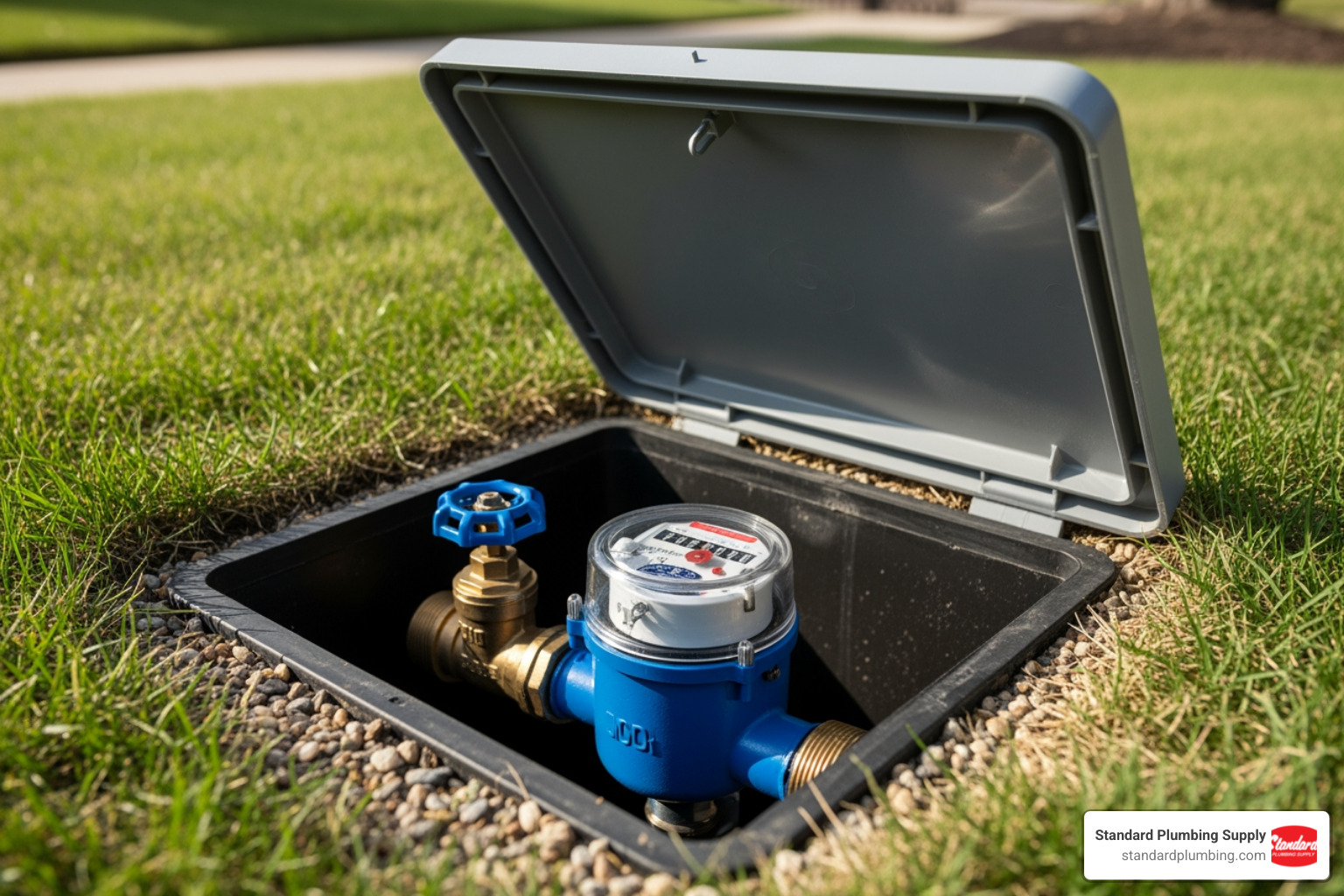
Common outdoor spots include:
- Buried Utility Box / “Buffalo Box”: This is a very common scenario in many areas across our service regions, including parts of California, Arizona, and Nevada. You’ll look for a small, usually rectangular or circular, metal or plastic box buried in the ground near the street curb, often marked “Water” or “Meter.” This box houses your water meter and typically a shutoff valve. This is often referred to as a “Buffalo box.”
- Curb Stop: Inside this utility box, you’ll find what’s called a curb stop. This is the valve that controls the water flow from the municipal main to your property. To operate it, you’ll often need a specialized tool called a meter key or curb key.
- Exterior Walls: In some warmer climates, the main shutoff might be located directly on an exterior wall of your house where the water line enters.
It’s generally illegal and potentially dangerous to tamper with the utility’s side of the water main shutoff valve (the one between the street and the meter). Your homeowner’s responsibility typically starts after the meter, or at the first shutoff valve on your property.
Tips for Finding Your Water Main Shutoff if It’s Hidden
If your water main shutoff valve isn’t immediately visible, don’t panic! We have a few tricks up our sleeves to help you locate it:
- Check Property Inspection Documents: As mentioned, your home inspection report is a goldmine of information. It often includes detailed notes and even photos of utility locations.
- Trace Pipes from the Street: Go to the street where your municipal water line likely runs. Visually follow the path where you think the water line enters your property. Look for any buried utility boxes, or where pipes might enter your foundation.
- Look for Access Panels: In homes without basements, especially those on a slab, the main water line might run under the foundation. Sometimes, an access panel in a closet or utility area will reveal pipes and valves.
- Contact Your Local Water Utility: If all else fails, your local water department or utility company (e.g., in Phoenix, Sacramento, Las Vegas, Salt Lake City) can often provide guidance or even send a technician to help you locate your main shutoff valve. They have records of where service lines enter properties. While they won’t operate your internal valve, they can help you find where your responsibility begins.
Identifying and Operating Your Water Main Shutoff Valve
Once you’ve located your water main shutoff valve, the next step is to understand what type of valve it is and how to operate it safely. There are two primary types of valves you’ll encounter in residential plumbing: gate valves and ball valves. Both serve the same purpose but operate differently. Most residential water main shutoff valves are made of durable brass, chosen for its reliability and resistance to corrosion. Less common are plastic valves, typically used for lower pressure or specialized applications.
| Feature | Gate Valves | Ball Valves |
|---|---|---|
| Reliability | Can wear out over time, prone to leaks/seizing. | Generally more reliable, less prone to leaks. |
| Operation | Multi-turn (requires several rotations). | Quarter-turn (requires only a 90-degree turn). |
| Visual Cue | Round handle or wheel. | Lever handle. |
| Common Issues | Can get stuck, handle may spin without turning valve, internal components can fail. | Very reliable, but if forced when stuck, the handle or internal ball could be damaged. |
| Best For | Older installations, less frequent operation. | Modern installations, preferred for main shutoffs due to ease of operation and reliability in emergencies. |
Gate Valves: The Multi-Turn Wheel
Gate valves are one of the older types of valves commonly used for water main shutoff. You’ll recognize them by their distinctive round handle or wheel. To operate a gate valve, you turn the handle multiple times. Following the “righty-tighty, lefty-loosey” rule, you turn the handle clockwise to close the valve and shut off the water. To open it, you turn it counter-clockwise.
The mechanism inside a gate valve involves a wedge-shaped “gate” that moves up and down to block or allow water flow. While effective, these valves can be prone to seizing over time due to mineral deposits or corrosion, making them difficult or impossible to turn when an emergency strikes. They should always be either completely open or completely closed; leaving them partially open can cause wear and tear on the internal components. We recommend exercising gate valves periodically to help prevent them from seizing up.
Ball Valves: The Quarter-Turn Lever
Ball valves are the modern standard for water main shutoff valves, prized for their reliability and ease of operation. They are easily identified by their lever-style handle. Unlike gate valves, ball valves only require a quarter turn (90 degrees) to go from fully open to fully closed.
To shut off the water with a ball valve, you turn the lever so that it is perpendicular (at a 90-degree angle) to the pipe. When the lever is parallel (in line) with the pipe, the water is flowing. This quick, decisive action makes them ideal for emergencies. We often recommend upgrading to a ball valve if you have an older gate valve that’s showing signs of wear or stiffness. For more details on modern quarter-turn ball valve designs, visit your local Standard Plumbing Supply location.
Tools You Might Need
While many water main shutoff valves can be operated by hand, sometimes you might need a little extra help, especially for outdoor valves or those that are a bit stiff. Here’s a list of tools that might come in handy:
- Water Meter Key (Curb Key): Essential for opening and operating valves in buried utility boxes.
- Adjustable Wrench: Useful for providing leverage on stiff valve handles or for turning a valve stem if the handle is missing.
- Pliers (especially locking-grip pliers): Can be used to grip a stubborn valve stem or handle for added torque.
- Screwdriver: Often needed to pry open the lid of an outdoor meter box.
- Protective Gloves: Always a good idea to protect your hands, especially when dealing with potentially dirty outdoor boxes or stiff valves.
When and Why to Use Your Main Shutoff Valve
Knowing how to operate your water main shutoff valve is only half the battle; knowing when to use it is equally crucial. This vital valve is not just for emergencies, though that’s often its most dramatic use. It also plays a key role in planned repairs, home maintenance, and even preparing your home for extended absences or winter.
When to Use the Water Main Shutoff in an Emergency
This is where your knowledge truly shines. In an emergency, turning off your water main shutoff valve is the first and most critical step to mitigate damage.
- Burst Pipes: Whether from freezing temperatures (common in Idaho, Utah, or Colorado winters) or simply old, corroded plumbing, a burst pipe can release a torrent of water. Immediately shutting off the main supply can save your home from severe flooding.
- Major Appliance Leaks: A washing machine hose bursting, a dishwasher overflowing, or a hot water heater rupturing can release a significant amount of water very quickly. While individual shutoffs are good, the main valve stops the problem at its source.
- Flooding: If you find water rapidly accumulating in your home from an unknown source, don’t hesitate. Turn off the main valve.
- Natural Disasters: In regions prone to earthquakes, such as California, knowing how to shut off your water is critical. According to earthquake preparedness experts, there is a significant chance of major earthquakes in many areas. After such an event, your water supply might be unavailable for 72 hours or more, and damaged pipes could leak. Shutting off the main supply prevents further damage from shifted plumbing.
Quick action in these scenarios can prevent thousands of dollars in repairs and minimize the disruption to your life.
Using the Shutoff for Plumbing Repairs and Vacations
Beyond emergencies, your water main shutoff valve is invaluable for planned situations:
- DIY Plumbing Projects: If you’re undertaking any plumbing repairs that involve more than one fixture, or if you’re replacing a major fixture like a water heater, it’s always safest to turn off the main water supply. This ensures no unexpected water flow and allows you to work without interruption.
- Extended Vacations: If you’re planning to leave your home for more than 24 hours (or especially for a week or more), we strongly recommend turning off your water main shutoff valve. Disasters can happen while you are away from your house. To prevent a flood or leak, turning off the main water supply to your home can prevent costly leaks from unexpected pipe bursts or appliance failures while you’re gone. This simple step can save you immense stress and money.
Can Shutting Off Water Prevent Pipes from Bursting in Winter?
While turning off your water main shutoff valve is a crucial step in winterization, it’s not a complete solution on its own for preventing pipes from bursting in freezing temperatures. When you shut off the main water supply, it stops new water from entering your home. However, there will still be water remaining in your pipes.
For true winterization in colder climates (like Idaho, Wyoming, Utah, or Colorado), you need to shut off the main supply and then drain all the water from your pipes. This usually involves opening all faucets (hot and cold) and flushing toilets until no more water comes out. Even after draining, we still recommend insulating exposed pipes, especially in unheated areas like basements, crawl spaces, and exterior walls. The combination of shutting off the main supply, draining the system, and adequate pipe insulation provides the best defense against burst pipes. Your pipes won’t burst because there is no water in them to freeze. To learn more about plumbing valve basics, stop by your local Standard Plumbing Supply branch.
Troubleshooting Common Valve Problems
Even the most reliable water main shutoff valves can encounter issues over time. They are mechanical devices exposed to water, minerals, and pressure. Knowing how to troubleshoot common problems like stuck or broken valves can save you time and prevent further damage. Safety should always be your top priority.
What to Do If the Valve is Stuck or Won’t Turn
It’s a common scenario: you find your water main shutoff valve, but it’s stuck solid. This is often due to corrosion, mineral deposits building up over years of disuse, or simply age. Here’s what we advise:
- Gentle Pressure First: For gate valves, try turning the wheel with gentle, steady pressure. For ball valves, try to move the lever.
- Avoid Excessive Force: Never force a valve with extreme strength or by using a pipe wrench directly on the handle. This can break the handle, strip the valve, or damage the pipe itself, turning a stuck valve into a leaking or broken one.
- Using Pliers for Leverage: If the valve is stiff, you can carefully use an adjustable wrench or locking-grip pliers on the stem of the valve (the part between the handle and the valve body). Some stems even have flat spots designed for this. Apply leverage gradually and gently.
- Lubrication (Caution): For very stiff valves, a penetrating lubricant might help, but use caution and ensure it’s safe for plumbing applications.
- Risk of Breaking: Be aware that older, corroded valves are brittle. If it doesn’t turn with reasonable effort, it’s often safer to assume it’s compromised.
If your valve remains stuck or you’re concerned about breaking it, it’s time to call a professional plumber.
What to Do If the Valve is Broken or Leaking
Signs of a broken or leaking water main shutoff valve are clear: visible drips, constant moisture around the valve, or if the valve turns but doesn’t actually stop the water flow. If you encounter a broken or leaking main valve, here’s our advice:
- Call a Professional Plumber Immediately: A leaking or broken water main shutoff valve is not a DIY repair. It requires specialized tools and expertise to replace without causing a major flood. Our licensed plumbers are experienced in safely replacing these critical components.
- Determine Responsibility (City vs. Homeowner): Remember the distinction between the city’s side of the valve (before the meter) and your homeowner’s side (after the meter). If the leak is on the city’s side, contact your local water utility. If it’s on your side, you (or your plumber) are responsible. In some cases, to replace your main shutoff valve, the city may need to temporarily shut off the water at the street, which your plumber can help coordinate.
- Prepare for Temporary Water Loss: If your main valve needs replacement, you will experience a temporary loss of water to your home. It’s wise to store some drinking water beforehand.
Never touch the city side of the valve as it is illegal to do so. If you have any questions about your main water shutoff valve or suspect it’s broken, it’s always best to contact a professional.
Conclusion
Understanding your home’s water main shutoff valve is more than just a piece of trivia; it’s a fundamental aspect of responsible homeownership and emergency preparedness. We’ve seen how this one valve can be the difference between a minor inconvenience and a catastrophic, expensive disaster. From identifying its location in various parts of our service areas—from the basements of Utah to the outdoor meter boxes of California—to understanding the mechanics of different valve types, you now have the knowledge to act swiftly and confidently.
Taking the time to locate your valve, understand how it works, and even practice turning it off (gently!) can empower you and protect your most valuable asset. Proactive maintenance and preparedness are key to preventing water damage and ensuring the longevity of your home’s plumbing system.
For all your plumbing needs, from finding the right tools to professional advice on valve replacement, we’re here to help. Find parts and professional advice at your local branch of Standard Plumbing Supply in Arizona, California, Colorado, Idaho, Nebraska, Nevada, Oregon, Utah, and Wyoming. We’re always ready to assist you in keeping your home safe and dry!
