
Why Your Relaxation Shouldn’t Come with a Repair Headache

Hot tub repair is a common concern for spa owners, whether you’re dealing with a heater that won’t warm up, jets that have lost their punch, or mysterious error codes flashing on the control panel. When your backyard oasis stops working, you need answers fast.
Quick Answer: What to Look for in Hot Tub Repair
When hiring a hot tub repair service, prioritize these key factors:
- Factory Certifications – Technicians certified by manufacturers like Gecko® or Balboa® ensure proper diagnosis and genuine parts
- Clear Pricing – Expect service fees starting around $249, plus $100 per 30 minutes for labor
- Warranty on Work – Reputable services guarantee repairs for 30 days and offer 1-year warranties on parts
- Proof of Insurance – Protects us from liability during high-voltage electrical work
- High First-Visit Success Rate – Top services complete over 90% of repairs on the first visit
Your hot tub was supposed to be a source of stress relief, not stress itself. When pumps start making strange grinding noises, water pools around the base, or the control panel displays cryptic error codes like “FLO” or “HL,” the relaxation quickly fades. The question becomes: Can you fix it yourself with a YouTube video and some basic tools, or do you need to call in a certified technician? The answer depends on the problem, your skill level, and most importantly, your safety.
The stakes are high. Hot tubs combine water and 240-volt electricity—a potentially deadly mix if handled improperly. Some repairs, like cleaning a filter or replacing a worn gasket, are straightforward DIY tasks. Others, like diagnosing a tripping GFCI breaker or replacing a control pack, require professional expertise. Making the wrong call can mean wasted money on parts that don’t solve the problem, or worse, serious injury.
This guide will help you recognize the warning signs that your hot tub needs attention, understand the most common component failures and their causes, and make an informed decision about when to grab your toolbox versus when to pick up the phone. We’ll also walk you through how to find a reputable repair service—one with the right certifications, fair pricing, and a track record of getting the job done right the first time.
I’m Jacob Reese, Vice President of Standard Plumbing Supply, a third-generation family business serving the plumbing and building trades across the Western United States since 1952. While our focus is on providing contractors and DIY enthusiasts with the plumbing components and PVC fittings they need for repairs—including hot tub repair projects—I’ve seen how the right parts and the right expertise make all the difference in getting a job done correctly. Let’s explore what you need to know to get your spa back to providing relaxation instead of frustration.
Signs Your Hot Tub Needs Attention
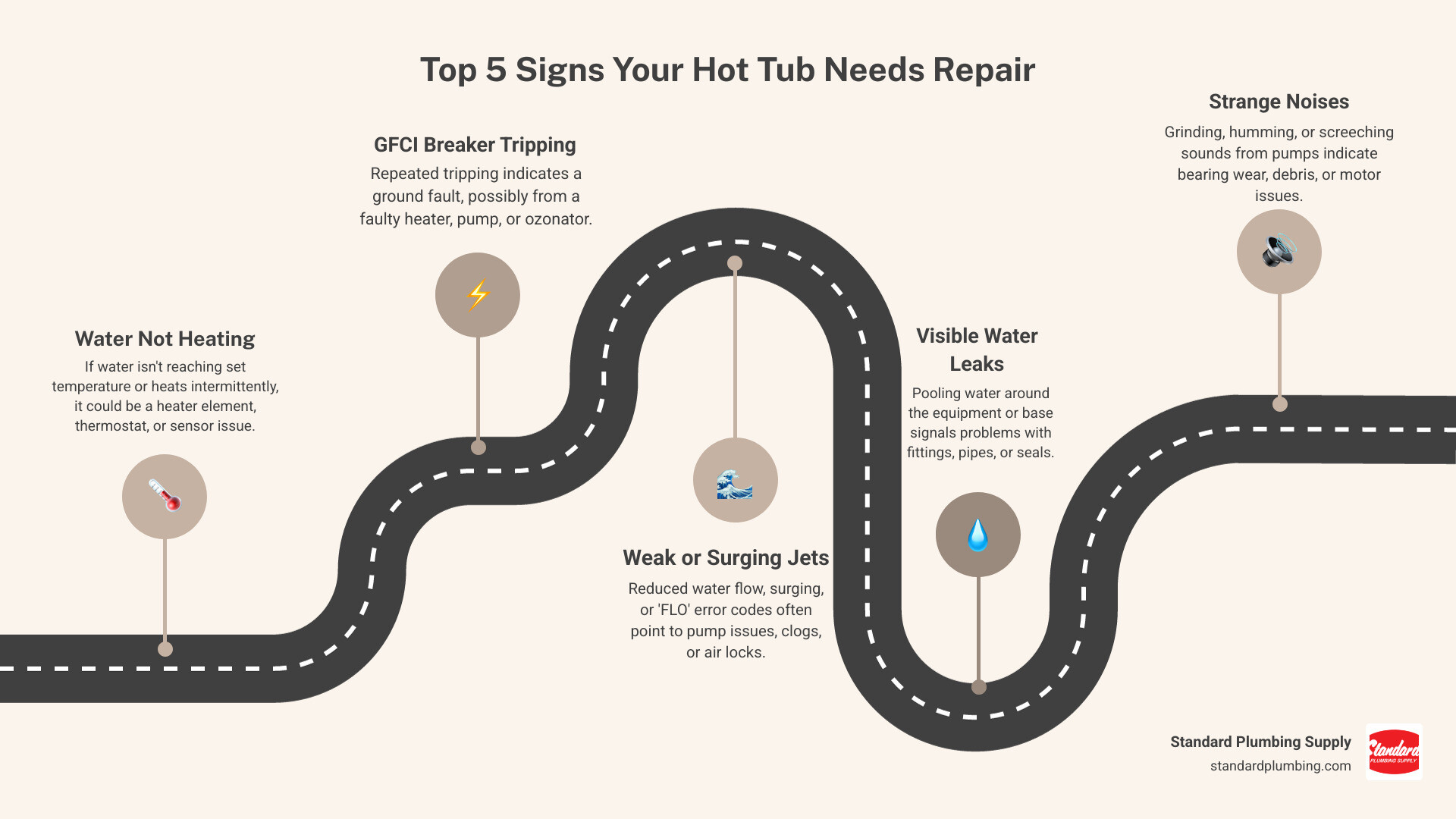
Before we dig into specific repairs, let’s look at the red flags that indicate your hot tub might be waving a white towel. Recognizing these signs early can save you from more extensive and costly hot tub repair down the line.
- Water not heating or fluctuating temperature: This is often the most frustrating sign. If your water isn’t reaching its set temperature, or it’s heating intermittently, your heater element, thermostat, or sensors could be failing.
- Strange noises from pumps: A healthy hot tub pump should hum quietly. Grinding, squealing, or excessively loud noises can point to worn bearings, a clogged impeller, or an airlock.
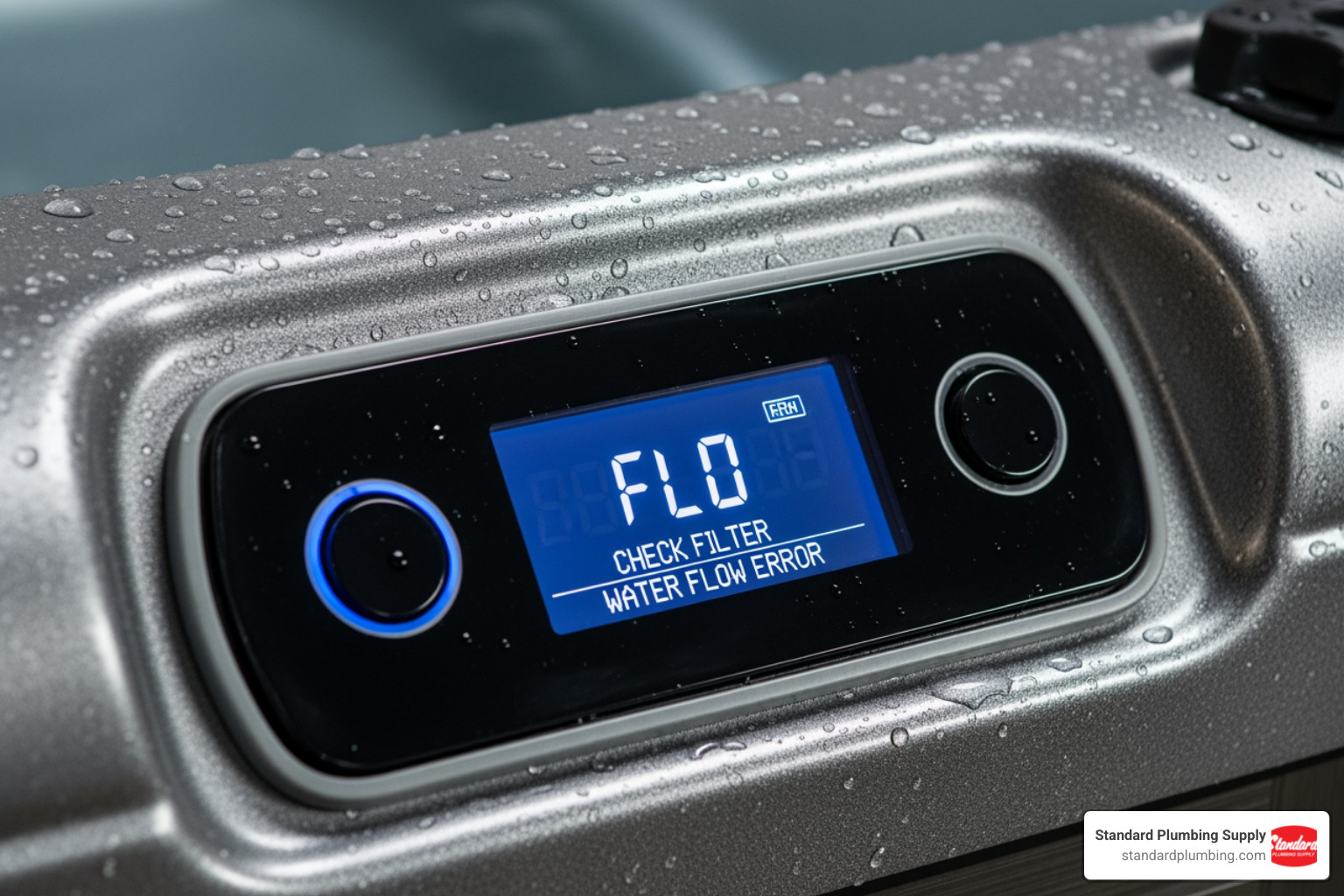
- Weak or surging jets: If your jets lack their usual power or seem to surge, it could be due to a low water level, clogged filters, a faulty pump, or an airlock in the plumbing system. Display messages like “FLO” (flow error) often accompany this.
- Control panel error codes: Your hot tub’s display panel is its way of communicating problems. Codes like “FLO” (indicating a flow issue) or “HL” (high limit, meaning the heater has shut down due to overheating) are direct calls for troubleshooting.
- GFCI breaker tripping: If your hot tub’s ground fault circuit interrupter (GFCI) breaker trips frequently, it’s a serious safety warning. This indicates a ground fault, often caused by a failing electrical component like the heater, pump, or ozonator. Never ignore a tripping GFCI.
- Visible water leaks: Water pooling around the base of your hot tub is an obvious sign of trouble. Leaks can originate from various points, including pump seals, heater unions, jets, or even cracks in the shell. While all leaks eventually pool at the bottom, the source could be much higher up.
- Cloudy or smelly water despite treatment: If you’re diligently balancing your water chemistry but still battling cloudy water, persistent odors, or slime, it could point to issues with your filtration system, ozonator, or biofilm buildup in the plumbing.
Common Hot Tub Problems and Component Failures
This section will detail the most frequent issues hot tub owners face, helping you diagnose the problem. We’ll cover the typical lifespan of parts and what causes them to fail.
Heater and Pump Malfunctions
The heater and pumps are the heart of your hot tub, and when they falter, your relaxation takes a hit. Heaters typically last 5 to 7 years, while pumps often last 5 to 10 years, but their lifespan can be significantly impacted by maintenance.
- Heater element failure: The heater element is responsible for warming your water. Common causes of failure include improper water chemistry (especially low pH, which causes corrosion), scale buildup from hard water, or a “dry fire” where the element is energized without sufficient water flow. A dry fire can rapidly overheat the element, causing it to melt or split.
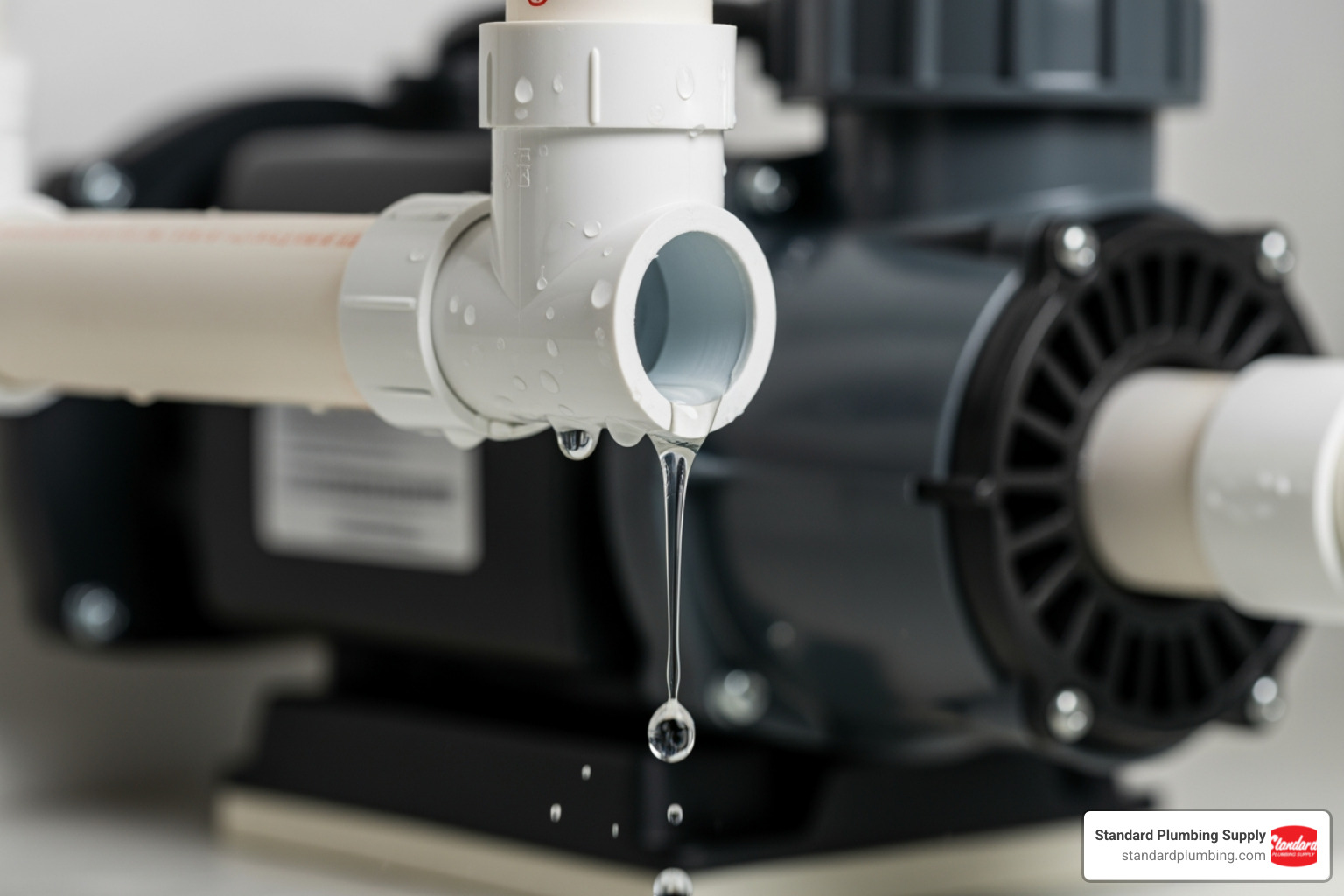
- Pump leaks at the seals: Over time, the seals within your hot tub pump can wear out, leading to leaks. These leaks often appear as drips or puddles directly under the pump housing. Replacing pump seals is a common hot tub repair.
- Pump air lock: An airlock occurs when air gets trapped in the pump, preventing it from priming and circulating water. This can happen after draining and refilling your tub. Signs include the pump running but no water flowing, or weak jets.
- Circulation pump vs. jet pump issues: Hot tubs often have two types of pumps. A circulation pump (or “circ pump”) continuously filters the water and usually runs the heater. A jet pump (or “therapy pump”) provides the powerful flow for the massage jets. Circulation pumps are generally less expensive to replace, costing between $150 to $200, while a jet pump can run between $300 to $500.
Many hot tubs use sophisticated control systems from manufacturers like Balboa® and components from Gecko® component manufacturer. These systems manage everything from heating and filtration to jet operation, and understanding their basic functions can help with diagnosis.
Leaks and Plumbing Issues
Nothing sours the hot tub experience faster than a persistent leak. While some leaks can be tricky to pinpoint, many common issues are identifiable. Most hot tub leaks can even be fixed by the owner for less than $50 if caught early!
- Leaking union fittings: These are the large threaded connectors that join components like pumps and heaters to the flexible PVC plumbing. The rubber gaskets inside these unions can degrade over time, leading to drips. We often see these in our plumbing supply stores, and they’re usually a straightforward fix with a new gasket.
- Cracked PVC pipes: Extreme temperature fluctuations, freezing (which can cost between $300 to $500 to repair frozen pipes), or physical stress can cause the rigid PVC pipes to crack. Water pooling directly beneath a pipe is a strong indicator. Repairing these often involves cutting out the damaged section and replacing it with new PVC and appropriate fittings, which we at Standard Plumbing Supply can help you with.
- Jet gasket deterioration: The gaskets that seal the jets to the hot tub shell can harden and crack, allowing water to seep out. If you notice leaks around individual jets, this is a likely culprit.
- Shell cracks or blisters: While less common, the acrylic shell of your hot tub can develop small cracks or blisters. These are usually visible from inside the tub and may require specialized epoxy repair.
- Locating leaks in foam insulation: Many hot tubs are insulated with foam, which can make locating a leak incredibly challenging. Water can travel through the foam, making the visible leak point far from the actual source. This is where patience and careful observation come in.
Electrical and Control System Glitches
Electrical problems demand immediate attention due to the inherent safety risks. High voltages are present in hot tubs, and improper handling can cause serious injury or death.
- GFCI tripping causes: As mentioned, a constantly tripping GFCI is a safety alarm. Common culprits include a faulty heater element (often due to water ingress), a short in the pump motor, or issues with the ozonator. The heater is a very common source of GFCI trips.
- Faulty temperature or flow sensors: These sensors tell the control pack about the water temperature and whether water is flowing through the heater. If they malfunction, the heater might not turn on, or it might “dry fire” if it thinks there’s flow when there isn’t.
- Spa pack (control pack) failure: The control pack is essentially the “brain” of your hot tub, managing all its functions. If it fails, you might experience complete power loss, erratic behavior, or persistent error codes. Replacing a control pack can be a significant investment, ranging from $234 to $850.
- Burnt-out fuses on the circuit board: Like any electronic device, a hot tub’s circuit board has fuses to protect its components. A blown fuse can indicate an overload or a short in a specific component. If the entire spa is non-operational, check the 0.3 amp system fuse on the circuit board.
- Safety precautions for electrical work: We cannot stress this enough: always turn off the spa and shut off power at the main breaker before attempting any electrical inspection or repair. If you are not a qualified electrician or technician, do not attempt high-voltage electrical repairs yourself.
DIY vs. Professional Hot tub repair: Making the Call
Deciding whether to tackle a repair yourself or call a professional depends on the complexity of the job, your skill level, and safety considerations.
Simple DIY Hot tub repair Tasks
For many hot tub owners, a bit of elbow grease and the right parts can resolve common issues. We encourage safe and informed DIY, especially when it comes to plumbing-related fixes where we can provide the necessary components.
- Cleaning and replacing filters: This is perhaps the easiest and most crucial maintenance task. Clogged filters restrict water flow, stressing your pump and potentially causing “FLO” errors. Regularly cleaning or replacing your filters is a must.
- Fixing minor leaks with epoxy: Small cracks in PVC pipes can sometimes be patched with specialized epoxy putty. For shell cracks, products like Plast-Aid can be effective. For minor leaks around jets or in plumbing, a leak sealer like Marlig’s Fix-a-Leak can work wonders, often fixing small leaks up to 1/8 inch in diameter for less than $50.
- Replacing worn gaskets: Leaks at pump or heater unions are often due to worn-out rubber gaskets. These are inexpensive and relatively easy to replace. Remember to shut off the gate valves on either side of the pump and heater to stop water flow before replacing gaskets.
- Resetting a tripped GFCI: If your GFCI trips, it’s worth trying to reset it. If it trips immediately again, or repeatedly, then it’s time to investigate the cause—but always with the power off.
- Troubleshooting basic error codes: Many control panel error codes, like “FLO” or “HL,” have simple troubleshooting steps. For “FLO,” check water level, filter cleanliness, and for airlocks. For “HL,” try resetting the GFCI breaker for 10 seconds.
- Safety first: turning off power: Regardless of how simple the task seems, always, always turn off the power to your hot tub at the main breaker before you begin. This is non-negotiable.
When to Hire a Professional for Hot tub repair
While DIY can save money, there are clear instances where calling a professional is the smartest, and safest, choice.
- Major electrical work: Any repair involving the main electrical connections, the control pack, or diagnosing a persistent GFCI trip (beyond basic resetting) should be handled by a certified electrician or hot tub technician. The risks of electric shock are too high.
- Control pack replacement: As the “brain” of the hot tub, replacing the control pack is a complex electrical task best left to experts.
- Complex plumbing repairs: While we can supply the PVC fittings and components, extensive plumbing repairs, especially those involving multiple broken pipes within the foam insulation, can be labor-intensive and require specialized tools and expertise.
- Pump or heater replacement: Replacing a pump or heater involves both plumbing and electrical connections. While some experienced DIYers might tackle this, it’s a job often recommended for professionals to ensure proper installation and safety. For example, replacing a pump yourself might cost around $400 for the part, but a professional could charge up to $1,400 including labor.
- Persistent, undiagnosed issues: If you’ve tried basic troubleshooting and the problem persists, or you can’t pinpoint the cause, a professional will have the diagnostic tools and experience to identify the root issue.
- High voltage risks: We cannot emphasize enough the danger of high voltage electricity combined with water. When in doubt, call a professional.
| Task | DIY Feasibility | Pro Recommended | Avg. Cost (DIY parts / Pro incl. labor) |
|---|---|---|---|
| Filter Cleaning/Replacement | High | Low | $30-$90 / $100-$200 (part of service) |
| Gasket Replacement (minor) | Medium | Low | < $50 / $200+ (part of service call) |
| Minor Leak Sealing | Medium | Low | < $50 / $200+ (part of service call) |
| GFCI Reset (initial) | High | Low | $0 / $249+ (diagnosis) |
| Pump Replacement | Medium | High | $150-$500 / $600-$1400 |
| Heater Replacement | Medium | High | $200-$600 / $500-$1200 |
| Control Pack Replacement | Low | High | $234-$850 / $500-$1500+ |
| Electrical Diagnosis/Repair | Very Low | High | N/A / $249+ (diagnosis) |
| Extensive Plumbing Repair | Low | High | $50-$200 / $400-$1000+ |
Finding a Reputable Repair Service
When you decide to call in the cavalry for hot tub repair, choosing the right technician is key to a lasting repair and peace of mind. We want you to have the best experience, whether you’re tackling a repair yourself with our plumbing supplies or hiring a pro.
Vetting Your Technician
Not all hot tub repair services are created equal. Here’s what to look for:
- Factory certifications: Look for technicians certified by major hot tub component manufacturers like Gecko® component manufacturer and Balboa® control systems. These certifications indicate specialized training and knowledge.
- Online reviews and testimonials: Check out customer reviews on platforms like Google, Yelp, or other local service directories. Look for consistent positive feedback about professionalism, expertise, and fair pricing.
- Proof of insurance: This is critical, especially for electrical work. Ensure the company carries liability insurance to protect you from any accidental damage or injury that might occur during the repair.
- Warranty on parts and labor: A reputable service will stand by their work. Look for a guarantee on repairs (some offer 30 days) and a warranty on any replacement parts (typically 1 year).
- Clear pricing structure: Before any work begins, get a clear understanding of their service call fees and hourly rates. The service fee for hot tub repair often starts around $249, covering drive time and diagnosis. Subsequent charges are typically $100 per 30 minutes of labor.
- High first-visit success rate: Some top services boast completing over 90% of repairs on the first visit, which saves you time and hassle.
When you’re looking for a service in our regions, such as Arizona, California, Colorado, Idaho, Nebraska, Nevada, Oregon, Utah, or Wyoming, consider asking for references or checking with local hot tub dealers for recommended repair specialists. The Hot Tub Store, for example, which serves Northern California, emphasizes factory-certified technicians and a high first-visit repair rate, offering a good benchmark for what to look for.
The Cost of Repairs and How to Prevent Them
Understanding repair costs and investing in preventative maintenance can save you significant money and extend the life of your spa. Nobody wants to spend more time or money fixing their hot tub than enjoying it!
Understanding Repair Costs
Professional hot tub repair can vary significantly depending on the issue and whether it’s a DIY fix or requires a technician.
- Average service call fee: As we noted, a standard service fee for a technician to come out and diagnose the problem typically starts around $249. This usually covers travel and the initial diagnostic time.
- Hourly labor charges: After diagnosis, expect labor to be charged at approximately $100 per 30 minutes, or $199 per hour.
- Typical part replacement costs:
- Replacing a circulation pump: $150 to $200 (part cost)
- Replacing a jet pump: $300 to $500 (part cost)
- Replacing a control pack: $234 to $850 (part cost)
- Replacing a heater: $200 to $600 (part cost)
- Replacing frozen pipes: $300 to $500 (part cost)
While DIY repairs for minor issues can often be done for less than $50 (e.g., using a leak sealer), hiring a hot tub repair company for larger repairs can cost at least $200 just for the service call, plus parts and labor.
Preventative Maintenance to Save Money
An ounce of prevention is worth a pound of cure, and this is especially true for hot tubs. Regular, diligent maintenance can significantly reduce the need for costly hot tub repair.
- Regular water chemistry balancing: This is paramount! Maintaining proper pH (7.2-7.6) and sanitizer levels prevents corrosion of components like heater elements and pump seals, and also reduces scale buildup. Test your water regularly and adjust as needed.
- Routine filter cleaning: Clean your filters every 1-2 weeks and replace them every 1-2 years, depending on usage. Clogged filters make your pump work harder, reducing its lifespan and efficiency.
- Annual plumbing purge: Use a biofilm cleaner at least annually to purge your plumbing lines. Biofilm can harbor bacteria and reduce water quality, contributing to issues.
- Inspecting the hot tub cover: A well-maintained cover is crucial for energy efficiency and protecting your tub from debris. Inspect it regularly for tears or waterlogging, and clean it to extend its life.
- Proper winterization procedures: If you’re not using your hot tub year-round, proper winterization is essential to prevent freezing damage to pipes and components. This involves draining, drying, and adding RV antifreeze to all lines and equipment. Frozen pipes can lead to costly repairs, as we mentioned earlier.
Frequently Asked Questions about Hot Tub Repair
How often should a hot tub be serviced?
Regular self-maintenance, such as water testing and filter cleaning, should be performed weekly or bi-weekly depending on usage. A more thorough professional tune-up or multi-point inspection is highly recommended annually. These professional services typically involve inspecting the topside controls, pumps, spa pack, heater, and water purification systems for functionality. This proactive approach helps catch minor issues before they become major, costly hot tub repair problems.
Is it worth fixing an old hot tub?
It truly depends on the tub’s age, its overall condition, and the estimated cost of the repair compared to the cost of a new, comparable model. The average lifespan of a hard-sided, portable hot tub is between fifteen to twenty years. Components like heaters typically last 5 to 7 years, while pumps often last 5 to 10 years. If the shell is in good shape and the repair cost is less than 30-50% of buying a new hot tub, it’s often worth fixing. However, if multiple major components are failing, or the tub is nearing the end of its typical lifespan, replacement might be a more economical choice in the long run.
Why does my hot tub GFCI keep tripping?
A tripping GFCI is a critical safety feature, indicating a ground fault somewhere in your hot tub’s electrical system. This means electricity is escaping its intended path and finding a route to the ground, which can be extremely dangerous. The most common culprits for a tripping GFCI are:
- Faulty Heater Element: This is a very frequent cause. Water can ingress into the element, or it can short internally.
- Failing Pump Motor: A pump motor nearing the end of its life can draw too much current or develop an internal short.
- Ozonator Malfunction: The ozonator, which helps sanitize the water, can also short out.
- Rodent Damage: Rodents chewing through wires can create a direct short.
- Water Intrusion: Moisture getting into the control pack or other electrical components can cause a fault.
To isolate the problem, a professional technician (or a very cautious, qualified DIYer who understands electrical safety) would typically unplug components one by one (always with the main power off!) to see which one is causing the trip. Due to the high voltage involved and the serious safety risks, diagnosing and repairing a persistent GFCI trip is almost always a job best left to a professional.
Conclusion
Recognizing the signs of trouble and understanding common issues are the first steps in hot tub repair. While many minor fixes are DIY-friendly, complex electrical and plumbing work is best left to certified professionals for safety and peace of mind. For those tackling plumbing-related DIY repairs, finding the right PVC fittings and parts is crucial. Standard Plumbing Supply offers a wide selection to help you get the job done right. Ready to find the parts for your next project? Explore our catalog of plumbing and PVC fittings to get started.
