
Why 110mm Waste Pipe Fittings Are Essential for Drainage Systems
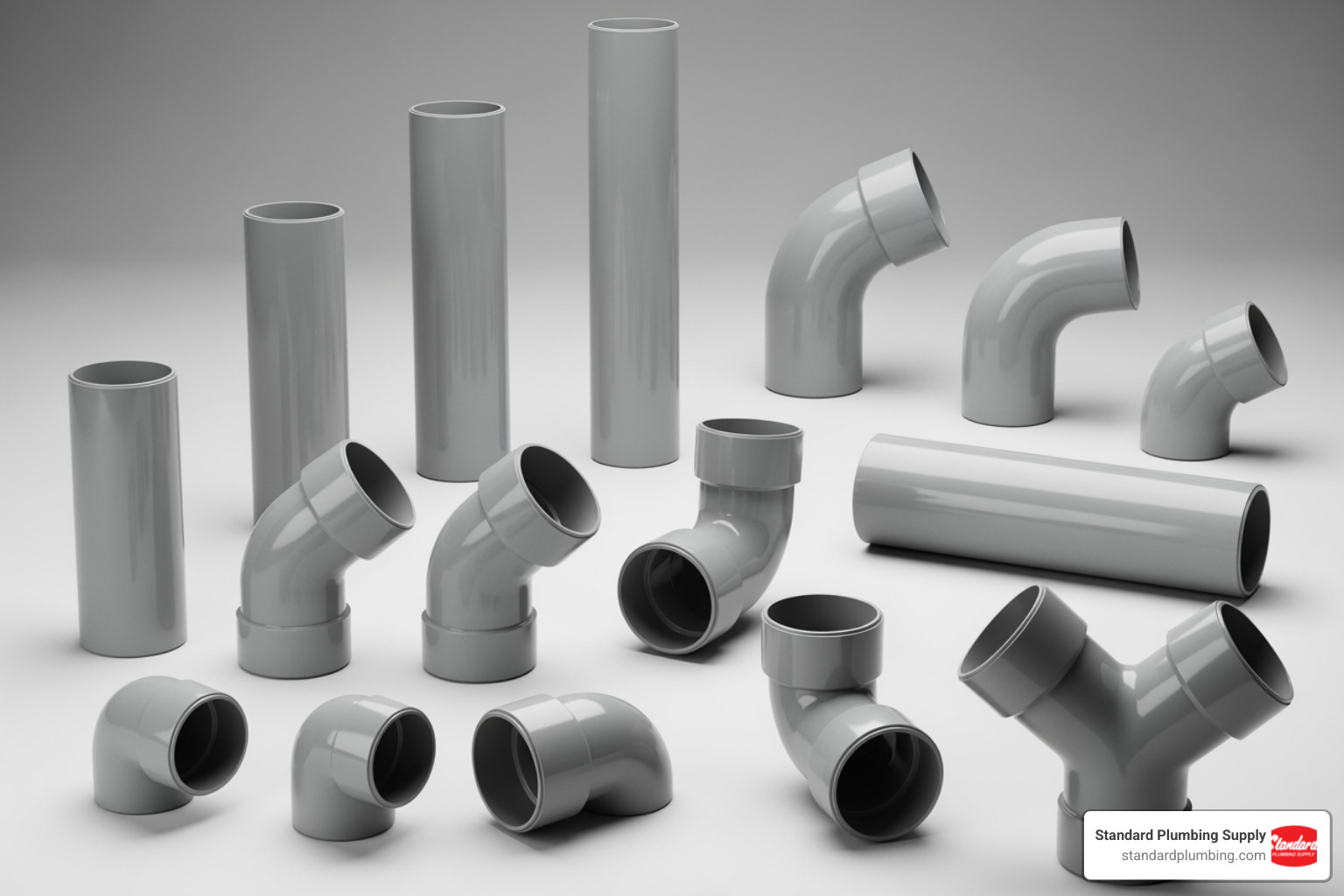
110mm waste pipe fittings are the standard components for domestic underground drainage systems, connecting waste from toilets, sinks, and surface water to the main sewer. Here’s what you need to know:
Essential 110mm Fittings for Your Drainage Project:
- Pipes: Single-socket and plain-ended pipes for straight runs
- Bends: 45° and 90° options for changing direction
- Junctions: Connect multiple pipe runs (tees, wyes, branches)
- Couplings: Join straight sections of pipe together
- Adaptors: Connect to smaller waste pipes (32mm, 40mm, 50mm)
- Access Fittings: Rodding eyes and cleanout points for maintenance
- Specialty Items: Air admittance valves, non-return valves, gully traps
Key Standards: All fittings must comply with BS EN 1401-1 for underground drainage.
Material: Typically made from PVC-U (rigid PVC) for durability, light weight, and ease of installation.
Installation: Available in both push-fit (rubber seal) and solvent weld (chemical bond) systems.
110mm is the standard diameter because it provides the optimal balance between flow capacity and pressure for residential waste systems. When installed at the correct gradient (minimum 1:80 for foul water), a 110mm pipe handles up to 4.5 litres per second. The terracotta/golden-brown color distinguishes underground drainage pipes from grey above-ground soil pipes, though functionally similar fittings exist for both applications.
Whether you’re a professional installer or tackling a DIY project, understanding which fittings you need—and how they work together—ensures your drainage system performs reliably for decades. The variety of bends, junctions, and adaptors allows you to create custom layouts that steer obstacles and connect multiple waste sources efficiently.
I’m Jacob Reese, Vice President of Standard Plumbing Supply, and I’ve spent over two decades working with contractors and DIY enthusiasts to source the right 110mm waste pipe fittings for projects ranging from simple repairs to complex commercial installations. Through hands-on experience across nearly every role in our family business, I’ve learned that choosing quality fittings and understanding proper installation methods makes all the difference in system longevity and performance.
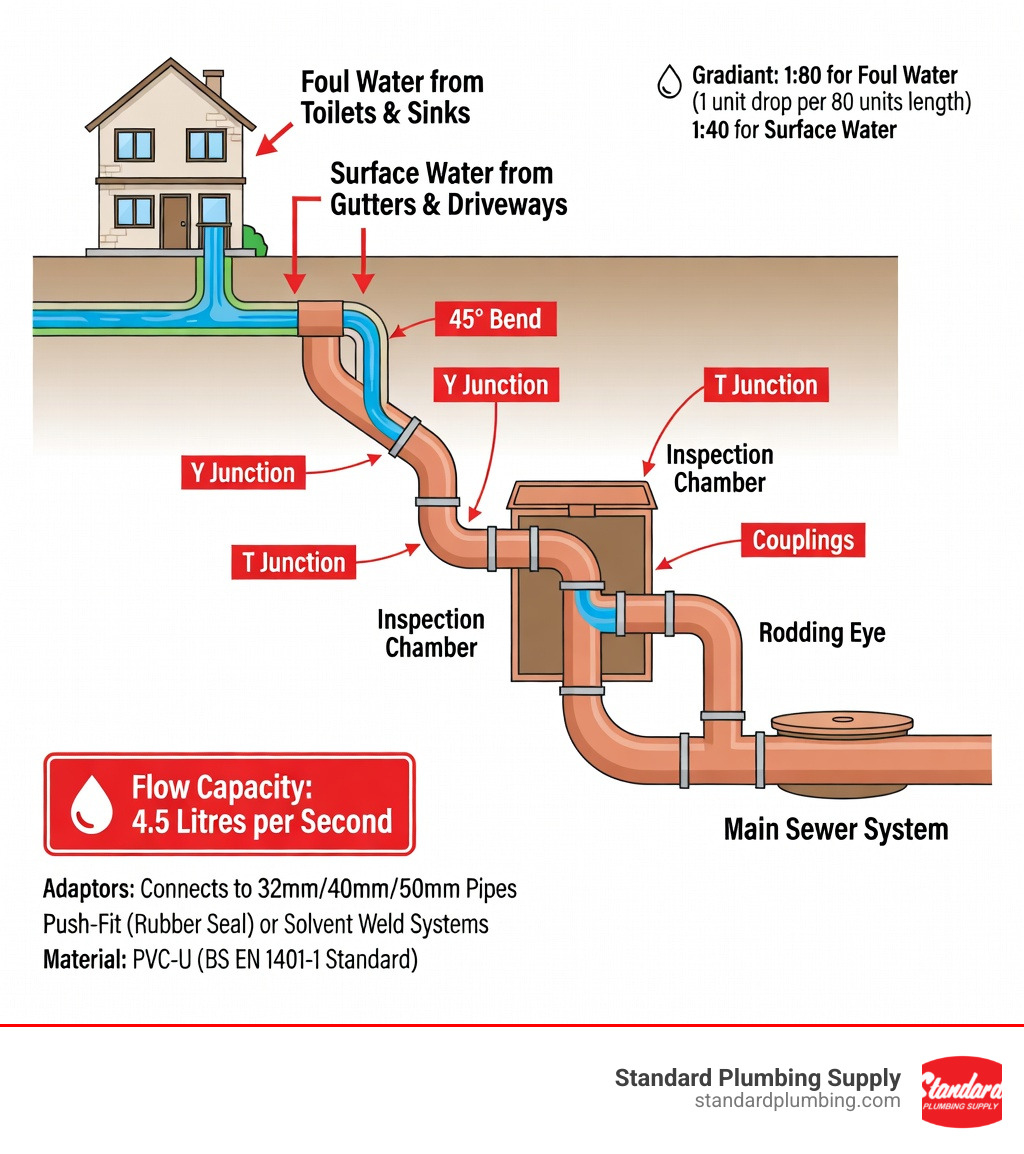
Simple 110 waste pipe fittings word guide:
What Are 110mm Waste Pipe Fittings?
When we talk about 110mm waste pipe fittings, we are referring to the backbone of modern residential and light commercial drainage. In the plumbing world, size matters—and 110mm (approximately 4 inches) is the “Goldilocks” diameter for moving waste away from a property. It is large enough to handle solids from toilets without frequent blockages, yet compact enough to be easily installed in trenches or under floorboards.
These fittings serve as the connectors, direction-changers, and adapters that turn a collection of straight pipes into a functional system. Because these components are often buried deep underground or hidden behind walls, we place a massive emphasis on material science and industry standards. You don’t want to dig up your garden in five years because a cheap fitting cracked!
Primary Uses of 110mm Waste Pipe Fittings in Drainage Systems
In our experience at Standard Plumbing Supply, we see these fittings used in three main scenarios:
- Foul Water Drainage: This is the critical system that carries waste from toilets, baths, and kitchen sinks to the public sewer or a septic tank.
- Surface Water Systems: These fittings manage rainwater collected from roofs (via downpipes) and paved areas, directing it to soakaways or storm drains.
- Underground Connectivity: 110mm is the standard for individual properties. While larger 160mm pipes are used for shared mains, the 110mm system is what connects your home to that larger network.
Common Materials and Their Properties
The choice of material often depends on your specific location and the application. While PVC-U is the global standard for underground drainage, ABS (Acrylonitrile Butadiene Styrene) is incredibly popular in many of our US locations, especially for above-ground DWV (Drain, Waste, Vent) systems.
| Feature | PVC-U (Polyvinyl Chloride Unplasticized) | ABS (Acrylonitrile Butadiene Styrene) |
|---|---|---|
| Best Use | Underground drainage, high chemical resistance | Above-ground DWV, cold weather resilience |
| Joining Method | Push-fit (rubber seal) or Solvent Weld | Primarily Solvent Weld |
| Color | Usually Terracotta/Brown (Underground) | Usually Black |
| Weight | Very Lightweight | Lightweight and impact resistant |
For those looking for high-performance ABS options, we often recommend components like the 6 x 4 ABS San Tee for complex junctions. If you’re curious about the deeper science, you can check out this guide on understanding industrial plastic materials.
Key Standards and Certifications
We can’t stress this enough: always check the stamps on your pipes and fittings. For underground drainage, BS EN 1401-1 is the gold standard. It ensures the plastic is thick enough to withstand soil loading (the weight of the earth pressing down) and ground movement. Other certifications to look for include:
- NSF Certification: Ensures the material is safe and meets performance standards.
- ASTM D2665: A common US standard for PVC-U plastic drain, waste, and vent pipe and fittings.
- Kitemark/BBA: These are third-party approvals that guarantee the product has been rigorously tested.
A Guide to the Different Types of 110mm Waste Pipe Fittings
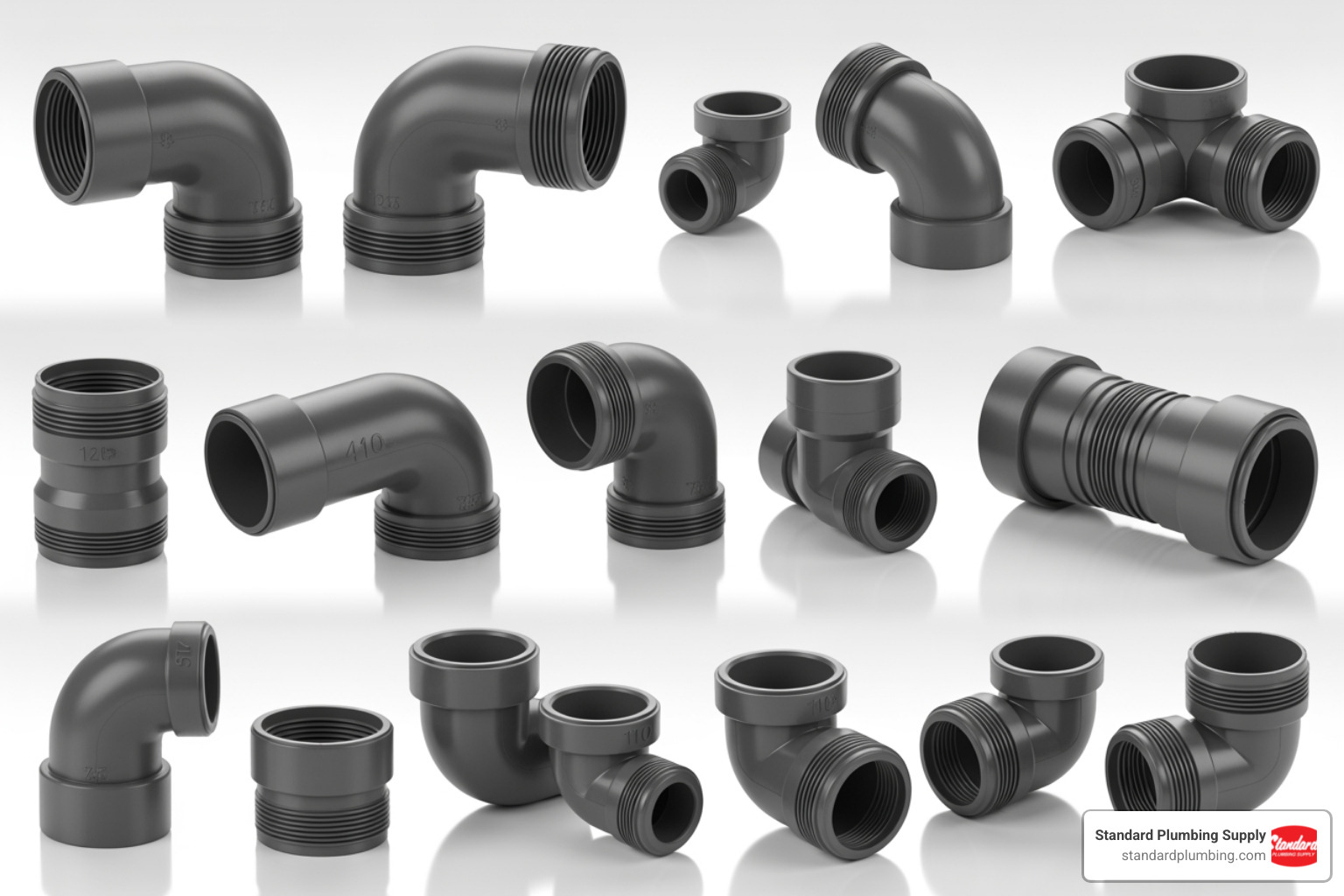
Designing a drainage system is like building a giant puzzle where every piece has to fit perfectly to keep things flowing downhill. Here’s a breakdown of the essential “puzzle pieces” we stock at our locations from Idaho to Arizona.
Bends and Junctions
Rarely does a drain run in a perfectly straight line. You’ll need to steer around foundations, trees, and existing utilities.
- Bends: Available in angles like 15°, 30°, 45°, and 90°. We generally recommend using two 45° bends instead of a single tight 90° bend whenever possible to reduce the risk of blockages.
- Tees and Wyes: These are used to join two pipe runs into one. A 3 x 3 x 3/4 Cop Red Tee or a 3 x 3 x 1-1/2 ABS St. Wye are classic examples of how we branch systems together.
- Adjustable Bends: These are lifesavers for those “almost right” angles, allowing you to rotate the fitting to achieve the perfect degree of turn (usually between 0° and 90°).
Couplings and Adaptors
Sometimes you just need to join two pieces of pipe, or connect a large 110mm pipe to a smaller sink waste.
- Slip Couplers: These don’t have a center “stop,” allowing them to slide fully onto a pipe. They are perfect for repair jobs where you need to bridge a gap in an existing line.
- Waste Adaptors: These are critical for connecting 32mm (1 1/4″), 40mm (1 1/2″), or 50mm (2″) waste pipes from sinks and showers into the main 110mm line. A DWV Male Trap Adapter is a common component here.
- Flexible Couplings: Made of rubber with stainless steel bands, these are used when joining pipes of different materials, such as connecting modern PVC to old clay pipes.
Access, Vents, and Speciality Fittings
Maintenance is the part of plumbing nobody likes to think about until there’s a problem.
- Rodding Eyes and Cleanouts: These provide an access point so you can insert a drainage rod to clear blockages without having to dig up the whole system.
- Air Admittance Valves (AAVs): These allow air into the system to prevent siphoning (that gurgling sound in your sink) but keep foul odors from escaping.
- Non-Return Valves: These are “one-way streets” for your sewage. They prevent floodwater or sewage from backing up into your home during heavy rain or sewer failures.
Installation Essentials: Jointing Methods and Best Practices
Getting the joint right is the difference between a dry basement and a very expensive disaster. We see two primary methods used across our service areas: push-fit and solvent weld.
Push-Fit vs. Solvent Weld Systems
Push-Fit: This is the go-to for most underground projects. It uses a captive rubber seal inside the socket.
- Pros: Fast, allows for thermal expansion (the pipe can move slightly as temperatures change), and can be disassembled if you make a mistake.
- Cons: If the seal is damaged or the pipe isn’t lubricated, it will leak.
Solvent Weld: This uses a chemical cement to “melt” the two surfaces together, creating a permanent bond.
- Pros: Extremely strong, permanent, and ideal for above-ground soil stacks where the pipe might be under more physical stress.
- Cons: Once it’s set, it’s permanent. If you mess up, you have to cut the pipe and start over.
Achieving the Correct Fall and Flow
Gravity is your best friend—or your worst enemy. If the “fall” (the slope) is too shallow, solids will settle and cause blockages. If it’s too steep, the water will rush away, leaving the solids behind.
- Foul Water (Toilets/Sinks): A minimum gradient of 1:80 is the industry standard.
- Surface Water (Rain): A steeper fall of 1:40 is recommended because there are fewer solids to worry about, and you want to move high volumes of water quickly.
At the correct 1:80 gradient, a 110mm pipe can handle a flow rate of 4.5 litres per second, which is more than enough for a standard family home.
Step-by-Step Guide to a Perfect Joint
- Cut the Pipe: Use a fine-toothed saw to get a square cut. An uneven cut is the leading cause of joint failure.
- Deburr and Chamfer: Use a file to remove any rough edges and create a slight 45-degree angle (chamfer) on the end of the pipe. This prevents the pipe from snagging and damaging the rubber seal.
- Clean: Wipe away any dirt or grit. Even a tiny pebble can ruin a seal.
- Lubricate (Push-Fit): Apply a silicone-based lubricant to the end of the pipe and the seal. Do not use dish soap or oil, as these can degrade the rubber over time.
- Join: Push the pipe firmly into the socket. If using push-fit, pull it back about 10mm to allow for thermal expansion. If using solvent weld, apply the cement, push together, and give a slight twist to ensure even coverage.
Troubleshooting, Maintenance, and FAQs
Even the best-installed systems need a little love occasionally. We recommend checking your access points once a year to ensure there isn’t a buildup of debris or “fatbergs” (congealed grease).
Troubleshooting Common Issues with 110mm Waste Pipe Fittings
- Leaks at Joints: This is usually due to a dislodged rubber seal or a pipe that wasn’t pushed in far enough. For solvent joints, it often means the surfaces weren’t cleaned properly before the cement was applied.
- Gurgling Noises: This usually indicates a venting issue. If air can’t get into the system, the rushing water creates a vacuum that sucks water out of your traps. Installing an Air Admittance Valve often solves this.
- Slow Drainage: Before you reach for the chemicals, check your gradient. If a section of pipe has “sagged” due to poor bedding in the trench, it will create a belly where waste collects.
Frequently Asked Questions
What is the minimum fall for a 110mm drainage pipe?
Foul water drainage requires a minimum gradient of 1:80, meaning a 1cm fall for every 80cm of pipe length. For surface water without solids, a steeper fall of 1:40 is recommended to ensure adequate flow and prevent sediment buildup.
Can I use grey 110mm soil pipe underground?
While possible if the pipe is certified for underground use, it’s not recommended. Underground drainage pipes are typically terracotta/golden-brown to distinguish them from grey above-ground soil pipes. Underground pipes are also manufactured to withstand soil pressure and ground movement. If you must use grey pipe underground, ensure it is “Schedule 40” or higher to handle the weight of the soil.
What’s the difference between push-fit and solvent weld fittings?
Push-fit fittings use a pre-lubricated rubber seal to create a watertight joint simply by pushing the pipe into the socket, making them fast and easy to install. Solvent weld fittings require a specific cement that chemically fuses the pipe and fitting, creating a permanent, high-strength bond. Push-fit is generally preferred for underground work to allow for slight ground movement.
Conclusion
Mastering 110mm waste pipe fittings is about more than just sticking pipes together; it’s about creating a reliable, gravity-fed highway for your home’s waste. By choosing the right materials, adhering to the 1:80 fall rule, and using quality components that meet BS EN 1401-1 standards, you ensure your plumbing remains out of sight and out of mind—exactly where it should be.
At Standard Plumbing Supply, we’ve been helping folks across the Western US get their drainage right for generations. Whether you need a simple coupling or a complex manifold, our team is ready to help you find the perfect fit for your project.
For a comprehensive selection of high-quality fittings for any project, Standard Plumbing Supply offers the components and expertise you need. Explore our full range of ABS DWV fittings and cleanout tees to get started on your next project today!
