
Why Flexible Water Lines Are Essential for Modern Plumbing
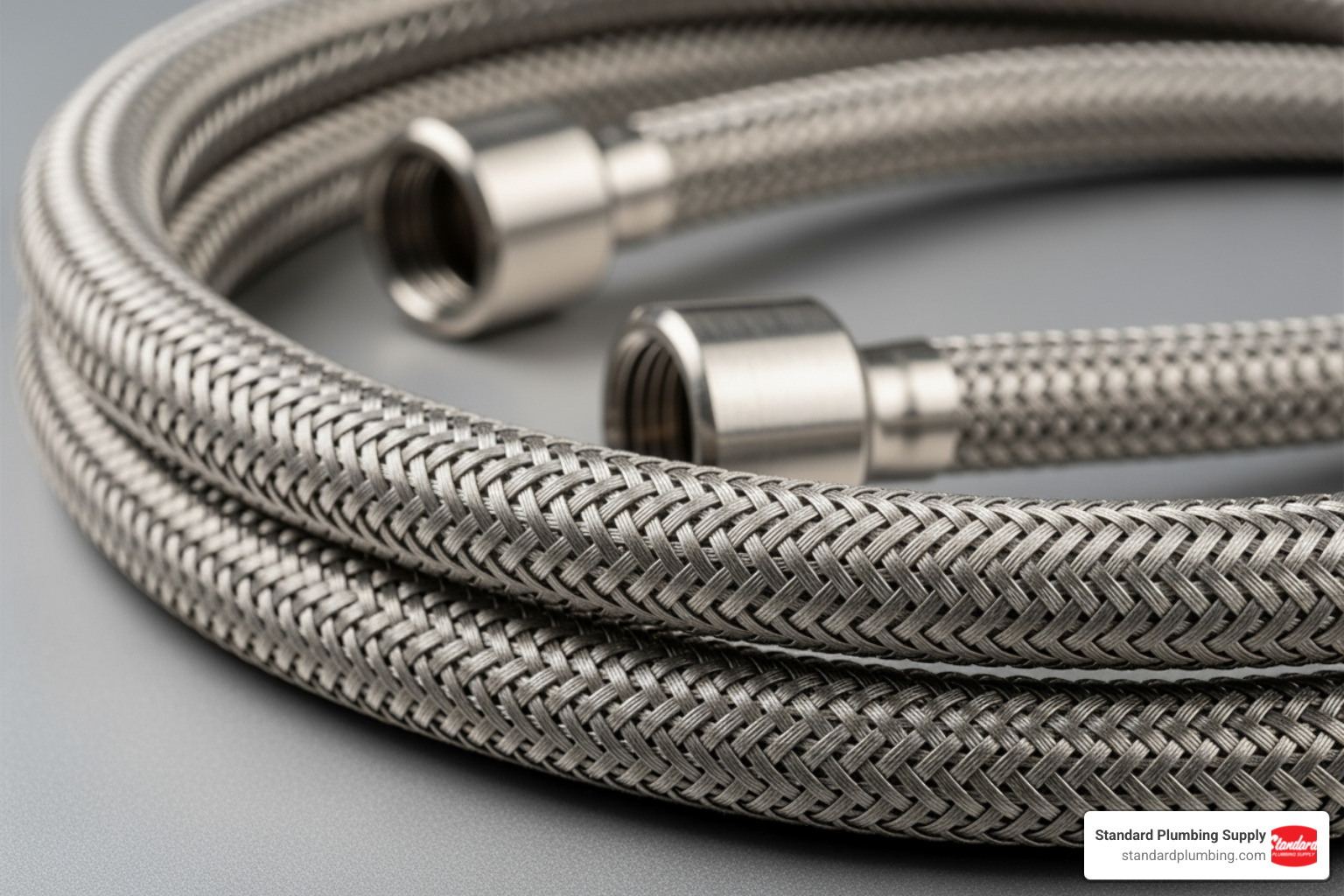
Flexible water lines have revolutionized plumbing by offering a faster, easier alternative to traditional rigid piping. These bendable hoses, typically made of braided stainless steel, PEX, or PVC, connect fixtures like faucets, toilets, and washing machines to water supply lines. Their key advantages include:
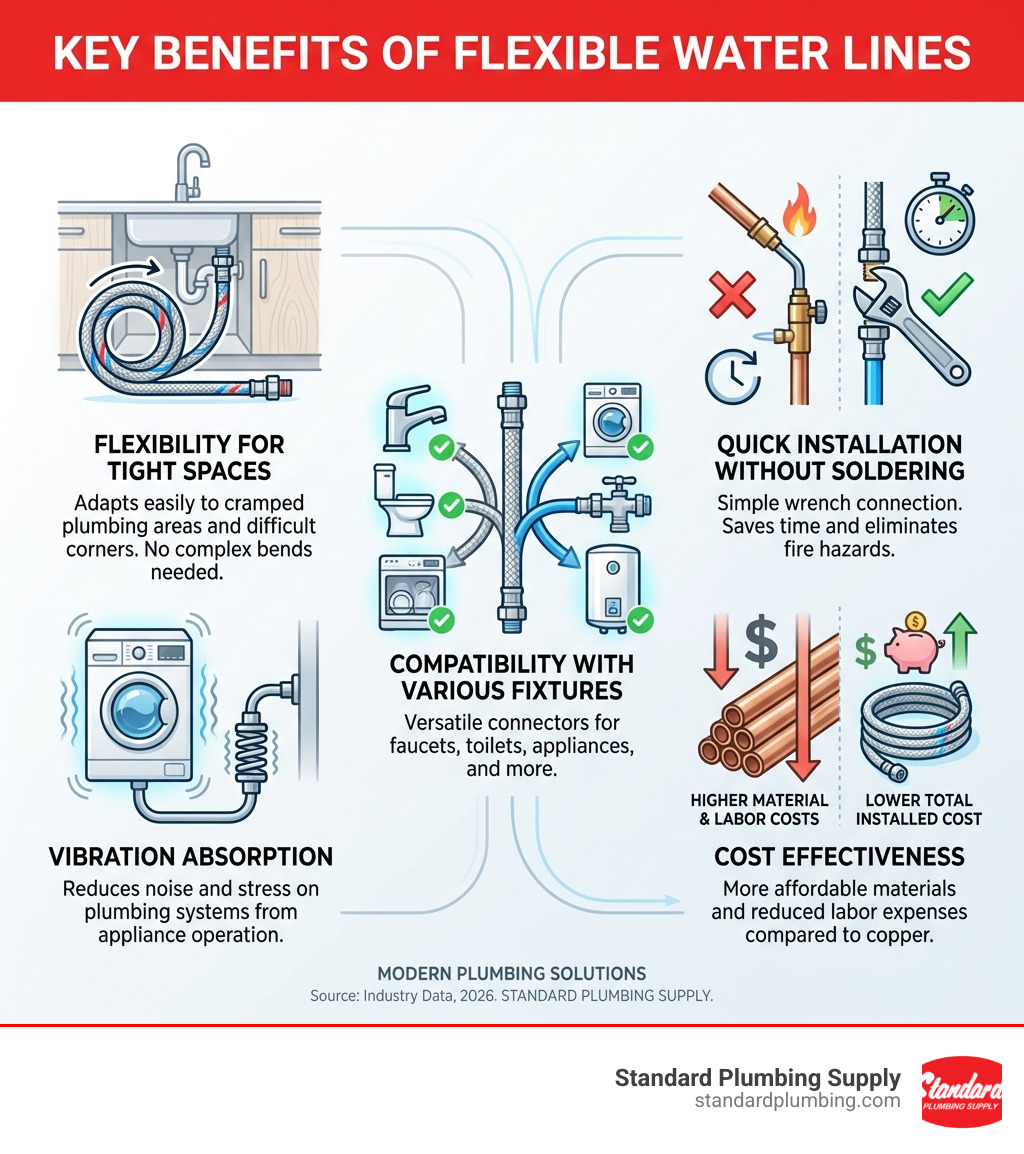
- Easy, solder-free installation
- Vibration absorption
- Suitability for tight spaces
- A typical lifespan of 5-10 years
If you’ve looked under a sink or behind a toilet, you’ve seen a flexible water line. These versatile connectors are the go-to for pros and DIYers because they eliminate the need for cutting and soldering rigid copper pipes. Most can be installed with just an adjustable wrench in about 15 minutes.
The market reflects this shift—the global flexible water line market was valued at $1.2 billion in 2022 and is projected to reach $1.8 billion by 2030. This growth shows how these products have become standard in residential plumbing.
Whether you’re replacing an old supply line or tackling a remodel, understanding flexible water lines will save you time and money. The right choice comes down to matching the material to your application.
I’m Jacob Reese, Vice President of Standard Plumbing Supply. Over my years working with contractors and DIYers, I’ve seen how choosing the right flexible water lines can make the difference between a quick installation and a weekend of headaches.
Understanding the Types of Flexible Water Lines
When we talk about flexible water lines, we’re referring to a broad category of products, each designed for specific applications. The materials used impact their durability, flexibility, and suitability for various tasks. Choosing the correct type is key to a lasting plumbing solution.
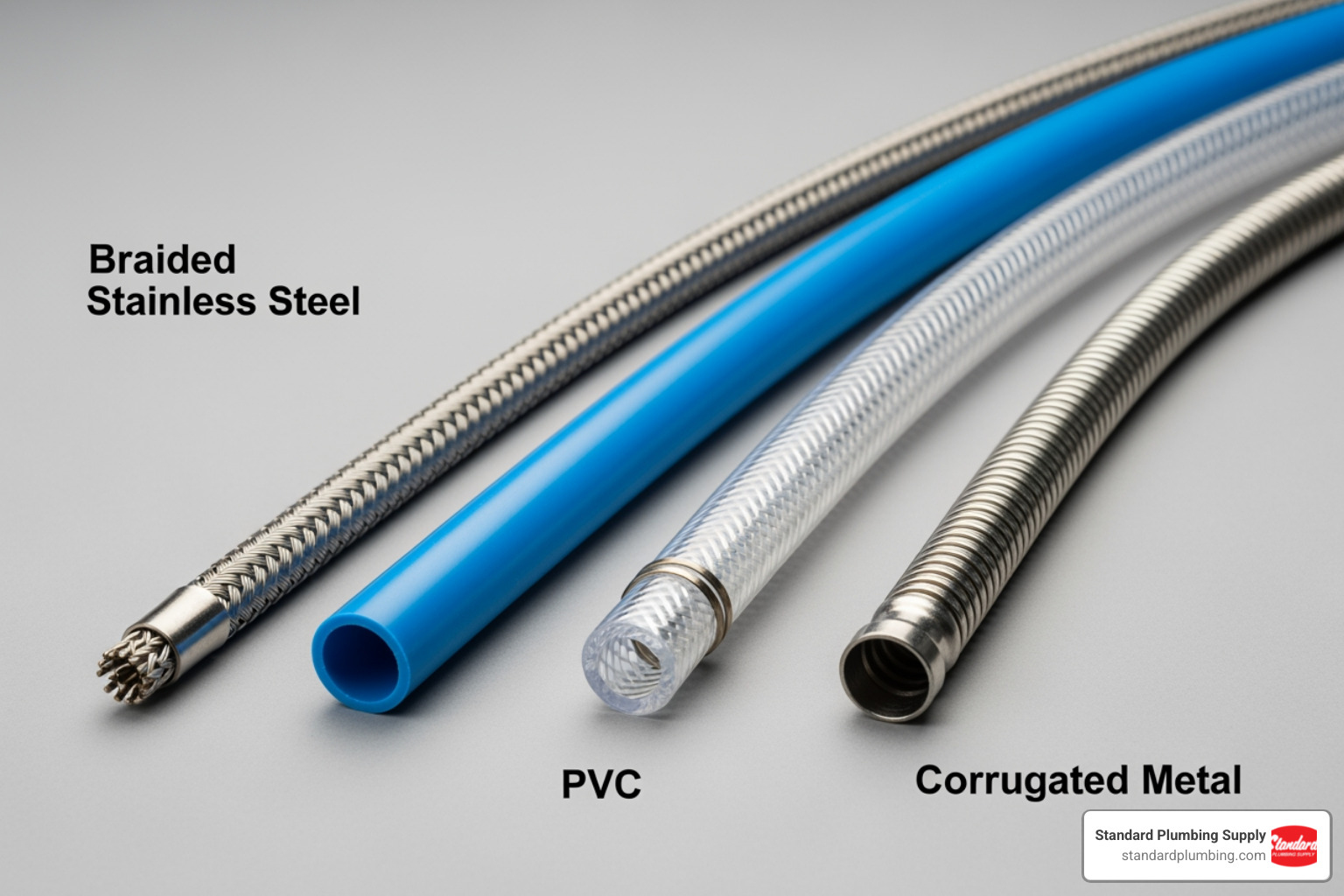
Let’s explore the common types:
Braided Stainless Steel Connectors
These are the most recognizable flexible lines for household fixtures. They feature a PVC core reinforced with nylon and encased in a grade 304 braided stainless steel exterior. This provides excellent flexibility, corrosion resistance, and durability.
Pros:
- Durable & Corrosion-Resistant: The stainless steel braiding protects the inner hose from punctures, kinks, and rust.
- Easy to Install: Connects easily with simple wrenches.
- Absorbs Vibration: Reduces stress on pipes from appliance vibrations.
Cons:
- Cost: More expensive than unbraided options.
- Internal Degradation: The inner PVC/nylon can degrade over time with hot water.
Common Applications: Faucets, toilets, dishwashers, washing machines, and refrigerator ice makers. Many are color-coded for hot and cold lines.
PEX (Cross-Linked Polyethylene) Tubing
PEX tubing is a game-changer for whole-house plumbing. Made from cross-linked polyethylene, its flexibility is ideal for running long distances with fewer connections, reducing potential leak points.
Pros:
- Highly Flexible: Can be snaked through walls and around corners, simplifying installation.
- Resistant to Corrosion & Scale: Unlike metal, PEX doesn’t corrode or develop scale buildup.
- Freeze Resistant: Can expand with freezing water, making it less prone to bursting than rigid pipes.
- Cost-Effective: Generally cheaper than copper and quicker to install.
Cons:
- UV Sensitive: Not suitable for continuous exposure to sunlight.
- Rodent Damage: Can be susceptible to chewing by rodents.
- Specialized Tools: Requires specific crimp or expansion tools for fittings.
Common Applications: Whole-house hot and cold water systems, radiant floor heating, and supply lines to individual fixtures. For more information, explore options like our 3/4″ x 20′ Red Sharkbite Pex.
PVC and Vinyl Tubing
For low-pressure or low-temperature applications, PVC and vinyl tubing offer an economical and highly flexible solution.
Pros:
- Affordable: The least expensive flexible line option.
- Extremely Flexible: Very pliable and easy to route.
- UV & Chemical Resistant: Certain types are designed for outdoor use and resist many chemicals.
Cons:
- Low Pressure/Temp Ratings: Not for high-pressure potable water or hot water.
- Prone to Kinking: Can kink if bent too sharply.
- Rodent Vulnerability: Can be chewed by rodents.
Common Applications: Pond circulation, aquarium setups, drain lines, and low-pressure irrigation. For these needs, we offer options like our 3/8″ x 50′ Clear Vinyl PVC Tubing.
Corrugated Metal Lines
For connections demanding high durability, flow rates, and temperature resistance, corrugated metal lines (usually stainless steel) are the top choice, especially for water heaters and softeners.
Pros:
- Extremely Durable: Highly resistant to crushing, kinking, and physical damage.
- High Temp/Pressure Ratings: Can withstand much higher temperatures and pressures than plastic lines.
- Superior Flow Rate: The corrugated design allows for maximum water flow.
- Prevents Electrolysis: Helps mitigate corrosion between dissimilar metals at connection points.
Cons:
- Stiffer: Less flexible than braided or PEX lines.
- Cost: Typically the most expensive option.
Common Applications: Water heaters, water softeners, boilers, and other applications where high flow and durability are critical.
Here’s a quick comparison of the four main types of flexible water lines:
| Material | Best Use | Pros | Cons |
|---|---|---|---|
| Braided Stainless Steel | Faucets, Toilets, Appliances | High durability, corrosion & kink resistance, easy install, absorbs vibration | More expensive than unbraided, internal materials can degrade with hot water over time, industrial aesthetic |
| PEX (Cross-Linked Polyethylene) | Whole-House Plumbing, Radiant Heating | Highly flexible, corrosion/scale resistance, freeze resistant, cost-effective, color-coded | UV sensitive (limits exposed use), susceptible to rodent damage, requires specialized fittings/tools |
| PVC and Vinyl Tubing | Low-Pressure, Ponds, Drains | Very affordable, highly flexible, UV resistant (some types), fish safe (some types), chemical resistant | Lower pressure/temperature ratings, prone to kinking if bent sharply, susceptible to rodent damage, clear vinyl can degrade in sunlight |
| Corrugated Metal (SS) | Water Heaters, Softeners, Boilers | Extreme durability, high temp/pressure ratings, superior flow, prevents electrolysis, heat resistant | Stiffer than other flexibles (less bend radius), typically the most expensive, installation can require more force |
How to Choose the Right Flexible Water Line
Selecting the right flexible water line involves a bit of homework to ensure compatibility, safety, and longevity. We guide our customers through these key considerations.
Sizing and Length: Getting the Perfect Fit
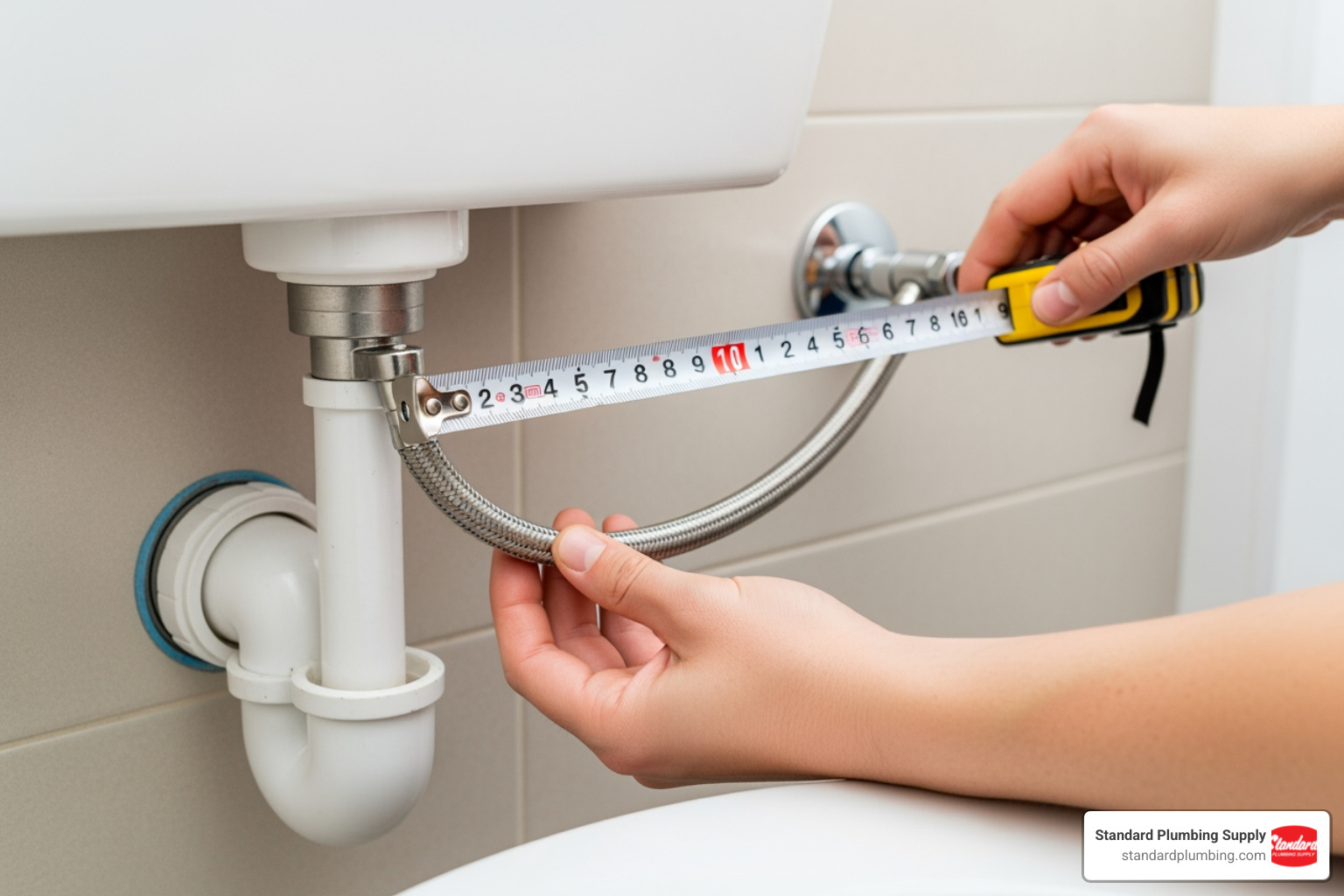
Accurate measurement is crucial. Measure the distance between your shutoff valve and the fixture’s connection point, then add 4-6 inches of slack to prevent stretching or kinking. Common diameters for household connections are 1/4″, 3/8″, and 1/2″, while larger appliances like water heaters may use 3/4″ or 1″ connections. A great tip is to check the tag on the old line, which usually indicates the length and end nut sizes.
Connection Types and Fittings
The ends of your flexible water line must perfectly match the connections on your shutoff valve and fixture. Common types include:
- Compression: Uses a ring (ferrule) to create a seal, common for ice makers.
- FIP/MIP (Female/Male Iron Pipe): Standard threaded connections often used for water heaters.
- FHT (Female Hose Thread): The same connection as a garden hose, used for washing machines.
- Push-to-Connect (PTC): Also known as “push-fit” or “SharkBite” fittings, these allow for quick, tool-free connections. Learn more about these versatile Sharkbite 1/2″ x 3/4″ MIP Reducing Pipe Connector.
- Ballcock Nuts: A 7/8″ nut specifically for toilet tank connections.
- SJ (Slip Joint): A 1/2″ non-tapered thread for faucets that seals with a rubber washer.
Always check both the valve and the appliance inlet to determine the required fitting types and sizes.
Key Features and Certifications to Look For
When shopping for flexible water lines, look for these crucial features:
- Pressure Rating (PSI): Ensures the line can withstand your home’s water pressure (typically 40-80 PSI). A rating of 125-200 PSI offers a good safety margin.
- Temperature Rating: Guarantees the line can handle hot water, especially for water heaters.
- Lead-Free Compliance: Federal law requires products for drinking water to be “lead-free.” Look for certifications like NSF/ANSI 61 to ensure safety and compliance.
- ASME Standards & UPC Listing: Indicates the product meets industry standards for safety and performance.
- Kink Resistance: Braided and corrugated lines offer better resistance to kinking, which can restrict flow.
- Color Coding: Many lines are color-coded (red for hot, blue for cold) for easy identification.
A Step-by-Step Guide to Installation
One of the greatest appeals of flexible water lines is their straightforward installation, a project most homeowners can tackle themselves.
Tools and Preparation
Gathering your tools first will make the process smooth and efficient.
What you’ll need:
- Adjustable wrenches or pliers
- A bucket and rags/towels
- Your new flexible water line
- Non-toxic silicone-based lubricant (optional)
Preparation Steps:
- Turn off the Water: Locate the main water shutoff for your home or the individual valve for the fixture and turn it off.
- Drain the Line: Open the faucet to release any remaining water pressure into your bucket.
- Remove the Old Line: Use a wrench to carefully loosen and remove the old supply line.
Installing Your New Flexible Water Lines
With the prep work done, installation is quick and easy.
- Connect to the Shutoff Valve: Thread the nut of the flexible water line onto the shutoff valve by hand to prevent cross-threading. Once hand-tight, use a wrench for an additional quarter-turn. Over-tightening can damage the washer.
- Connect to the Fixture/Appliance: Repeat the process on the other end, connecting it to your faucet, toilet, or other appliance. Hand-tighten first, then a quarter-turn with a wrench.
- Check for Leaks: Slowly turn the water supply back on. Inspect both connections for drips. If you see a leak, gently tighten the nut a little more until it stops.
Common Installation Mistakes to Avoid
Even simple installations can go wrong. Avoid these common mistakes:
- Over-tightening: The rubber washer creates the seal, not brute force. Over-tightening can damage the washer or fittings.
- Using Teflon Tape: Sealant is unnecessary for connections with rubber washers (like FIPS or SJ) and can prevent a proper seal.
- Kinking the Line: Avoid sharp bends, which restrict flow and can cause the hose to burst. Ensure a gentle curve.
- Wrong Length: A line that’s too short will be stretched, while one that’s too long can kink. Measure carefully.
- Forgetting Washers: Ensure the rubber washers are seated inside the nuts before connecting.
Maintenance, Troubleshooting, and Lifespan
Even durable flexible water lines require attention. Regular maintenance and knowing how to troubleshoot issues can extend their lifespan and prevent costly water damage.
Your Guide to Maintaining Flexible Water Lines
Proactive maintenance keeps your plumbing system in top shape.
- Annual Visual Check: Once a year, inspect all your flexible water lines for:
- Bulging, swelling, or fraying
- Rust spots or corrosion on the braiding
- Discoloration on plastic lines
- Moisture or dampness around connections or along the line
- No Chemical Cleaners: Avoid using harsh chemical cleaners on or near flexible lines, as they can degrade plastic or rubber components.
- Proactive Replacement: We recommend inspecting lines annually and replacing them every 5-10 years, or whenever you replace the fixture they’re connected to. This is especially true for hot water lines, as heat accelerates degradation.
Troubleshooting Common Issues with Flexible Water Lines
Most issues with flexible water lines are leaks. Here’s how to address them:
- Leaks at the Nut: This is the most common problem.
- Cause: Usually insufficient tightening, a damaged washer, or cross-threading.
- Solution: Turn off the water. Gently tighten the nut a quarter-turn. If that fails, remove the line, check the washer, and ensure the threads are clean before re-installing.
- Line Bursting: A less common but more severe issue.
- Cause: Can be due to age, excessive pressure, physical damage, or kinking.
- Solution: Immediately turn off the main water supply. The line cannot be repaired and must be replaced. Ensure the new line has an adequate pressure and temperature rating.
- Kinking:
- Cause: Improper routing or a line that is too long.
- Solution: Reroute the line to allow for a gentler curve. If the line is severely kinked, replace it, as the internal structure may be compromised.
Frequently Asked Questions about Flexible Water Lines
We often get asked similar questions about flexible water lines. Here are some of the most common inquiries and our expert answers.
How long do flexible water lines typically last?
The lifespan depends on material, water quality, and installation, but a general guideline is 5-10 years for most braided lines. Corrugated metal lines often last longer. We recommend annual inspections and replacing the line whenever you replace the connected fixture to prevent unexpected leaks.
Can you connect two flexible water lines together?
We strongly advise against this, as it creates an extra potential leak point. The best practice is to always use a single hose of the correct length. While it’s sometimes possible to join corrugated metal lines with specific fittings, it’s best to avoid this unless absolutely necessary, and you should consult a professional to ensure it’s done safely.
Are flexible water lines better than rigid copper pipes?
For connecting fixtures and appliances, flexible water lines have several key advantages over rigid copper pipes:
- Ease of Installation: They are much faster and easier to install, often requiring only a simple wrench and no soldering.
- Flexibility: Their bendable nature is perfect for tight or awkward spaces.
- Vibration Absorption: They absorb vibrations from appliances like washing machines, reducing noise and stress on the plumbing system.
- Cost-Effectiveness: Reduced labor time often makes flexible lines a more cost-effective solution overall.
While rigid pipes have their place for whole-house distribution, flexible lines have become the superior, more convenient choice for final connections to fixtures and appliances.
Conclusion
This guide has covered everything from the different types of flexible water lines to choosing, installing, and maintaining them. We hope you now feel empowered to make informed decisions for your home’s plumbing.
The right flexible water line makes all the difference. Whether you’re connecting a new faucet or installing a water heater, understanding the nuances of braided stainless steel, PEX, PVC, and corrugated metal lines is key. The ease of installation, durability, and vibration absorption give these products a “flex appeal” that’s hard to beat.
At Standard Plumbing Supply, we’re committed to providing you with high-quality products and expertise. Our teams across Arizona, California, Colorado, Idaho, Nebraska, Nevada, Oregon, Utah, and Wyoming are ready to assist.
Go ahead and tackle that plumbing project with confidence! For all your needs, we invite you to Find all the plumbing fittings you need for your next project. Happy plumbing!
