
Why Drain Cleaning Augers Are Essential for Stubborn Clogs
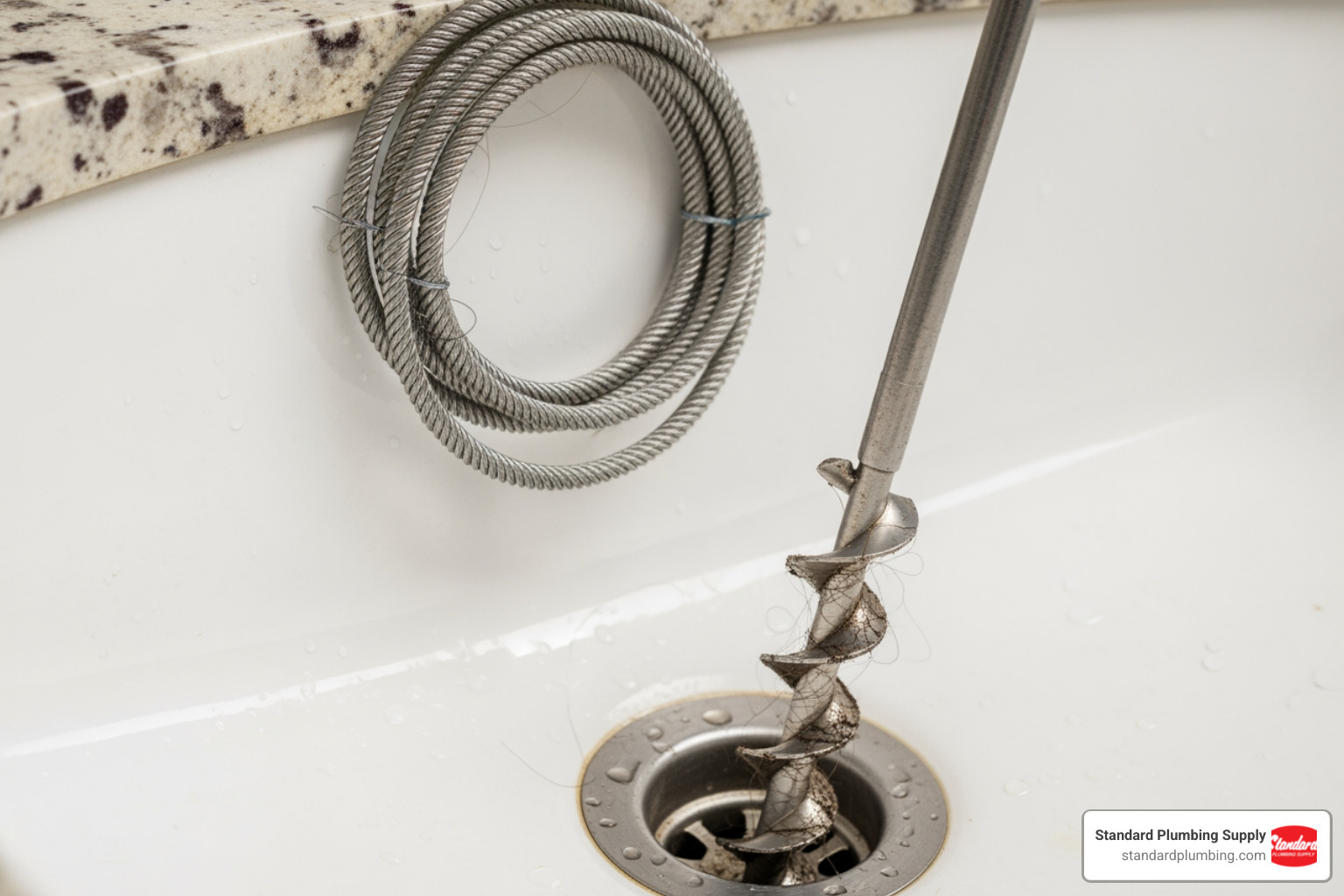
Drain cleaning augers are mechanical tools designed to clear stubborn clogs that plungers and chemical cleaners can’t handle. They use a flexible steel cable with a corkscrew tip to physically break up or retrieve obstructions from your pipes.
Quick Answer: What You Need to Know About Drain Cleaning Augers
- What they are: Long, flexible metal cables with coiled tips that drill into clogs
- When to use them: For hair, grease, or object clogs that won’t clear with a plunger
- Types available: Manual hand-crank, toilet/closet augers, and electric/drill-powered models
- Cost: Basic models start around $15-30; electric models range $200-400+
- Best for: Sink drains, shower drains, toilets, and branch lines (not main sewer lines)
Few household frustrations compare to a clogged drain that won’t budge. You’ve plunged until your arms hurt. You’ve tried hot water and maybe even a chemical cleaner. But the water still pools stubbornly in your sink or shower.
This is where drain cleaning augers shine.
Unlike plungers that use air pressure or chemicals that dissolve debris, augers take a mechanical approach. The rotating cable literally bores through the blockage, breaking it apart or hooking it so you can pull it out. It’s a hands-on solution that gets results when other methods fail.
The tool goes by several names—you might hear it called a plumber’s snake, drain snake, or drain auger. While professionals use heavy-duty motorized versions for severe main line clogs, homeowners and contractors rely on manual and electric models for everyday blockages in sinks, showers, tubs, and toilets.
I’m Jacob Reese, Vice President of Standard Plumbing Supply, and I’ve been around plumbing tools since I was eight years old sweeping our warehouse floors. In my years working with contractors and DIY customers, I’ve seen drain cleaning augers save countless service calls and prevent emergency plumbing disasters when used correctly.
What is a Drain Auger?
A drain auger, often affectionately called a plumber’s snake or drain snake, is essentially a long, flexible tool specifically engineered to clear clogs and obstructions from drains. Imagine a long, slender, flexible steel rod with a coiled hook or corkscrew tip at its end. This tip is designed to either break up dense clogs like tree roots (yes, those can get into your pipes!) or snag and retrieve lightweight obstructions such as hair, grease, or even that small toy your child accidentally flushed. The rotating action of the auger cable can also scrape away mineral deposits and oil buildup from the interior walls of your pipes, helping to restore proper flow.
When we talk about the frustration of a clogged drain, whether it’s a backed-up kitchen sink from food scraps and grease, a sluggish shower drain choked with hair, or a stubborn toilet refusing to clear, drain cleaning augers are our go-to mechanical solution. They physically tackle the problem where plungers might only push water and chemical cleaners might not fully dissolve the obstruction or could even damage older pipes. For less serious blockages, a combination of a liquid drain cleaner and vigorous use of a plunger can sometimes be enough to clear them, but when those methods fail, it’s time to bring out the auger. Our plumber snake and drain auger product range can help you free up blocked drains without the need to call out a plumbing professional for many common issues.
Drain Auger vs. Plumber’s Snake: Is There a Difference?
This is a common question, and the answer is a little nuanced! Often, the terms “drain auger,” “plumber’s snake,” and “drain snake” are used interchangeably, especially by homeowners. They all refer to the same basic mechanical tool with a flexible cable and an auger head designed to clear clogs.
However, there can be subtle distinctions in common usage:
- Plumber’s Snake (or Drain Snake): This term often refers to the more general category of these tools, particularly the manual or smaller handheld versions used for sinks, tubs, and showers. A plumber’s snake is a length of slender, flexible steel rod that can be fed through a pipe to meet an obstruction. It has a coiled hook at the end to push through or pull out clogged material.
- Drain Auger: This term can sometimes imply a more robust or specialized version. For instance, a “toilet auger” is specifically designed for toilets, and “machine augers” refer to the heavy-duty, often motorized equipment used for more significant or deeply located blockages, sometimes with a wider gauge rod suitable for larger outdoor drains and sewers rather than internal pipes. These are best suited for more heavy-duty drain cleaning.
So, while the terms are largely interchangeable, think of “drain auger” as sometimes referring to the specialized or heavy-duty end of the spectrum, while “drain snake” or “plumber’s snake” covers the broader range, including the smaller tools for everyday clogs. Regardless of the name, the principle remains the same: a mechanical attack on stubborn clogs. You can learn more about the plumber’s snake and its history.
Types of Drain Augers and Their Uses
Just like there are different types of clogs, there are different types of drain cleaning augers designed to tackle them. Knowing which one to use is half the battle!
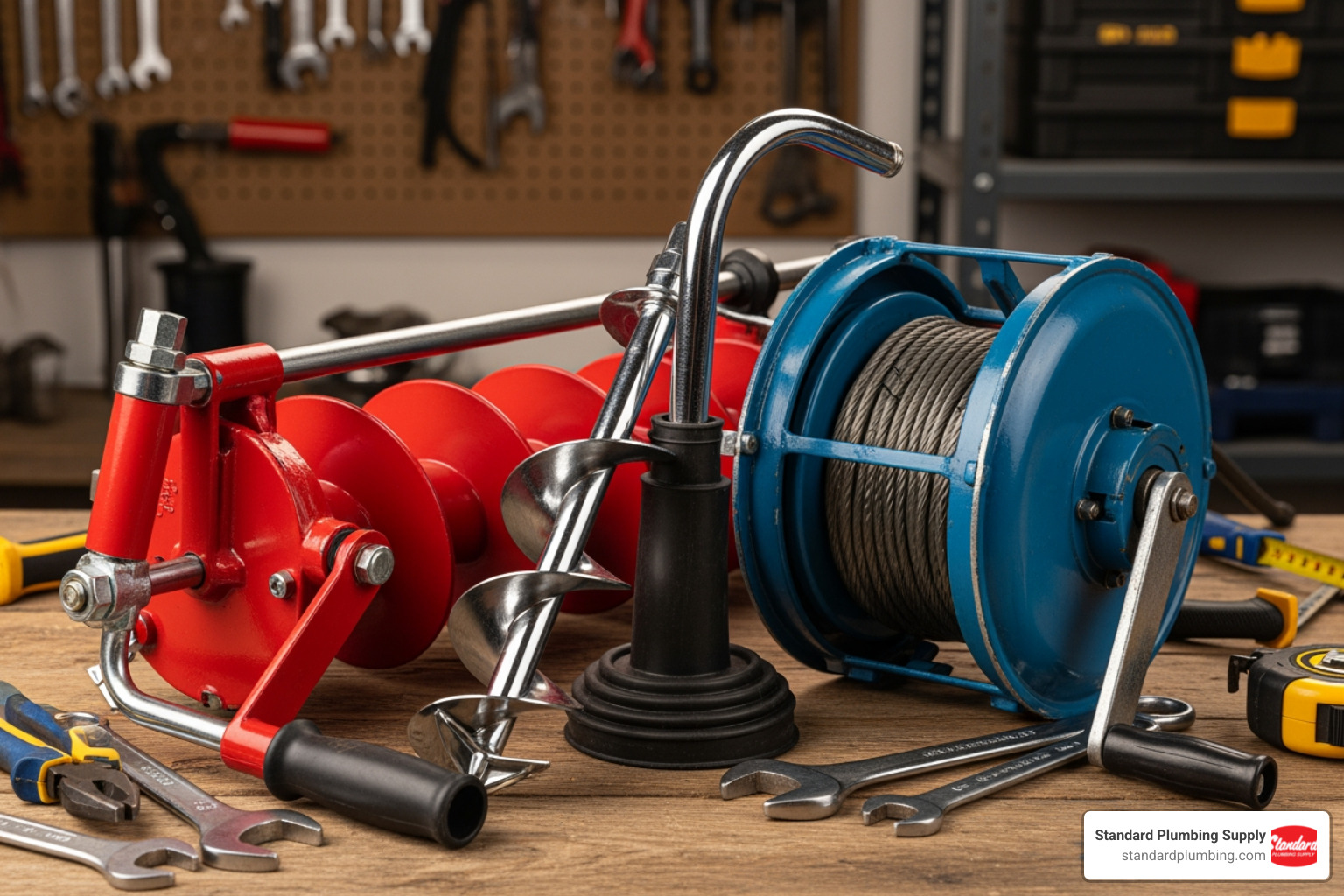
Manual Hand Augers
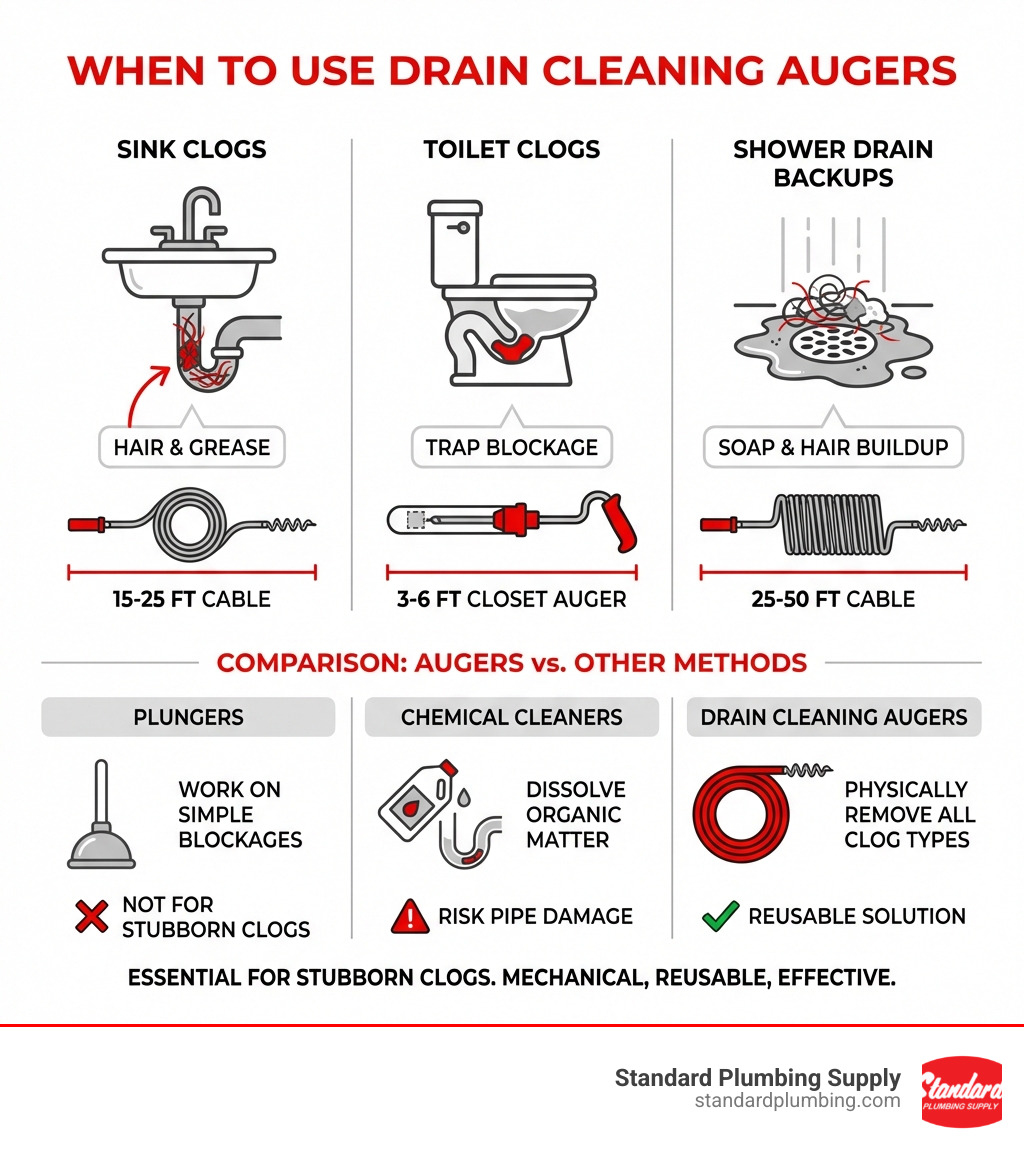
These are the most common and affordable type of drain auger, perfect for the do-it-yourself homeowner. They’re typically hand-cranked and feature a flexible cable stored within a drum or canister. Hand augers are ideal for clearing toilet and drain clogs in smaller lines, such as those found in sinks, showers, and bathtubs. We’re talking about those pesky hair clogs in the bathroom sink or shower, or the grease buildup in a kitchen sink. Their cables usually range from 15 to 25 feet in length, making them suitable for clogs that aren’t too far down the pipe. For example, a Kobalt 1/4-in x 25-Feet High carbon wire Hand auger for Drain is a popular choice for these applications.
Toilet or Closet Augers
A toilet auger, sometimes called a closet auger, is a specialized hand auger designed specifically for clearing clogs in toilets and urinals. What makes it unique is its J-shaped bend and a protective rubber or vinyl sleeve over the cable. This coating is crucial because it prevents the flexible metal cable from scratching or damaging the delicate porcelain finish of your toilet bowl. These augers typically have a shorter cable, usually around 3 to 6 feet, which is just enough to steer the toilet’s intricate trap (the S-bend at the bottom) and clear blockages within or just beyond it. Hand augers are ideal for clearing toilet and drain clogs. For example, a Project Source 3/8-in x 3-Feet High carbon wire Hand auger for Toilet is designed for this specific task.
Drill-Powered and Electric Drain Cleaning Augers
When you encounter tougher clogs or need to reach further into the plumbing system, drill-powered and electric drain cleaning augers become invaluable.
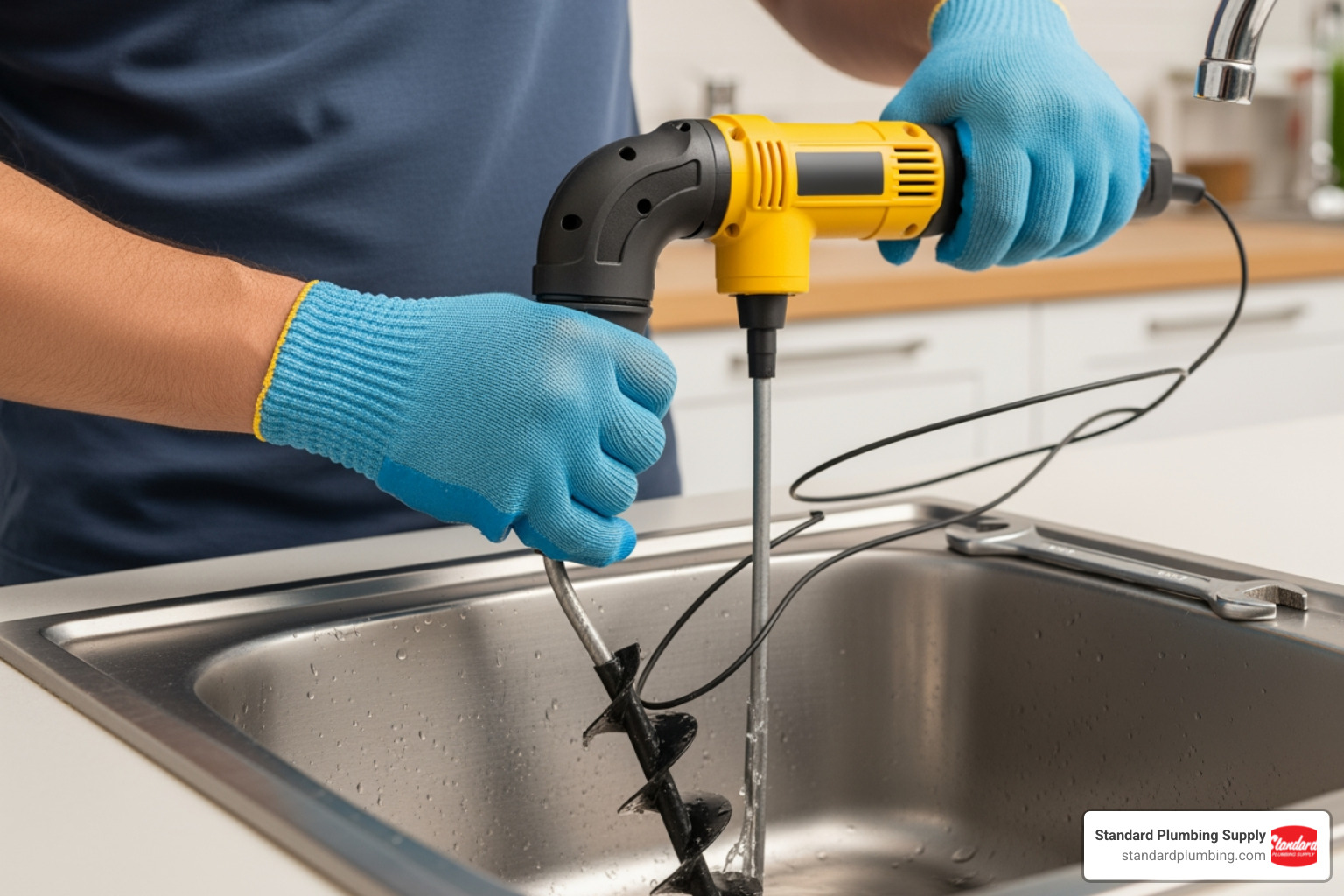
- Drill-Powered Augers: These augers attach to a standard electric drill, which provides the rotational power for the cable. This saves you from manual cranking and gives you more torque to push through stubborn blockages. They’re a step up from manual hand augers for more challenging DIY tasks.
- Electric Drain Cleaning Augers: These are self-contained units with their own electric motor, offering even more power and often featuring automatic feed mechanisms. An automatic-feed handheld electric drain cleaner can be compact and portable, suitable for small line cleaning, and keeps your hands cleaner and safer as the cable advances and retracts. For deeper, more resistant clogs, such as those in longer branch lines or even some main sewer lines, a corded or cordless machine auger with cables up to 50 feet or more can be used. These machine augers are best suited for more heavy-duty drain cleaning. Some models, like the VEVOR 110 Volts 1/2-in dia x 75-ft L Steel Core Corded Machine Auger, are capable of clearing pipes up to 75 feet. For deeply located blockages, we stock augers with lengths of 50 feet and more, suitable for almost any drain or sewer outlet.
Electric augers often come with various auger bit types, each designed for a specific kind of clog:
- Bulb Augers: Good for general purpose and retrieving objects.
- C-Cutters: Effective for grease clogs and scraping pipe walls.
- Drop Head Augers: Designed to steer tight bends and start the clearing process.
- Root Ranger Cutting Nozzles: Specialized for cutting through stubborn tree roots.
Here are some examples of auger bits we have available:
Auger vs. Other Methods: Choosing the Right Tool
When faced with a clog, you have several options: a plunger, chemical drain cleaners, or a drain cleaning auger. Each has its place, and choosing the right tool can save you time, money, and potential damage to your plumbing.
| Method | Effectiveness | Cost (DIY) | Safety What is a Drain Auger?
What is a Drain Auger?
Frustrating clogs; Plumber’s snake; Drain snake; Mechanical tool; Flexible steel cable; Corkscrew tip; Breaking up clogs; Retrieving obstructions; [INFOGRAPHIC] explaining the difference between a plunger, chemical cleaner, and drain auger
Drain Auger vs. Plumber’s Snake: Is There a Difference?
Interchangeable terms; Professional vs. homeowner tools; Heavy-duty augers; Handheld snakes; More about the plumber’s snake
Types of Drain Augers and Their Uses
[IMAGE] of different types of drain augers side-by-side
Manual Hand Augers
Hand-crank; Canister augers; Small clogs; Sinks; Showers; Tubs; 15-25 feet cable length
Toilet or Closet Augers
J-bend; Protective rubber sleeve; Toilet bowl protection; Short cable (3-6 feet); Specifically for toilets
Drill-Powered and Electric Drain Cleaning Augers
[IMAGE] of an electric drain auger in action; Motorized power; Tougher clogs; Longer pipes (50+ feet); Automatic feed; Heavy-duty cleaning; [LIST] of auger bit types like the 3/8×7-1/2 Auger Bit
Auger vs. Other Methods: Choosing the Right Tool
[TABLE] comparing drain augers, chemical cleaners, and plungers on effectiveness, cost, safety, and pipe damage risk
Advantages of Using a Drain Auger
Physically removes clogs; Reusable; Cost-effective long term; No harsh chemicals; Safe for most pipes
Disadvantages and Limitations
Requires manual effort; Can damage pipes if used incorrectly; Ineffective on main line blockages; Messy process
How to Use a Drain Auger to Clear a Clog
[IMAGE] illustrating how to feed the auger cable into a P-trap
Step 1: Preparation and Safety
Protective gloves; Eye protection; Bucket and rags; Remove drain stopper; Clear the area
Step 2: Operating Your Drain Cleaning Auger
Insert cable; Turn handle clockwise; Feel for resistance; Push and retract motion; Break up or hook the clog
Step 3: Retrieving the Clog and Finishing Up
Pull cable out slowly; Clean the auger head; Flush drain with hot water; Repeat if necessary
Essential Safety Precautions
Never use with chemicals; Avoid forcing the cable; GFCI for electric models; Wear proper PPE
Choosing and Maintaining Your Auger
Key Features to Consider When Buying
Cable length; Cable diameter; Material (high-carbon wire); Handle type; Manual vs. power source; A great starter kit
Proper Maintenance for Longevity
Clean after each use; Dry the cable thoroughly; Lubricate to prevent rust; Store properly in its drum or casing
When to Call a Professional Plumber
Recurring clogs; Multiple drains backing up; Suspected main sewer line blockage; Foul odors from drains; Lack of confidence or tools; Checklist for sewer backups
Conclusion
Empowering DIY tool; Effective for specific clogs; Proper use is key; Standard Plumbing Supply; Expert advice; Find the right tools; Visit your local Standard Plumbing Supply for tools and expert advice
