
Stop the Drip and Reclaim Your Peace
Shower cartridge replacement is a straightforward DIY plumbing repair that can fix leaks, restore water pressure, and improve temperature control—all in under two hours. Here’s what you need to know:
- Turn off your water supply at the main valve or local shutoff valves
- Remove the handle and trim to access the valve body
- Extract the old cartridge using pliers or a cartridge puller tool
- Install the new cartridge with proper alignment (watch for Hot/Cold markings)
- Test thoroughly for leaks and correct water temperature
Cost: $50-$100 | Time: 1-3 hours | Skill Level: Intermediate
A leaky shower faucet is more than just an annoyance; that constant drip, drip, drip means water and money are going down the drain. If your shower drips when it’s off, struggles with temperature control, or has a stiff handle, you’re likely dealing with a worn-out cartridge.
Most shower cartridge problems stem from simple wear and tear. Over time, mineral deposits build up, and rubber seals deteriorate. The typical cartridge lasts 10 to 30 years, but hard water and frequent use can shorten that lifespan considerably.
Replacing a shower cartridge yourself saves you the cost of a plumber’s visit—typically $150 to $300—and gives you the satisfaction of solving a real household problem. This guide walks you through every step, from diagnosing the problem to testing your finished repair. We’ll cover single-handle and dual-handle systems, show you how to identify the right replacement part, and troubleshoot common issues.
I’m Jacob Reese, Vice President of Standard Plumbing Supply. As a third-generation plumbing professional, I’ve spent decades helping contractors and homeowners source the right parts for repairs like this. I’ve seen how the right knowledge and quality parts make all the difference.
Before You Begin: Diagnosis and Preparation
Before starting, it’s crucial to diagnose the problem and gather the right tools and parts.
Is It Time for a Change? Signs of a Faulty Cartridge
Your shower cartridge controls water flow and temperature. When it fails, you’ll notice clear signs:
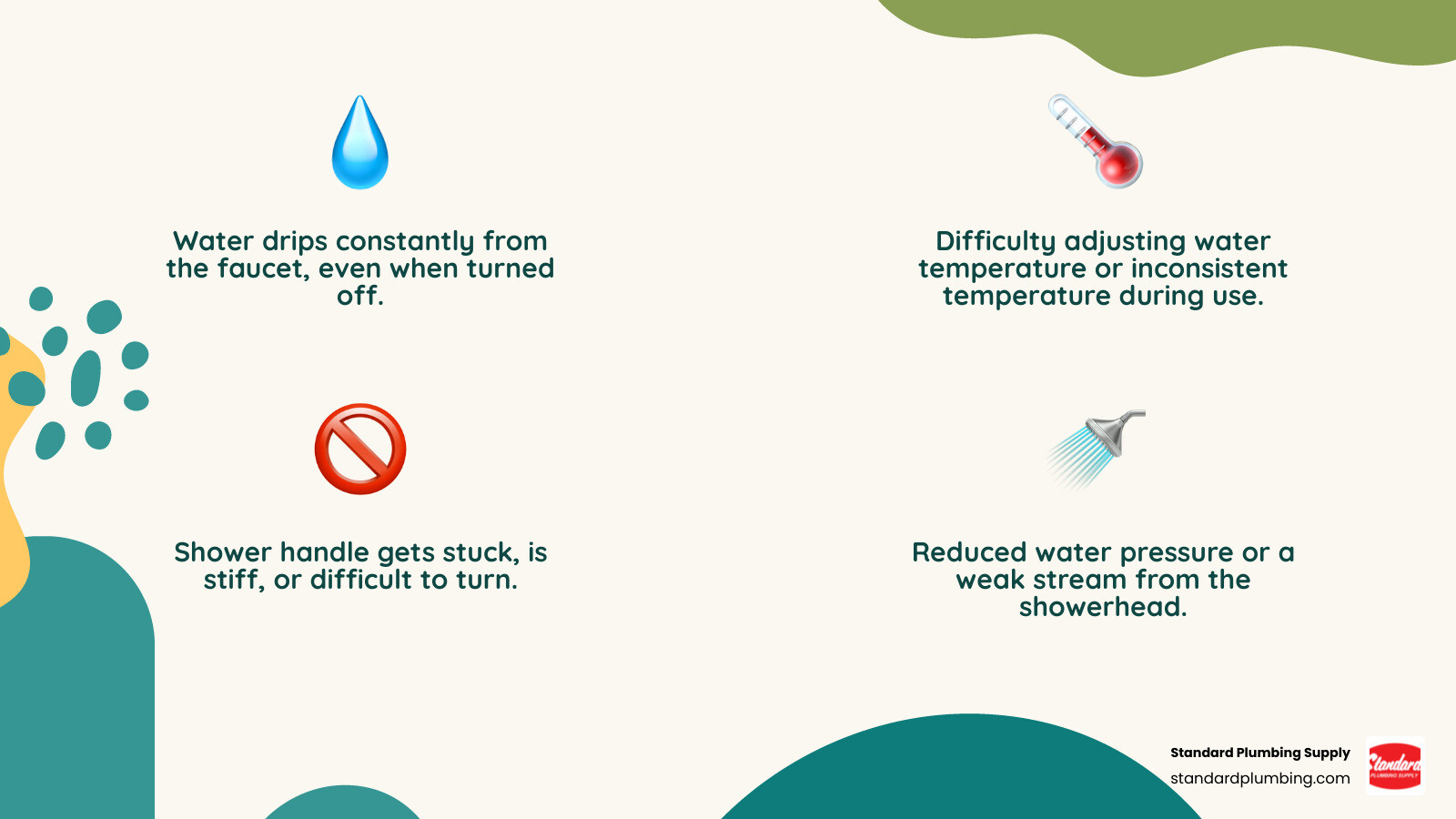
- Dripping or Leaking Faucet: The most common sign is a persistent drip when the water is off, indicating worn-out internal seals.
- Difficulty Adjusting Water Temperature: If you struggle to find the right temperature or experience sudden hot/cold fluctuations, the cartridge’s mixing ability is likely compromised.
- Reduced Water Pressure: A weak or inconsistent stream can be caused by a clogged or failing cartridge restricting water flow.
- Stuck or Difficult-to-Turn Handle: A handle that’s hard to turn suggests corrosion or wear inside the cartridge.
- Strange Noises: Whistling or grinding sounds from the valve often point to internal damage.
Understanding these signs helps confirm the cartridge is the culprit. Now, let’s look at the different types you might encounter.
| Cartridge Type | Function | Common Issues & Replacement Needs – |
|---|---|---|
| Single-Handle | Controls both temperature and volume with one lever. | The most common type. Failure often results in drips, stiffness, or poor temperature control. – |
| Dual-Handle | Uses two separate handles for hot and cold water, which are controlled by individual cartridges or stems. | While less common in modern showers, they are still found in many homes. A leak can often be traced to a specific handle (hot or cold), allowing you to replace just one cartridge if needed. |
| Pressure-Balancing | A more advanced type of single-handle cartridge. It has a mechanism that automatically adjusts to changes in water pressure, preventing sudden temperature spikes (like when someone flushes a toilet). | These are very common in modern homes. When they fail, you might experience a complete loss of either hot or cold water, or sudden, dangerous temperature fluctuations. |
| Thermostatic | The most advanced type, allowing you to pre-set a specific water temperature. It maintains this temperature precisely, regardless of pressure or temperature fluctuations in the water supply. | Found in higher-end showers, these are complex and can be more expensive to replace. Failure usually manifests as an inability to control the temperature accurately or a complete loss of temperature regulation. |
Gather Your Tools and Materials
Having your tools ready will make the job smoother. Here’s what you’ll need:
- Screwdrivers (Phillips and Flathead): For handle screws and prying off caps.
- Hex Wrench Set (Allen Keys): For modern handles with set screws.
- Adjustable Wrench or Pliers: For nuts and clips. Needle-nose pliers are especially useful.
- Cartridge Puller Tool (Recommended): A lifesaver for stuck cartridges, preventing damage to the valve body.
- New Replacement Cartridge: The correct model for your faucet.
- Silicone Grease (Plumber’s Grease): To lubricate O-rings for a better seal and easier installation.
- Rags or Old Towels: To cover the drain and for cleanup.
- Safety Glasses: Essential for eye protection.
- Utility Knife & Caulk (Optional): For cutting and reapplying sealant around the trim plate.
- Penetrating Oil (e.g., WD-40): For stubborn, corroded cartridges.
Pro Tip: Shut Off the Water First!
Before you begin, turn off the water supply to the shower. Use either the main water shutoff for your house or local shutoff valves if your shower has them. Once the water is off, open the faucet to drain any remaining water and relieve pressure.
Identifying the Correct Part for Your Shower Cartridge Replacement
Not all cartridges are the same. Getting the right replacement is key.
- Identify the Manufacturer: Look for a brand name or logo on the handle or trim plate (e.g., Moen, Delta, Kohler).
- Find the Model Number: Check the trim plate, the old cartridge, or any original paperwork.
- Take Pictures: Photograph the handle, trim, and valve for reference.
- Bring the Old Cartridge with You: This is the most reliable method. Take the old cartridge to your local Standard Plumbing Supply, and our experts will find the exact replacement. We stock a wide variety of cartridges for all major brands.
- Check the Manufacturer’s Website: Most brands have online parts diagrams to help you identify the correct part number.
Your Step-by-Step Guide to Shower Cartridge Replacement
With your tools and new cartridge ready, you can begin the replacement.
Step 1: Remove the Faucet Handle and Trim
- Remove the Handle Cap: Carefully pry off the decorative cap covering the handle screw.
- Loosen the Set Screw: Use a Phillips screwdriver or Allen wrench to loosen the screw holding the handle.
- Remove the Handle: Gently pull the handle straight off the valve stem.
- Unscrew and Remove the Trim Plate (Escutcheon): Remove the screws holding the plate to the wall. If it’s caulked, carefully cut the seal with a utility knife before pulling it away.
- Expose the Valve Body: You should now have clear access to the shower valve and the old cartridge.
Step 2: Remove the Old Cartridge
This can be the most challenging step, especially with older, corroded cartridges.
- Locate and Remove the Retaining Clip: Most cartridges are secured by a small metal clip. Use needle-nose pliers to pull it straight out. Be careful not to drop it down the drain.
- Loosen the Cartridge: If your new cartridge came with a plastic tool, use it to twist the old cartridge back and forth to break the seal.
- Pull Out the Shower Valve Cartridge:
- For most cartridges: Grip the stem with pliers and pull it straight out, wiggling gently if needed.
- For stuck cartridges: A cartridge puller tool is highly recommended. It provides the necessary grip and leverage to remove stubborn cartridges without damaging the valve. For very stubborn cases, a little penetrating oil can help loosen it. If it won’t budge, it may be time to call a professional.
Once the old cartridge is out, take it to your local Standard Plumbing Supply to ensure you have the correct replacement. For more guidance, check out this guide on How to Replace a Shower Cartridge in 9 Simple Steps .
Step 3: Install the New Cartridge
With the old cartridge removed, you’re ready to install the new one.
- Clean and Flush the Valve Body: Use a rag to clean any debris or mineral buildup from inside the valve. Briefly turn the water supply on and off to flush out any loose particles from the pipes.
- Apply Silicone Grease: Lightly coat the O-rings on the new cartridge with plumber’s grease. This helps create a watertight seal and makes installation easier.
- Align and Insert the Cartridge: Align any tabs or notches on the cartridge with the corresponding slots in the valve body. Pay close attention to the “H” (Hot) and “C” (Cold) markings to ensure correct orientation. Gently push the cartridge straight in until it is fully seated. Do not force it.
- Re-insert the Retaining Clip: Slide the metal clip back into its slot to secure the new cartridge.
- Secure Bonnet Nut (if applicable): If your valve has a bonnet nut, hand-tighten it and then give it a final quarter-turn with a wrench. Do not overtighten.
Post-Installation Checks and Troubleshooting
Before you put your tools away, perform these final checks to ensure a successful repair.
Testing Your New Installation
- Turn Water On Slowly: Go to your main water valve and turn it on slowly. Listen for any unusual sounds.
- Check for Leaks: With the water on, carefully inspect the valve and cartridge for any drips. Wiping the area with a dry paper towel can help spot small leaks.
- Test Hot and Cold Water Flow: Turn the shower on and test both hot and cold settings. Ensure the water flows freely, the temperature adjusts correctly, and hot/cold are not reversed.
- Adjust Temperature Limit Stop (if applicable): Many modern valves have a temperature limit stop to prevent scalding. If your water is too hot or not hot enough, you may need to remove the handle and adjust this setting according to the manufacturer’s instructions.
Troubleshooting After Your Shower Cartridge Replacement
Encountered an issue? Here are some common fixes.
- Persistent Leaks: If the faucet still drips, turn the water off and check the following:
- Connections: Ensure the bonnet nut (if present) is snug.
- Retaining Clip: Verify the clip is fully seated and securing the cartridge.
- Cartridge Seating: The cartridge may not be fully seated. Try re-seating it.
- Trim Plate Seal: If water is seeping from behind the wall plate, you may need to apply a new bead of silicone caulk.
- Reversed Hot/Cold Water: This is an easy fix. Turn off the water, remove the handle, and rotate the cartridge stem 180 degrees. Reassemble and test.
- Low Water Pressure: If pressure is still low, check for blockages.
- Debris: Turn off the water, remove the new cartridge, and flush the valve body again to clear any remaining sediment.
- Showerhead: Unscrew the showerhead and check for debris in the screen.
- Water Stops: If your valve has integral stops, make sure they are fully open.
Bonus Project: Quick Faucet Aerator Swap
While you have your tools out, consider a quick, 5-minute upgrade for your kitchen or bathroom sinks: replacing the faucet aerator.
Why and How to Replace a Faucet Aerator
Your faucet aerator is the small screen at the tip of your faucet spout. It mixes air into the water, creating a smooth, splash-free flow. Over time, these can get clogged with mineral buildup, causing a weak or erratic stream.
How to Replace It:
- Unscrew the Old Aerator: Most aerators can be unscrewed by hand. If it’s stuck, use pliers with a cloth to protect the finish.
- Match Size and Thread: Take the old aerator to your local Standard Plumbing Supply to find an exact match. They come in various sizes and thread types (male or female).
- Screw on the New Aerator: Ensure the new aerator has its rubber washer in place. Screw it clockwise onto the faucet spout until it’s hand-tight. Don’t overtighten.
- Test: Turn on the water and enjoy your smooth, consistent water stream!
This quick swap can significantly improve your sink’s performance and is a great way to put your newfound DIY plumbing skills to good use!
Frequently Asked Questions about Shower Cartridges
Here are answers to some common questions about shower cartridge replacement.
How often should a shower cartridge be replaced?
A shower cartridge typically lasts 10 to 30 years, but this can vary based on:
- Water Quality: Hard water with high mineral content can cause buildup and shorten the cartridge’s lifespan.
- Frequency of Use: A shower used daily will wear out its cartridge faster than one used infrequently.
- Cartridge Material: Higher-quality materials like brass and ceramic tend to last longer.
Consider replacing a cartridge over 10 years old as preventative maintenance to avoid future leaks.
When should I call a professional plumber?
While many cartridge replacements are DIY-friendly, it’s time to call a professional if:
- The cartridge is stuck: If you can’t remove the old cartridge with a puller tool, forcing it may damage the valve body.
- The valve body is damaged: If you see significant corrosion or damage to the plumbing inside the wall, it’s a job for a pro.
- Problems persist after replacement: If you still have leaks, pressure issues, or temperature problems, a plumber can diagnose the underlying issue.
- You’re not comfortable: If the job feels beyond your skill level, it’s always safer to call for professional help.
Our team at Standard Plumbing Supply can help you find the right parts and offer advice on whether your project is a good fit for DIY.
Conclusion: Enjoy Your Drip-Free Shower
There you have it! From understanding the tell-tale signs of a failing cartridge to confidently executing a shower cartridge replacement, you now possess the knowledge and skills to tackle this common household plumbing repair. You’ve not only fixed an annoying problem but also contributed to water conservation and saved yourself a pretty penny on professional fees. That’s the kind of DIY satisfaction that makes a home truly yours.
No more drip, drip, drip to interrupt your peace. Instead, enjoy the delight of a perfectly functioning shower with consistent temperature and strong water pressure.
For all your plumbing needs, from cartridges to fittings, find the right parts at Standard Plumbing Supply. We’re here to support your next project, big or small. Find all your plumbing fitting needs here.
