
Why Understanding Shower Drain Parts Matters for Your Next Repair
Shower drain parts are the essential components that keep water flowing smoothly out of your shower while preventing leaks, water damage, and costly repairs. Whether you’re fixing a slow drain, upgrading to a modern linear system, or replacing a damaged strainer, knowing which parts you need can save you time and money.
Quick Answer: Essential Shower Drain Parts
- Strainer/Grate – Visible cover that catches hair and debris
- Drain Body – Main housing that connects to the plumbing
- Flange – Seals the drain to the shower base
- Gaskets & Washers – Create watertight seals
- P-Trap – Prevents sewer gases from entering your home
- Tailpiece – Connects the drain body to the P-trap
The global shower drain market was valued at $1.2 billion in 2022 and is growing steadily as homeowners invest in bathroom renovations and upgrades. A well-maintained shower drain prevents water damage, mold growth, and unpleasant odors – making it one of the most important components in your bathroom.
Modern shower drains come in various types, from traditional point drains to sleek linear systems. They’re available in materials like stainless steel, brass, PVC, and ABS, with finishes ranging from brushed nickel to matte black. Understanding these options helps you choose parts that match your shower type, whether you have a preformed base, tiled floor, or curbless wet room.
The average cost to replace a shower drain ranges from $150 to $400, with most homeowners spending around $250 for parts and labor. Many repairs are simple enough for DIY enthusiasts, especially when you know exactly which components you need.
I’m Jacob Reese, Vice President of Standard Plumbing Supply and a third-generation leader in the plumbing industry who has worked with shower drain parts since childhood. Through decades of hands-on experience, I’ve helped countless contractors and homeowners select the right shower drain parts for their specific projects and applications.
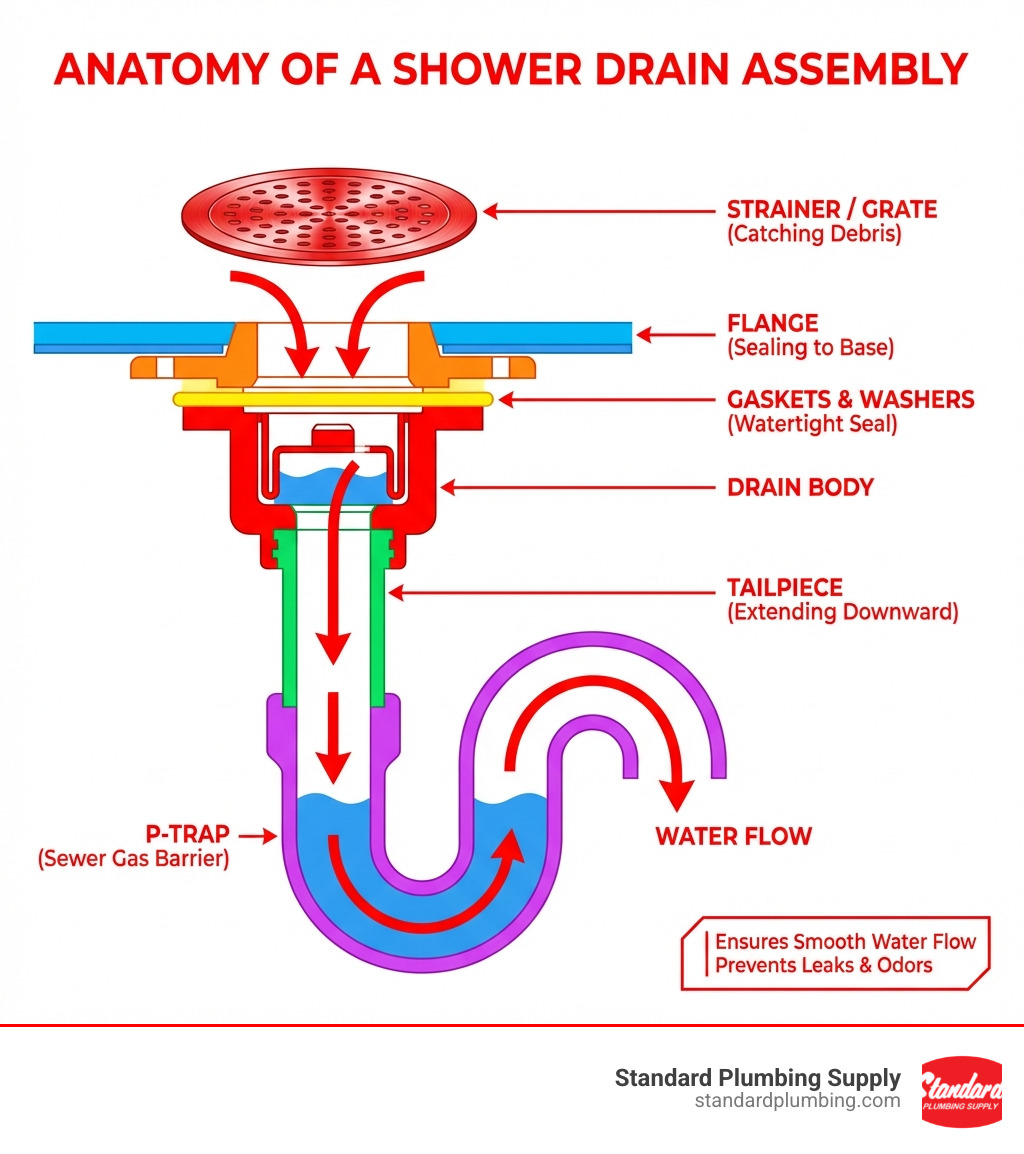
Shower drain parts word roundup:
Anatomy of a Shower Drain: The Core Components
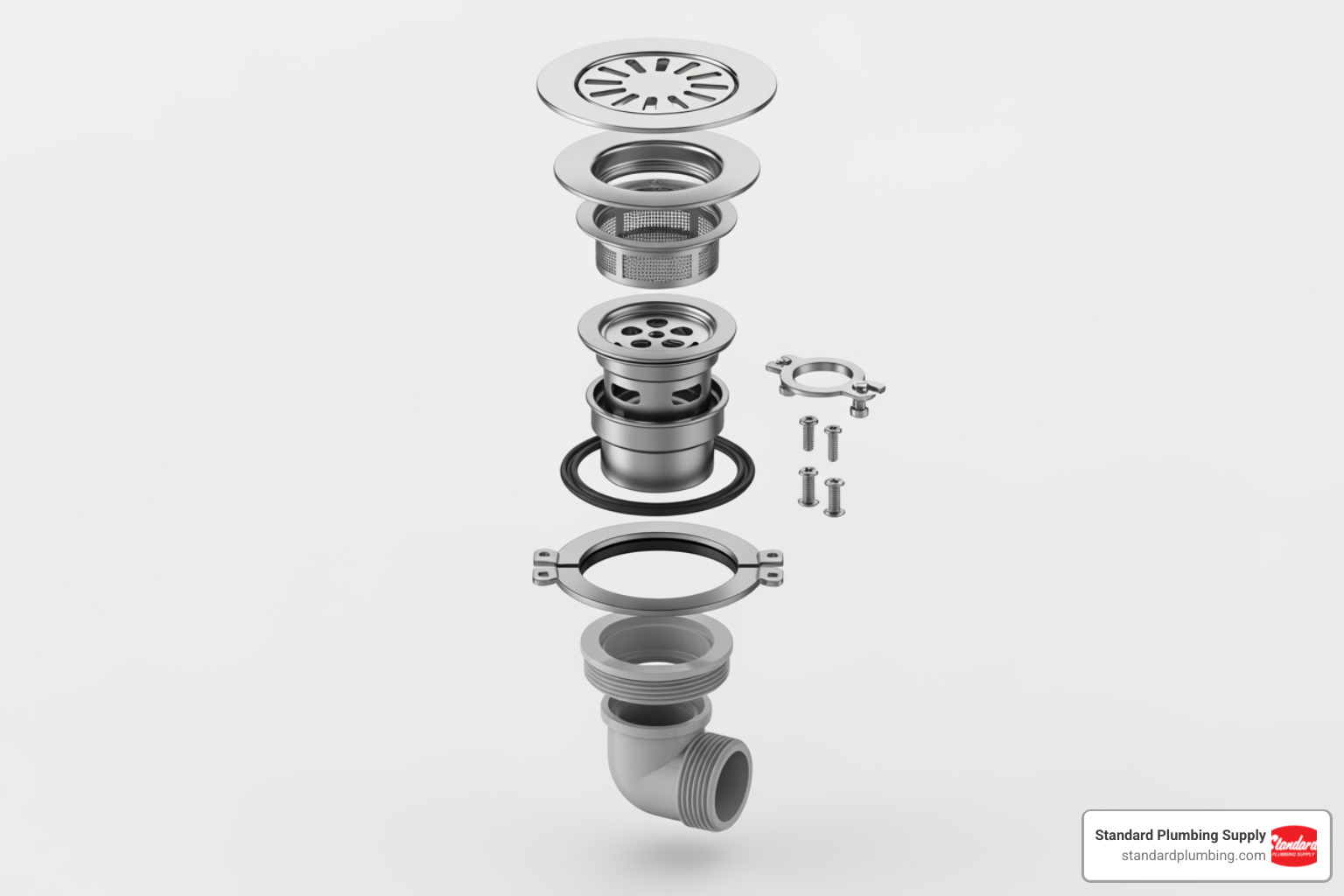
A shower drain is a small opening with a big job. Beneath that tidy grate lives a system designed to keep water moving down while keeping moisture and odors from coming back up. The drain assembly directs water from the surface through the drain body, into the tailpiece, and through the P-trap to the main drain line. Along the way, gaskets, washers, and flanges create watertight seals that protect subfloors and framing from leaks.
To see examples of common drain assemblies and parts, browse manufacturer overviews like Shower Drains | Oatey and Shower Drains | Schluter.
Essential Shower Drain Parts for Any Repair
- Strainer or grate: The visible cover that keeps debris out. Typically 4-1/4 inch diameter for many round point drains.
- Drain cover: Another term for the visible grate or decorative top.
- Drain body: The main housing that connects to the shower base and plumbing.
- Flange: The lip or bonding area that seals to the shower base or waterproofing membrane.
- Clamping ring: Sandwiches the shower pan liner or membrane for a watertight seal (common in tiled shower systems).
- Gasket: Rubber ring providing compression seal; in no-caulk drains, the gasket seals to the pipe.
- Rubber washer: Creates seal between the shower base and the drain body underside.
- Fiber/friction washer: Helps distribute compression under the locknut.
- Spud: The threaded connection component between the drain and pipe in some assemblies.
- Tailpiece: Short section connecting the drain body to the P-trap.
Tip from the field: On no-caulk drains, the gasket orientation matters. The flat side typically sits at the bottom inside the drain body with the beveled side up, ensuring the compression ring seals properly to the pipe.
Strainers and Covers: The First Line of Defense
Your strainer is the unsung hero that catches hair, soap bits, and bobby pins before they become clogs.
- Hair catchers: Drop-in or integrated designs that trap hair while allowing flow.
- Snap-in strainers: Quick replacements that snap into compatible 4-1/4 inch drain tops. Universal snap-tite options are common in stainless steel.
- Screw-in strainers: Attach with 2 screws for a secure fit on many fiberglass or acrylic bases.
- Pop-up drains: Less common in showers but sometimes used; more typical in tub applications.
- Round vs. square grates: Round is classic; square can align better with tile lines.
Common strainer finishes:
- Brushed nickel
- Matte black
- Polished chrome
- Oil-rubbed bronze
- Brushed gold
- Stainless steel
Want a visual of typical strainers? Here are example images from manufacturers:
Types of Shower Drains: Point vs. Linear
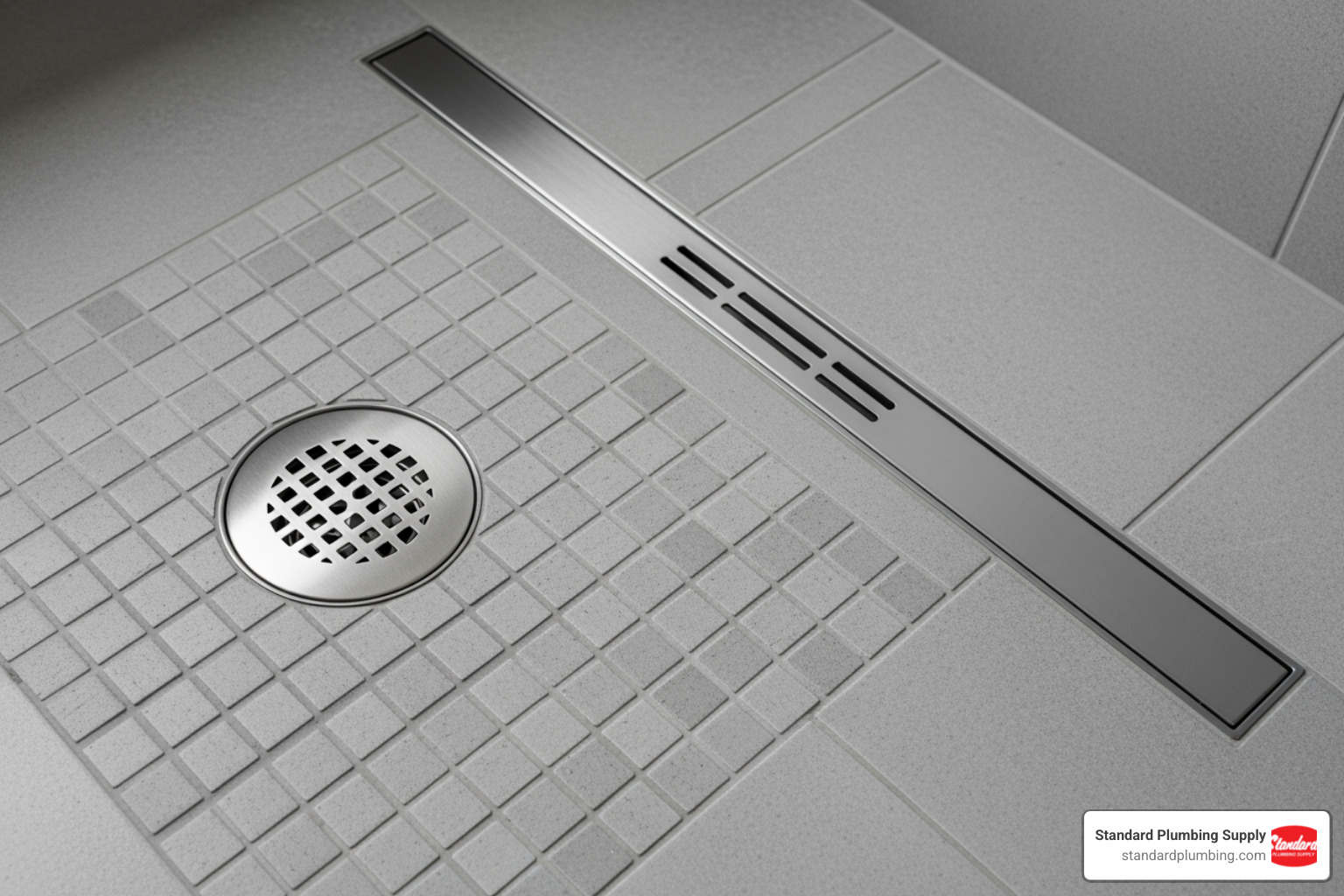
Most showers in our region use one of two types of drains, selected based on your shower base style, design goals, and flow needs.
- Point drains: The classic “center drain.” The floor slopes from all sides toward a single point.
- Linear drains: A long, narrow channel along one side or at the wall, allowing a single-plane slope. Ideal for curbless showers and contemporary designs.
Walk-in showers, wet rooms, and tiled floors often benefit from linear drains, while preformed bases (acrylic, fiberglass, composite) are typically designed for point drains.
Point Drains: The Classic Choice
- Round and square options for tiled or preformed bases.
- Usually centered, but can be offset to avoid joists.
- Floor slopes from all directions toward the drain (a “bowl” slope).
- Broad compatibility with shower pans and retrofit projects.
- Standard strainer sizes like 4-1/4 inch make replacements easy.
Point drain systems are available with clamping rings (for membrane-lined tile showers) or as single-piece drains for preformed bases. For membrane-integrated systems, many pros use bonded-flange point drains that connect directly to waterproofing membranes.
Linear Drains: The Modern Solution
- Also called trench drains or channel drains.
- Can be installed at the wall or mid-floor for uninterrupted tile designs and easy wheelchair access.
- Support large-format tiles and single-plane slopes (no “pizza-slice” cuts).
- Excellent for high-flow applications like rain heads or multiple body sprays.
- Curbless shower benefits: minimal thresholds and improved accessibility.
Explore modern solutions and installation options from trusted manufacturers here: More info about modern plumbing solutions. For bonded waterproofing and integrated flange solutions, see Shower Drains | Schluter.
Choosing the Right Shower Drain Parts for Your Project
Before you pick parts, confirm the project type:
- New construction: Decide point vs. linear early. Match the drain to the shower base and waterproofing strategy.
- Renovation: If reusing the existing base, match the drain type and outlet size. For tiled re-dos, consider upgrading to a bonded-flange drain for better waterproofing.
- Repair: Identify the failing component (strainer, gasket, compression ring, etc.) and match size and connection type.
Selecting the Right Material
Below is a side-by-side comparison in plain language to help you choose.
-
Stainless steel
- Pros: Most widely used for grates due to durability, corrosion resistance, and clean look. Excellent for both residential and commercial. Many finish options (brushed, matte black variants).
- Cons: Higher cost than plastic for grates. The drain body is usually another material (e.g., PVC) even if the grate is stainless.
- Best for: Visible components where aesthetics matter; high-traffic showers; long-term durability.
-
Brass
- Pros: Strong, long-lasting, and reliable for threaded bodies and no-caulk designs. Excellent corrosion resistance. Often used in commercial or heavy-duty applications.
- Cons: Heavier and typically more expensive than plastic.
- Best for: Durable drain bodies in hotels, gyms, or residential upgrades where longevity matters.
-
PVC
- Pros: Affordable, widely compatible with preformed bases, easy to work with. Great for solvent-weld or compression (no-caulk) connections.
- Cons: Visible parts usually need a stainless or finished cover for aesthetics. Not as heat-resistant as metals.
- Best for: Most residential point drains and repairs; cost-effective under-tile components.
-
ABS
- Pros: Lightweight and strong; solvent welds with ABS cement; popular in certain regions.
- Cons: Black color may require covering; not all areas prefer ABS over PVC.
- Best for: Regional code preferences and compatible systems; residential retrofits.
Residential vs. commercial:
- Residential showers often use PVC or ABS drain bodies with stainless steel grates for a balance of cost, durability, and appearance.
- Commercial showers favor brass or stainless steel bodies for ruggedness and long life under frequent use.
Measuring for Replacement Shower Drain Parts
Getting the size right is half the battle:
- Pipe size: Most residential showers use a 2-inch drain pipe. Some high-flow or commercial applications use 3-inch.
- Outlet size: Match your drain body outlet to your pipe size (2-inch is most common).
- Strainer diameter: Many point drains use a 4-1/4 inch strainer. Verify whether yours is a snap-in or screw-in style.
- Drain opening height/adjustability: Some systems include lateral and tilt adjustment for perfect alignment with finished tile height.
- Base compatibility: Confirm whether your shower base is preformed (acrylic, fiberglass, Vikrell, cast iron) or tiled; choose drains designed for that base type.
Matching Finishes and Styles
Updating a drain cover is one of the fastest, most affordable ways to refresh your shower’s look.
- Popular finishes: Brushed nickel, matte black, polished chrome, oil-rubbed bronze, brushed gold, stainless.
- Style tips:
- Match your drain grate to shower fixtures for a cohesive design.
- Square grates often align better with tile grout lines.
- For curbless showers, linear drain grates in brushed stainless or matte black create a sleek, uninterrupted aesthetic.
- Design-forward options: Many modern drains are crafted to be seen, not hidden. Decorative grates and tileable covers lift the look without sacrificing performance.
Common Shower Drain Problems and Fixes
Even the best systems need occasional attention. Here are the top issues we see in Arizona, California, Colorado, Idaho, Nebraska, Nevada, Oregon, Utah, and Wyoming homes and commercial facilities:
- Clogs and slow draining: Hair and soap scum are common culprits.
- Leaks: Often due to worn gaskets, loose locknuts, or improper gasket orientation.
- Unpleasant odors: A dry or compromised P-trap or deteriorated seal can allow sewer gas in.
- Mold or mildew around the drain: Signals slow leaks or recurring pooling.
- Water pooling on the shower floor: Can point to a partially clogged drain, improper slope, or undersized outlet for flow demand.
Unclogging and Maintenance
Routine maintenance beats emergency future repairs every time.
- Remove the strainer and clear visible hair regularly.
- Use a small drain snake to pull out hair deeper in the throat. Avoid harsh chemicals that can damage pipes or finishes.
- Try natural solutions: A rinse with hot water and a mild, non-corrosive cleaner helps keep soap residues at bay.
- Establish a cleaning schedule: Quick monthly checkups prevent slow-drain surprises.
Watch a short how-to refresher here:
Pro tip: Consider a hair-catching insert under your strainer. It is inexpensive, works quietly in the background, and makes maintenance easier.
Sealing Leaks and Preventing Odors
- Replace worn gaskets: Rubber and fiber washers can flatten or crack over time.
- Tighten connections: Gently snug the locknut beneath the base. Don’t overtighten—cracked bases are nobody’s idea of a good time.
- P-trap function: The trap holds water that blocks sewer gas; if a shower is rarely used, run water periodically to maintain the trap seal.
- Check the drain seal: For no-caulk drains, ensure the compression gasket sits correctly (flat side down inside the drain body, beveled side up) and that the fiber washer is correctly placed between the rubber washer and the locknut.
If pooling persists even after clearing clogs, evaluate slope and outlet size. Linear drains and larger outlets (3-inch) can help in high-flow setups.
Installation Considerations for Shower Drains
DIY vs. professional installation:
- DIY-friendly: Replacing strainers, hair catchers, or no-caulk compression gaskets on accessible drains.
- Call a pro: Moving drain locations, installing new P-traps, setting linear channels in mud beds, or tying into a bonded waterproofing membrane. Code compliance and watertightness matter—especially in tiled showers.
Shower base type:
- Preformed bases (acrylic, fiberglass, Vikrell, cast iron): Often pair with no-caulk or solvent-weld compression drains designed for the base thickness.
- Tiled showers: Typically use clamping ring drains for pan liners or bonded-flange drains that integrate with sheet membranes.
Waterproofing membrane:
- Bonded-flange systems connect directly to waterproofing membranes, reducing layers and potential leak paths. See manufacturer examples at Shower Drains | Schluter.
Local plumbing codes:
- Across our service areas (AZ, CA, CO, ID, NE, NV, OR, UT, WY), code requirements for trap size, drain sizing, and venting apply. When in doubt, ask our counter pros—doing it right the first time is cheaper than doing it twice.
No-Caulk vs. Solvent Weld Drains
-
No-caulk drains
- Use a compression gasket to seal to the drain pipe—no sealant needed.
- Faster installs, great for preformed bases and tight spaces.
- Rubber gasket and fiber washer create a reliable seal to the base underside.
- Tip: Orient the gasket correctly; the flat side seats at the bottom of the drain body.
-
Solvent weld drains
- Use PVC or ABS cement to bond the drain outlet to the pipe.
- Permanent connection with excellent reliability when done correctly.
- Choose PVC vs. ABS based on your system and local code preferences.
For more details on no-caulk and caulking/threading connection methods, see product guidance like Oatey’s drain families at Shower Drains | Oatey.
Tips for a Watertight Seal
- Bonding flange: In tiled showers with sheet membranes, ensure a secure bond to the drain’s integrated flange.
- Rubber gaskets and fiber washers: Replace if they show wear. The fiber ring sits between the rubber washer and the locknut to distribute pressure.
- Plumber’s putty: Typically used under metal strainers or trim in some assemblies—verify compatibility with your finish.
- Test for leaks before tiling or finishing: Plug and fill, then inspect carefully.
Quick how-to resources:
Frequently Asked Questions about Shower Drains
What are the basic parts of a shower drain?
A shower drain consists of a visible strainer or grate, a drain body that connects to the plumbing, and a series of gaskets and washers to create a watertight seal with the shower base. Below the drain body, a tailpiece connects to the P-trap, which prevents sewer gases from entering the living space.
How do I know what size shower drain to buy?
Measure the diameter of your drain pipe—most residential showers use 2-inch outlets. If you are replacing just the cover, measure the strainer diameter (commonly 4-1/4 inches) and note if your current cover is snap-in or screw-in. For unusual drain setups or older homes, bring your old parts to our counter and we will match them.
Can I replace just the shower drain cover?
Yes. Many round and square covers are sold independently. Ensure the new cover matches your existing attachment method (snap-in vs. screw-in) and diameter. Upgrading to a fresh finish—like matte black or brushed nickel—can give your shower an instant facelift.
Are linear drains worth it?
For curbless showers, large-format tile, or contemporary aesthetics, linear drains are an excellent choice. They allow a single-plane slope, integrate neatly at the wall, and handle high flow rates from multiple fixtures. The linear segment is growing fast as walk-in showers and wet rooms trend upward.
What does “no-caulk” really mean?
“No-caulk” drains use a compression gasket to seal to the pipe—no messy sealant or lead caulking required. They are time-savers, especially on preformed bases. Just be sure to orient the gasket correctly and tighten to spec.
How much should I budget for a shower drain replacement?
Most homeowners spend $150 to $400 for a full replacement including labor, with $250 being typical. Many simple repairs (like swapping a strainer or gasket) can be done DIY at a fraction of that cost.
Do finishes matter in terms of performance?
The finish is mostly about aesthetics and corrosion resistance on visible parts. Stainless steel and high-quality coatings hold up well in wet environments. Match your drain finish to faucets and trim for a cohesive look.
What are the differences between residential and commercial shower drains?
Commercial settings favor more rugged bodies (brass, stainless) and often larger outlets for high traffic. Residential drains commonly pair plastic bodies (PVC/ABS) with stainless grates for an ideal blend of performance and value.
Find the Right Parts for Your Shower Repair
This guide covers the essential shower drain parts, from strainers and flanges to different drain types like point and linear. By understanding materials, sizes, and common issues, you can confidently tackle your next repair or upgrade.
When you are ready to pick up parts, we are here to help. Standard Plumbing Supply has locations across Arizona, California, Colorado, Idaho, Nebraska, Nevada, Oregon, Utah, and Wyoming—from Boise to Phoenix, Salt Lake to Sacramento, Las Vegas to Reno-area communities, and many more. Use our SPS store locator to see hours, contact info, and services at your nearest branch. We are happy to look at your old part, match sizes, and send you home with the right solution the first time.
If you want to dig deeper into product systems and design-forward options, explore:
And if you are a visual learner, these quick resources are handy:
With the right Shower drain parts, you can prevent leaks, improve drainage, and give your shower a design upgrade—all without breaking the bank. Stop by any of our locations from Bountiful to Boise, San Diego to St. George, and let’s get your project flowing.
