
Introduction: The Unsung Hero of Your Shower
A shower valve cartridge is the internal component inside your shower faucet that controls water flow, mixes hot and cold water, and regulates pressure to give you a comfortable shower. When it fails, you’ll experience drips, temperature swings, or a handle that won’t budge.
Quick Answer: Understanding & Replacing Your Shower Valve Cartridge
- What it is: A mechanical valve inside your shower faucet that controls water flow and temperature
- Signs of failure: Dripping faucet, inconsistent temperature, stiff handle, reduced pressure
- How to replace: Turn off water supply → Remove handle and escutcheon → Extract old cartridge → Install new cartridge → Reassemble
- Average lifespan: 10-20 years depending on water quality and usage
- Replacement difficulty: Moderate DIY project (30-60 minutes with basic tools)
- Key consideration: Must match your specific valve brand and model
Most homeowners don’t think about their shower valve cartridge until something goes wrong. That slow drip from your shower head? The sudden blast of scalding water when someone flushes the toilet? These aren’t just annoyances—they’re signs that the cartridge inside your shower valve is wearing out.
The good news is that replacing a shower valve cartridge is one of the most straightforward plumbing repairs you can tackle yourself. Unlike replacing an entire valve body (which often requires cutting into walls), a cartridge swap typically takes less than an hour and requires only basic tools. You don’t need to be a licensed plumber to fix that drip or restore smooth temperature control.
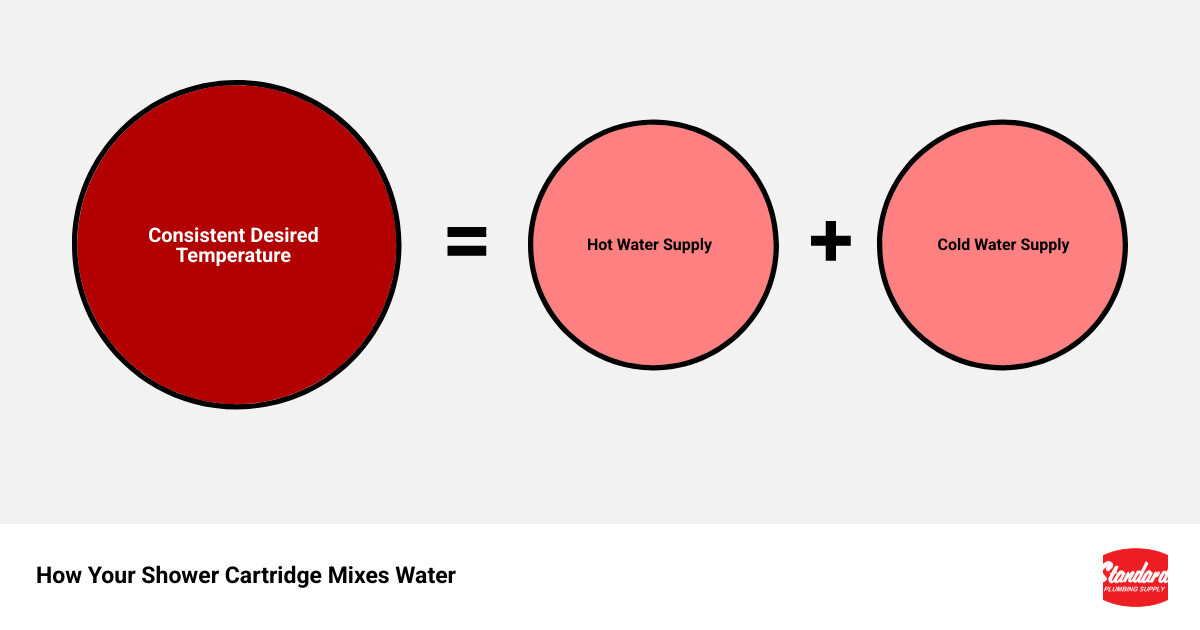
Understanding how your shower valve cartridge works is the first step to fixing it. The cartridge sits inside your shower valve body and acts as the gatekeeper for your water supply. When you turn the handle, you’re actually moving internal components within the cartridge that open and close pathways for hot and cold water. The cartridge blends these streams to achieve your desired temperature while maintaining consistent pressure—even when water demand changes elsewhere in your home.
Different valve systems use different cartridge designs. Pressure-balancing cartridges (like Moen’s Posi-Temp or Kohler’s Rite-Temp systems) maintain outlet temperature within ±3°F during water pressure fluctuations, preventing those unpleasant temperature shocks. Thermostatic cartridges offer even more precise control, allowing you to set an exact temperature that remains constant regardless of pressure changes. Understanding which type you have will help you select the right replacement and set realistic expectations for performance.
The cartridge itself is built from just a few key components: a sleeve (the outer shell with water flow ports), a valve stem (the movable part connected to your handle), and O-rings (which create watertight seals). Over time, these O-rings wear out, mineral deposits accumulate, and moving parts develop play—leading to the problems you’re experiencing now.
I’m Jacob Reese, Vice President of Standard Plumbing Supply, and I’ve spent my entire life in the plumbing industry, starting at age eight sweeping warehouses and working my way through nearly every role in our family business. Through thousands of customer interactions and hands-on experience with shower valve cartridge replacements across every major brand, I’ve learned what works, what doesn’t, and how to help DIYers succeed on their first attempt.
Is Your Cartridge Crying for Help? Common Signs of Failure
We’ve all been there—standing under a shower that just isn’t cooperating. But how do you know if the culprit is your shower valve cartridge or something else entirely? Our years of experience tell us there are a few tell-tale signs that your cartridge is waving the white flag.
Here are the most common indicators that your shower valve cartridge needs to be replaced:
- Leaky Faucet or Spout: This is arguably the most common and annoying sign. A slow drip from the faucet tap means the internal seals (O-rings) in your cartridge are no longer creating a watertight barrier. Not only is it irritating, but it’s also a waste of water!
- Inconsistent Water Temperature: Does your shower go from perfectly warm to icy cold or scalding hot without warning? This often happens when someone else in the house flushes a toilet or turns on a faucet. If your shower valve lacks a pressure-balancing feature, or if that feature within the cartridge has failed, you’ll experience these wild temperature swings. This is a classic sign of a failing pressure-balancing mechanism within the cartridge.
- Stiff or Stuck Handle: If you have to wrestle with your shower handle just to turn the water on or change the temperature, the internal components of the cartridge might be corroded, clogged with mineral deposits, or simply worn out. It should glide smoothly.
- Reduced Water Pressure: While reduced water pressure can stem from many issues, a clogged or failing cartridge can restrict water flow, leading to a noticeably weaker shower.
- Squeaking or Grinding Noises: Any unusual sounds emanating from your shower handle when you operate it could indicate friction or wear within the cartridge’s moving parts. These noises are often a precursor to more significant problems.
If you’re experiencing one or more of these symptoms, it’s highly likely that your shower valve cartridge is due for a replacement.
Choosing Your Champion: How to Select the Right Replacement Cartridge
So, you’ve identified the problem, and it points to the shower valve cartridge. Now comes the critical step: finding the right replacement. This isn’t a one-size-fits-all situation, as cartridges are highly specific to the brand and model of your shower valve. Choosing incorrectly can lead to frustration and a continued leaky shower!
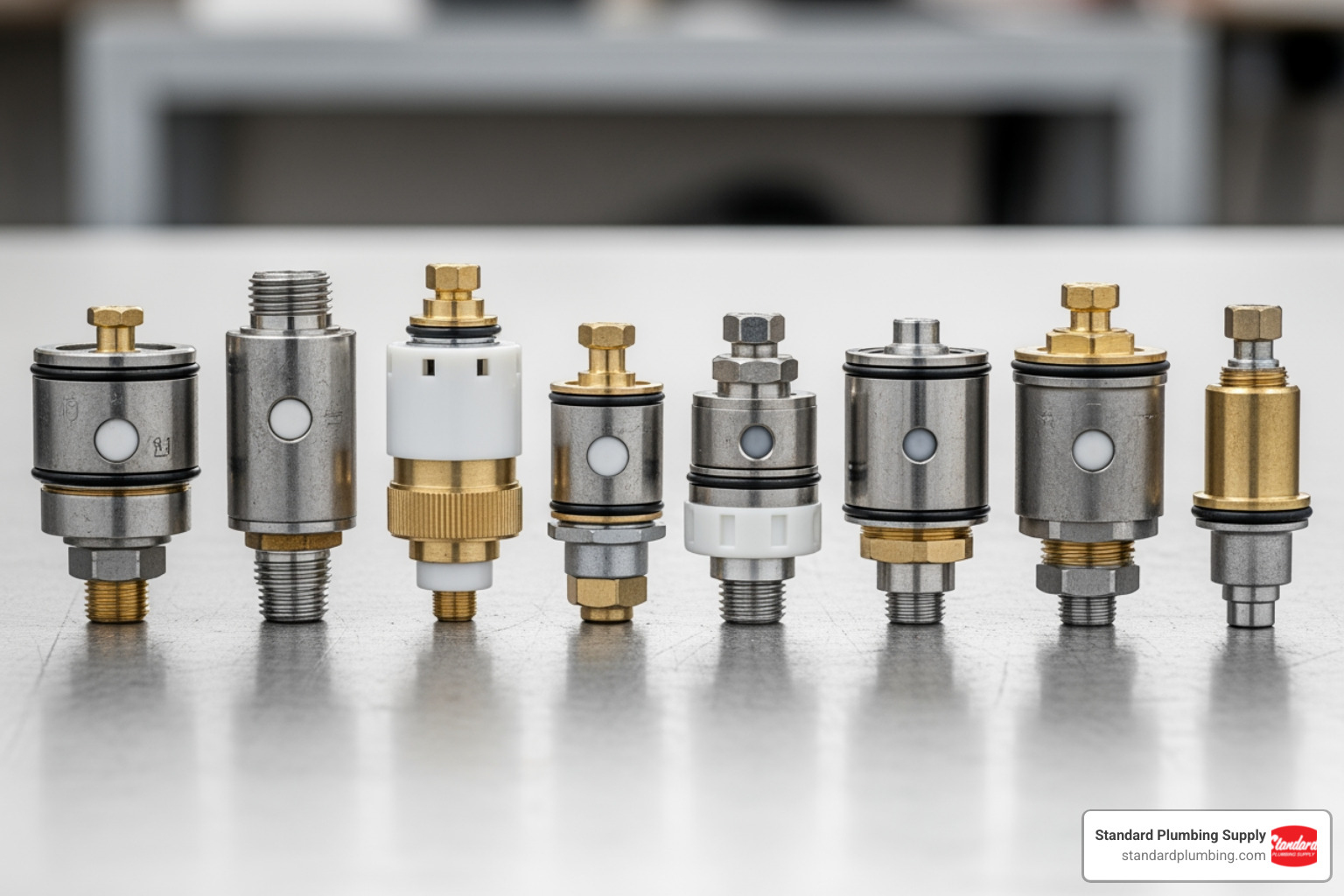
Compatibility is Key: The most important rule of cartridge replacement is to find an exact match for your existing valve. While some brands, like Moen, offer backward compatibility for certain models (e.g., a new 1200 or 1225 cartridge can replace an older 1200), you generally need the cartridge designed for your specific faucet.
Identifying Your Valve Type: Before you even think about buying, you’ll need to identify your shower valve.
- Brand: Look for a brand name on your shower trim, handle, or escutcheon plate (e.g., Moen, Delta, Kohler, Pfister).
- Model/Series: This is often trickier. Sometimes the model number is on the back of the escutcheon plate or in your home’s original plumbing documentation. If not, you might need to remove the handle and take a look at the existing cartridge for any identifying numbers or unique features. Moen, for example, has various cartridge numbers like 1225, 1222, 1212, 1213, 1224, and more, each designed for specific valve series like M-Core, Posi-Temp, or Moentrol. Delta also has series like Monitor® and Multichoice®.
Single-handle vs. Two-handle: This is a fundamental distinction. Single-handle faucets use one cartridge to control both temperature and flow. Two- or three-handle systems might use separate cartridges for hot and cold water, or a combination of mixing and diverter cartridges.
Material and Design Impact: Cartridges are made from various materials, each impacting performance and longevity.
| Feature | Brass Cartridges | Plastic Cartridges | Ceramic Disc Cartridges |
|---|---|---|---|
| Longevity | Very good; corrosion-resistant. | Fair to good; prone to wear over time. | Excellent; highly durable and wear-resistant. |
| Cost | Higher upfront cost. | Lower upfront cost. | Higher upfront cost, but long-term value. |
| Performance | Reliable, smooth operation. | Can become stiff or leak sooner. | Very smooth operation, precise temperature control. |
| Common Uses | Older, more traditional faucets; some high-end models. | Often found in budget-friendly faucets or specific designs. | Modern faucets, known for drip-free performance. |
| Key Insight | Durable, but moving parts can still wear. | Less durable, but easy to replace. | Two ceramic discs slide against each other for sealing, minimizing wear. |
Understanding Cartridge Types
Beyond material, the functional design of the shower valve cartridge is crucial.
- Pressure-Balancing Cartridges: These are heroes in multi-fixture homes. They continuously monitor and adjust the hot and cold water pressure to maintain a consistent outlet temperature, preventing sudden scalding or freezing. Moen’s Posi-Temp® and Kohler’s Rite-Temp® systems are prime examples, maintaining temperature within a tight +/-3°F range during pressure fluctuations. This is a huge benefit for safety and comfort!
- Thermostatic Cartridges: Taking temperature control to the next level, thermostatic cartridges allow you to set an exact desired temperature. They then maintain that temperature precisely, regardless of pressure or flow changes. We see both manual and digital models of these, offering user-friendly control panels for consistent temperature and flow.
- Manual Cartridges: These are typically found in older or simpler shower systems. They control flow and temperature directly based on handle position, without active pressure or temperature balancing.
- Diverter Cartridges: In multi-function shower systems (e.g., with a main showerhead, handheld sprayer, and body jets), diverter cartridges are responsible for directing water flow to the selected outlet. For instance, Kohler’s Real Rain® diverter valves activate a “Deluge” function for an immersive rain shower experience.
If you’re still scratching your head trying to identify your specific Moen cartridge, we recommend checking out their helpful guide: More info on cartridge identification.
Key Features for a Durable Shower Valve Cartridge
When you’re ready to purchase a replacement shower valve cartridge, don’t just grab the cheapest option. Investing in a quality cartridge can save you headaches (and water) down the road. Look for these key features:
- Ceramic Disc Construction: As seen in our table above, ceramic discs are highly durable and resist wear, leading to smoother operation and a longer, drip-free life. Many modern cartridges, like some Pfister 0X8 models, feature ceramic discs.
- Brass Body: While some cartridges use plastic components, a brass body offers superior durability and corrosion resistance, especially in areas with hard water.
- Stainless Steel Components: Internal parts made of stainless steel, such as the spool in some Pfister cartridges, further improve durability and resistance to corrosion and mineral buildup.
- High-Quality O-Rings: These small rubber rings are critical for sealing. Quality O-rings will maintain their elasticity and integrity longer, preventing leaks. Many feature rubber O-rings to create secure seals and prevent leaks.
- Temperature Limit Stops: For safety, especially in homes with children or elderly individuals, integrated temperature limit stops prevent accidental scalding by restricting how hot the water can get.
The Main Event: A Step-by-Step Guide to Shower Valve Cartridge Replacement
Alright, it’s time to get your hands dirty (or wet, more accurately!). Replacing a shower valve cartridge is typically an easy process to complete with minimal tools, and we’re here to walk you through it.
Safety First: This is plumbing 101. Always, always, always turn off the water supply before starting any work on your faucet. We don’t want any impromptu indoor water features!
DIY vs. Professional: While this is a manageable DIY project, if you encounter unexpected issues (like a seized cartridge that won’t budge, or if you’re unsure about turning off your home’s main water supply), don’t hesitate to call a professional. Standard Plumbing Supply has locations throughout Arizona, California, Colorado, Idaho, Nebraska, Nevada, Oregon, Utah, and Wyoming, and we can always help you find the right parts or recommend a trusted plumber.
Step 1: Preparation and Safety
Gathering your tools and taking proper precautions will make the job much smoother.
- Turn off Main Water Supply: Locate your home’s main water shut-off valve (usually in the basement, garage, or utility closet) and turn it off. For apartments or condos, there might be a shut-off valve specific to your unit or bathroom.
- Cover the Drain: Place a towel or stopper in the shower drain. Trust us, you don’t want to lose a tiny screw or O-ring down the pipe.
- Gather Tools: Here’s what you’ll likely need:
- Phillips screwdriver
- Flathead screwdriver
- Hex wrench set (often 3/32″ is common for handle screws)
- Adjustable wrench or pliers
- Needle-nose pliers (especially helpful for tricky clips or parts)
- Cartridge puller tool (highly recommended, especially for stubborn cartridges)
- Utility knife (optional, for scoring caulk)
- Flashlight or headlamp
- Rag and bucket
- New shower valve cartridge (your champion!)
- Plumber’s grease (silicone-based, safe for O-rings)
- Safety glasses (always a good idea when dealing with potential debris)
Step 2: Accessing the Old Shower Valve Cartridge
Now, let’s get to the heart of the matter.
- Remove Handle: Most shower handles are secured by a small set screw. Look for a tiny hole on the underside or back of the handle. Use the appropriate hex wrench (often 3/32″) or screwdriver to loosen this screw. You usually don’t need to remove the screw completely, just loosen it enough to slide the handle off.
- Remove Escutcheon Plate: This is the decorative plate against the wall. It’s typically held in place by screws. Unscrew these and carefully remove the plate. You might need to gently pry it if it’s sealed with caulk. If you have a Moen M-Core valve, you might need to slide off a sleeve from the assembly first.
- Remove Stop Tube (if present): Some older or specific models, like the Moen 1225, might have a stop tube or “D” washer that slides off the cartridge stem.
- Locate Retaining Clip: This is a crucial step. Many cartridges are held in place by a U-shaped copper or brass retaining clip. Use needle-nose pliers to carefully pull this clip straight out. If you can’t see it, you might need to remove more of the trim. Do NOT turn the water back on without this clip in place!
For a visual guide on handle removal and accessing the cartridge, check out Moen’s installation help videos: View a video on handle removal.
Step 3: Removing and Installing the New Cartridge
The moment of truth!
- Remove the Old Cartridge:
- If you have a cartridge puller: This tool is designed to grip the cartridge and provide leverage to pull it out, especially if it’s seized by mineral deposits. Follow the puller’s instructions.
- Without a puller: For some cartridges, you might be able to use pliers to grasp the stem and gently wiggle and pull the cartridge straight out. For Moen 1225, a plastic twisting tool (often included with the new cartridge) helps loosen it before pulling.
- Be patient! Old cartridges can be stubborn.
- Clean the Valve Body: Once the old cartridge is out, inspect the inside of the valve body. Use a rag to wipe away any mineral deposits or debris. If there’s significant buildup, you might need a small brush. You can briefly turn the water supply back on (with a bucket ready!) to flush out any loose particles, but be quick and careful.
- Lubricate O-Rings: Take your new shower valve cartridge. Apply a thin, even coat of plumber’s grease to the O-rings on the cartridge. This helps create a good seal and makes future removal easier. You might also grease the inside of the valve body.
- Align the New Cartridge: This is key for proper function.
- Look for alignment tabs, posts, or notches on the cartridge and inside the valve body.
- For Moen M-Core cartridges (like the 1212, 1213, or 1214), you’ll often align posts on the cartridge with a pressure balancing puck or adapter inside the valve body.
- For Moen 1225 cartridges, ensure the small notch on the stem faces down. If hot and cold are reversed after installation, you can often rotate the stem 180 degrees.
- Gently push the new cartridge straight into the valve body until it’s fully seated. Do not force it.
- Secure the New Cartridge: Reinsert the retaining clip you removed earlier. Make sure it’s fully seated and holding the cartridge firmly in place.
- Reassembly:
- Slide the stop tube (if applicable) back into place.
- Reattach the escutcheon plate and secure it with its screws.
- Slide the handle back onto the cartridge stem and tighten the set screw.
- Double-check everything.
Now, slowly turn your main water supply back on. Check for leaks around the escutcheon plate and operate your shower handle to ensure proper function and temperature control. You should hear a satisfying whoosh of water, not a drip!
For visual learners, here’s a helpful video on Moen 1222 cartridge replacement that covers many of these steps: Watch a video on cartridge replacement.
Frequently Asked Questions about Shower Valve Cartridges
We hear a lot of questions about these unsung heroes of the shower. Here are some of the most common:
How long does a shower valve cartridge typically last?
The lifespan of a shower valve cartridge can vary quite a bit, but generally, you can expect them to last anywhere from 10 to 20 years. However, several factors influence this:
- Water Hardness: In areas with hard water (which is common across many of our service areas in Arizona, California, Nevada, and Utah), mineral deposits can build up on the cartridge’s moving parts and O-rings, leading to premature wear and failure.
- Usage Frequency: A shower that’s used multiple times a day will naturally wear out its cartridge faster than one in a guest bathroom.
- Material Quality: As we discussed, ceramic disc cartridges and those with brass or stainless steel components tend to last longer than plastic ones.
- Brand and Model: Higher-quality brands often use more durable materials and designs, contributing to a longer lifespan.
Regular maintenance, like cleaning the valve body during replacement, can also help extend the life of your plumbing components.
Why is my shower still dripping after replacing the cartridge?
Oh, the frustration! You’ve done all the hard work, and that annoying drip persists. Don’t despair; it’s usually one of a few common issues:
- Incorrect Installation: The cartridge might not be fully seated or properly aligned within the valve body. Even a slight misalignment can prevent a complete seal.
- Debris in the Valve Body: Before installing the new cartridge, if the valve body wasn’t thoroughly cleaned, a small piece of sediment or mineral buildup could be preventing the cartridge from sealing correctly.
- Damaged O-Rings: While your new cartridge comes with fresh O-rings, they can sometimes be nicked or damaged during installation. Always apply plumber’s grease to help them slide smoothly.
- Worn-Out Valve Seat: In some older faucet designs, there’s a separate valve seat that the cartridge presses against. If this seat is worn or damaged, the new cartridge won’t be able to form a perfect seal.
- Mismatched Cartridge: Double-check that you indeed purchased the exact right cartridge for your specific shower valve model. Even subtle differences can cause leaks.
If the drip continues, we recommend re-opening the valve, re-inspecting for debris, ensuring proper alignment, and checking the O-rings.
What is the difference between a pressure-balancing and a thermostatic cartridge?
These two types of shower valve cartridges are designed to improve your showering experience, but they do so in different ways:
-
Pressure-Balancing Cartridge:
- Function: Its primary job is to prevent sudden temperature changes (scalds or chills) caused by fluctuations in water pressure. For example, if someone flushes a toilet, the pressure-balancing mechanism quickly adjusts the hot and cold water mix to maintain your chosen temperature.
- Anti-Scald Protection: This is its main benefit. It reacts to pressure changes to keep the temperature relatively stable (e.g., within +/-3°F).
- Temperature Control: You still manually set the temperature by moving the handle along its range, but the cartridge ensures that once set, it stays consistent despite pressure drops elsewhere.
- Benefits: Increased safety and comfort, especially in homes with older plumbing or multiple users.
-
Thermostatic Cartridge:
- Function: This cartridge aims for precise temperature control. You set a specific temperature (e.g., 100°F), and the thermostatic cartridge maintains that exact temperature, regardless of pressure or even minor temperature changes in the incoming hot water supply.
- Precise Temperature Control: It uses a wax element or bimetallic strip that expands and contracts to adjust the hot and cold water flow, ensuring the water leaving the shower is at your chosen temperature.
- Water Conservation: Because it gets to your desired temperature quickly and maintains it, you spend less time adjusting the handle, potentially saving water.
- Benefits: Superior comfort, luxury, and often allows for multi-function showers where you can divert water without affecting temperature.
A pressure-balancing cartridge is reactive to pressure changes to maintain relative temperature, while a thermostatic cartridge is proactive in maintaining an exact temperature, regardless of pressure or incoming water temperature shifts. Both contribute to a safer and more enjoyable shower, but thermostatic offers a higher degree of precision.
Conclusion: Enjoy Your Flawlessly Functioning Shower
Congratulations! You’ve steerd the cartridge conundrum, identified your shower’s needs, and are now equipped to tackle the replacement. No more drips, no more sudden blasts of icy cold or scalding hot water, and a handle that operates as smoothly as a dream. We know the satisfaction that comes from a successful DIY plumbing project, and fixing your shower valve cartridge is one of the most rewarding.
By understanding what a shower valve cartridge is, recognizing the signs of its failure, selecting the correct replacement, and following our step-by-step guide, you’ve not only saved money but also gained valuable knowledge about your home’s plumbing.
For all the parts and expert advice you need for this project and more, Standard Plumbing Supply is here to help. Our team members across Arizona, California, Colorado, Idaho, Nebraska, Nevada, Oregon, Utah, and Wyoming are ready to assist you in finding the right shower valve cartridge for your specific needs, along with any tools or supplies you might require.
Find a Standard Plumbing Supply store near you and let us help you keep your home running smoothly: Find a store near you.
